
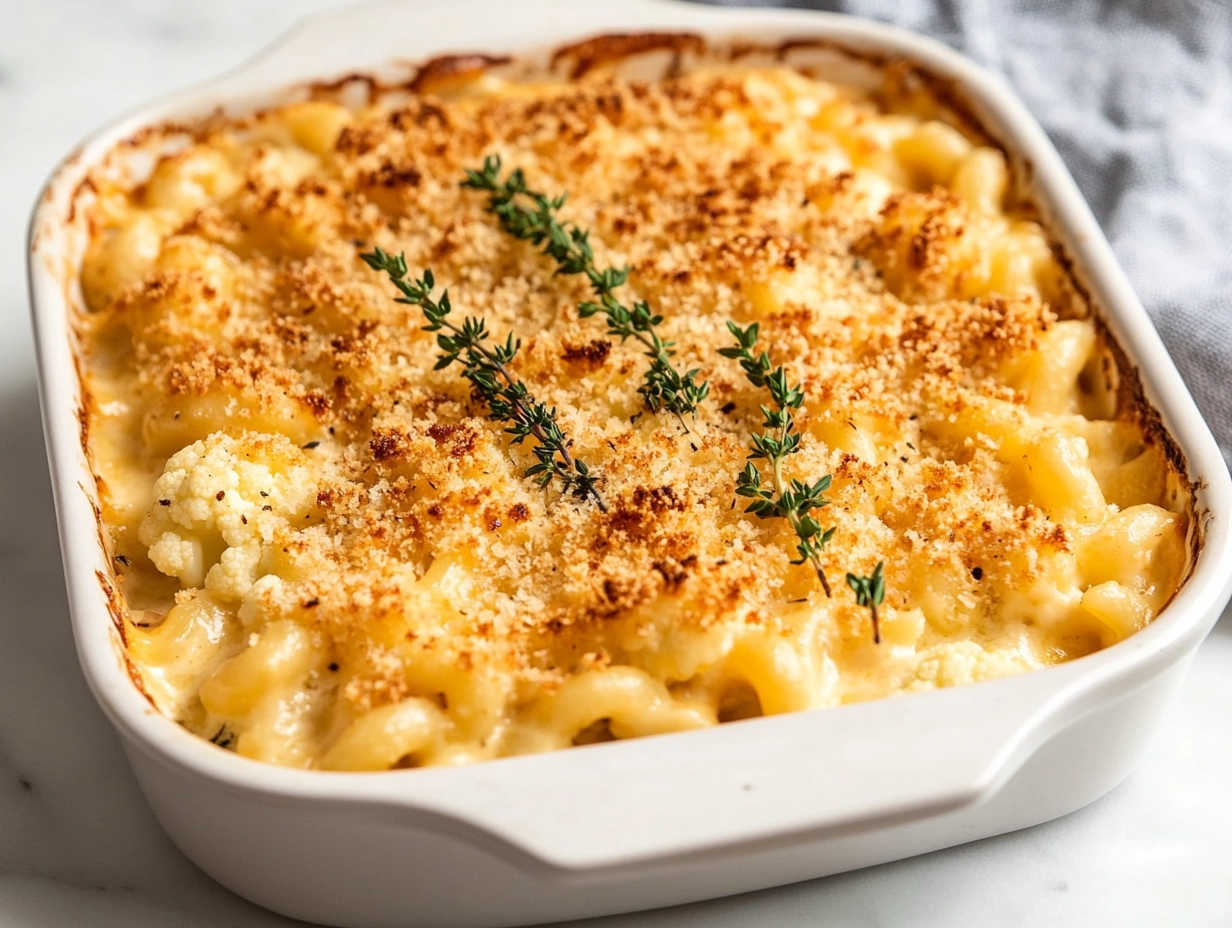

Mac and cheese is the ultimate comfort dish, but Gordon Ramsay’s version proves it can be both indulgent and thoughtfully balanced.
Instead of relying only on heavy cheese and cream, this recipe layers flavor through a proper roux, bold British cheeses, fresh herbs, and an unexpected addition of cauliflower for texture and balance.
This mac and cheese is rich without being overwhelming, creamy without being greasy, and deeply satisfying in a way that feels both nostalgic and refined.
It’s the kind of dish that works just as well for a cozy family dinner as it does for a dinner party side.
Why This Recipe Feels Like Comfort Food?
Mac and cheese has an emotional pull that few dishes can match.
- Creamy pasta feels instantly satisfying
- The baked topping adds warmth and crunch
- It’s familiar yet elevated
- It feels hearty, cozy, and filling
This version delivers all the comfort you expect, with a little extra depth.
The Inspiration Behind This Recipe
Gordon Ramsay’s approach to mac and cheese focuses on balance and structure. Instead of masking everything with cheese, this recipe builds a flavorful base sauce, uses a blend of cheeses for complexity, and adds cauliflower to lighten the dish while keeping it satisfying. The result is a mac and cheese that tastes indulgent but still feels intentional and well-rounded.
What Makes Gordon Ramsay’s Mac and Cheese Different?
This recipe stands apart from standard mac and cheese in several ways.
- Uses a classic roux-based cheese sauce
- Combines multiple British cheeses for depth
- Includes cauliflower for balance and texture
- Finished with herbed breadcrumbs for crunch
Each component adds contrast rather than excess.
Ingredients Overview
This mac and cheese relies on simple pantry ingredients, but the combination and proportions make all the difference. The cheese blend adds sharpness and creaminess, while mustard and cayenne bring subtle heat and depth.
Nothing here is accidental, every ingredient has a role.
Ingredient Breakdown

Elbow Macaroni
Classic shape that holds sauce well and bakes evenly.
Cauliflower
Adds body and lightness, breaking up the richness of the cheese sauce.
Butter and Flour
Form the roux that gives the sauce structure and smoothness.
English Mustard Powder
Enhances the cheese flavor without tasting overtly mustardy.
Whole Milk
Creates a creamy sauce without heaviness.
Cheddar Cheese
Provides sharp, familiar flavor.
Lancashire & Cheshire Cheese
Add creaminess and depth, balancing the cheddar.
Breadcrumbs
Create a crisp topping that contrasts the creamy interior.
Fresh Thyme
Adds freshness and aroma.
Cayenne, Salt & Pepper
Bring warmth and seasoning balance.
Spotlight on Cheese Blend and Cauliflower
Cheese Blend
Using multiple cheeses creates layers of flavor — sharp, creamy, and slightly tangy — rather than a one-note sauce.
Cauliflower
Cauliflower absorbs flavor while adding texture and lightness, preventing the dish from feeling too dense.
Together, they create a mac and cheese that feels rich but not heavy.
Smart Substitutions and Variations
- Swap cauliflower for broccoli or leeks
- Use Gruyère or mozzarella if British cheeses aren’t available
- Add crispy bacon or pancetta for extra richness
- Use gluten-free pasta and flour for a GF version
The base method stays the same.
Equipment You’ll Need
- Large pot for pasta
- Saucepan
- Whisk
- Baking dish
- Mixing spoon
- Oven
Step-by-Step Method
- Preheat oven to 375°F (190°C)
- Cook macaroni in salted water until just al dente
- Blanch cauliflower florets until tender; drain
- Melt butter in a saucepan
- Whisk in flour and cook briefly
- Add mustard powder
- Slowly whisk in milk to form a smooth sauce
- Stir in cheeses until melted
- Season with salt, pepper, and cayenne
- Combine pasta, cauliflower, and sauce
- Transfer to baking dish
- Mix breadcrumbs with thyme
- Sprinkle over mac and cheese
- Bake until golden and bubbling
How to Know It’s Done
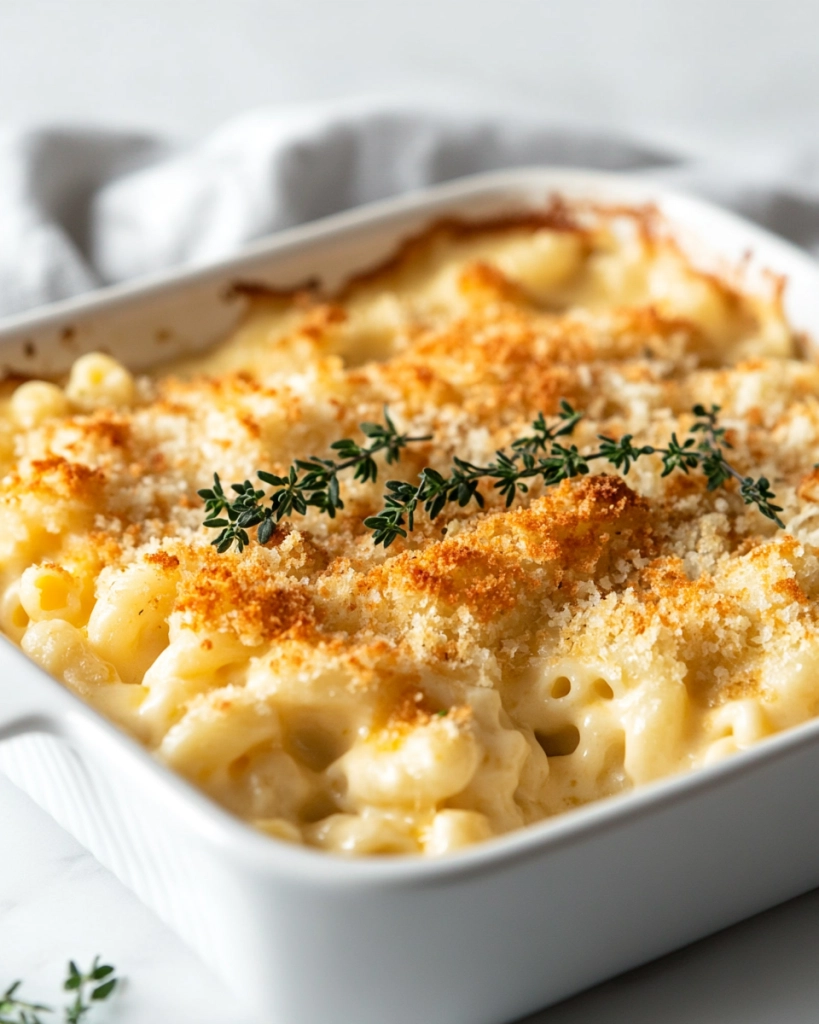
- Top is golden and crisp
- Sauce is bubbling at the edges
- Pasta is tender but not mushy
- Cheese sauce is smooth and creamy
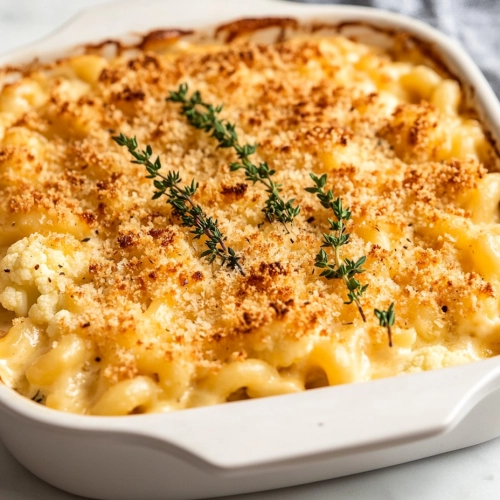
Gordon Ramsay Mac and Cheese Recipe
Equipment
- Large pot (for pasta)
- Saucepan
- Whisk
- Baking Dish
- Mixing spoon
- Oven
Ingredients
- 1 lb elbow macaroni
- 1 medium cauliflower cut into florets
- 4 tbsp butter
- 4 tbsp all-purpose flour
- 2 tsp English mustard powder
- 3 cups whole milk
- 1 cup sharp Cheddar cheese grated
- 1 cup Lancashire cheese grated
- 1 cup Cheshire cheese grated
- 1 cup breadcrumbs
- 2 tbsp fresh thyme leaves
- Salt and pepper to taste
- ¼ tsp cayenne pepper
Instructions
- Preheat oven to 375°F (190°C)
- Cook macaroni in salted water until just al dente
- Blanch cauliflower florets until tender; drain
- Melt butter in a saucepan
- Whisk in flour and cook briefly
- Add mustard powder
- Slowly whisk in milk to form a smooth sauce
- Stir in cheeses until melted
- Season with salt, pepper, and cayenne
- Combine pasta, cauliflower, and sauce
- Transfer to baking dish
- Mix breadcrumbs with thyme
- Sprinkle over mac and cheese
- Bake until golden and bubbling
Tips and Tricks for Best Results

- Don’t overcook the pasta
- Grate cheese fresh for smoother melting
- Season the sauce before baking
- Let it rest a few minutes before serving
Common Mistakes and How to Fix Them
Sauce is grainy
Heat was too high — melt cheese gently.
Mac and cheese is dry
Add a splash of milk before baking.
Too bland
Add more mustard or salt.
Breadcrumbs burned
Cover loosely with foil and finish uncovered.
What to Serve With Mac and Cheese
Make-Ahead and Storage Tips
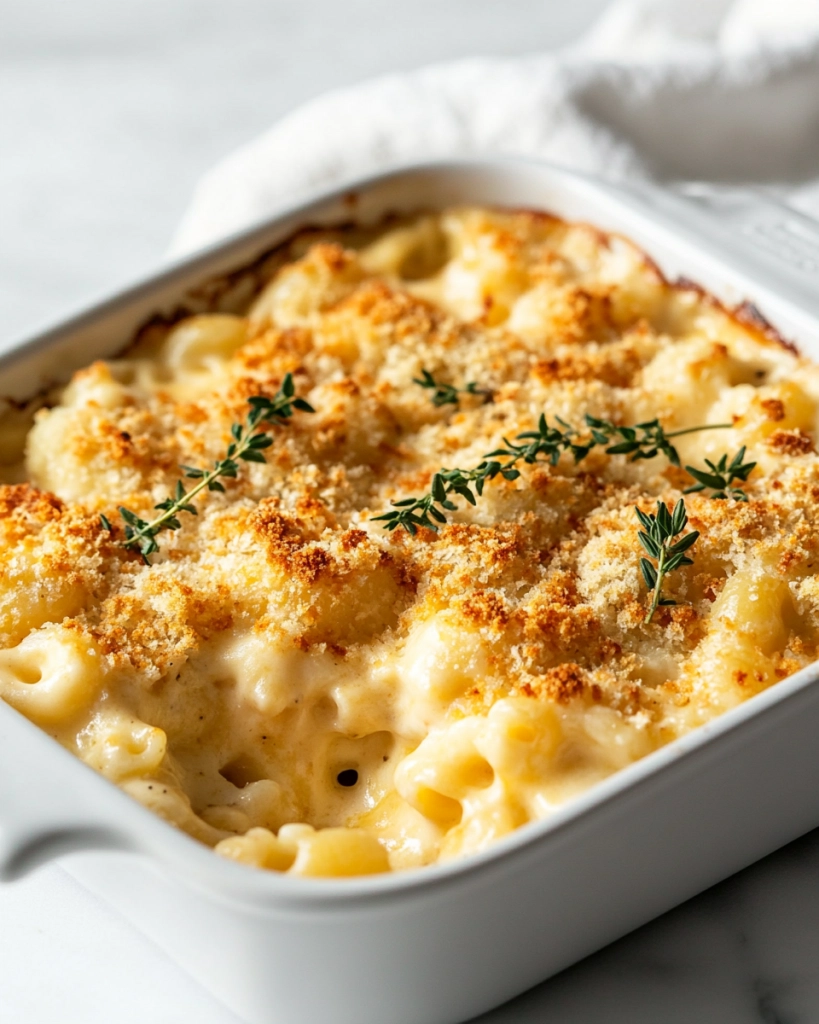
- Assemble up to 24 hours ahead
- Refrigerate covered before baking
- Store leftovers up to 3 days
- Reheat gently with a splash of milk
Frequently Asked Questions
1. Why add cauliflower to mac and cheese?
It adds texture and balances richness without overpowering flavor.
2. Can I skip the cauliflower?
Yes, but the dish will be richer and heavier.
3. Can I use different cheeses?
Yes, but aim for a mix of sharp and creamy.
4. Is mustard powder necessary?
It enhances cheese flavor without tasting like mustard.
5. Can I make this gluten-free?
Yes, use gluten-free pasta and flour.
6. Why bake mac and cheese after cooking?
Baking creates a crisp topping and melds flavors.
7. Can I freeze mac and cheese?
Yes, freeze before baking for best texture.
8. How do I reheat without drying it out?
Add milk and reheat covered.
9. Can I add meat?
Yes, bacon or ham work well.

hi there,
The Freshman Cook started as a place to keep track of recipes I wanted to make again. Somewhere along the way, it grew into a collection of meals that friends requested, desserts that disappeared too quickly, and weeknight dinners that made life a little easier.
know more