
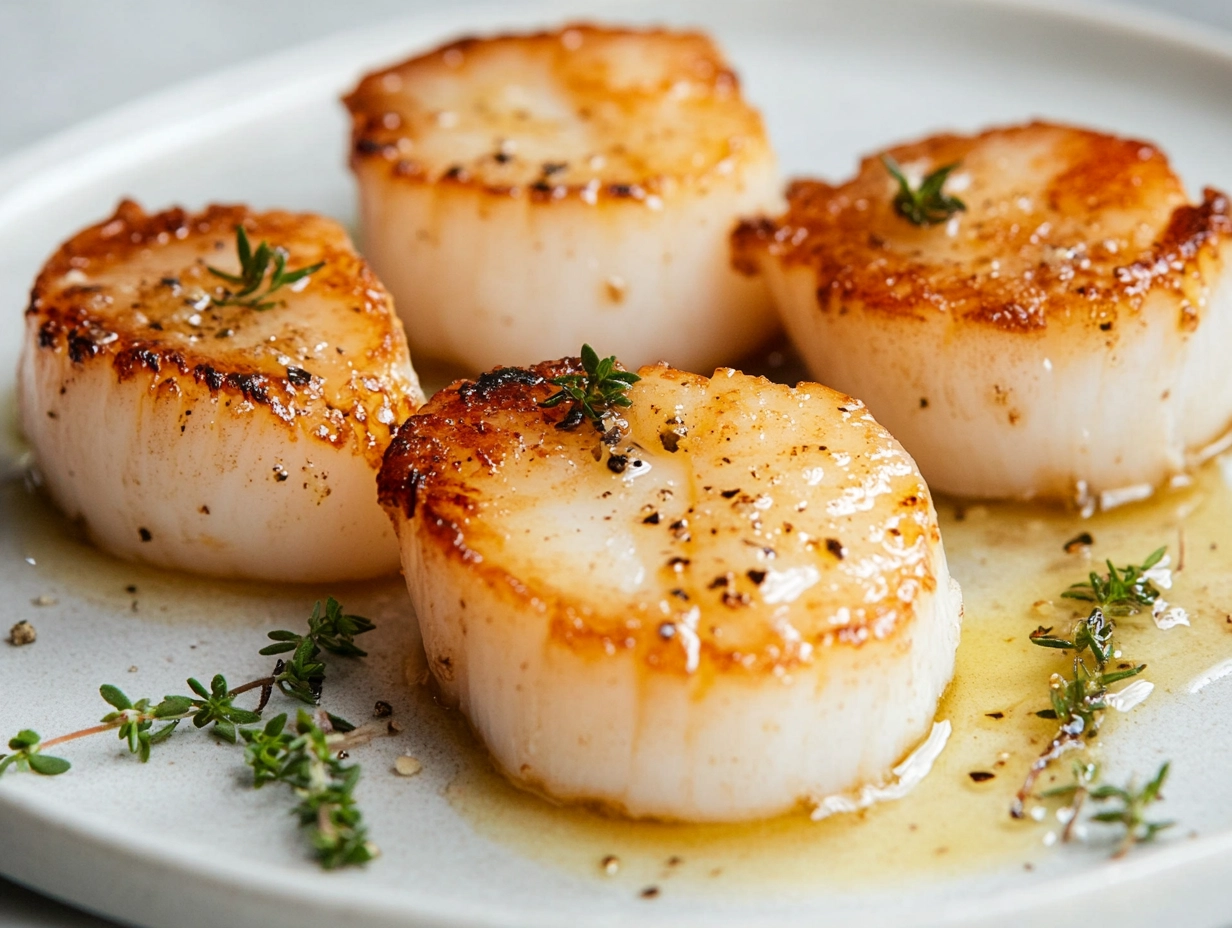

Pan-seared scallops are one of those dishes that look restaurant-level impressive but are surprisingly simple when done right.
The challenge isn’t the ingredients, it’s timing, heat, and restraint. This recipe is inspired by Gordon Ramsay’s pan-searing technique and adapted for home cooking.
With a beautifully caramelized crust on the outside and a tender, buttery center, these scallops come together in minutes.
This recipe proves that when seafood is cooked properly, you don’t need complicated sauces or long prep to create something truly special.
Why This Recipe Feels Like Comfort Food
Even though scallops are often seen as fancy, this recipe feels grounding and satisfying.
- The sizzling sound when scallops hit the pan is incredibly satisfying
- The cooking process is fast and focused
- The flavors are clean and balanced
- It feels indulgent without being heavy
This dish turns a simple protein into a calm, confidence-building cooking experience.
The Inspiration Behind This Recipe
Pan-seared scallops are a staple of classic restaurant menus, especially in French and British-influenced cooking. Gordon Ramsay’s version strips the dish down to its essentials, high heat, dry scallops, and precise timing. The goal isn’t to mask the scallops but to highlight their natural sweetness and delicate texture. Once you master this technique, it becomes a reliable go-to for both weeknight dinners and special occasions.
What Makes Gordon Ramsay’s Pan-Seared Scallops Different
This method focuses on discipline and simplicity.
- Scallops are thoroughly dried before cooking
- The pan is properly heated before adding scallops
- They are left undisturbed to form a crust
- Butter and aromatics are added at the right moment
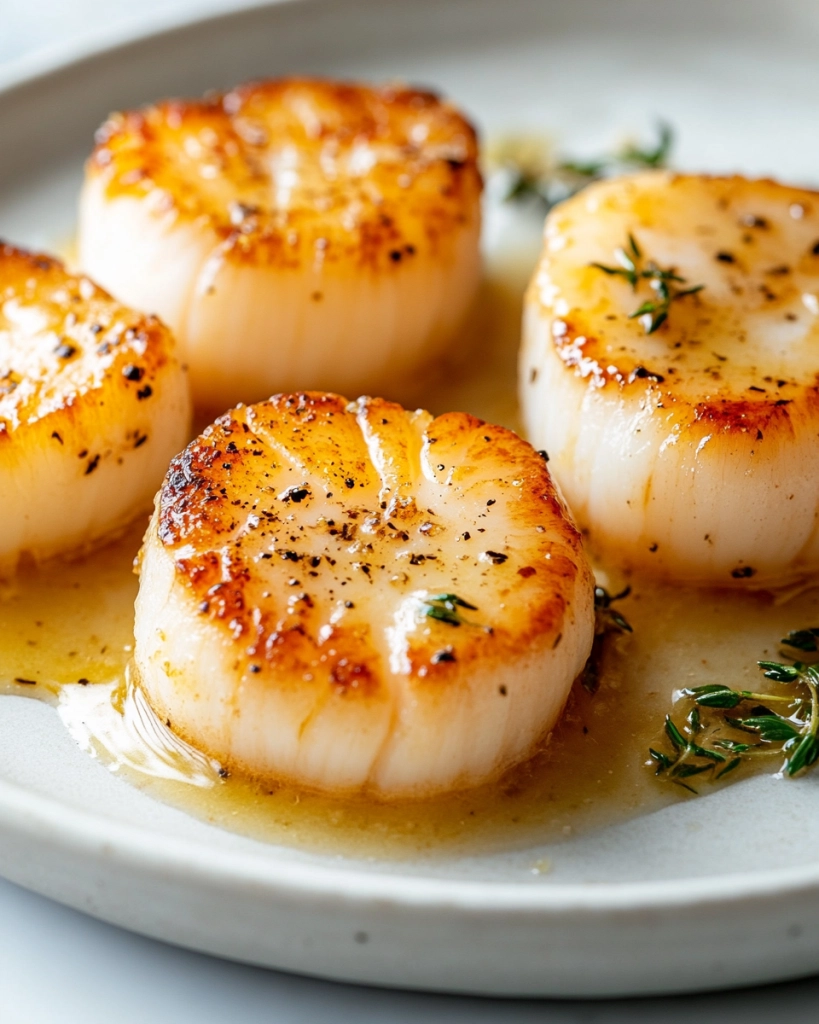
The result is golden, evenly seared scallops with a tender interior.
Ingredients Overview
This recipe relies on a short ingredient list, which means quality matters. Fresh scallops, good butter, and proper seasoning are all you need to let the natural flavor shine.
The key is treating the scallops gently and avoiding overcrowding the pan.
Ingredient Breakdown

Scallops
Use large, dry sea scallops if possible. They sear better and develop a deeper crust than wet scallops.
Butter
Butter adds richness and helps create a glossy finish when basting.
Olive Oil
Olive oil raises the smoke point, preventing the butter from burning.
Garlic
Adds subtle aromatic depth without overpowering the scallops.
Fresh Herbs
Thyme or parsley adds freshness and balance.
Salt and Pepper
Season simply to enhance, not overpower.
Spotlight on Scallops and Heat Control
Scallops
Scallops cook extremely fast. Overcooking causes them to become rubbery, so timing is everything.
Heat
High heat is essential to form a golden crust. A lukewarm pan will cause scallops to steam instead of sear.
Together, proper heat and patience create the signature restaurant-quality finish.
Smart Substitutions and Variations
- Use ghee instead of butter for higher heat
- Finish with lemon zest for brightness
- Add capers for a briny contrast
- Serve with a light beurre blanc or brown butter sauce
The core technique remains the same.
Equipment You’ll Need
- Heavy skillet (cast iron or stainless steel)
- Paper towels
- Tongs or fish spatula
- Plate for resting
- Spoon for basting
Step-by-Step Method
- Pat scallops completely dry with paper towels
- Season both sides with salt and pepper
- Heat a skillet over high heat until very hot
- Add olive oil, then carefully place scallops in the pan
- Do not move them for 1½–2 minutes
- Flip scallops once a golden crust forms
- Add butter, garlic, and herbs
- Baste scallops with melted butter
- Cook another 1–2 minutes until just opaque
- Remove from heat and serve immediately
How to Know the Scallops Are Done
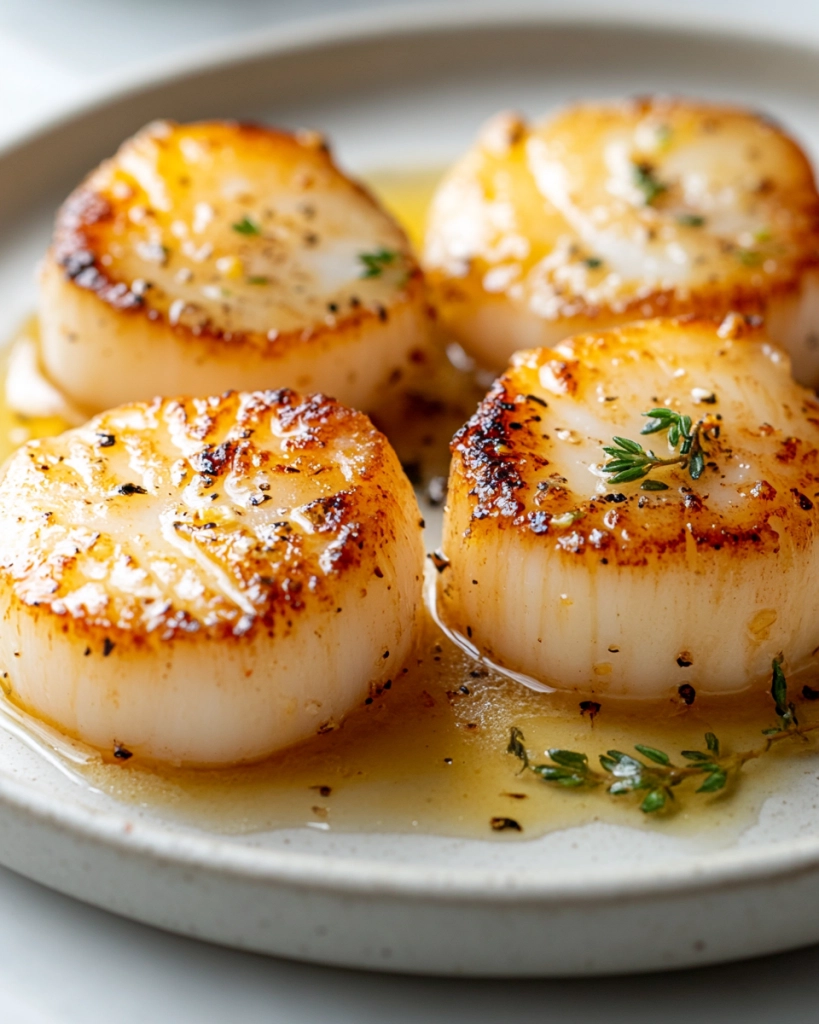
- Golden crust on the outside
- Slightly translucent center
- Firm but springy to the touch
- No strong fishy smell
Overcooked scallops will feel tight and dry.
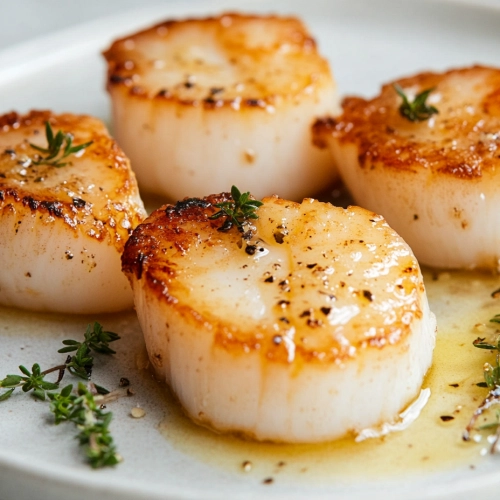
Gordon Ramsay Pan-Seared Scallops Recipe
Equipment
- Heavy skillet (cast iron or stainless steel)
- Paper towels
- Tongs or fish spatula
- Plate for resting
- Spoon for basting
Ingredients
- 12 large sea scallops
- Salt and black pepper to taste
- 1 tbsp olive oil
- 2 tbsp butter
- 1 garlic clove smashed
- Fresh thyme or parsley
Instructions
- Pat scallops completely dry with paper towels
- Season both sides with salt and pepper
- Heat a skillet over high heat until very hot
- Add olive oil, then carefully place scallops in the pan
- Do not move them for 1½–2 minutes
- Flip scallops once a golden crust forms
- Add butter, garlic, and herbs
- Baste scallops with melted butter
- Cook another 1–2 minutes until just opaque
- Remove from heat and serve immediately
Notes
Tips and Tricks for Best Results
- Dry scallops thoroughly before cooking
- Use high heat and don’t overcrowd the pan
- Flip only once
- Serve immediately for best texture
Common Mistakes and How to Fix Them
No golden crust
The pan wasn’t hot enough or scallops were too wet.
Scallops are rubbery
They were overcooked. Reduce cooking time.
Burnt butter
Add butter after flipping, not at the start.
Scallops stuck to the pan
Wait longer — they release naturally once seared.
What to Serve With Pan-Seared Scallops
- Creamy risotto
- Mashed potatoes
- Garlic spinach
- Vegan Tomato Pasta
- Green salad
Make-Ahead and Storage Tips
- Scallops are best cooked fresh
- Avoid reheating if possible
- If needed, reheat gently in a pan with butter
- Store leftovers in an airtight container for up to 1 day
Frequently Asked Questions
1. Should scallops be rinsed before cooking?
No, just pat them dry thoroughly.
2. What type of scallops are best for searing?
Large, dry sea scallops.
3. Why shouldn’t I move scallops while cooking?
Moving them prevents proper crust formation.
4. Can I use frozen scallops?
Yes, but thaw completely and dry well.
5. How long do scallops take to cook?
About 3–4 minutes total.
6. Can I cook scallops without butter?
Yes, but butter adds flavor and richness.
7. What pan works best?
Cast iron or stainless steel.
8. How do I avoid overcooking?
Remove scallops as soon as they turn opaque.
9. Can I add sauce?
Yes, keep it light to avoid overpowering.
10. Is this a restaurant technique?
Yes, this classic method is widely used and refined by chefs like Gordon Ramsay.

hi there,
The Freshman Cook started as a place to keep track of recipes I wanted to make again. Somewhere along the way, it grew into a collection of meals that friends requested, desserts that disappeared too quickly, and weeknight dinners that made life a little easier.
know more