
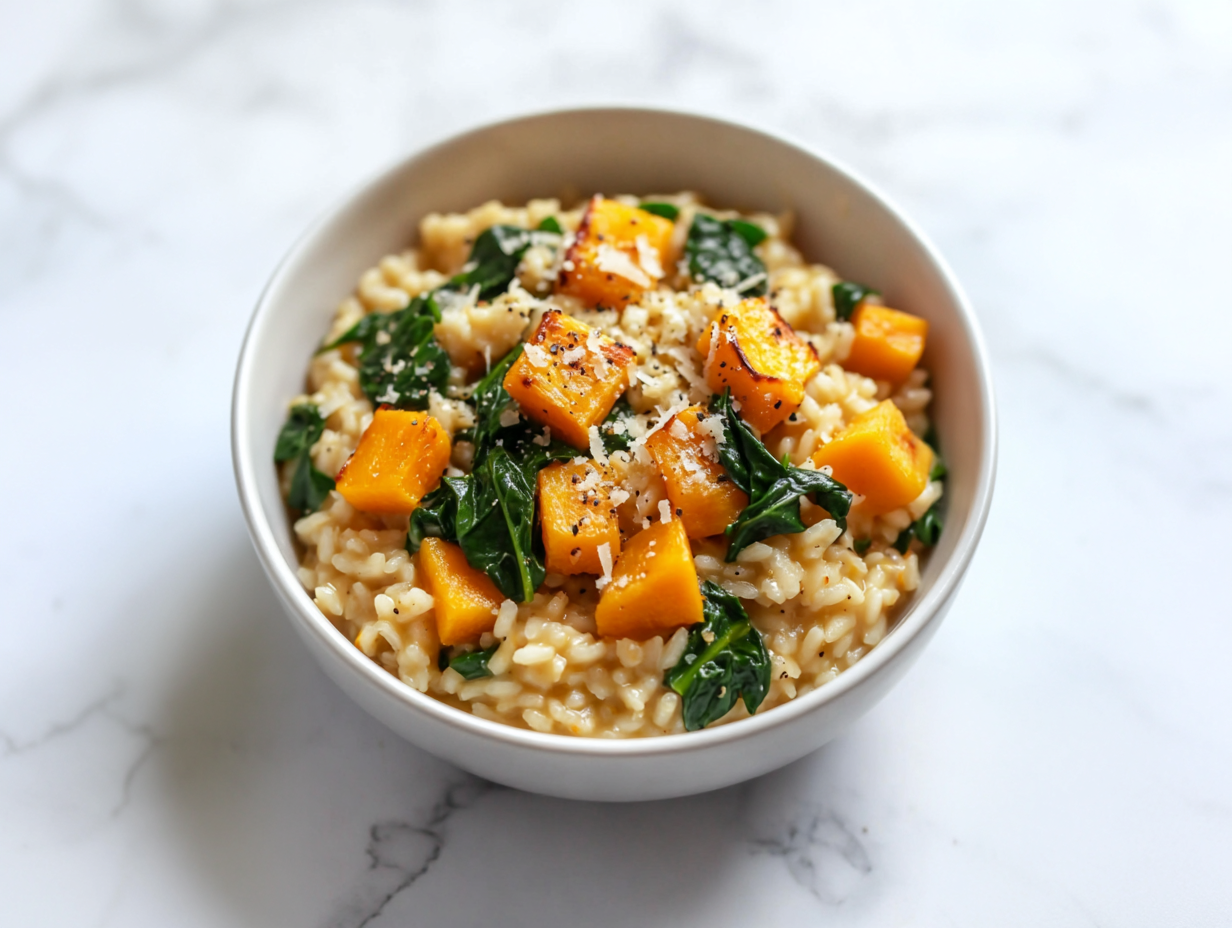

Butternut Squash and Spinach Risotto is a cozy vegetarian main dish made with creamy Arborio rice, roasted butternut squash, fresh spinach, Parmesan, and warm vegetable broth. It is a satisfying way to bring seasonal vegetables into a classic stovetop meal.
The roasted squash adds a naturally sweet contrast to the savory rice, while spinach brings freshness and color. Slowly adding warm broth gives the Arborio rice its signature creamy consistency while keeping the grains tender.
Why You’ll Reach for This Recipe Again
- Seasonal Main Dish: Butternut squash and spinach make this a natural choice for fall cooking.
- Vegetarian Friendly: The recipe provides a satisfying meatless option for lunch or dinner.
- Simple Ingredients: A short list of familiar ingredients creates a complete dish.
- One-Pan Risotto: Aside from roasting the squash, the risotto cooks in a single heavy-bottomed saucepan.
- Beginner Accessible: The gradual broth method is simple once you understand the timing.
- Freshly Made: The recipe is ready in about 45 minutes, making it suitable when you want a homemade meal without a long cooking process.
Ingredient Insights and Swaps

- Butternut Squash: Choose a firm squash with smooth skin and no soft spots. Cut the cubes evenly so they roast at roughly the same rate.
- Arborio Rice: Arborio is ideal for risotto because its starch helps create the creamy consistency as it cooks. Avoid substituting with standard long-grain rice if you want the classic texture.
- Vegetable Broth: Keep the broth warm while preparing the risotto. Adding cold liquid can interrupt the cooking process and make it harder to maintain a steady simmer.
- Fresh Spinach: Roughly chopped fresh spinach wilts quickly when folded into the finished risotto. Baby spinach is also convenient because its leaves are already tender.
- Parmesan Cheese: Freshly grated Parmesan melts more smoothly into hot risotto. For a vegetarian preparation, check the cheese label if that distinction matters to you.
- Butter and Olive Oil: Butter provides richness in the risotto base, while olive oil helps the squash roast. Use a mild olive oil so the roasted vegetable remains the focus.
Chef’s Tip: Keep the broth warm and add it one ladle at a time, stirring steadily as the rice absorbs each addition. This gradual process helps the Arborio rice release its starch and develop the creamy consistency risotto is known for.
Butternut Squash and Spinach Risotto
Equipment
- Baking sheet
- Large heavy-bottomed saucepan
- Wooden spoon
- Chef's knife
- Cutting Board
- Ladle
Ingredients
- 1 lb butternut squash peeled and cubed
- 1 tablespoon olive oil for roasting
- 1 small yellow onion finely chopped
- 2 cloves garlic minced
- 1 1/2 cups arborio rice rinsed
- 4 cups vegetable broth warm, for gradual addition
- 2 cups fresh spinach roughly chopped
- 2 tablespoons butter
- 1/4 cup Parmesan cheese grated
- to taste Salt and pepper
Instructions
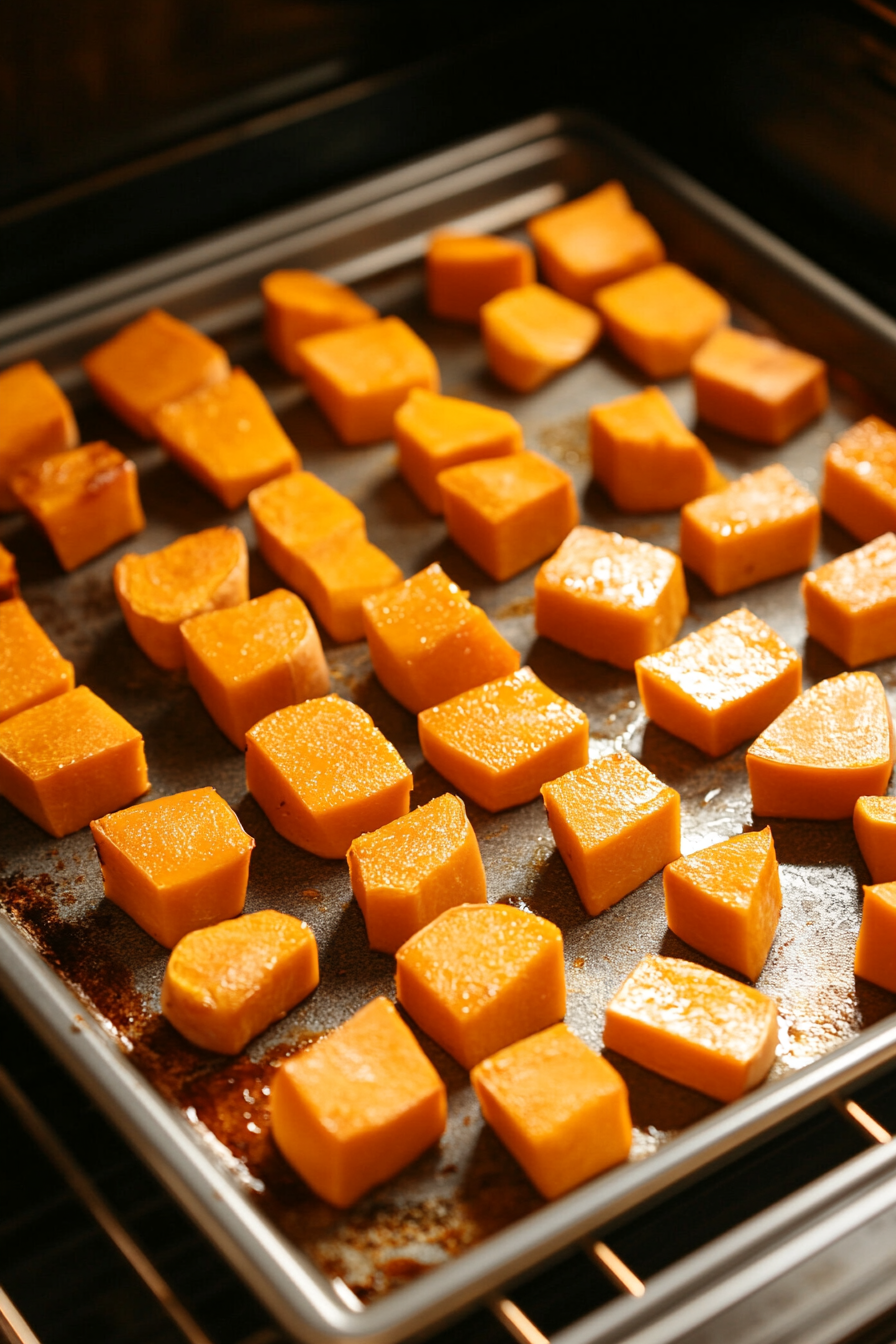
- Preheat your oven to 400°F (200°C). Spread cubed butternut squash on a baking sheet, drizzling with olive oil, and toss to coat evenly. Roast for about 25-30 minutes until tender and caramelized around the edges.
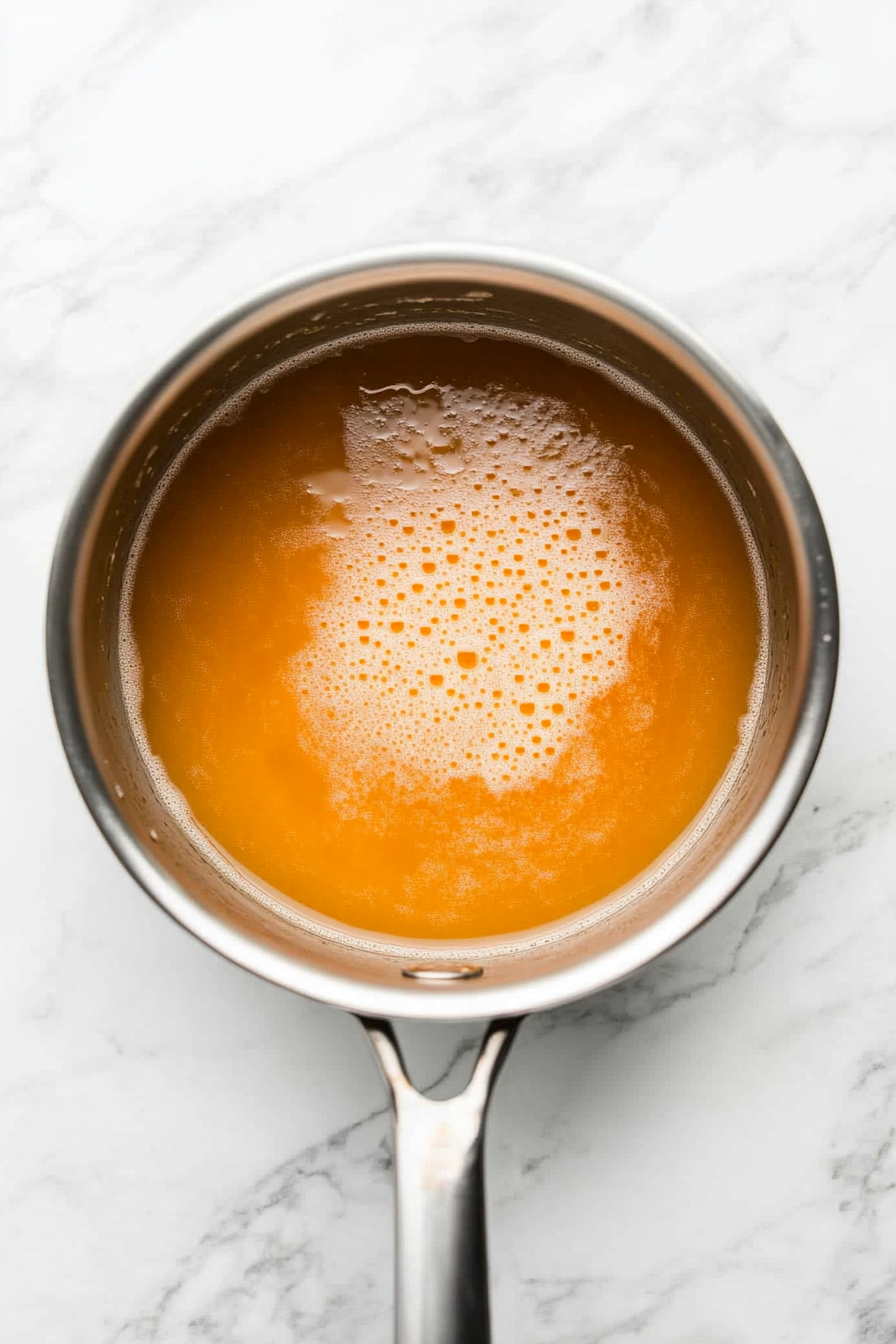
- While the squash roasts, pour the vegetable broth into a saucepan and gently warm it over low heat. Keep it simmering so it’s ready for gradual addition.
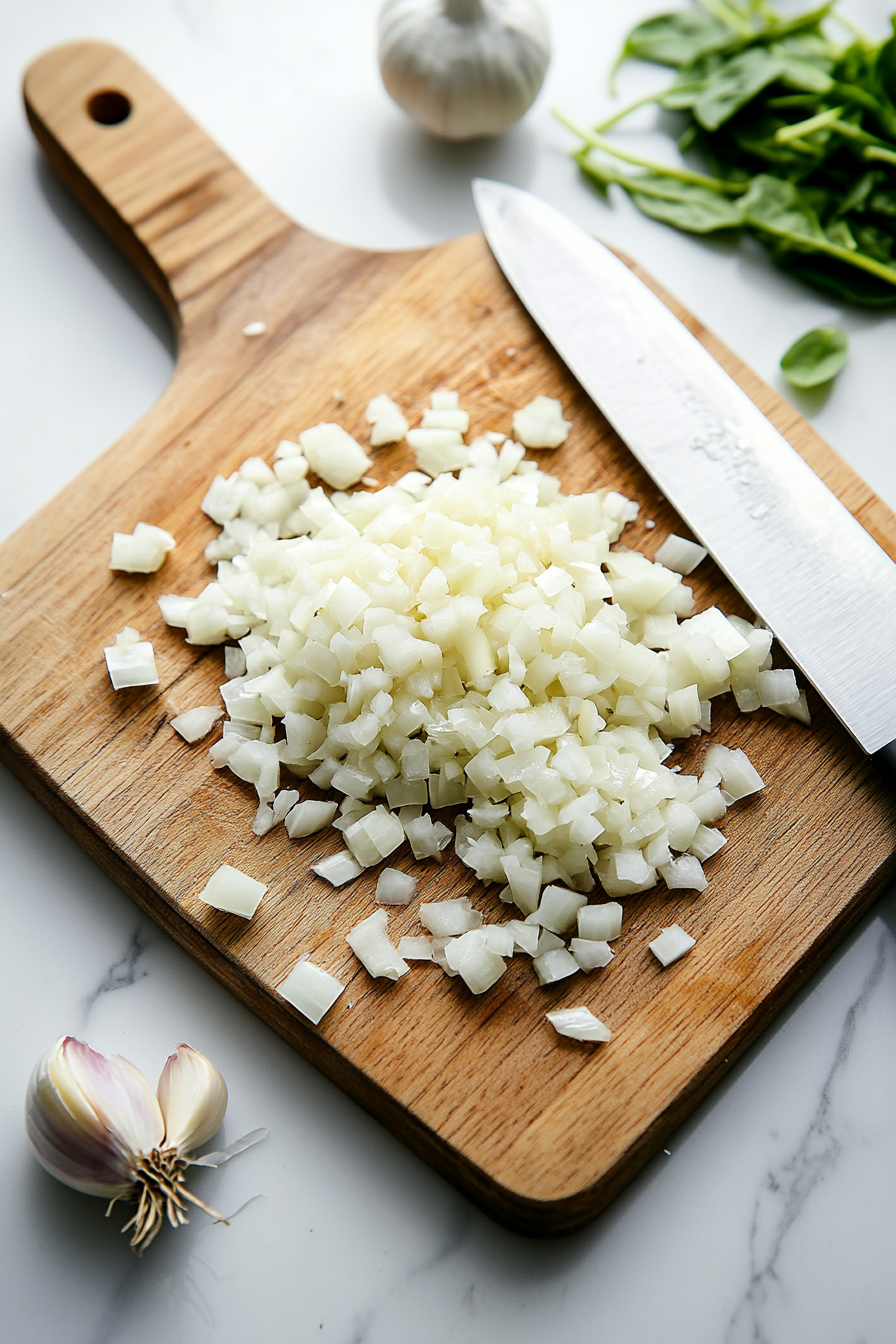
- Finely chop the onion and mince the garlic, preparing to build the base of the risotto.
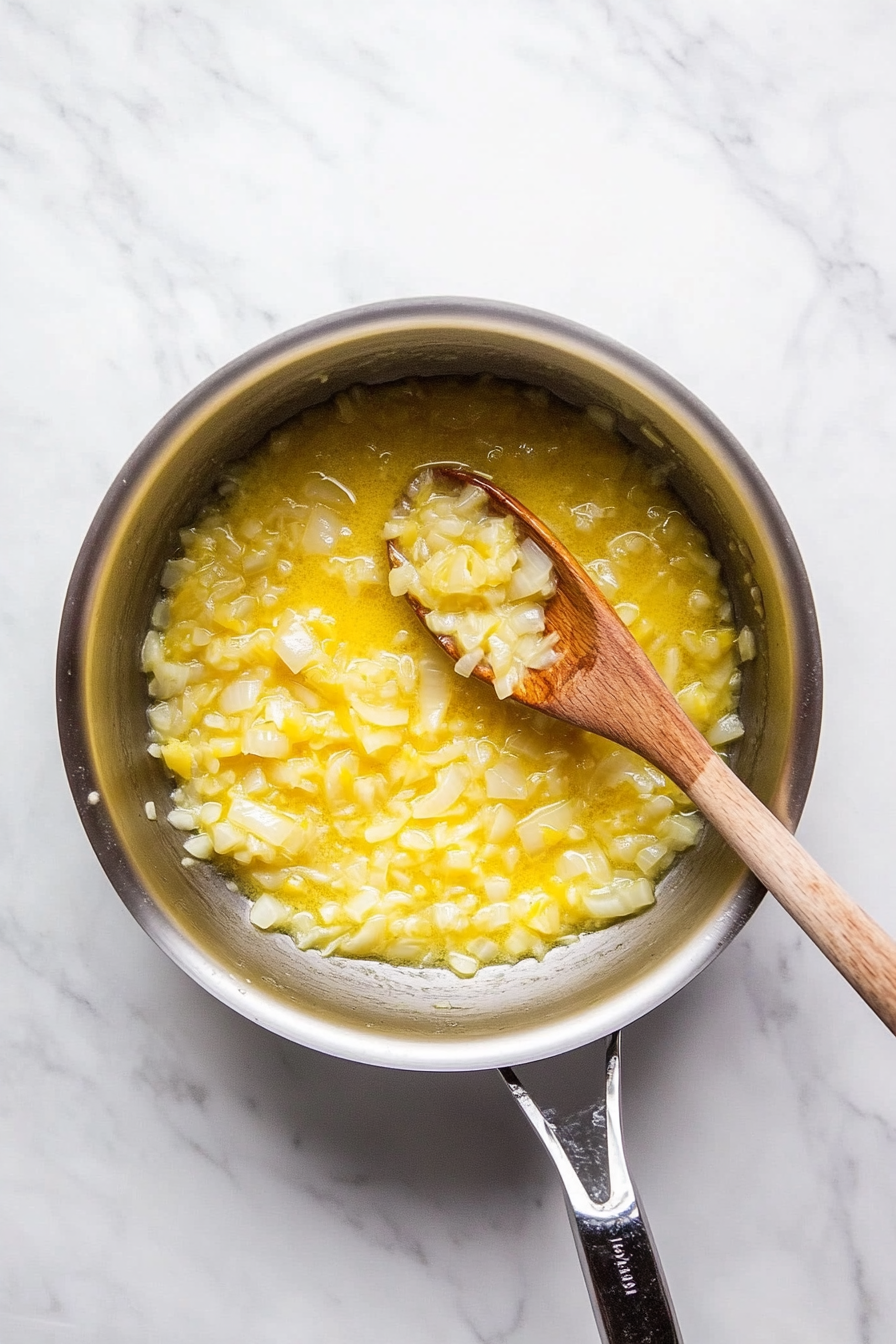
- In a large heavy-bottomed saucepan, melt the butter over medium heat. Add the chopped onion and cook, stirring often, until translucent and fragrant, about 3-4 minutes.
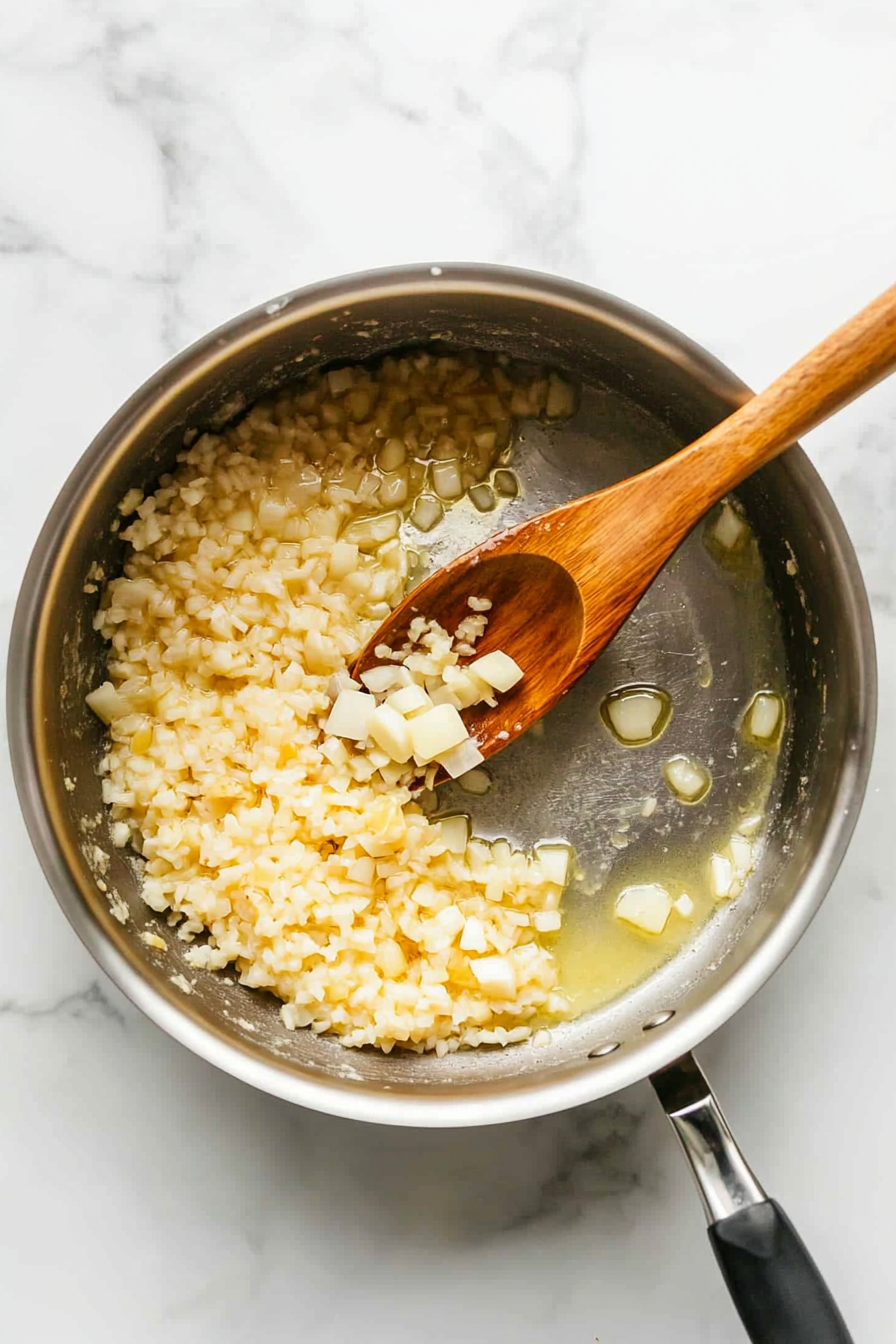
- Add the minced garlic to the pan and cook for another 30 seconds until it releases a warm aroma.
- Stir in the rinsed arborio rice, allowing it to toast slightly and become translucent around the edges, about 2 minutes.
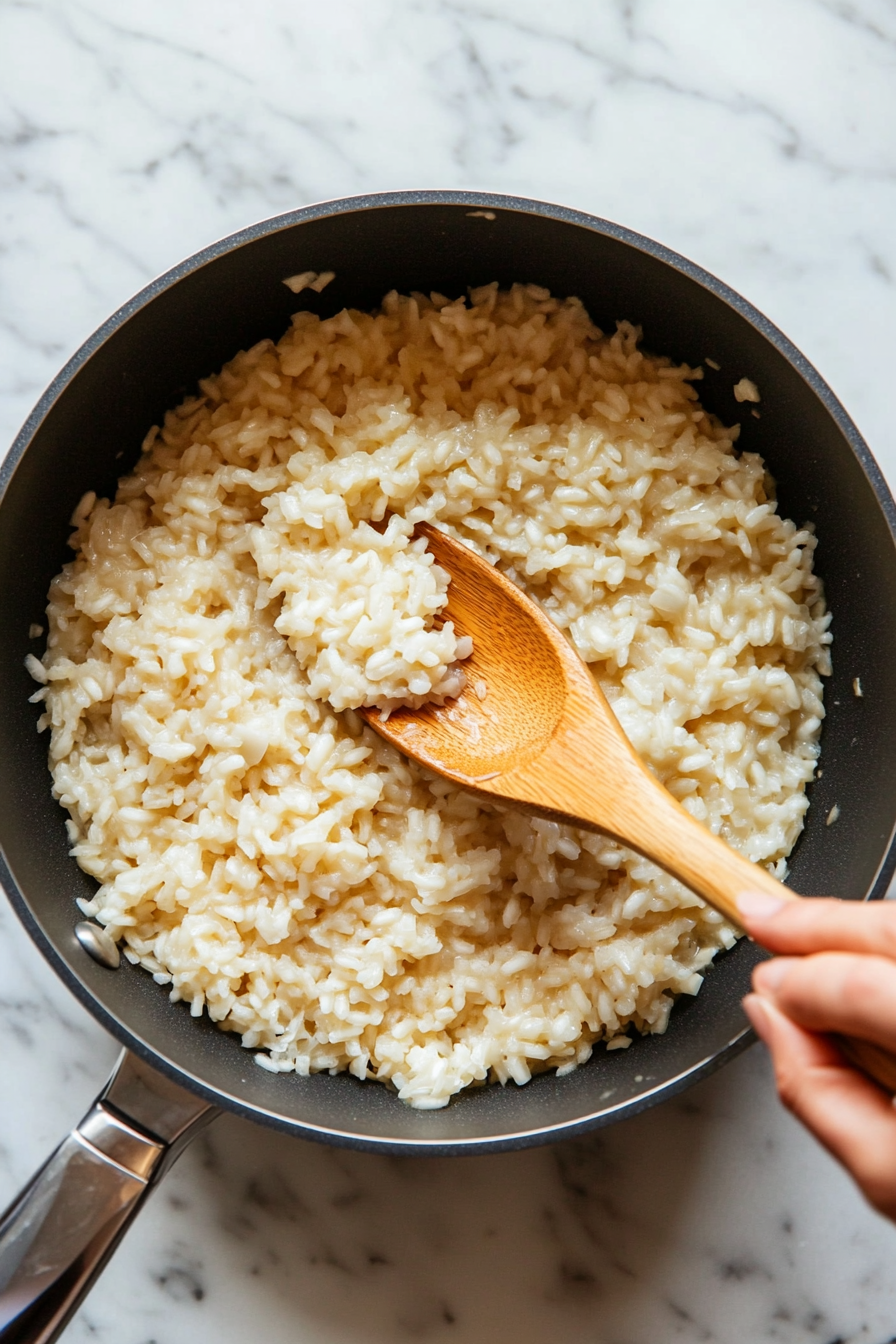
- Pour in a ladle of warm broth, stirring continuously until the liquid is mostly absorbed, encouraging a creamy texture to form.
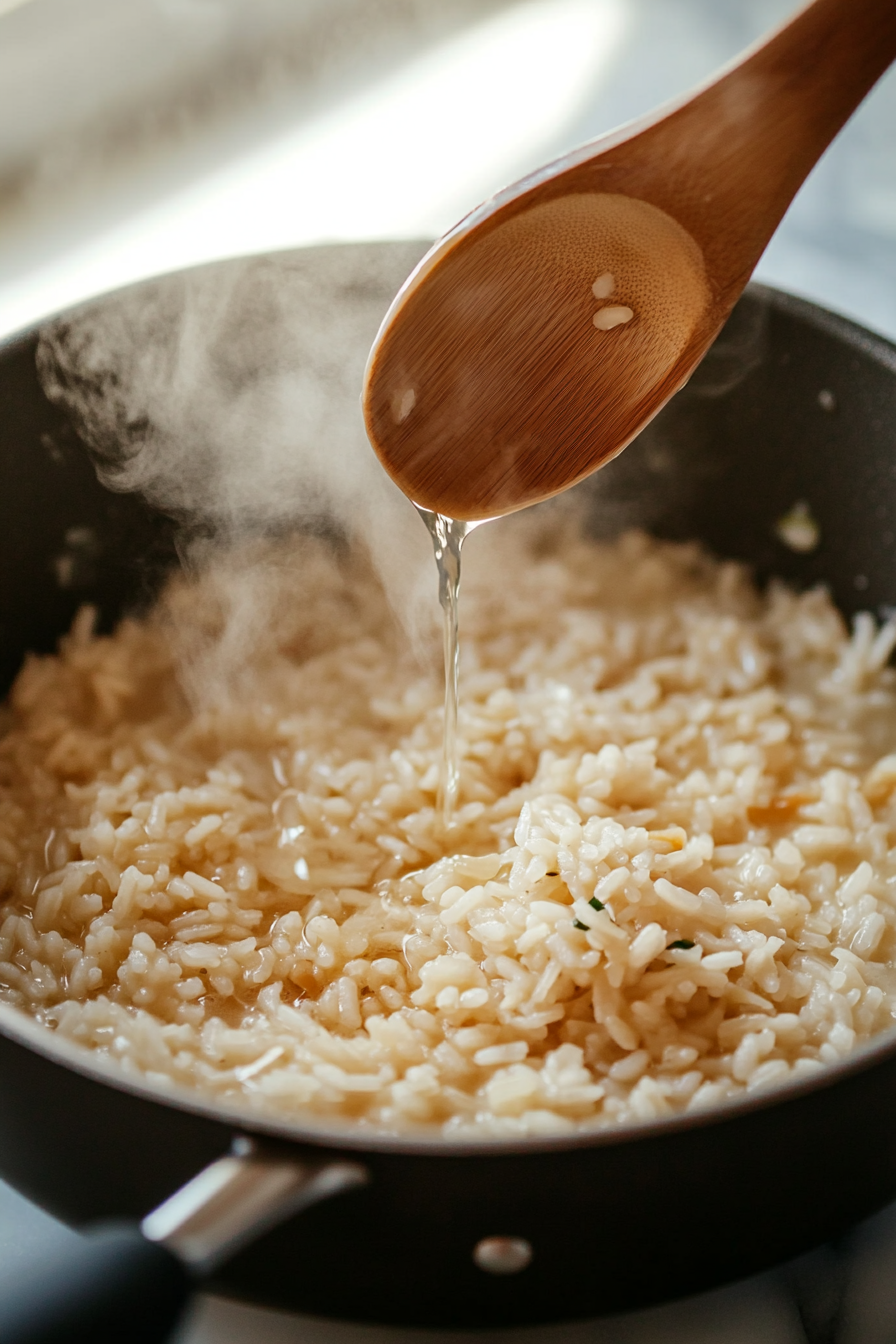
- Continue adding the broth in small ladles, stirring steadily and waiting for each addition to be absorbed before adding more, for about 20 minutes or until the rice is tender and creamy.
- Gently fold in the roasted butternut squash pieces and chopped spinach, stirring until the spinach wilts beautifully into the mixture and everything is heated through.
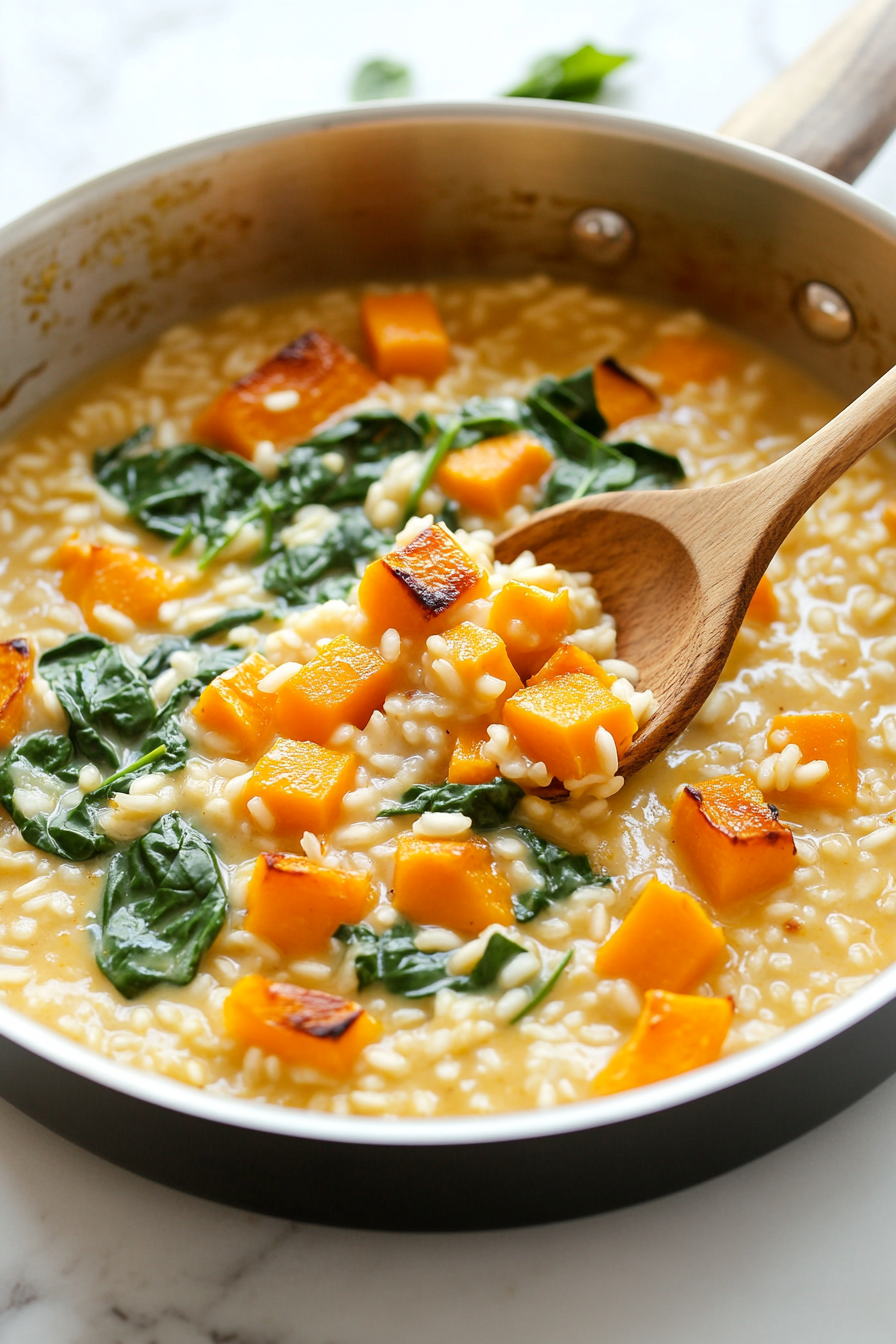
- Remove the risotto from heat, then stir in grated Parmesan cheese. Season with salt and pepper to taste, adjusting as needed.
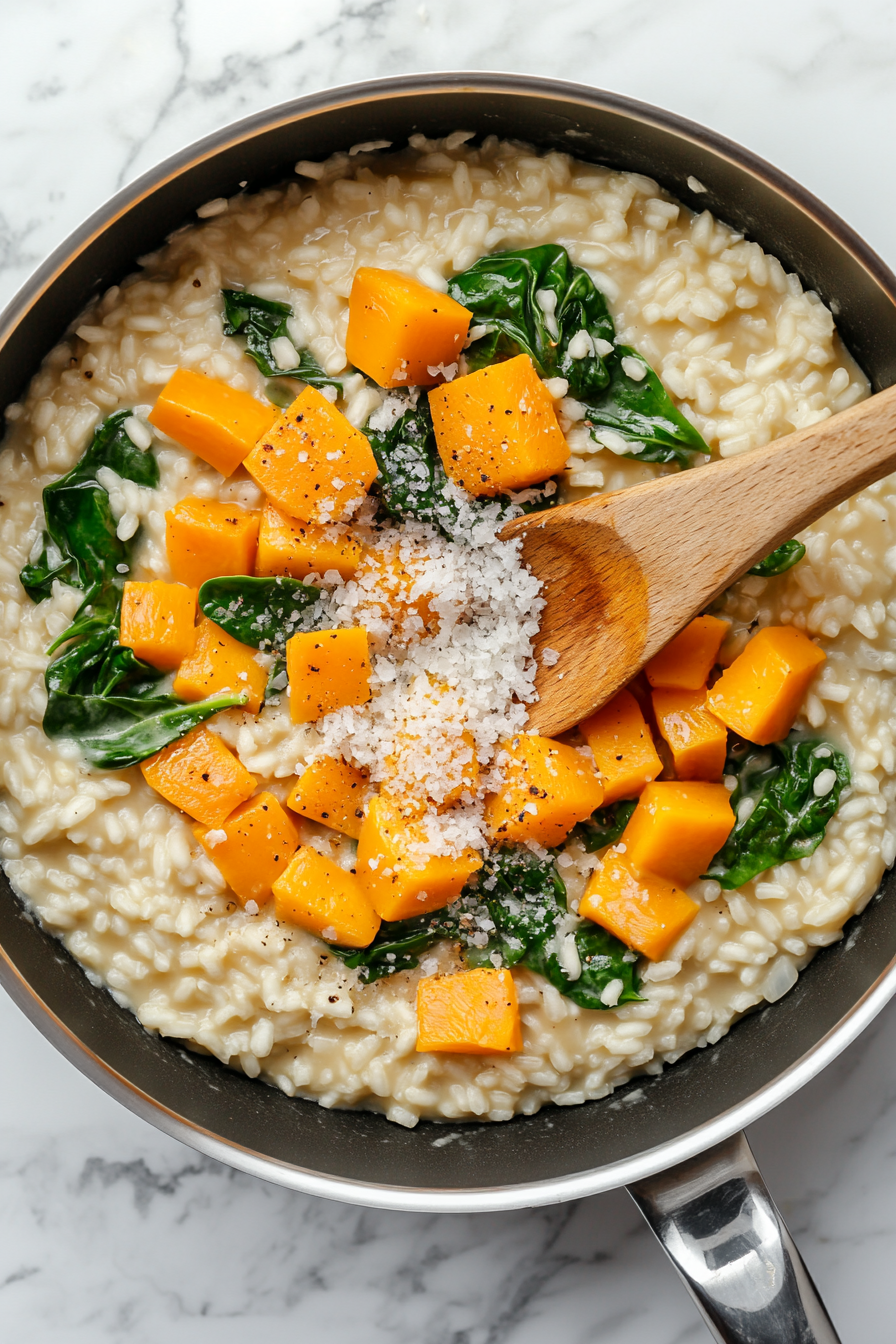
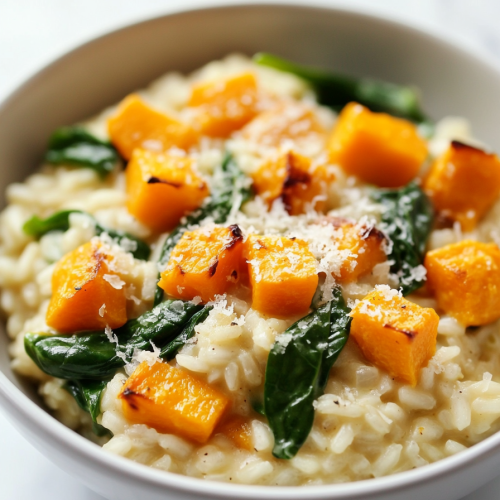
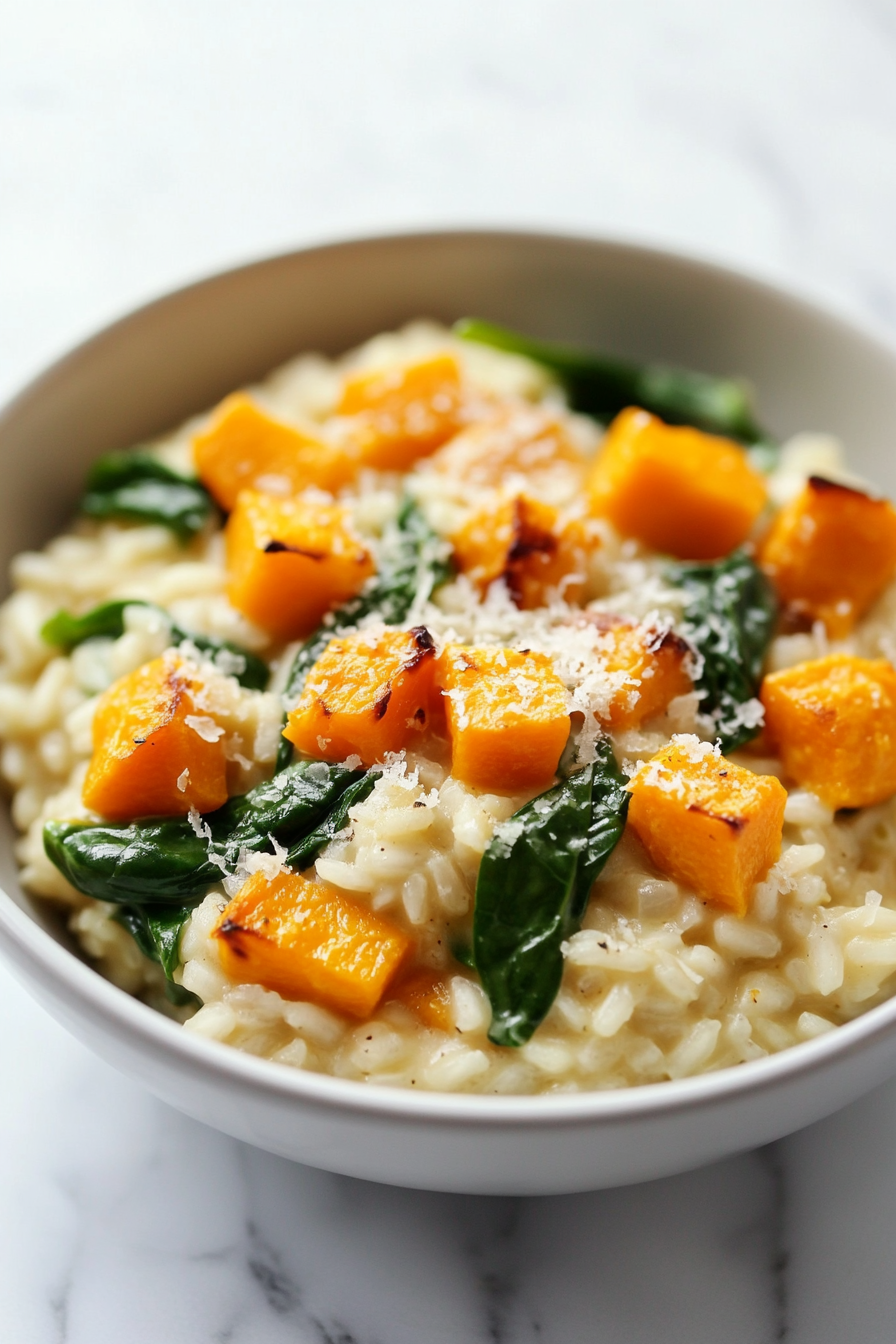
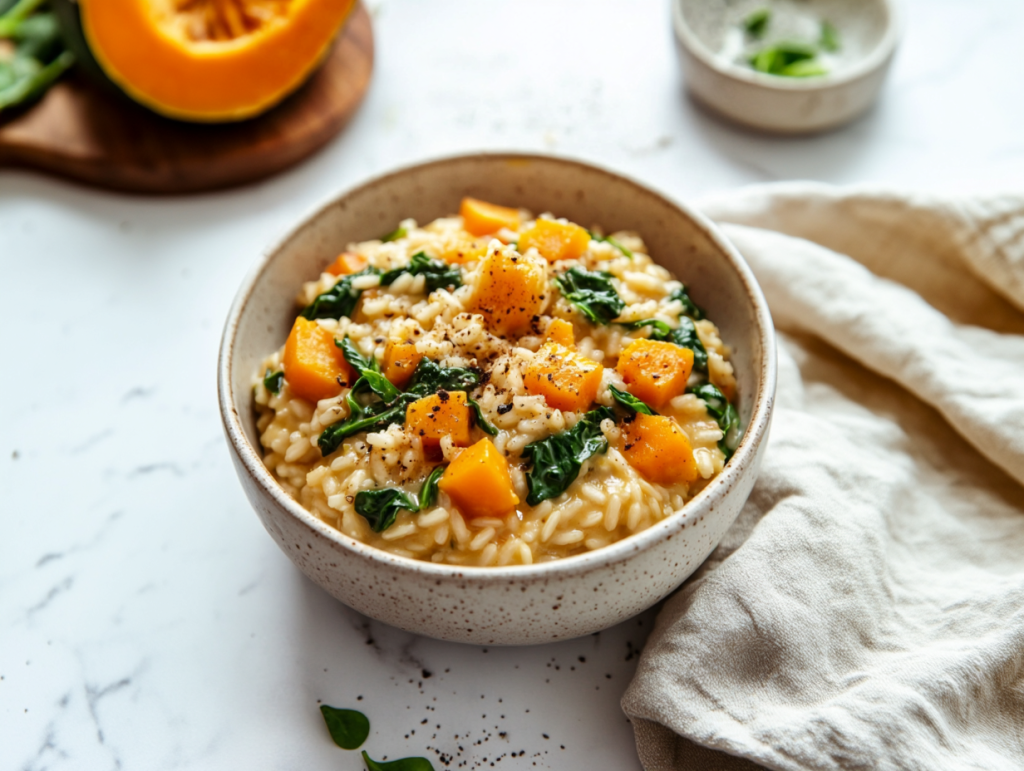
- Serve immediately, garnished with additional Parmesan if desired. The risotto should be creamy, with tender rice, caramelized squash, and vibrant green spinach, ready to enjoy hot.
Nutrition Information
| Nutrient | Amount |
|---|---|
| Calories | 380 kcal |
| Carbohydrates | 60 g |
| Protein | 10 g |
| Fat | 13 g |
| Fiber | 5 g |
| Sugar | 7 g |
| Sodium | 690 mg |
Common Mistakes to Avoid
- Cold Broth: Adding chilled broth can lower the temperature of the rice and interfere with consistent cooking.
- Adding Too Much Broth at Once: Risotto benefits from gradual additions, so give the rice time to absorb each ladle before adding more.
- Neglecting the Stirring: Stir regularly while the broth is being absorbed to help distribute the rice and release its starch.
- Overcooking the Rice: Risotto should be tender while retaining some structure. Avoid cooking it until the grains completely lose their shape.
- Burning the Garlic: Garlic needs only about 30 seconds before the rice is added, so keep the heat controlled.
- Letting the Finished Risotto Sit: Risotto continues to thicken as it stands, so serve it immediately after finishing for the intended consistency.
Delicious Variations You Should Try
- Kale Variation: Replace some of the spinach with finely chopped kale.
- Mushroom Version: Add sautéed mushrooms for a deeper savory element.
- Sage and Squash: Add chopped fresh sage to complement the roasted butternut squash.
- Goat Cheese Finish: Replace or supplement the Parmesan with crumbled goat cheese.
- Walnut Addition: Sprinkle toasted chopped walnuts over individual portions for crunch.
- Spicy Version: Add a pinch of red pepper flakes while cooking the onion and garlic.
- Lemon Finish: Add a little fresh lemon zest after cooking for a brighter flavor.
How to Serve This Dish?
- Crispy Skin Salmon
- Grilled Chicken
- Stuffed Chicken Breasts
- Lemon Garlic Shrimp
- Crustless Mini Quiche
Best Ways to Store Leftovers
- Refrigerator Storage: Transfer cooled risotto to an airtight container and refrigerate for up to 3 days.
- Individual Portions: Divide leftovers into smaller containers for convenient single servings.
- Cooling: Allow the risotto to cool appropriately before transferring it to the refrigerator.
- Container Choice: Use airtight containers with secure lids to protect the rice from refrigerator odors.
- Freshness Tip: Keep additional Parmesan or fresh garnishes separate and add them when serving.
Frequently Asked Questions
- Why is Arborio rice used for risotto?
Arborio rice contains a high amount of starch that is gradually released during cooking, helping create risotto’s characteristic creamy consistency. - Should Arborio rice be rinsed for risotto?
The recipe specifically calls for rinsed Arborio rice. Follow the recipe as written and drain it well before adding it to the saucepan. - Why does the broth need to stay warm?
Warm broth helps maintain the cooking temperature when it is gradually added to the rice, allowing the risotto to continue cooking steadily. - How often should I stir risotto?
Stir steadily as each addition of broth is absorbed. This helps the rice cook evenly and encourages the release of starch. - What does properly cooked risotto look like?
The rice should be tender and creamy while still maintaining some structure. It should not resemble dry, fluffy rice. - When should the spinach be added?
Add the chopped spinach with the roasted squash near the end of cooking. It only needs a short time to wilt and heat through. - Why is Parmesan added after removing the risotto from heat?
Stirring Parmesan into the hot risotto off the heat allows it to melt into the rice without exposing the cheese to prolonged direct heat. - Why does risotto become thicker as it sits?
The rice continues absorbing moisture after cooking, so the consistency naturally becomes thicker. This is why risotto is best served immediately.


hi there,
The Freshman Cook started as a place to keep track of recipes I wanted to make again. Somewhere along the way, it grew into a collection of meals that friends requested, desserts that disappeared too quickly, and weeknight dinners that made life a little easier.
know more