
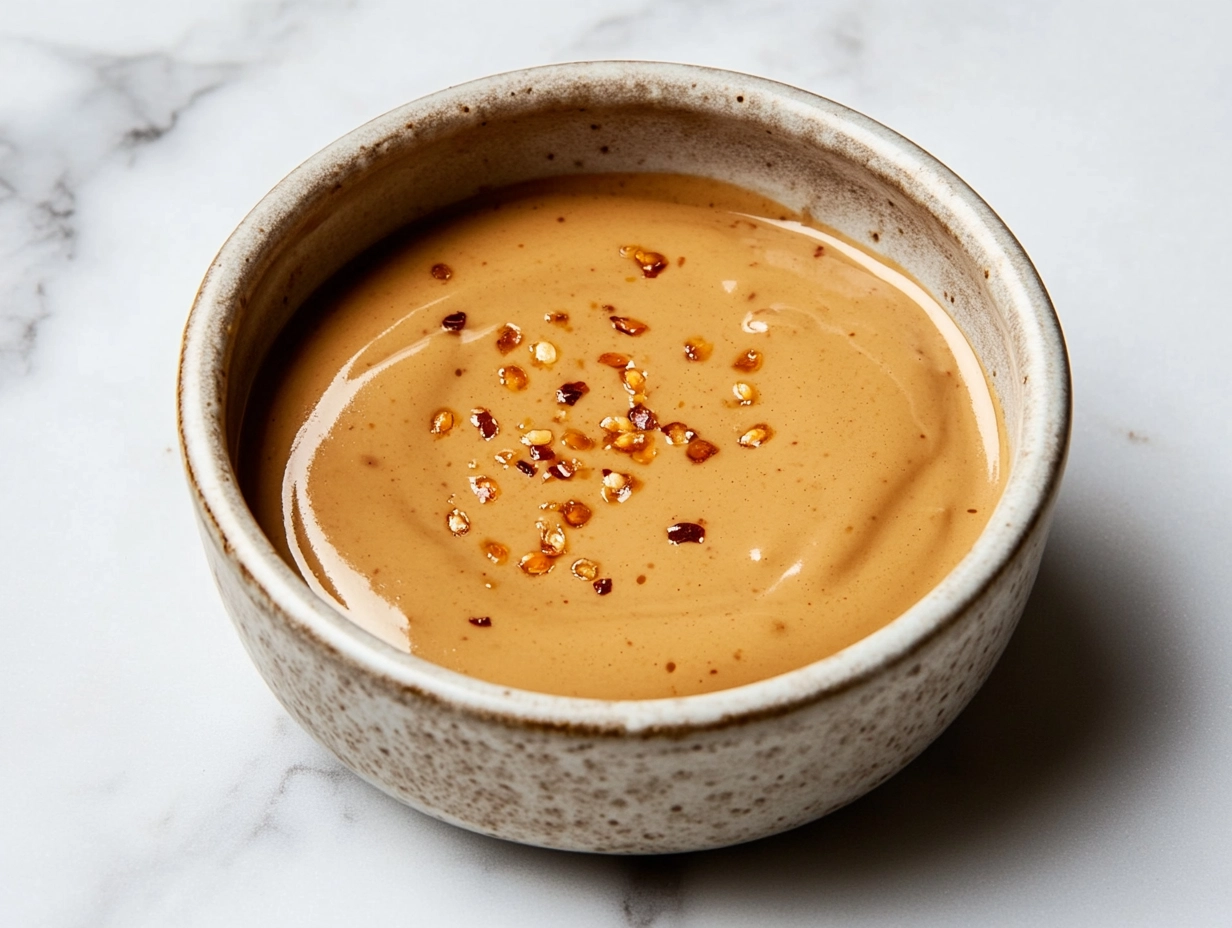

Peanut butter isn’t just for sweet snacks. When turned savory, it transforms into a rich, umami-packed sauce that can dress up almost anything.
I stumbled upon this idea when I was out of my usual condiments and needed something quick to toss with roasted veggies. It turned out to be a revelation—creamy, spicy, nutty, and deeply satisfying.
This sauce became my go-to for lazy weeknights, jazzing up everything from grilled chicken to steamed greens. It’s like a secret handshake among pantry staples, unexpected but always welcome.
The Unexpected Use of Savory Peanut Butter Sauce as a Versatile Pantry Staple
Why I Keep This Sauce in My Kitchen
- I love how this sauce surprises people—it’s nutty, spicy, and deeply flavorful.
- It reminds me of childhood snacks but with a grown-up twist.
- I feel proud whenever I whip this up—it’s so quick and brings a punch of flavor.
- It’s my secret weapon when I want to elevate a simple meal without fuss.
My Inspiration for a Versatile Saucy Staple
I once made this sauce on a whim, inspired by a craving for something rich and spicy. It turned out to be surprisingly versatile. The key was balancing the saltiness of soy with the richness of peanut butter, and adding a dash of acidity for brightness. Since then, I’ve kept tweaking it—sometimes with a squeeze of lime, sometimes with a dash of sriracha. It’s a flexible, forgiving recipe.
A Short History of Savory Peanut Butter Sauce
- Peanut sauce has roots in Southeast Asian cuisines, especially Thai and Indonesian.
- Savory peanut sauces date back centuries, originally used in satays and salads.
- The first commercial peanut butter was developed in the 1890s, but savory uses took longer to popularize.
- In recent years, chefs have revived it as a versatile pantry staple for everything from bowls to wraps.
Deep Dive into Key Ingredients for Savory Peanut Sauce

- Peanut Butter: First, creamy natural peanut butter yields a smooth sauce. For a chunkier bite, use crunchy.
- Soy Sauce: Adds umami and saltiness. Light soy keeps it balanced; dark soy deepens color and richness.
- Garlic: My go-to is fresh minced garlic, but garlic powder works in a pinch. It’s the pungent punch.
- Rice Vinegar: Brightens everything. Lemon juice can replace it, but vinegar offers a cleaner tang.
- Sesame Oil: Just a teaspoon adds smoky depth. Skip if you prefer a milder, nutty flavor.
Spotlight on Peanut Butter & Soy Sauce
Peanut Butter:
- Creamy peanut butter: It’s the foundation—smooth, rich, and slightly sweet. Toasted varieties add extra depth.
- Soy sauce: It’s the salty backbone—adds umami, so use a good quality one for best flavor.
Soy Sauce:
- Salty, savory, with a slight fermentation note that complements the nuttiness.
- Choose a quality soy for a richer, less overwhelmed flavor.
- It’s the salt and umami that makes the sauce pop.
Substitutions for Dietary Needs and Flavor Tweaks
- Dairy-Free: Use coconut aminos instead of soy for a milder, sweeter profile.
- Gluten-Free: Tamari is a great soy-free alternative that’s gluten-free.
- Vegan: Skip fish sauces—stick with soy and add a squeeze of lemon for brightness.
- Sweetener: Honey or maple syrup can replace sugar for a softer, floral sweetness.
- Acid: Lime juice can substitute rice vinegar—adds a fresh, citrusy zing.
Equipment & Tools
- small saucepan: cooking and simmering the sauce
- whisk: blending ingredients smoothly
- measuring spoons: accurate ingredient measurement
Step-by-Step Guide to Making Savory Peanut Butter Sauce
- Gather your tools: a small saucepan, a whisk, and a measuring spoon.
- Warm the peanut butter in the microwave for 20 seconds or so to loosen it.
- Add soy sauce, rice vinegar, a dash of sesame oil, and minced garlic to the peanut butter.
- Pour in warm water gradually, whisking constantly until smooth and pourable.
- Simmer gently over low heat for about 2 minutes, stirring often.
- Taste and adjust salt or acidity. If too thick, add more warm water, a tablespoon at a time.
- Remove from heat, stir in chili flakes if you like heat, and serve warm or at room temperature.
Let the sauce rest for 5 minutes off heat to thicken slightly before serving. Drizzle over dishes or serve as a dipping sauce.
How to Know It’s Done
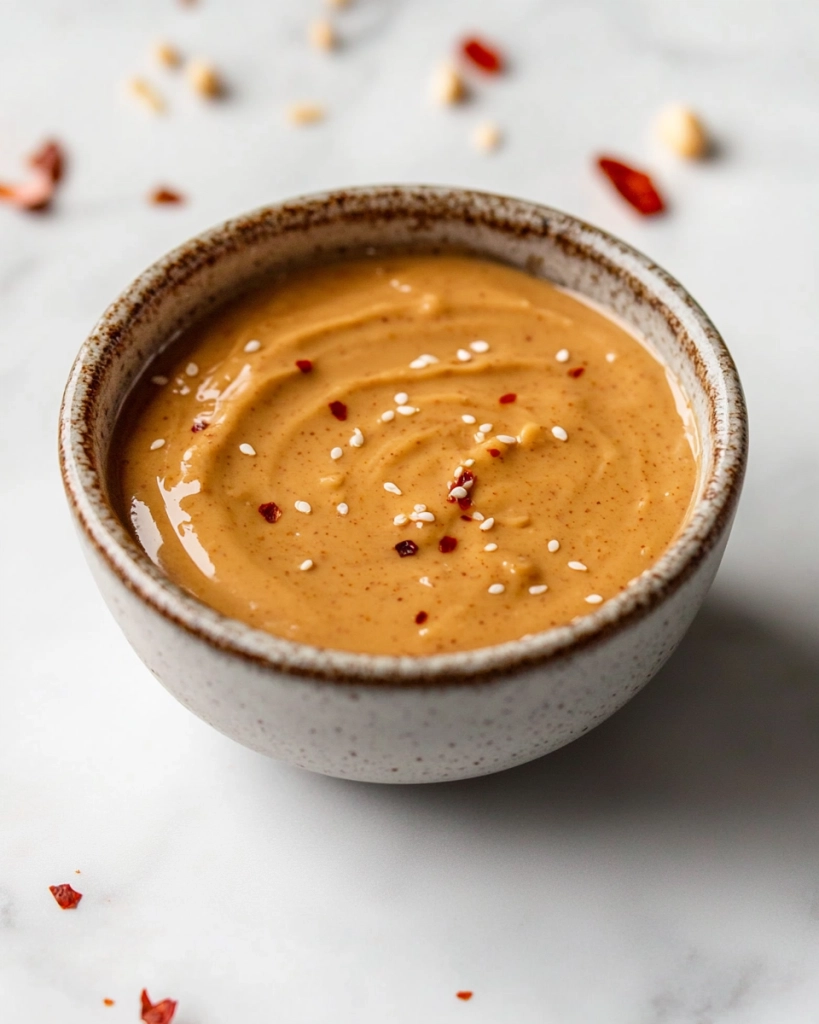
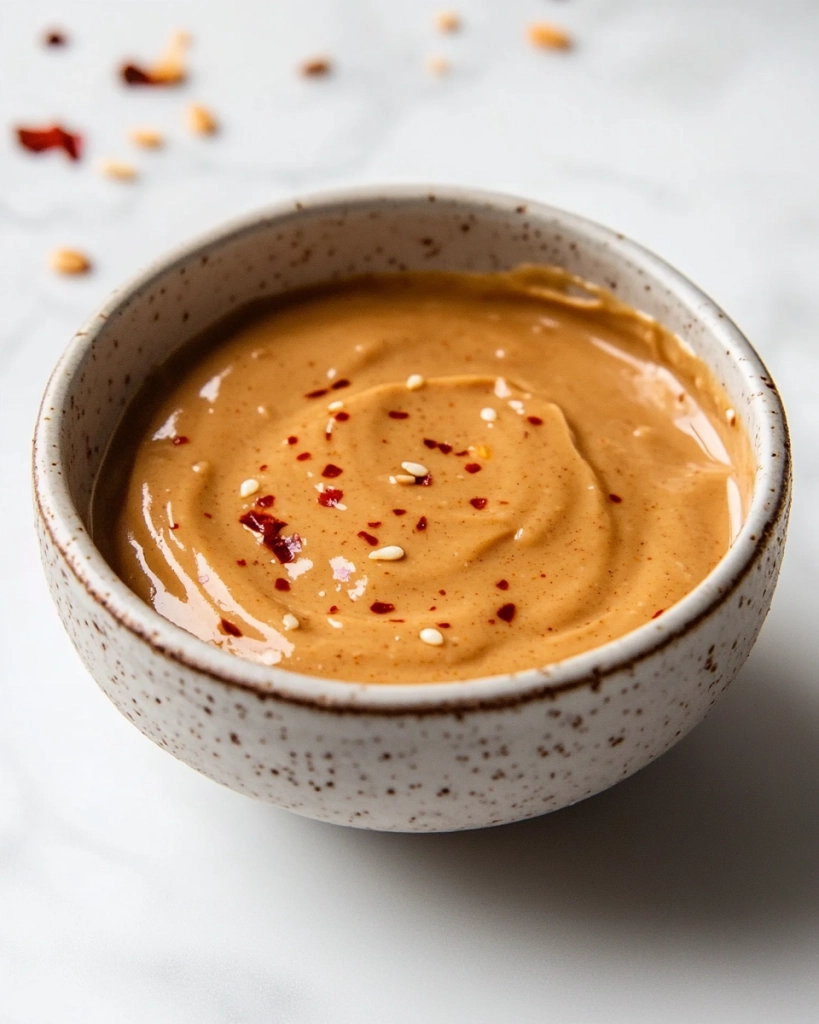
- Color should be smooth and glossy.
- Smell should be nutty with a hint of garlic and tang.
- Consistency should be pourable but not runny, like thick cream.
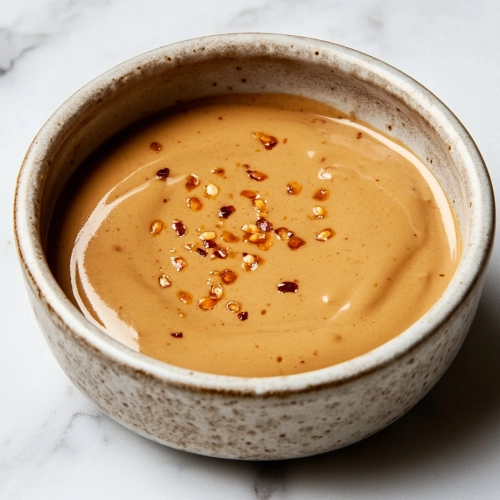
Savory Peanut Butter Sauce
Equipment
- Small saucepan
- Whisk
- Measuring spoons
Ingredients
- 1/2 cup natural peanut butter creamy or crunchy, based on preference
- 2 tablespoons soy sauce use tamari for gluten-free
- 1 clove garlic minced fresh garlic
- 1 tablespoon rice vinegar for brightness
- 1 teaspoon sesame oil adds smoky depth
- 2-3 tablespoons warm water to thin the sauce
- to taste chili flakes optional, for heat
Instructions
- Place a small saucepan on the stove and add the peanut butter. Warm it gently over low heat for about 20 seconds, just until it loosens and becomes easier to whisk.
- Add the soy sauce, minced garlic, rice vinegar, and sesame oil to the warm peanut butter. Whisk everything together until smooth and fragrant—this will take about a minute and should look glossy and evenly combined.
- Gradually pour in warm water, about one tablespoon at a time, whisking constantly to keep the sauce smooth and creamy. Continue until the sauce reaches your desired pourable consistency, usually 2 to 3 tablespoons of water.
- Bring the mixture to a gentle simmer over low heat. Let it cook for about 2 minutes, stirring frequently, until slightly thickened and bubbling gently. Your kitchen will fill with a nutty, savory aroma.
- Remove the saucepan from heat and taste the sauce. Adjust the seasoning by adding a little more soy or a dash of rice vinegar if you want more tang. If you like heat, stir in chili flakes now.
- Let the sauce rest for a few minutes off the heat—this allows the flavors to meld and the sauce to thicken slightly. It should be glossy, smooth, and ready to pour over your favorite dishes.
Notes
Cooking Tips & Tricks for Perfect Savory Peanut Butter Sauce
- FLAVOR: Toast sesame seeds or garlic before adding for deeper aroma.
- BALANCE: Taste early and often—balance salty, sour, and spicy elements.
- TEXTURE: Whisk constantly to keep the sauce smooth and glossy.
- HEAT CONTROL: Keep heat low to prevent burning or separation.
- DILUTION: Use warm water or broth to adjust thickness without diluting flavor.
- INFUSE: Let the sauce sit off heat for 10 minutes to deepen flavors.
Common Mistakes and How to Fix Them
- FORGOT to loosen the peanut butter? Microwave briefly or stir vigorously to smooth it out.
- DUMPED too much soy? Dilute with more warm water and a splash of vinegar.
- OVER-TORCHED the sauce? Remove from heat immediately and whisk vigorously to recover smoothness.
- SALT too strong? Rinse briefly with cold water, then start again with less soy.
Quick Fixes for Common Sauce Slip-Ups
- When the sauce separates, whisk in a splash of hot water to re-emulsify.
- Splash in a little rice vinegar if too bland, for a quick flavor lift.
- Patch too thick? Thin with warm water, whisk until silky.
- Shield from overcooking by removing from heat as soon as it’s bubbling.
- Rescue a burnt-tasting sauce by starting fresh and adding a spoonful of fresh peanut butter.
What to Serve With Peanut Butter Sauce
- Noodles
- Stir-fried vegetables
- Spring rolls
- Grilled chicken
- Steamed jasmine rice
Make-Ahead and Storage Tips for Savory Peanut Butter Sauce
- Prepare the sauce up to 3 days in advance; store in an airtight container in the fridge.
- The flavors deepen overnight, but the sauce thickens. Thin with warm water or broth before serving.
- Keep in a sealed jar for up to a week. Shake or stir well before use.
- Reheat gently on the stove, stirring constantly, until warm and smooth.
10 Practical Q&As About Making Savory Peanut Butter Sauce
1. Can I use crunchy peanut butter in this sauce?
Use natural peanut butter for a richer, more complex flavor. Stir well to loosen it before mixing.
2. Will crunchy peanut butter work?
Yes, but expect a chunkier texture. For a smoother sauce, blend it longer or sift after mixing.
3. How do I fix a thick, clumpy sauce?
Add a splash of warm water or broth to thin the sauce if it’s too thick or sticky.
4. Why is my sauce bland?
Taste and adjust the salt or acidity at the end. A squeeze of lime brightens and balances the richness.
5. How should I cook the sauce?
Cook the sauce gently over low heat, stirring constantly to prevent burning or separation.
6. What are good flavor boosters?
Use soy sauce or tamari for depth; sesame oil adds a smoky, nutty note.
7. My sauce looks greasy or separated, what do I do?
If the sauce separates, whisk in a little warm water or oil to bring it back together.
8. Can I make it sweeter?
Add a touch of honey or sugar if you want a subtle sweetness to balance the savory.
9. How long does it keep?
Serve immediately for best flavor; refrigerate in an airtight container up to 3 days.
10. How do I reheat without breaking it?
Reheat gently on the stove over low heat, stirring until smooth and warm.
This sauce isn’t just a flavor booster; it’s a little bowl of umami that can make a simple meal feel special. It’s perfect for those nights when you’re short on time but craving something hearty.
Plus, it keeps well in the fridge, so I often make a batch on a Sunday afternoon and have it ready for quick dinners all week. It’s one of those recipes that feels like a small act of culinary rebellion—simple, honest, and just a little bit wild.

hi there,
The Freshman Cook started as a place to keep track of recipes I wanted to make again. Somewhere along the way, it grew into a collection of meals that friends requested, desserts that disappeared too quickly, and weeknight dinners that made life a little easier.
know more