

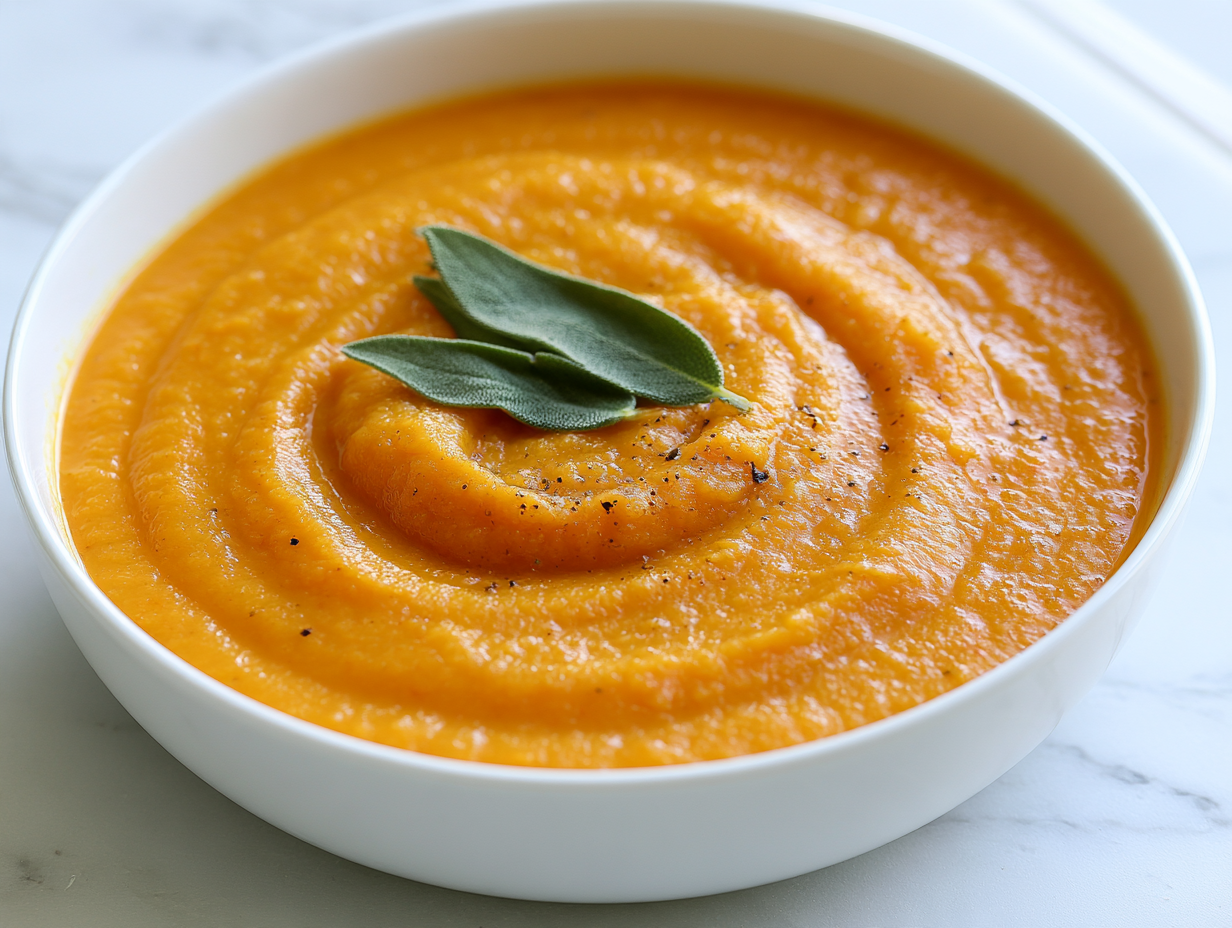

Roasted Butternut Squash Soup is the kind of recipe that makes the most of cool-weather produce. Roasting the squash, onion, carrot, and garlic brings out deeper flavors before everything is blended into a smooth, creamy soup.
The finished soup has a naturally sweet squash flavor balanced by savory roasted vegetables, herbs, black pepper, and stock. It is simple enough for a weeknight meal but cozy enough to serve as part of a fall lunch or dinner.
Why Roast the Vegetables for This Soup?
Roasting is the defining step in this recipe.
Instead of simmering the vegetables from the beginning, the squash and other vegetables spend time in a hot oven first. This softens them while developing a deeper roasted flavor.
Butternut squash already has a naturally sweet flavor, and roasting brings that quality forward. The onion and carrot contribute additional sweetness, while garlic and herbs provide savory notes.
The result is a soup with more depth than you would get from simply boiling the vegetables in stock.
The Roasted Vegetable Base
The squash isn’t working alone here.
Onion and carrot add sweetness and body, while garlic brings a savory aromatic quality. Sage is especially fitting for the fall flavors in this soup.
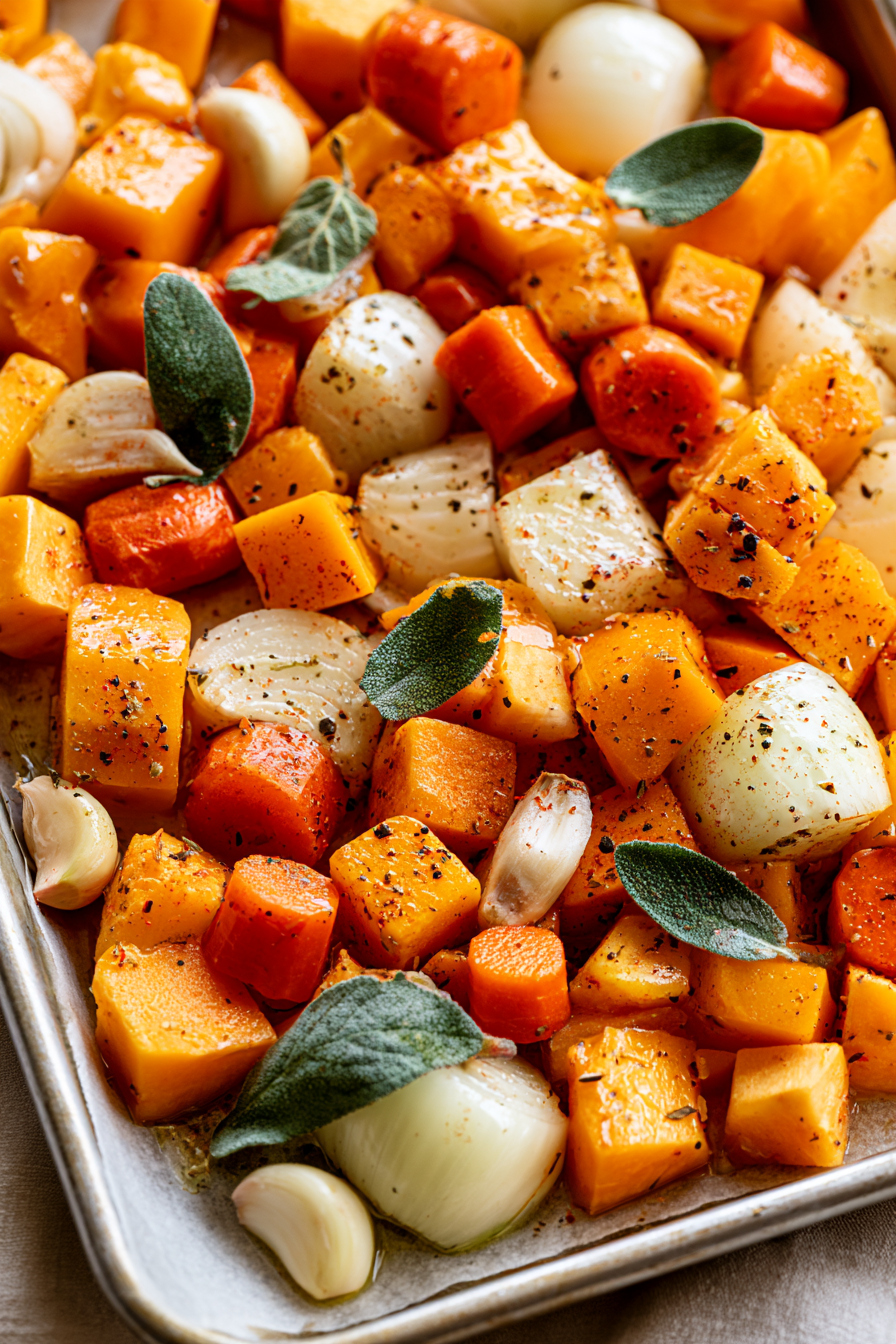
Everything is coated with olive oil before roasting, which helps the vegetables brown and keeps them from drying out during the relatively long roasting time.
The vegetables should be tender enough to blend easily when they come out of the oven.

Roasted Butternut Squash Soup
Equipment
- 1 Baking sheet
- 1 Parchment Paper
- 1 Blender
- 1 Cutting Board
- 1 Vegetable Peeler
- 1 Stirring Utensil
Ingredients
- 2 tablespoons extra-virgin olive oil
- 1 large onion quartered.
- 3 cloves garlic whole
- 1 large carrot peeled and diced.
- 1 –3 lb butternut squash halved and seeded
- 3 sage leaves more for garnish
- 1/2 teaspoon black pepper
- 3 –4 cups low-sodium chicken stock
Instructions
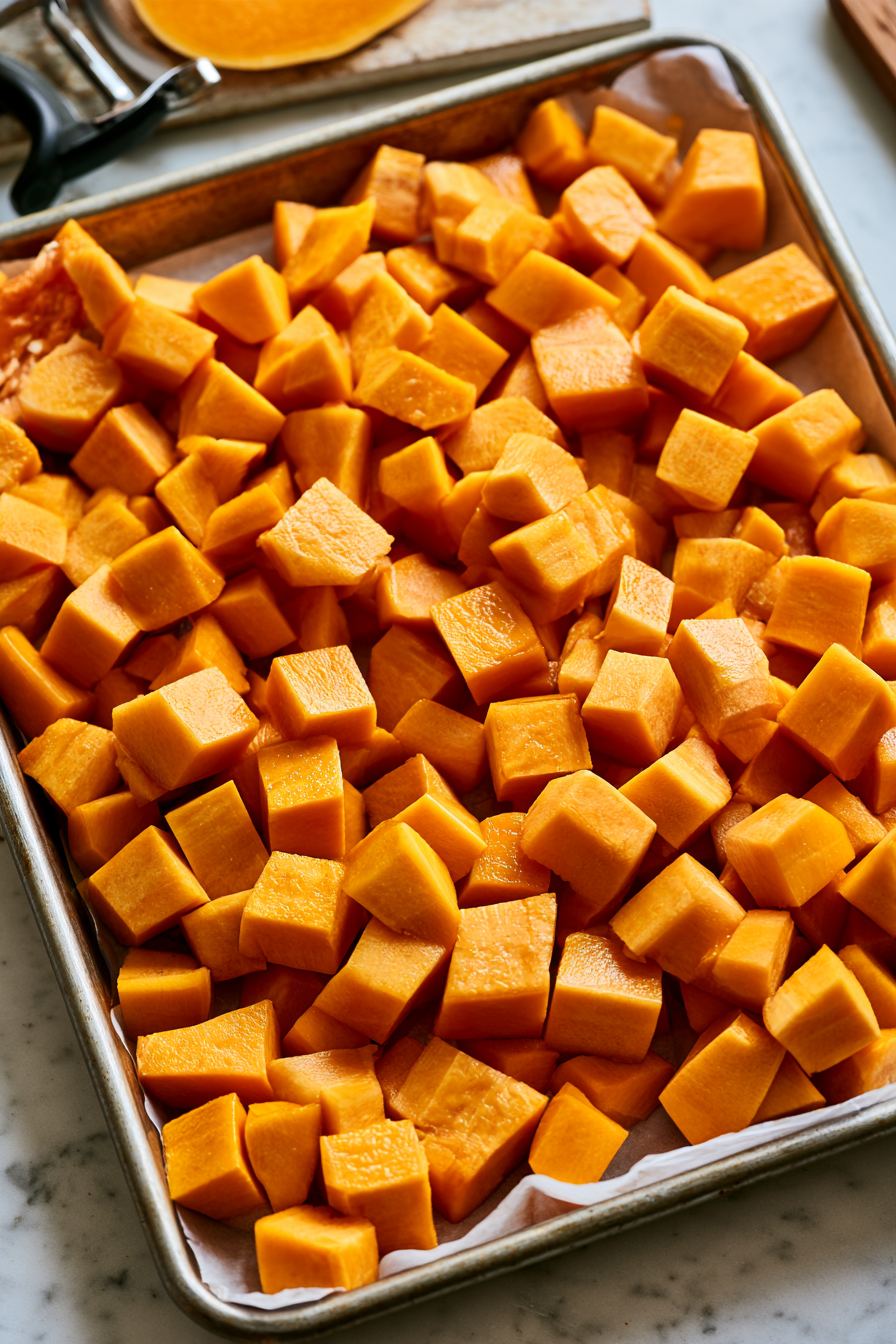
- Set the oven's temperature to 350°F. Cut the butternut squash into 1-inch squares after peeling and pitting it. Transfer to a sizable roasting pan or baking sheet.
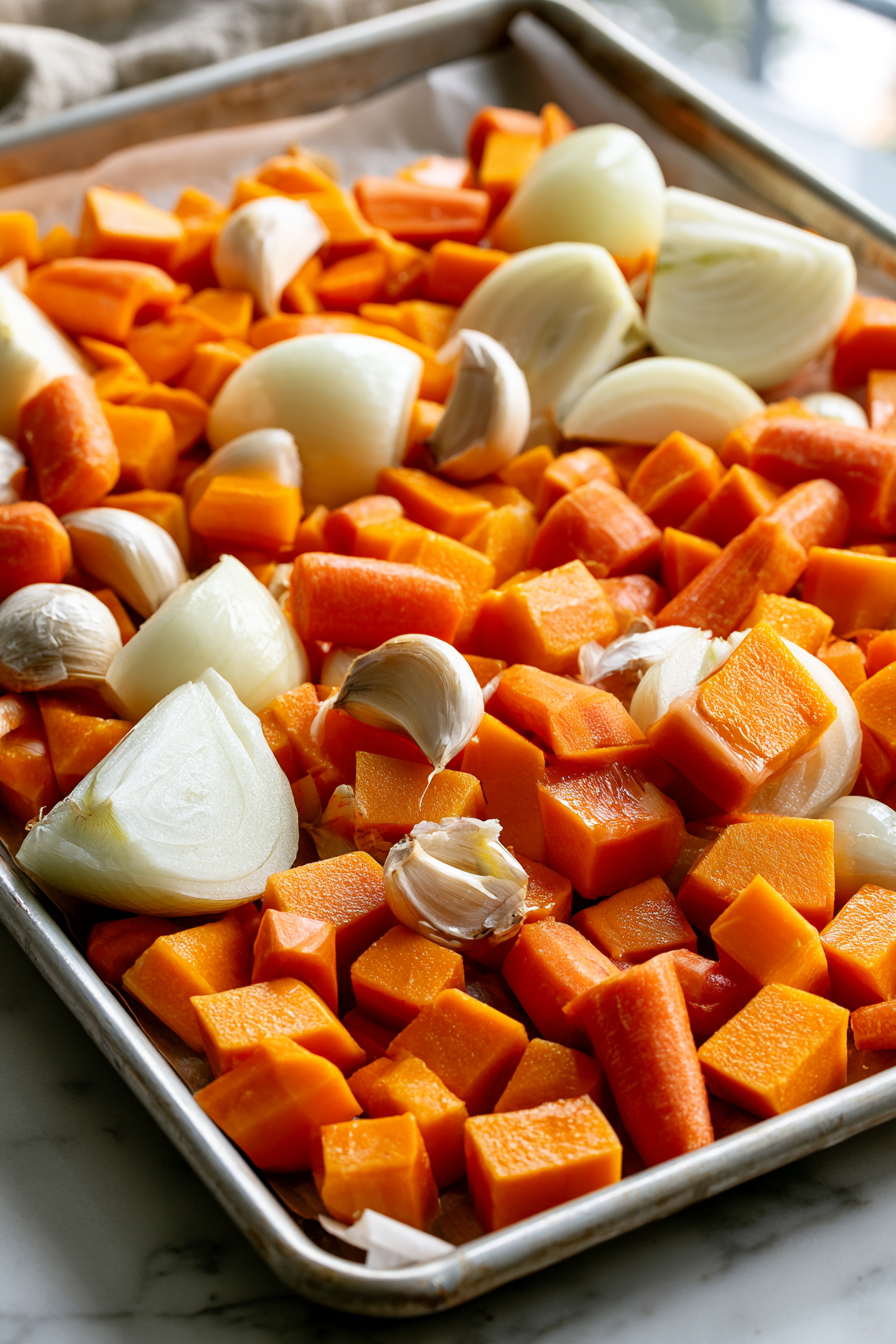
- Cut the onions, celery, and carrots into large pieces and add them to the pan. Add the peeled garlic, either whole or cut in half.
- Add the salt, pepper, red pepper powder, and herbs. To coat, add the olive oil and toss. Vegetables should be roasted for one hour to make them tender. Cook the vegetables for a further fifteen minutes if they are not tender.
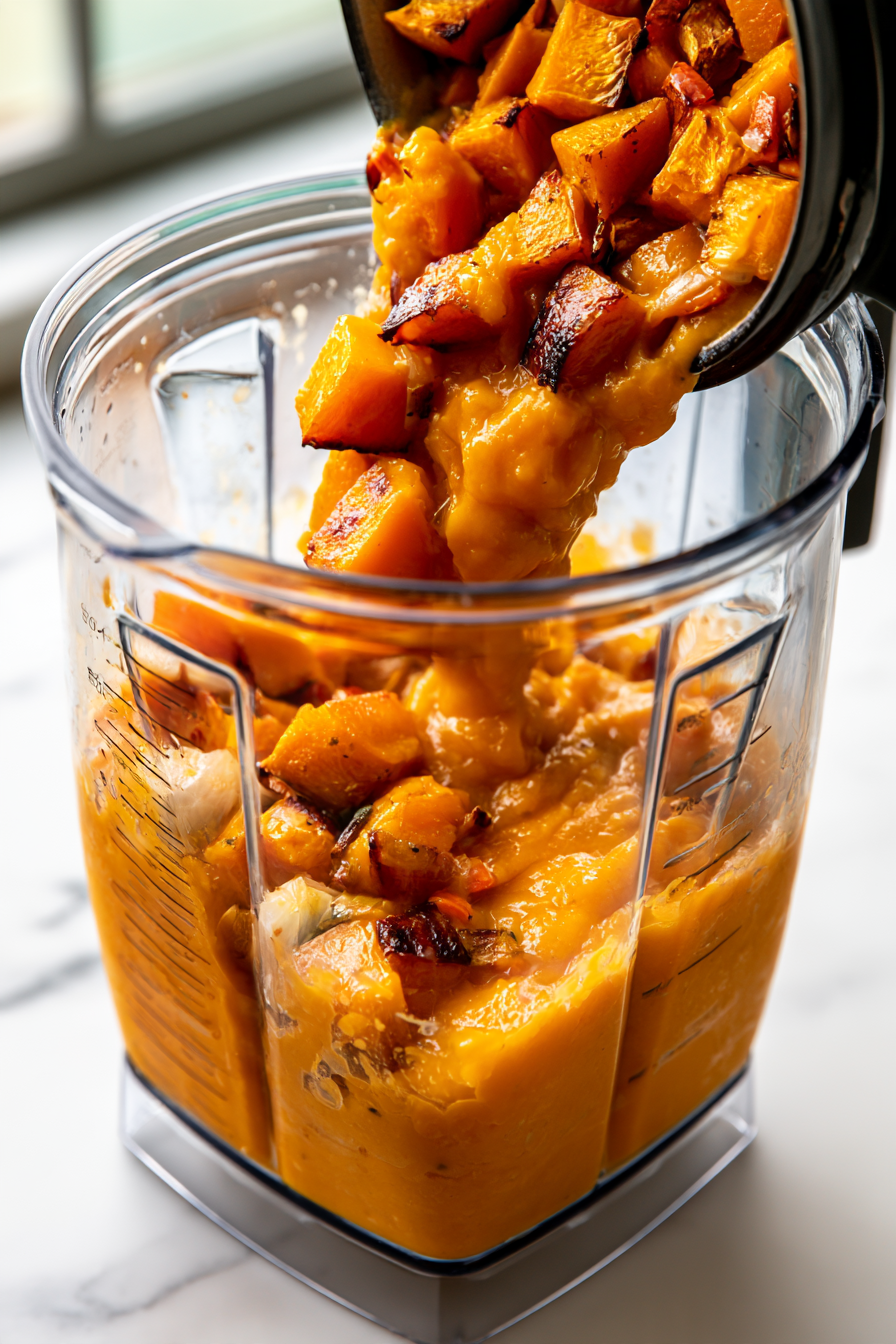
- Place cooked veggies in a food processor (or blender) together with one cup of vegetable stock, and blend until the desired consistency is achieved, or until the mixture is smooth and creamy. This might need to be done in a few batches.
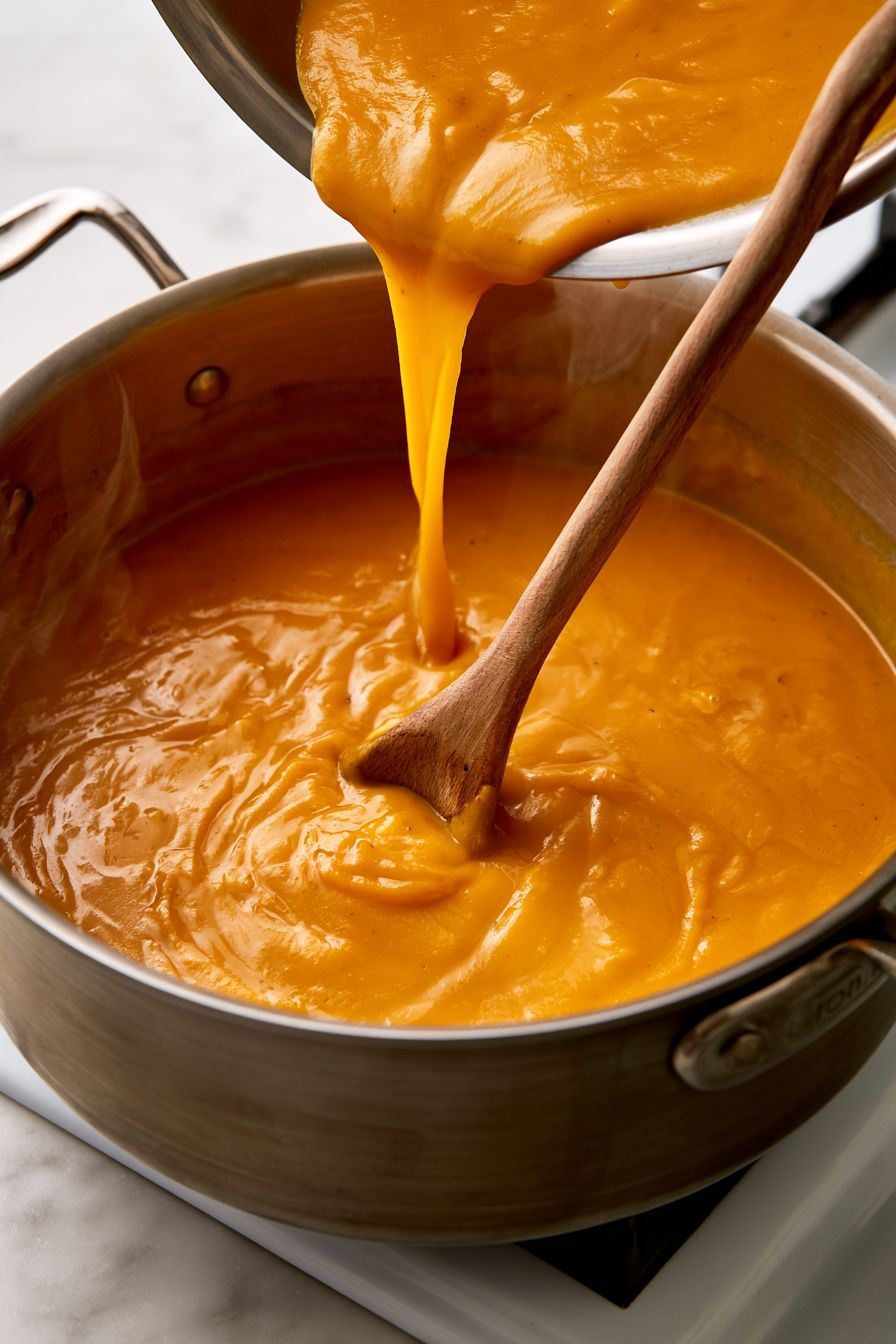
- Transfer mixture to a big saucepan. Stir thoroughly after adding the remaining vegetable stock. Simmer for ten minutes on low heat. Simply thin out the soup with a little water if it's too thick and adjust the consistency to your liking.
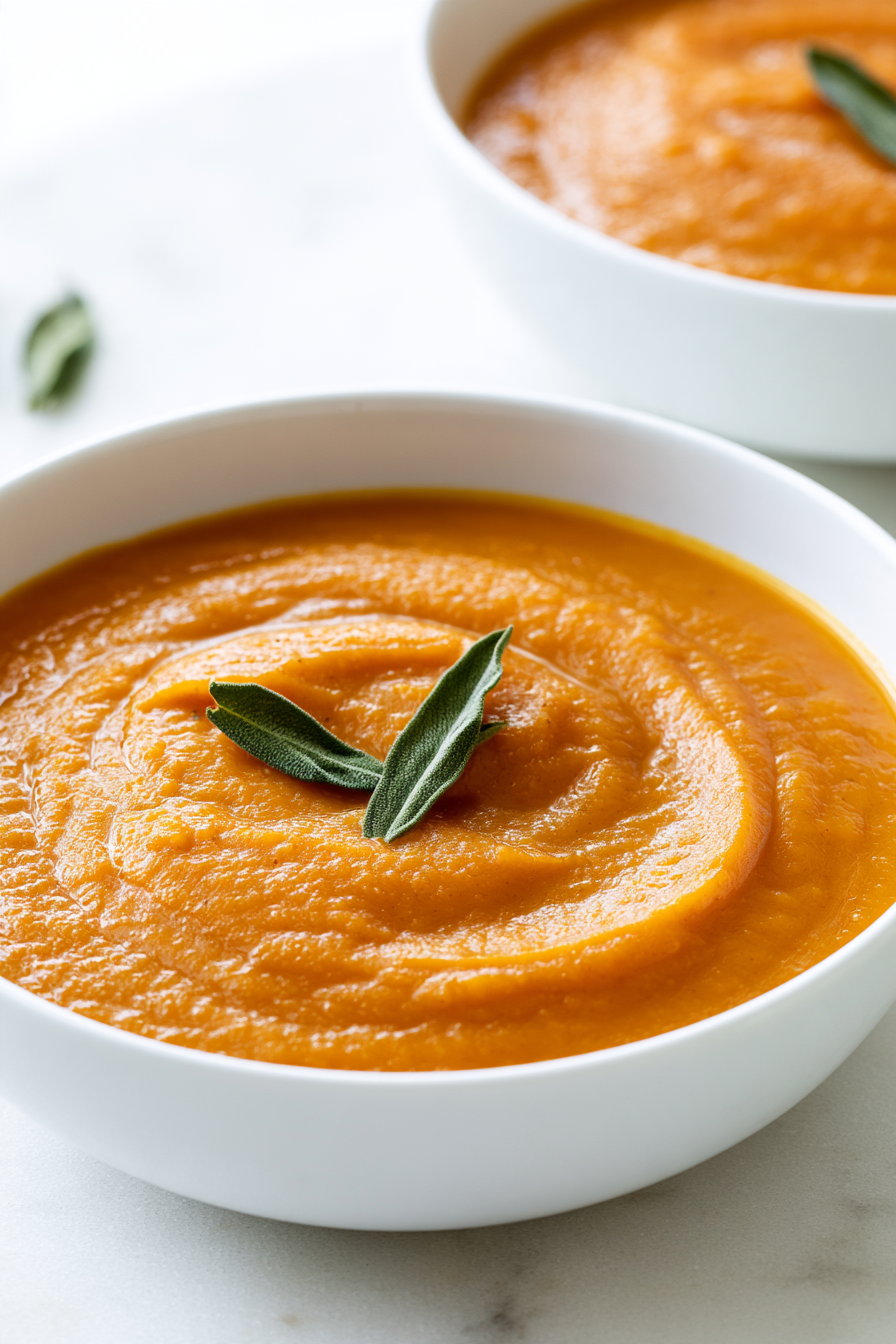
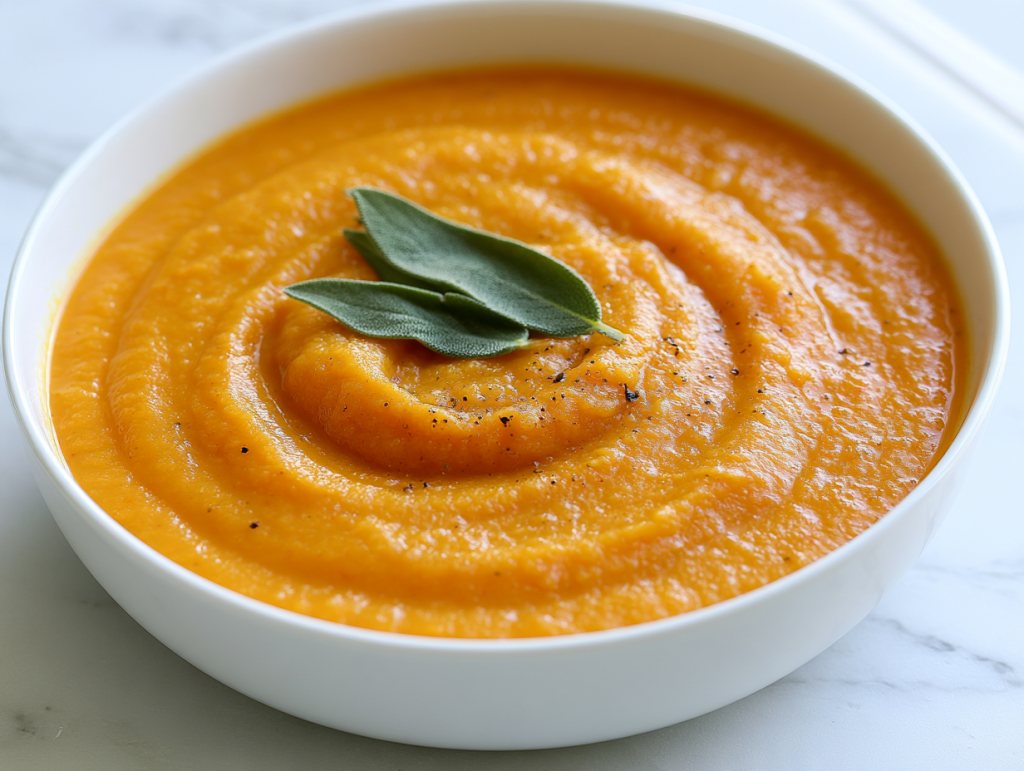
- Serve after adding more optional fresh herb garnish!
Notes
- Added three cloves of garlic (the last from my bulb and I adore garlic), but it overwhelmed the soup.
- As stated in the recipe, use just 1 garlic clove. If you would want your garlic to taste gentler, you can also add roasted garlic.
- A sturdy baking tray is always advised when roasting vegetables to prevent warping and bending during cooking.
- I’m a huge lover of my Vitamix blender, but before you buy, be sure to read my Vitamix Comparison page.
Nutrition Facts
| Nutrition | Value |
|---|---|
| Calories | 292KCAL |
| Carbohydrates | 54G |
| Protein | 4g |
| Fat | 9g |
| Saturated Fat | 4g |
| Sodium | 1589mg |
| Iron | 2.8mg |
| Calcium | 200mg |
| Vitamin A | 4287iu |
| Potassium | 1437mg |
How to Get a Smooth, Velvety Texture
The texture of this soup depends heavily on the blending step.
Once the roasted vegetables are tender, they are blended with stock until smooth and creamy. Depending on the size of your blender, you may need to work in several batches rather than filling the container all at once.
Blend until there are no noticeable chunks of squash or vegetables remaining. If the mixture seems unusually thick, the recipe allows you to thin it later with additional liquid.
A high-powered blender can produce an especially smooth texture, but a standard blender or food processor can also work.
Why the Roasting Time Matters
The recipe calls for roasting the vegetables for about one hour at 350°F.
Start checking the vegetables around the end of that cooking period. The goal is tenderness rather than simply following the clock.
If the squash or other vegetables are still firm, the recipe recommends roasting them for another 15 minutes.
Tender vegetables are important because they need to blend smoothly into the soup.
Using Garlic Carefully
Garlic deserves special attention in this recipe because the notes specifically mention that three cloves produced a stronger garlic flavor than desired.
The recipe notes recommend using one garlic clove for a gentler garlic flavor, even though the ingredient list currently lists three cloves.
If you enjoy a more pronounced roasted garlic flavor, the notes also suggest using roasted garlic instead.
This is a good example of why tasting matters with strongly flavored ingredients. The sweetness of butternut squash is delicate enough that too much garlic can easily dominate it.
Try More Soup Recipes
- Vegan Lentil Soup
- Slow Cooker Tortellini Soup
- Irish Veggie & Potato Leek Soup
- Instant Pot Broccoli Cheddar Soup
- Vegan Asparagus Soup
Frequently Asked Questions
1. Can I make this soup without a high-powered blender?
Yes. The recipe can be blended in batches using a standard blender or food processor. Work carefully with the roasted vegetables and hot liquid.
2. Why is my butternut squash soup too thick?
Butternut squash can produce a naturally thick soup. Add a small amount of water or additional stock and stir until the desired consistency is reached.
3. Can I roast the vegetables longer than one hour?
The recipe recommends checking the vegetables after one hour and roasting for another 15 minutes if they are not tender. The important indicator is tenderness rather than a fixed maximum time.
4. Can I use roasted garlic in this soup?
The recipe notes specifically mention roasted garlic as an option if you prefer a gentler garlic flavor.
5. What herbs work well with butternut squash soup?
Sage is the herb specified in this recipe. Its earthy flavor complements the naturally sweet roasted squash.
6. Can I make the soup thinner after blending?
Yes. Add a little water gradually and adjust the consistency to your preference.
7. Why should I use a sturdy baking sheet?
The recipe notes recommend a sturdy baking tray because thinner baking sheets can warp or bend while roasting vegetables.
8. What can I serve with butternut squash soup?
Crusty bread, toasted sandwiches, and simple green salads all work well alongside the soup without competing with its roasted squash flavor.
9. Is this recipe suitable for a fall dinner?
Yes. The roasted butternut squash, carrot, onion, sage, and warm soup texture make it particularly well suited to fall lunches and dinners.
hi there,
i’m Lily
A California-born chef with roots in the Central Valley’s farming community, transforming salads from diet staple to culinary art.