

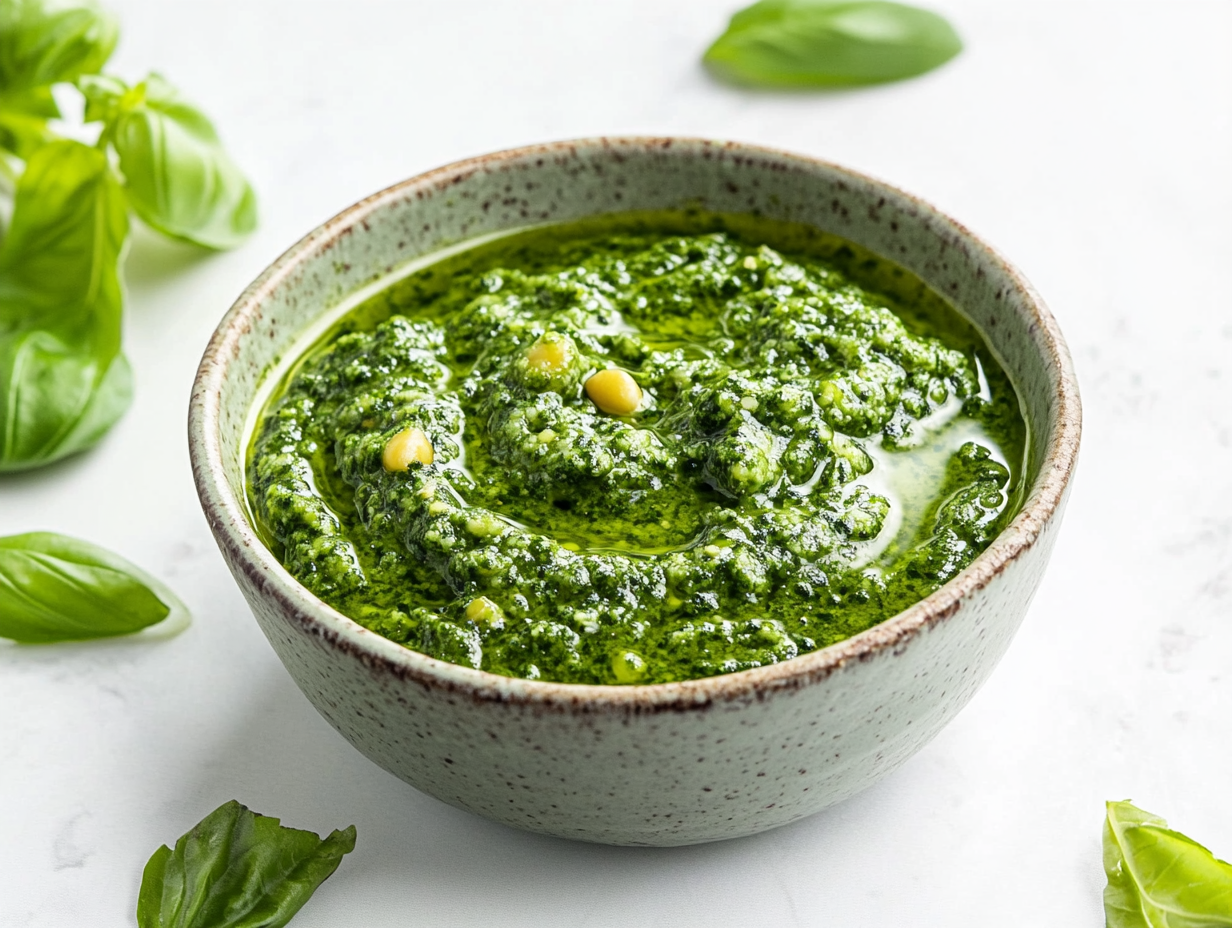

Whenever I have a bunch of fresh basil sitting in the kitchen, this classic pesto is usually the first thing I think of making. It’s quick, doesn’t need cooking, and turns a handful of simple ingredients into something really useful for everyday meals.
I like how easily it comes together just a few minutes of blending and it’s ready to use. I often make a small batch and keep it in the fridge, then add it to pasta, sandwiches, or even roasted vegetables during the week.
What keeps me coming back to this recipe is how flexible it is. I can adjust the texture, add a bit more cheese, or keep it lighter depending on what I need, and it still works every time without much effort.

Classic Basil Pesto
Equipment
- Food processor
- Blender
Ingredients
- 1/2 cup toasted pine nuts
- 2 tablespoons fresh lemon juice
- 1 small garlic clove
- 1/4 teaspoon sea salt
- freshly ground black pepper
- 2 cups basil leaves
- 1/4 cup extra-virgin olive oil plus more for a smoother pesto
- 1/4 cup freshly grated Parmesan cheese optional
Instructions
- Bring a small saucepan of water to a boil after filling it halfway. Assemble an ice water dish and place it next to your burner. Place the blade attachment on a food processor and set it up.
- Blanch the basil briefly by submerging the leaves in hot water for five to ten seconds, or until they have wilted. Transfer the basil leaves to the ready-made ice water using tongs. They can’t cook any longer because of this.
- Tie paper towels around the basil. Squeeze to remove all the water, then add the garlic, pine nuts, and lemon juice to the food processor.
- Once everything has crumbled into small pieces, pulse. The extra virgin olive oil should be added gradually while the processor is operating at a low speed. Make sure your basil pesto has a slight texture by not running the machine for an extended period of time.
- Spoon into a small bowl the basil mixture. Season to taste with salt and pepper and add the cheese. Stir to incorporate. You can adjust the thickness and smoothness of your pesto by adding a small amount additional extra virgin olive oil.
- Apply right away or save for later.
Notes
- Add the garlic, lemon juice, pine nuts, Parmesan cheese, basil, spinach, salt, lemon zest, and pepper to a food processor. Process until almost smooth, stopping occasionally to scrape down the sides of the bowl with a spatula.
- While mixing until smooth, drizzle the remaining olive oil into the mixture.
- Adjust the seasoning according to your taste.
Nutrition Facts
| Nutrition | Value |
|---|---|
| Calories | 137kcal |
| Carbohydrates | 2g |
| Protein | 2g |
| Fat | 14g |
| Saturated Fat | 2g |
| Sodium | 170mg |
| Iron | 0.5mg |
| Calcium | 44mg |
| Vitamin A | 144IU |
| Potassium | 54mg |
How Long Does Homemade Pesto Last?
This pesto made with basil can be kept for up to a week in the refrigerator or for up to three months in the freezer by carefully sealing it in a jar or other sealable container. Thaw it in the fridge or at room temperature
Can You Freeze Basil Pesto?
Really! Pesto freezes well for up to six months; defrost it the night before you want to use it. Pesto can be frozen in two different ways:
- In a Freezer-Safe Jar: Drizzle with extra virgin olive oil, then place in the freezer. When I intend to utilize the entire amount in a pasta meal, I do this action.
- Within Ice Cube Trays: Pour the pesto into ice cube trays, freeze for an hour or until solid, and then move the cubes to freezer bags if you want to be able to use a tiny bit at a time.

hi there,
i’m Lily
A California-born chef with roots in the Central Valley’s farming community, transforming salads from diet staple to culinary art.