

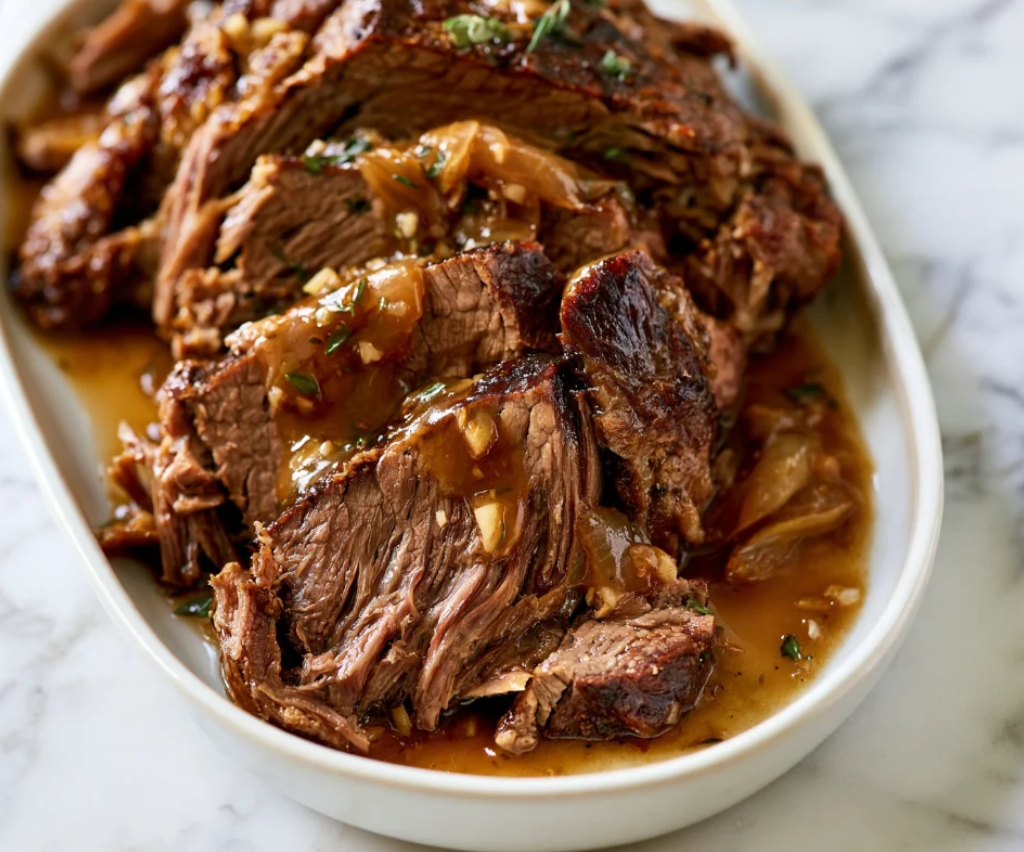

Apple Cider Braised Pot Roast is a comforting fall main course made by slowly cooking a seasoned roast with apple cider, onions, garlic, and herbs. The long braising time allows the meat to become tender while the cooking liquid develops into a savory gravy with a subtle apple sweetness. It’s a lovely choice for a relaxed weekend dinner or a seasonal meal when you have time to let the oven or stovetop do the work.
Searing the roast first builds a browned exterior, while the apple cider helps deglaze the pot and carries the flavors of the aromatics throughout the sauce. Thyme and bay leaf add an earthy herbal note, creating a balanced finish that complements the richness of the meat.
Why You’ll Keep Making This Apple Cider Pot Roast
- Ideal for Slow Cooking: The gentle braising process gradually tenderizes a larger cut of meat.
- Seasonal Ingredients: Apple cider adds an autumn-inspired touch without requiring an elaborate ingredient list.
- One-Pot Preparation: Sear the roast, cook the aromatics, and braise everything in the same Dutch oven.
- Homemade Gravy: The braising liquid can be reduced into a concentrated sauce without needing a separate gravy base.
- Flexible Meat Choice: The recipe allows beef or pork, so you can choose according to your preference.
- Useful for Weekend Cooking: Most of the cooking time is hands-off, leaving you free to prepare other parts of the meal.

Ingredient Notes and Helpful Substitutions
- Beef or Pork Roast: The recipe calls for a 3-pound roast, preferably chuck roast or pork shoulder. These cuts contain connective tissue that gradually softens during long, moist cooking. Cooking time can vary depending on the cut and its thickness.
- Apple Cider: Two cups of preferably unfiltered apple cider provide the braising liquid. Use nonalcoholic apple cider rather than hard cider to maintain the intended flavor profile.
- Vegetable Oil: Oil helps the roast develop a deep brown exterior before braising. Choose a neutral oil that can handle medium-high heat.
- Onion: One large sliced onion forms the aromatic base of the sauce. Yellow onion is a reliable option because it softens well during the long cooking process.
- Garlic: Three minced cloves add savory depth. Add them after the onions have softened, and cook briefly to avoid burning.
- Thyme and Bay Leaf: Fresh thyme provides an herbal aroma, while dried thyme offers a convenient alternative in a smaller quantity. The bay leaf adds subtle background flavor and should be removed before serving.
Chef’s Tip: Pat the roast thoroughly dry before seasoning and searing. A dry surface browns more effectively, creating flavorful browned bits that can be lifted from the bottom of the Dutch oven when you add the cider.
Apple Cider Braised Pot Roast
Equipment
- Dutch oven or heavy-bottomed pot
- Sharp Knife
Ingredients
- 3 pounds beef or pork roast preferably chuck roast or pork shoulder
- 2 cups apple cider preferably unfiltered
- 2 tablespoons vegetable oil for searing
- 1 large onion sliced
- 3 cloves garlic minced
- 1 teaspoon fresh thyme or ½ teaspoon dried thyme
- 1 bay leaf bay leaf
- Salt and pepper to taste Salt and pepper
Instructions
- Pat the roast dry with paper towels, then season generously with salt and pepper on all sides.
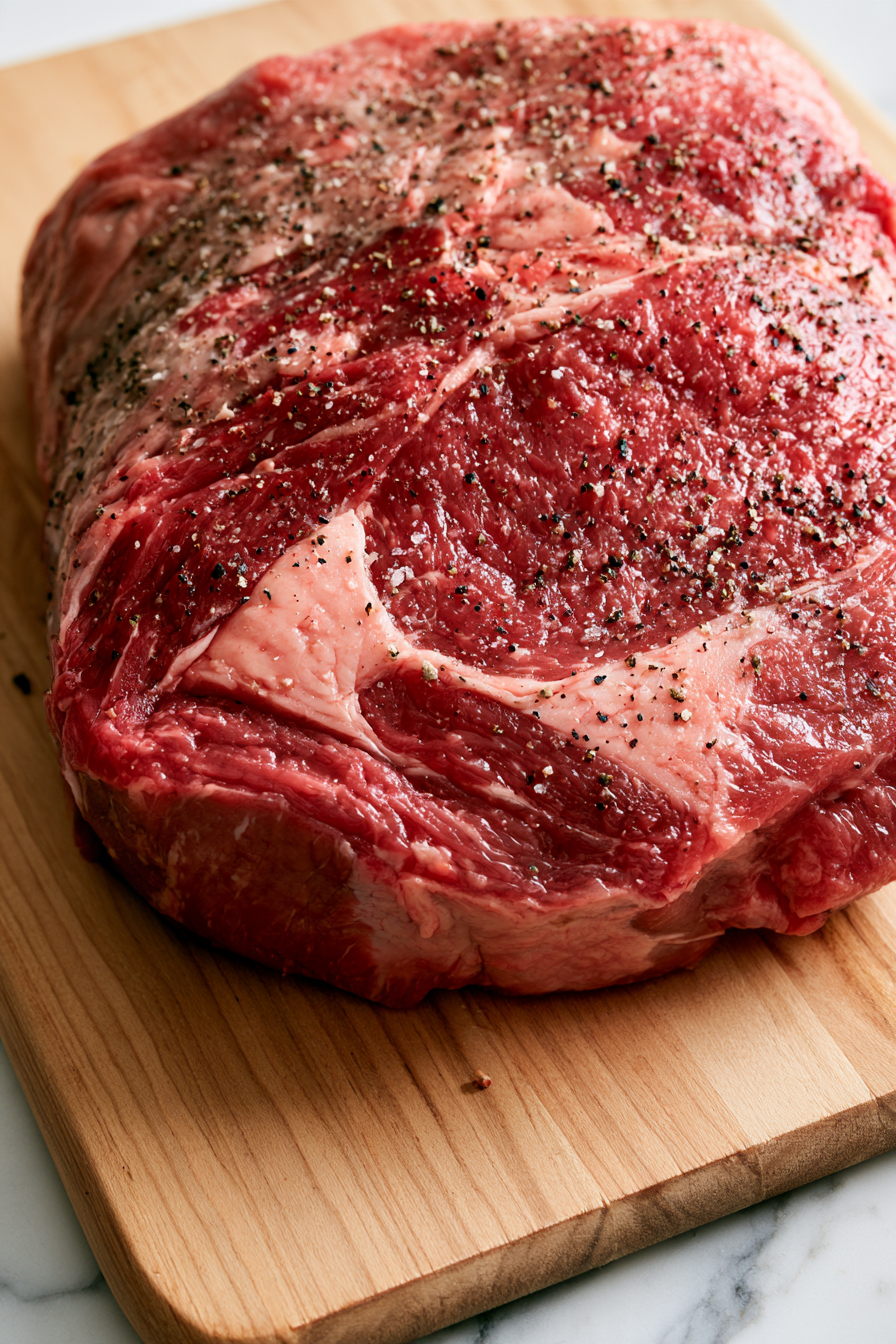
- Heat the vegetable oil in a heavy-bottomed Dutch oven over medium-high heat until shimmering. Carefully place the roast in the hot oil and sear for about 4-5 minutes on each side until the surface is deep golden brown.
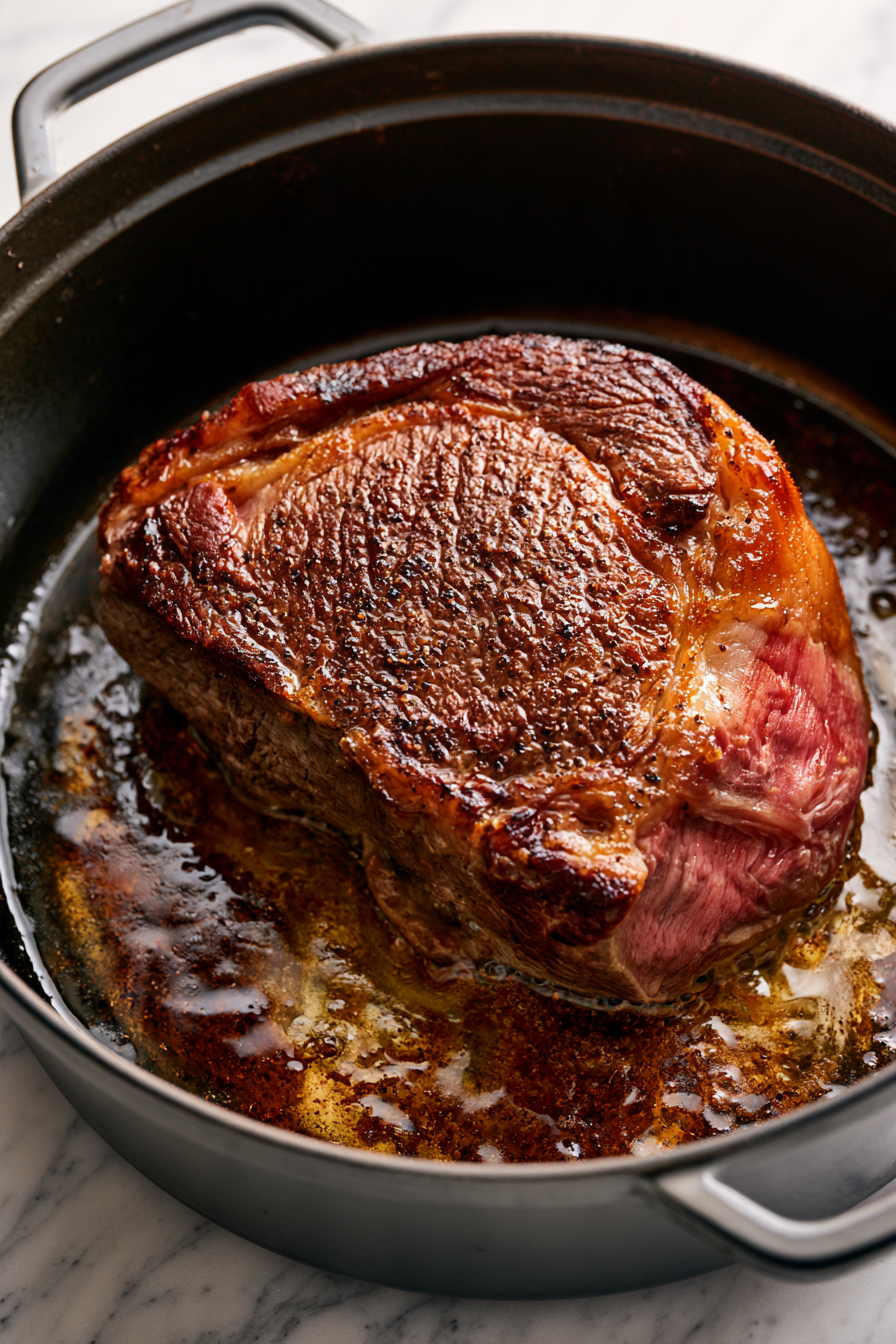
- Remove the browned roast and set aside on a plate. Add sliced onion to the pot and cook for about 3 minutes until they soften and become translucent, releasing a fragrant aroma.
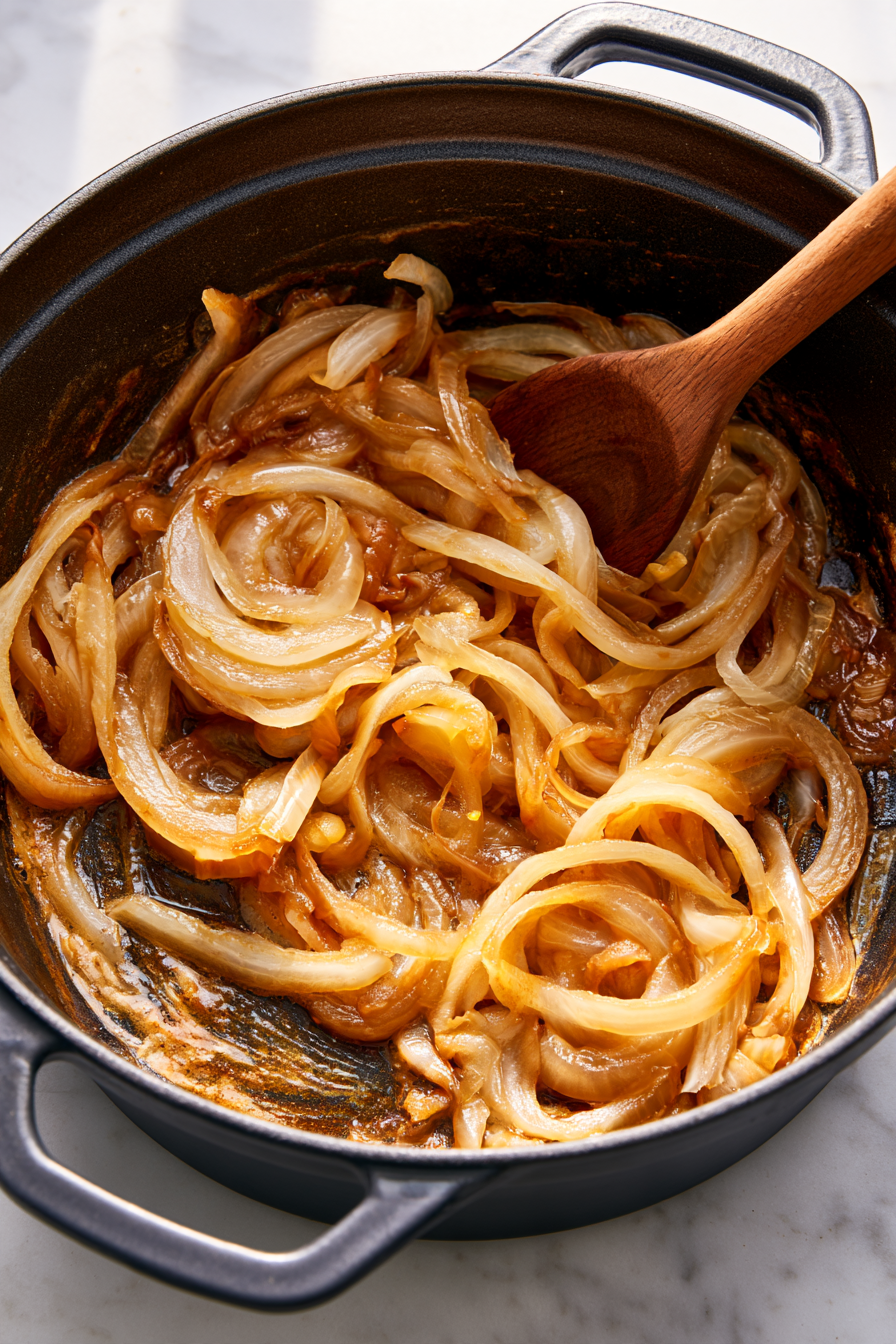
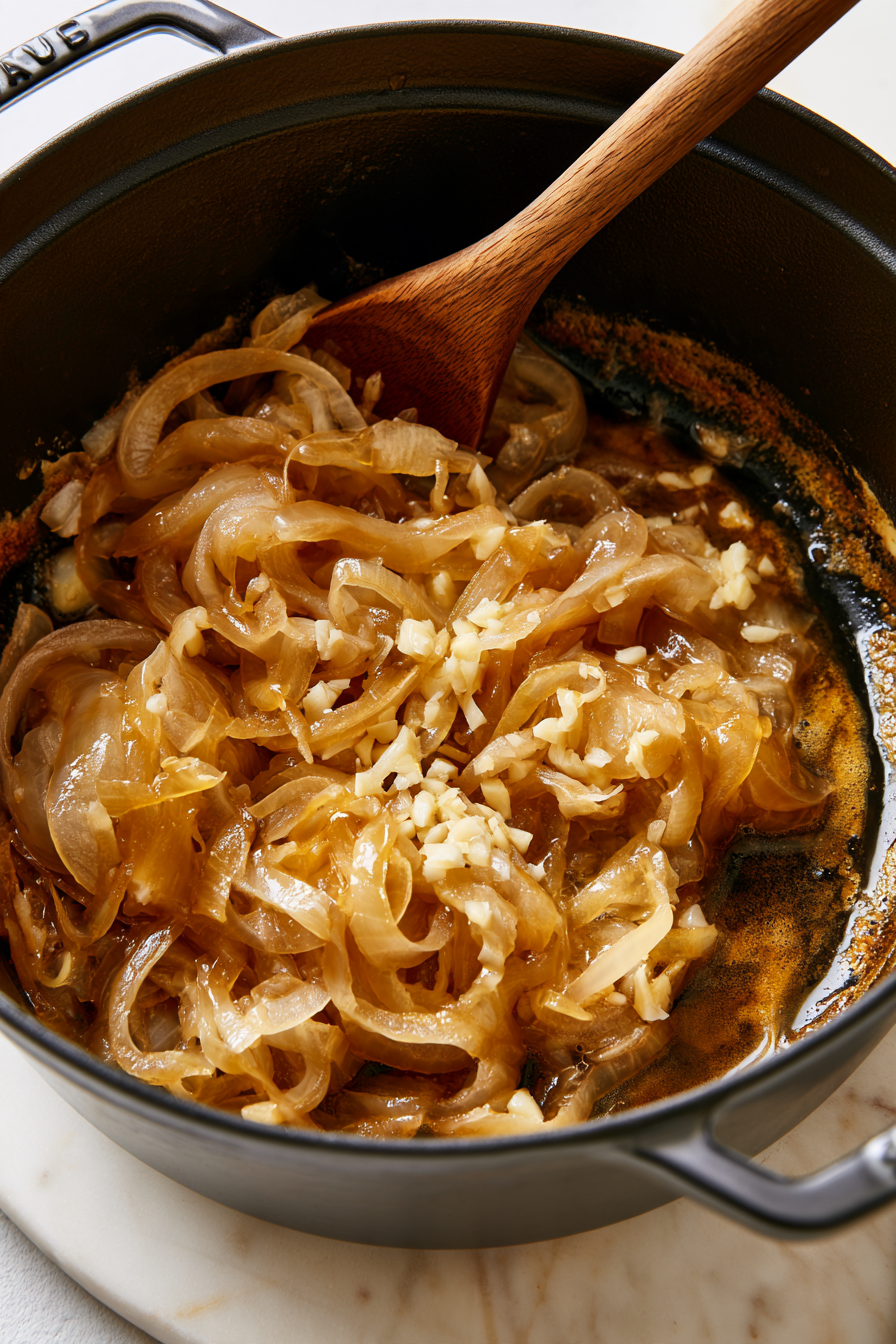
- Stir in the minced garlic and cook for another 30 seconds until fragrant, being careful not to burn it.
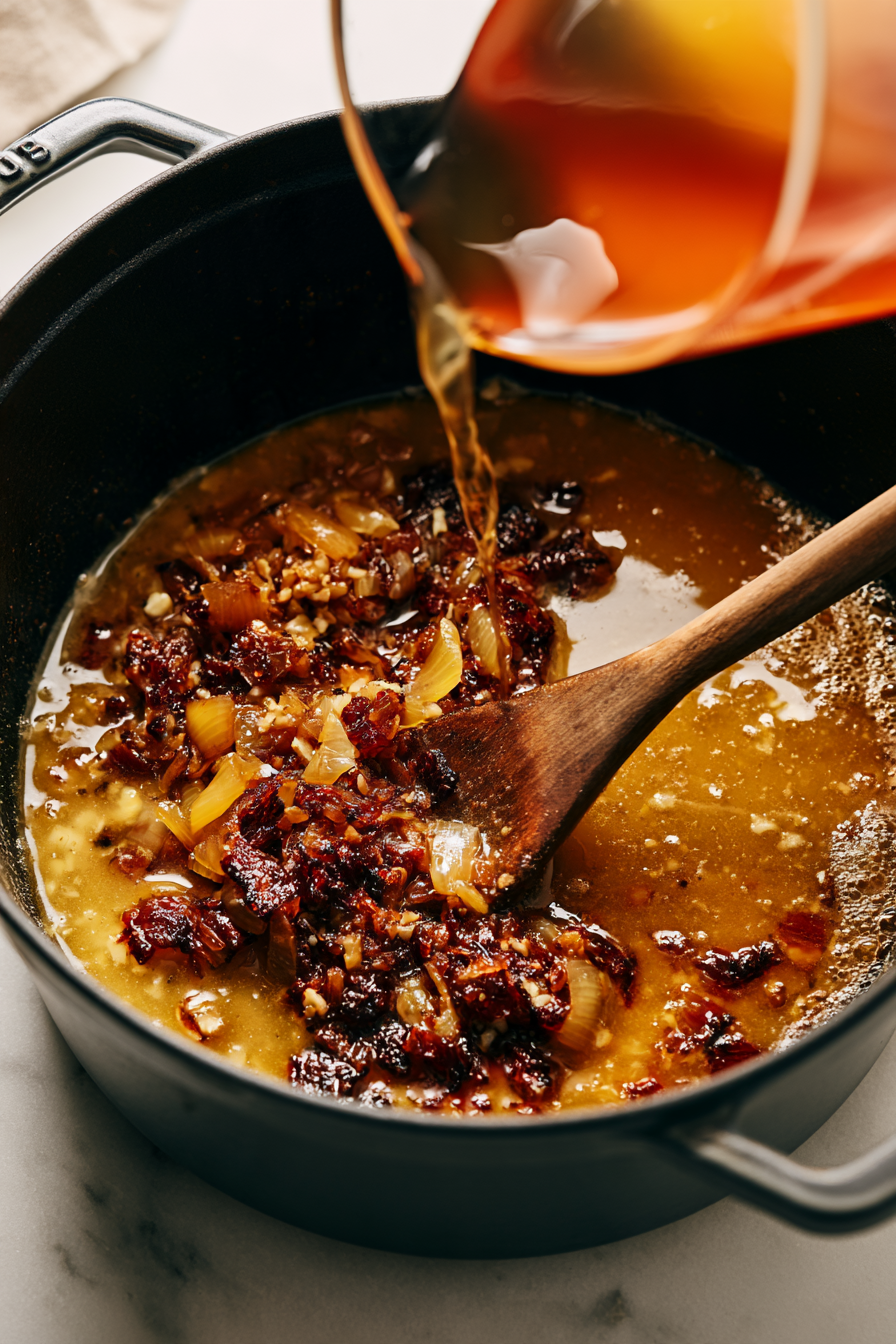
- Pour in the apple cider, scraping up any browned bits from the bottom of the pot to deglaze, which adds rich flavor.
- Reintroduce the seared roast to the pot, tucking in the thyme and bay leaf. Bring the liquid to a gentle simmer.
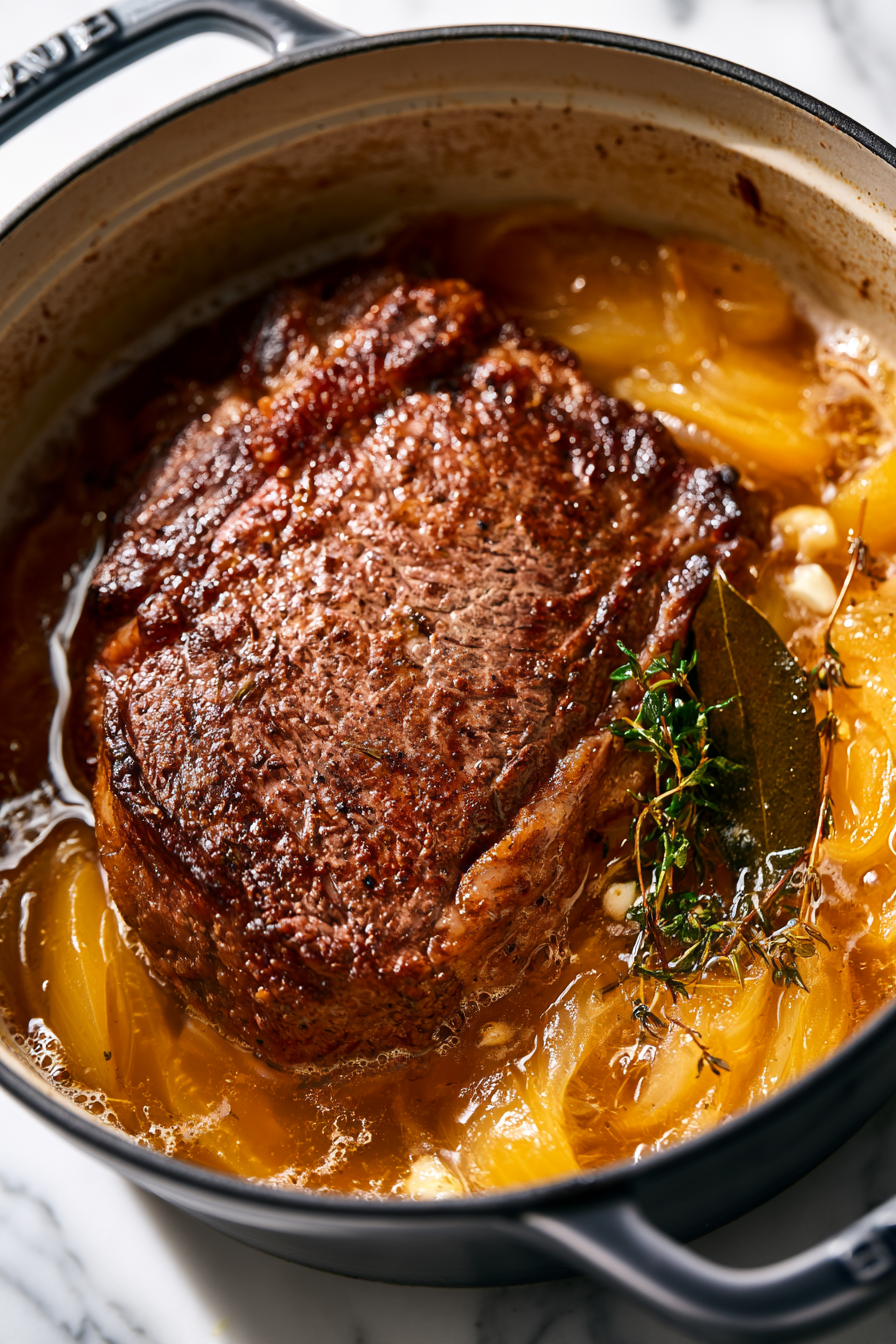
- Cover the Dutch oven with a lid, reduce the heat to low, and let it braise gently for about 3 hours until the meat is fork-tender and easily pulls apart.
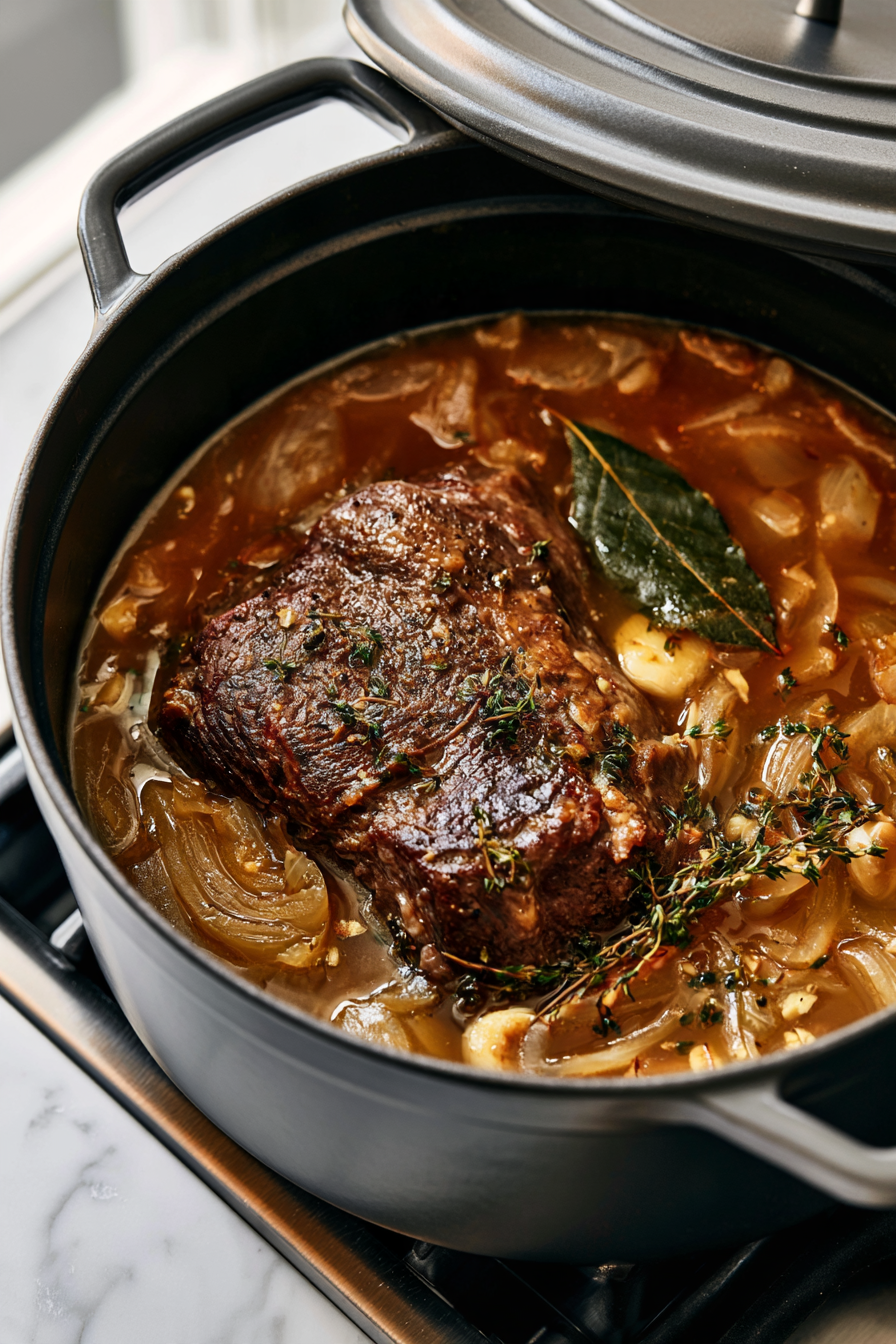
- Once cooked, turn off the heat and carefully remove the roast, tenting it with foil to rest for 10 minutes. Meanwhile, remove the bay leaf and thyme sprigs from the sauce.
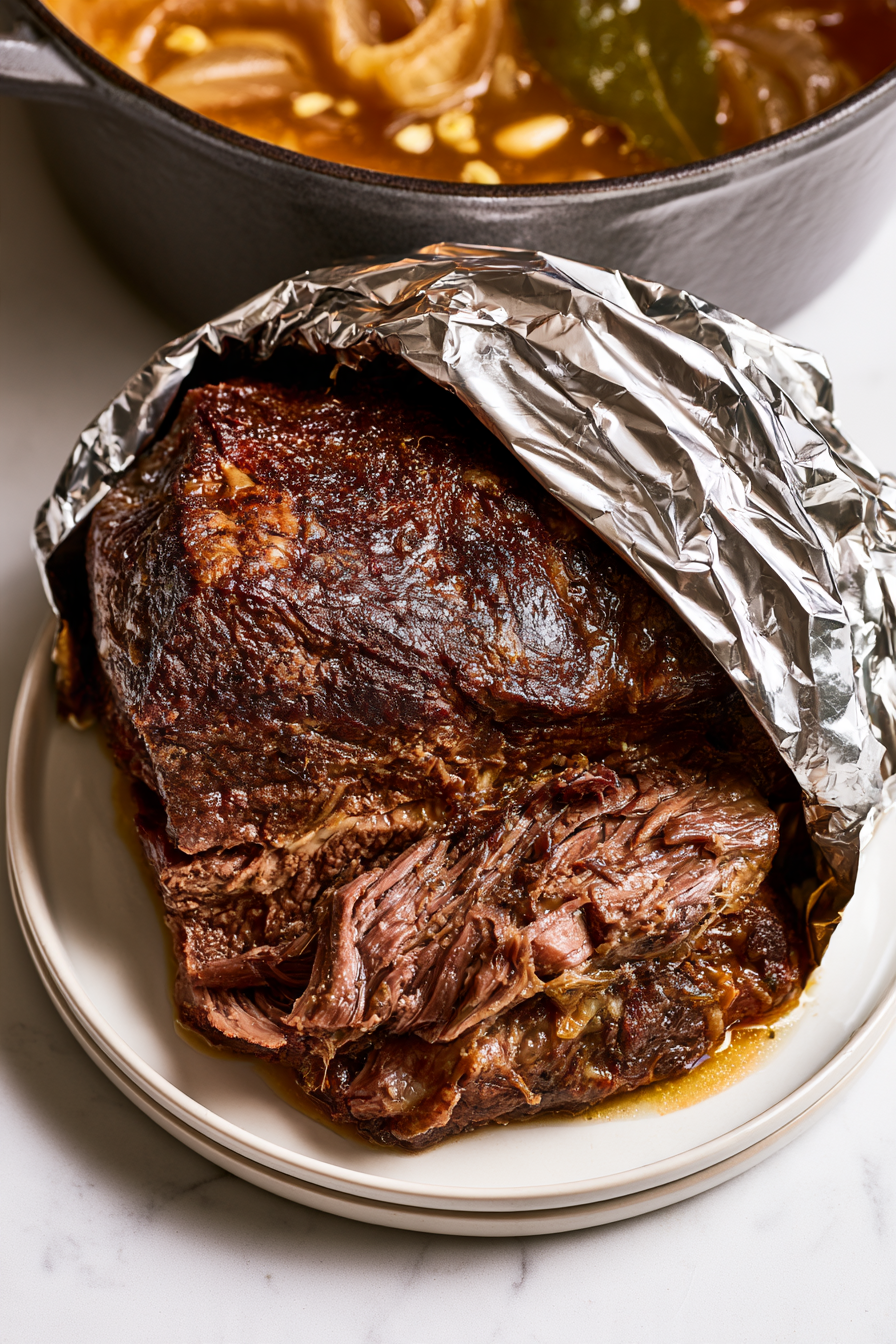
- Optionally, simmer the sauce uncovered for 10 minutes to thicken slightly, stirring occasionally until it reaches a glossy, flavorful consistency.
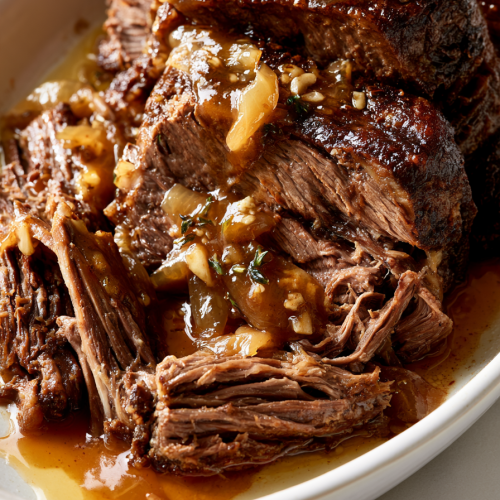
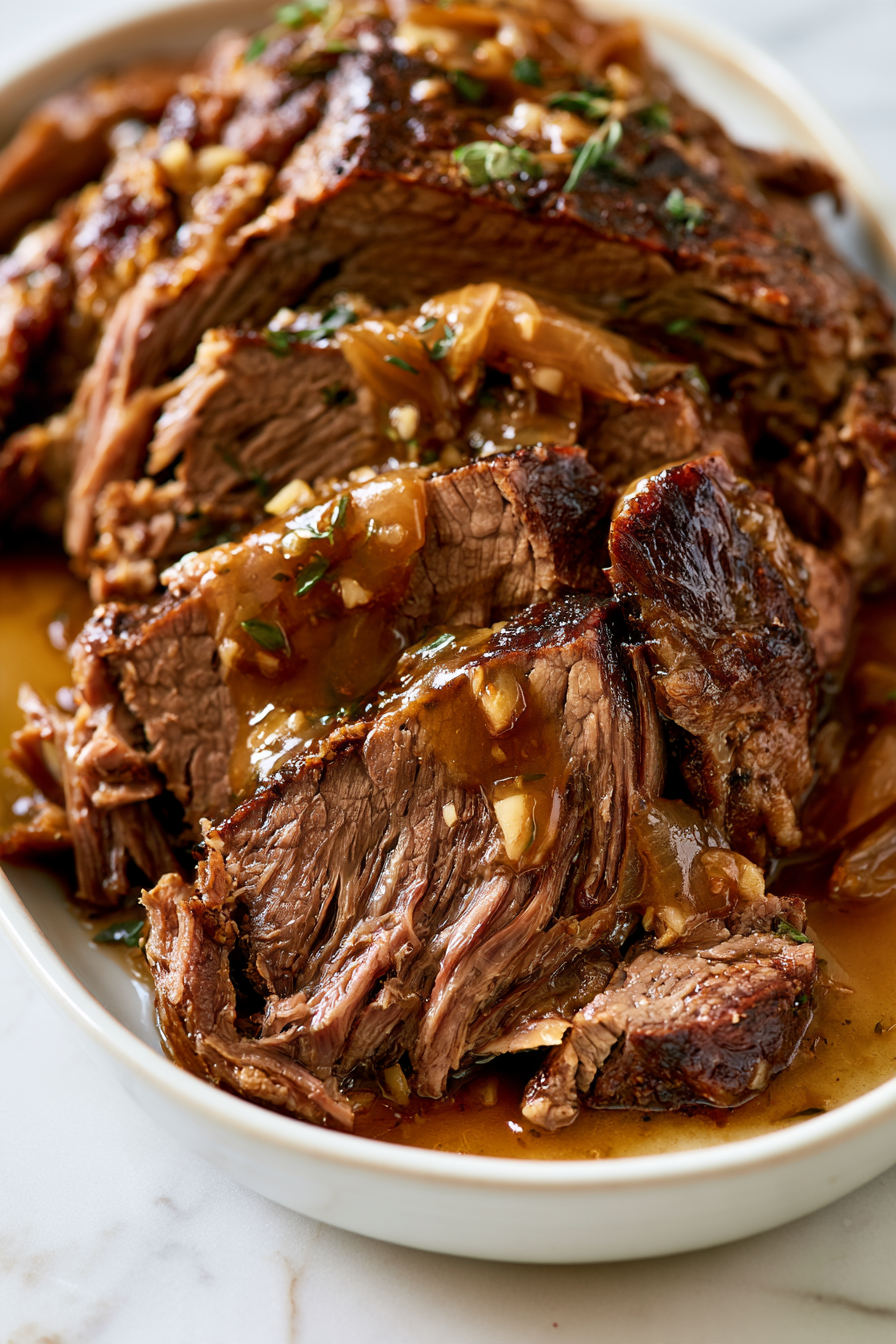
- Slice or shred the roast, then serve it topped with the rich cider gravy for a cozy, fall-inspired main dish.
Nutrition Information
| Nutrient | Estimated Amount |
|---|---|
| Calories | 450 kcal |
| Carbohydrates | 14 g |
| Protein | 42 g |
| Fat | 25 g |
| Fiber | 2 g |
| Sugar | 11 g |
| Sodium | 450 mg |
Common Mistakes to Avoid When Braising Pot Roast
- Skipping the Sear: Browning creates flavorful bits that enrich the cider sauce. Sear the roast on all sides before adding the liquid.
- Using Too Much Heat: A vigorous boil can cause uneven cooking and make it harder to achieve tender meat. Keep the braising liquid at a gentle simmer.
- Lifting the Lid Frequently: Repeatedly uncovering the pot releases heat and steam. Keep the lid on during most of the braising time.
- Using the Wrong Cut: Lean cuts without much connective tissue may become dry during prolonged braising. Cuts suited to slow cooking generally produce better results.
- Stopping Before the Meat Is Tender: Three hours is a guideline, not a guarantee. If the roast still resists a fork, continue cooking until it becomes tender.
- Reducing the Sauce Too Much: Excessive reduction can make the cider gravy overly concentrated or sweet. Simmer only until it reaches your preferred consistency.
Flavor Twists Worth Trying
- Apple and Herb Roast: Add a little fresh rosemary alongside the thyme for a more pronounced herbal aroma.
- Garlic-Forward Gravy: Add an extra clove of garlic if you prefer a stronger savory base.
- Mustard Cider Sauce: Whisk a small amount of Dijon mustard into the finished sauce for a tangy contrast.
- Apple and Onion Variation: Add sliced apples during the final portion of braising for additional fruit flavor and soft apple pieces.
- Smoky Seasoning: Add a small amount of smoked paprika to the salt and pepper before searing.
- Peppery Cider Gravy: Finish the sauce with freshly cracked black pepper for a sharper savory note.
More Comforting Fall Recipes to Try Next
- Roasted Pumpkin Soup
- Roasted Butternut Squash Soup
- Butternut Squash and Ginger Soup
- Roasted Fennel and Pumpkin Autumn Soup
- Chicken and Rice Soup with Cinnamon and Thyme
How to Store Apple Cider Braised Pot Roast
- Refrigerator Storage: Store the cooled meat and gravy in airtight containers and refrigerate within two hours. Use within 3 to 4 days.
- Freezer Storage: Freeze the roast with some of its gravy in freezer-safe containers for up to 2 to 3 months for best quality.
- Portioning: Divide the roast into meal-sized portions before storing to make reheating easier.
- Reheating: Warm the meat gently in a covered saucepan with some gravy until it reaches 165°F. Add a little water or broth if the sauce has thickened too much.
- Freshness Tip: Store the meat with some of the braising liquid to help prevent it from drying out during refrigeration.
Frequently Asked Questions
1. Can I make apple cider braised pot roast in the oven?
Yes. After bringing the cider to a gentle simmer, cover the Dutch oven and place it in an oven preheated to 325°F. Check the roast periodically and cook until it is fork-tender. The cooking time will depend on the cut and thickness.
2. What is the difference between apple cider and apple juice in this recipe?
Apple cider is generally less filtered and often has a fuller apple flavor, while apple juice is typically clearer and more filtered. Either can work, but juice may produce a sweeter, less complex sauce.
3. How do I know when the roast is ready to slice or shred?
The meat should yield easily when pierced with a fork. If it remains firm or difficult to pull apart, it needs more braising time even if the suggested cooking time has passed.
4. Why is my cider gravy too sweet?
Apple cider naturally contributes sweetness, and reducing the sauce concentrates it. Add a small splash of broth or a little acidity, such as apple cider vinegar, to balance the flavor gradually.
5. Can I make this recipe without a Dutch oven?
Yes. Use a heavy-bottomed, oven-safe covered pot or sear the roast in a skillet before transferring everything to a covered roasting dish. Make sure the cooking vessel retains moisture throughout braising.
6. Why is my pot roast tough after several hours?
The connective tissue may not have softened sufficiently yet, or the cut may be too lean for prolonged braising. Continue cooking gently and check the texture periodically rather than relying only on the clock.
7. Can I thicken the cider gravy without reducing it?
Yes. Mix a small amount of cornstarch with cold water to form a slurry, then stir it into the simmering gravy gradually until it reaches the desired consistency.
8. Should I slice or shred the roast before serving?
Either works. Slice the meat if it holds together neatly, or shred it if it becomes very tender and pulls apart easily. Spoon the cider gravy over the meat to keep it moist.


hi there,
The Freshman Cook started as a place to keep track of recipes I wanted to make again. Somewhere along the way, it grew into a collection of meals that friends requested, desserts that disappeared too quickly, and weeknight dinners that made life a little easier.
know more


