
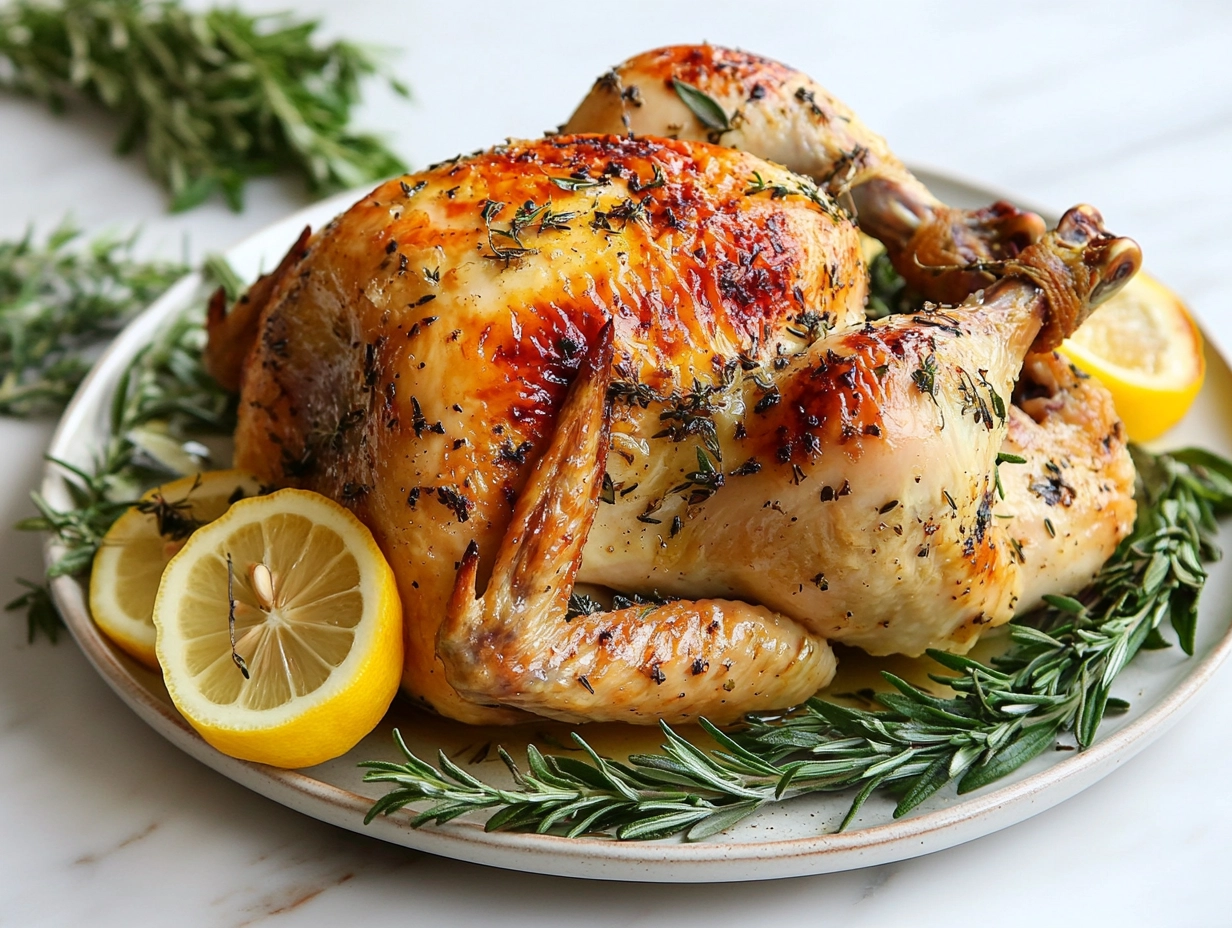

Roast chicken is one of those timeless dishes that feels comforting, celebratory, and deeply satisfying all at once. Gordon Ramsay’s roast chicken with lemon and herbs focuses on doing the basics perfectly, crisp skin, juicy meat, and simple aromatics that enhance rather than overpower the bird.
This recipe highlights balance and technique. Butter and olive oil help achieve golden, crackly skin, fresh herbs infuse the meat with aroma, and lemon brings brightness that cuts through the richness. It’s the kind of roast chicken that works just as beautifully for a Sunday family meal as it does for a special dinner.
Why This Recipe Feels Like Comfort Food
There’s something unmistakably comforting about a roast chicken coming out of the oven.
- The aroma fills the kitchen and signals a hearty meal
- Crispy skin contrasts perfectly with tender meat
- Herbs and garlic create warmth and familiarity
- It feels nourishing, grounding, and complete
This dish is simple, honest comfort food done exceptionally well.
The Inspiration Behind This Recipe
Roast chicken is a cornerstone of European home cooking, particularly in British and French kitchens. Gordon Ramsay’s version stays true to tradition while emphasizing seasoning, proper preparation, and resting — the small details that separate a good roast from a great one. The goal is to let the chicken shine, supported by lemon, garlic, and herbs that enhance its natural flavor rather than masking it.
What Makes Gordon Ramsay’s Roast Chicken Different
This roast chicken stands out because of its thoughtful technique.
- The chicken is seasoned generously inside and out
- Butter and herbs are rubbed under the skin
- Aromatics are placed inside the cavity
- The bird is basted naturally as it roasts
These steps ensure juicy meat and deeply flavored skin.
Ingredients Overview
This recipe uses straightforward, classic ingredients. The focus is on quality chicken, fresh herbs, and proper seasoning. Lemon and garlic add brightness and depth, while butter delivers richness and helps achieve crisp skin.
Nothing is complicated — it’s all about how the ingredients are used.
Ingredient Breakdown

Whole Chicken
A good-quality, air-chilled chicken roasts more evenly and develops crispier skin.
Butter
Butter adds richness and helps the herbs cling to the skin and meat.
Lemon
Lemon brightens the dish and balances the richness of the chicken.
Garlic
Whole garlic softens as it roasts, adding sweetness and aroma.
Fresh Herbs (Sage, Rosemary, Parsley)
Fresh herbs provide earthy, fragrant notes that define the flavor profile.
White Wine or Chicken Broth
Creates moisture in the pan and forms the base of a simple jus.
Salt & Pepper
Essential for bringing out the chicken’s natural flavor.
Spotlight on Herb Butter and Lemon
Herb Butter
Rubbing herb butter under the skin allows flavor to penetrate the meat while keeping it moist during roasting.
Lemon
Lemon juice and roasted lemon halves add acidity, preventing the dish from feeling heavy.
Together, they create a roast chicken that’s rich yet bright.
Smart Substitutions and Variations
- Use thyme instead of sage
- Swap butter for olive oil for a lighter version
- Add carrots or potatoes to the roasting pan
- Use stock instead of wine for alcohol-free cooking
The technique stays the same even with small changes.
Equipment You’ll Need
- Roasting pan
- Rack (optional)
- Kitchen twine
- Mixing bowl
- Sharp knife
- Meat thermometer
Step-by-Step Method
- Preheat oven to 200°C / 400°F
- Pat the chicken completely dry
- Mix butter with minced garlic, herbs, salt, and pepper
- Gently loosen skin and rub herb butter underneath
- Season the cavity generously
- Stuff cavity with lemon halves, garlic bulb, and herb sprigs
- Tie legs together with kitchen twine
- Place onion (if using) in the roasting pan
- Set chicken on top and drizzle with olive oil or butter
- Pour wine or broth into the pan
- Roast until skin is golden and juices run clear
- Rest the chicken before carving
How to Know the Chicken Is Done
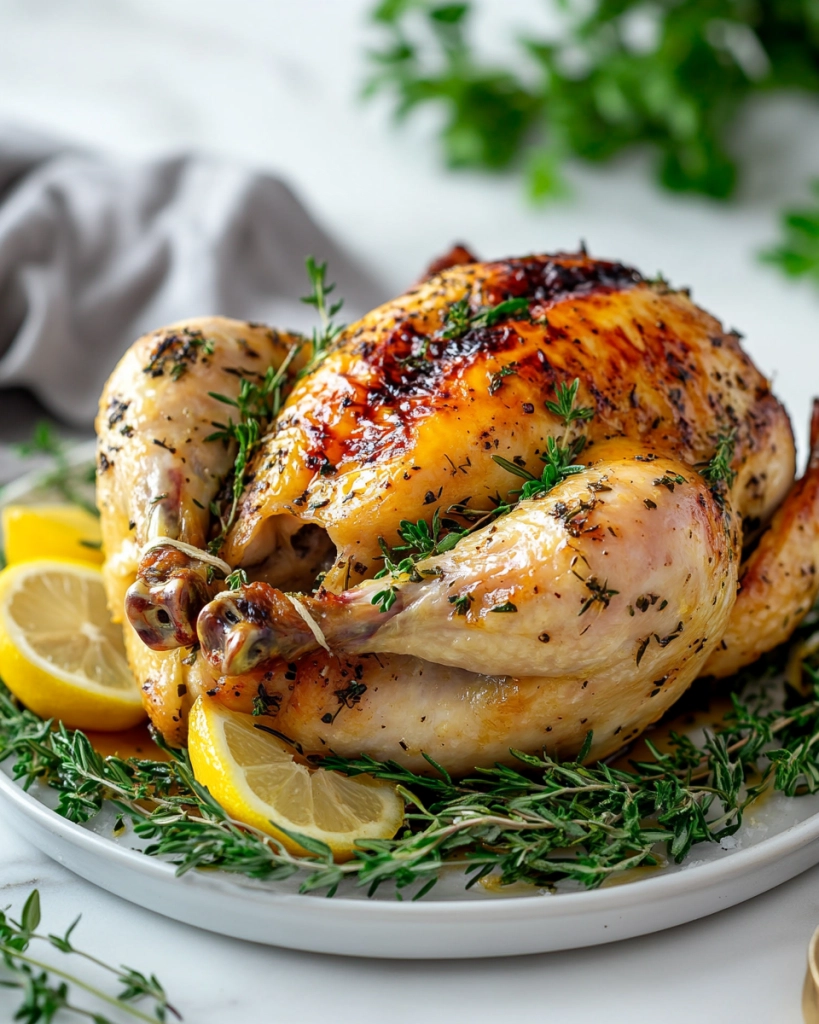
- Internal temperature reaches 74°C / 165°F
- Juices run clear when pierced
- Skin is golden and crisp
- Legs move easily when pulled
Resting the chicken ensures juicy slices.
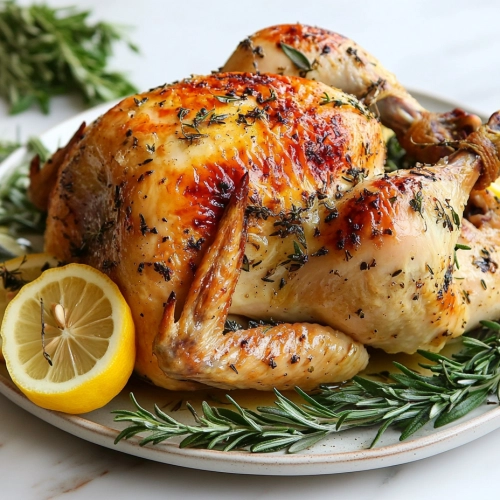
Gordon Ramsay Roast Chicken with Lemon and Herbs.
Equipment
- Roasting Pan
- Rack (optional)
- Kitchen Twine
- Mixing bowl
- Sharp Knife
- Meat thermometer
Ingredients
- 1 whole chicken 1.75–2 kg, patted dry
- 100 g unsalted butter softened
- 1 lemon half juiced, half halved
- 1 whole garlic bulb halved
- 3 garlic cloves minced
- 1 tbsp fresh sage chopped
- 2 tsp fresh rosemary chopped
- 1 tbsp fresh parsley chopped
- 1 onion quartered (optional)
- 1 cup dry white wine or chicken broth
- Olive oil optional
- Sea salt and black pepper to taste
Instructions
- Preheat oven to 200°C / 400°F
- Pat the chicken completely dry
- Mix butter with minced garlic, herbs, salt, and pepper
- Gently loosen skin and rub herb butter underneath
- Season the cavity generously
- Stuff cavity with lemon halves, garlic bulb, and herb sprigs
- Tie legs together with kitchen twine
- Place onion (if using) in the roasting pan
- Set chicken on top and drizzle with olive oil or butter
- Pour wine or broth into the pan
- Roast until skin is golden and juices run clear
- Rest the chicken before carving
Tips and Tricks for Best Results
- Always start with dry skin
- Season more than you think you need
- Let the chicken rest at least 10 minutes
- Use pan juices as a simple sauce
Common Mistakes and How to Fix Them
Skin isn’t crispy
The chicken wasn’t dry enough or oven wasn’t hot.
Chicken is dry
It was overcooked — rely on a thermometer.
Flavor feels bland
Season more generously inside and out.
Burnt pan juices
Add a splash of water or stock during roasting.
What to Serve With Roast Chicken
- Roasted potatoes
- Buttered green beans
- Garlic mashed potatoes
- Steamed carrots
- Green salad
Make-Ahead and Storage Tips
- Herb butter can be made 24 hours ahead
- Store leftovers in the fridge for up to 3 days
- Reheat gently to avoid drying out
- Use leftovers for sandwiches or salads
Frequently Asked Questions
1. Should I cover the chicken while roasting?
No, roasting uncovered helps the skin crisp.
2. Can I use dried herbs instead of fresh?
Yes, but fresh herbs give better aroma and flavor.
3. Do I need to baste the chicken?
Not necessary — the butter does the work.
4. Why rest the chicken before carving?
It allows juices to redistribute.
5. Can I roast vegetables in the same pan?
Yes, they absorb delicious flavor.
6. What’s the best oven temperature?
A hot oven (200°C / 400°F) works best.
7. Can I make this ahead for guests?
Yes, roast earlier and reheat gently.
8. How do I keep the breast from drying out?
Butter under the skin and proper timing help.
9. Can I use olive oil instead of butter?
Yes, but butter adds more richness.
10. Is this a classic roast method?
Yes, it reflects traditional European roasting refined by chefs.

hi there,
The Freshman Cook started as a place to keep track of recipes I wanted to make again. Somewhere along the way, it grew into a collection of meals that friends requested, desserts that disappeared too quickly, and weeknight dinners that made life a little easier.
know more