



These Ham and Cheese Savory Scones are a delicious twist on classic scones, making them perfect for breakfast, brunch, lunch, or even an afternoon snack. They’re simple to prepare with everyday ingredients and bake into golden, flaky wedges that are easy to serve for family meals or gatherings.
Each scone has crisp, buttery edges with a tender interior filled with smoky ham, sharp cheddar, and fresh chives. The combination creates a rich, savory bite that’s equally satisfying on its own or alongside a warm bowl of soup.
Why This Recipe Works So Well
- Perfect for Any Meal: Great for breakfast, brunch, lunch, or a light dinner.
- Easy to Make Ahead: Prepare the dough in advance for fresh-baked scones whenever you need them.
- Flaky Bakery-Style Texture: Cold grated butter creates tender, flaky layers.
- Simple Everyday Ingredients: Everything is easy to find at the grocery store.
- Beginner Friendly: Straightforward steps make homemade savory scones easy to master.
- Great for Entertaining: Easy to bake and serve for brunches, holidays, or casual gatherings.
Ingredient Notes & Easy Substitutions

- Frozen Butter: Grating frozen butter distributes it evenly through the flour, helping create flaky layers.
- Sharp Cheddar Cheese: Sharp cheddar adds bold flavor. Mild cheddar, Gruyère, or Monterey Jack are also excellent choices.
- Cooked Ham: Use diced leftover ham or deli ham cut into small pieces for even distribution.
- Heavy Cream: Creates a rich, tender dough. Full-fat buttermilk can be used for a slightly tangier flavor.
- Fresh Chives: Add a mild onion flavor that complements the ham and cheese without overpowering them.
- Dijon Mustard: Optional, but it adds subtle depth that enhances the savory ingredients.
Chef’s Tip: Handle the dough as gently as possible when shaping. Minimal mixing keeps the butter in small pieces, giving the scones their signature flaky texture.

Ham and Cheese Savory Scones Recipe
Equipment
- Large mixing bowl
- Pastry cutter or fork
- Box grater
- Baking sheet
- Parchment paper
- Bench scraper or sharp knife
- Pastry brush
- Cooling rack
Ingredients
- 2 cups all-purpose flour
- 1 tablespoon baking powder
- 1 tablespoon granulated sugar
- 3/4 teaspoon salt
- 1/2 teaspoon garlic powder
- 1/4 teaspoon freshly ground black pepper
- 1/2 cup unsalted butter frozen and grated
- 1 cup shredded sharp cheddar cheese
- 3/4 cup diced cooked ham
- 2 tablespoons chopped fresh chives
- 2/3 cup heavy cream
- 1 large egg
- 1 teaspoon Dijon mustard optional
- 1 tablespoon heavy cream for brushing
- 1 tablespoon shredded cheddar for topping (optional)
- Flaky sea salt for garnish (optional)
Instructions
- Preheat the oven to 400°F (200°C) and line a baking sheet with parchment paper.
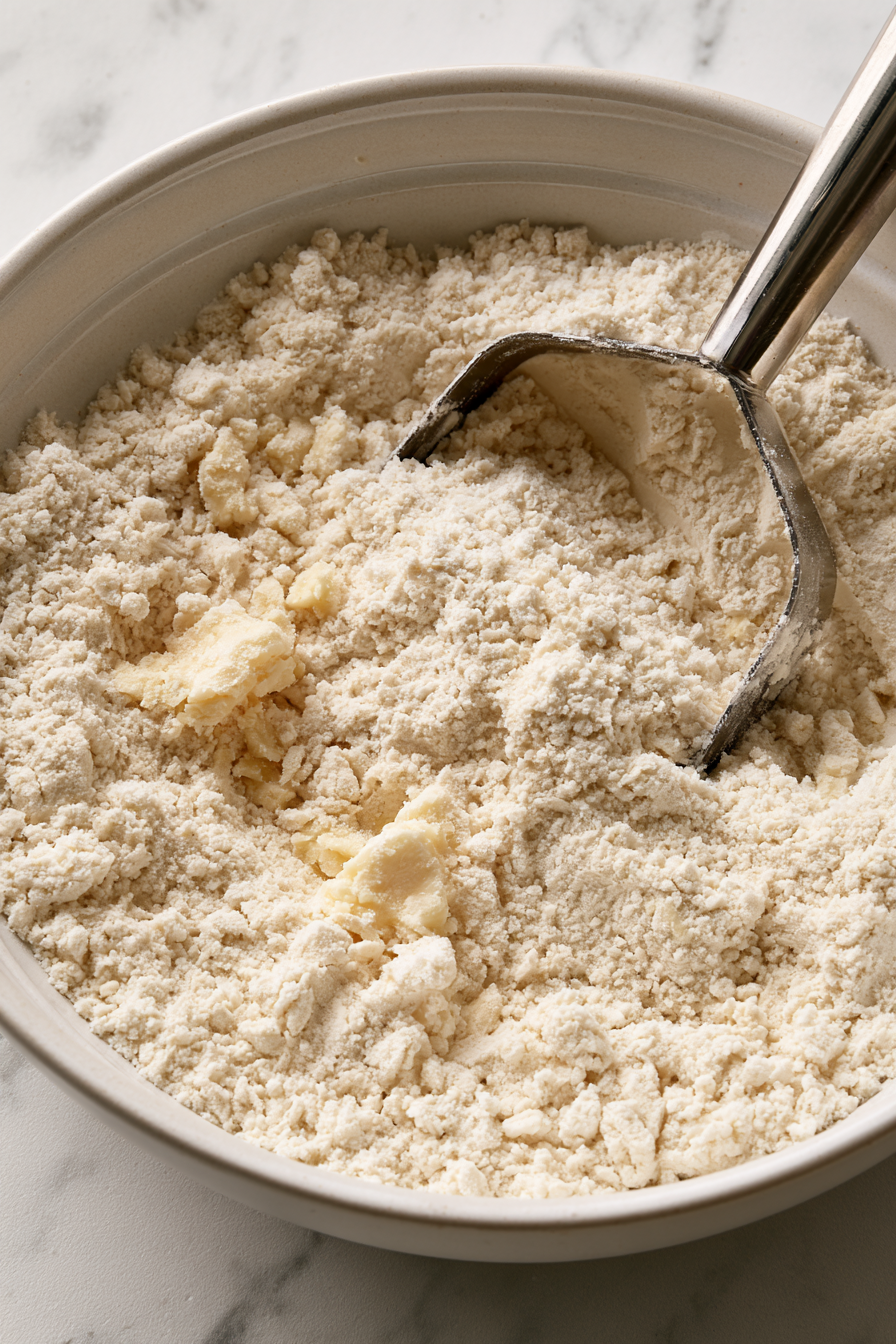
- In a large bowl, whisk together the flour, baking powder, sugar, salt, garlic powder, and black pepper. Add the grated butter and work it into the flour until the mixture resembles coarse crumbs.
- Stir in the shredded cheddar cheese, diced ham, and chopped chives until evenly distributed.

- Whisk together the heavy cream, egg, and Dijon mustard if using. Pour the wet ingredients into the flour mixture and gently stir until a shaggy dough forms. Avoid overmixing.

- Transfer the dough to a lightly floured surface and gently press it into a 1-inch thick circle. Cut into 8 equal wedges and place them on the prepared baking sheet, leaving space between each scone.
- Brush the tops with heavy cream and sprinkle with extra cheddar cheese and flaky sea salt if desired.

- Bake until the scones are golden brown and cooked through. Let them cool for 5 to 10 minutes before serving warm.

Nutrition Information
| Nutrient | Per Serving |
|---|---|
| Calories | 395 kcal |
| Carbohydrates | 27 g |
| Protein | 14 g |
| Fat | 26 g |
| Fiber | 1 g |
| Sugar | 2 g |
| Sodium | 610 mg |
Common Mistakes to Avoid
- Using Warm Butter: Soft butter melts into the dough instead of creating flaky layers.
- Overmixing the Dough: Too much mixing develops gluten and makes the scones dense.
- Skipping the Cream Brushing: Brushing the tops helps create a beautifully golden finish.
- Uneven Scone Sizes: Cutting evenly ensures all the scones bake at the same rate.
- Adding Too Much Flour While Shaping: Excess flour can make the dough dry and heavy.
- Serving Immediately from the Oven: Let the scones cool briefly so the crumb can finish setting.
Delicious Variations You Should Try
- Bacon and Cheddar: Replace the ham with crispy cooked bacon.
- Swiss Cheese Version: Swap the cheddar for shredded Swiss cheese.
- Jalapeño Cheddar: Add finely diced jalapeños for a little heat.
- Everything Bagel Style: Sprinkle everything bagel seasoning over the cream wash before baking.
- Herb Lover’s Scones: Mix in chopped parsley, thyme, or rosemary with the chives.
- Smoked Gouda Twist: Use smoked Gouda for a richer, smoky flavor.
- Caramelized Onion Version: Fold in chopped caramelized onions for extra sweetness.
More Must-Try Recipes
Storage Tips for the Best Texture
- Make Ahead: Prepare and shape the dough up to 24 hours ahead, then refrigerate until ready to bake.
- Room Temperature: Store cooled scones in an airtight container for up to 2 days.
- Refrigerator Storage: Keep in an airtight container for up to 5 days.
- Freezer Storage: Freeze baked scones for up to 3 months in a freezer-safe container.
- Reheating: Warm in a 325°F oven for 8 to 10 minutes until heated through.
Frequently Asked Questions
- Why should the butter be frozen before grating?
Frozen butter stays cold longer during mixing, creating pockets of steam in the oven that produce flaky layers. - Can I use pre-shredded cheese?
Yes. Freshly shredded cheese melts a little more smoothly, but pre-shredded cheese works well for convenience. - How do I know when the scones are fully baked?
They should be golden brown on top and around the edges, with the centers feeling firm when gently pressed. - Can I make smaller scones?
Yes. Divide the dough into smaller wedges and begin checking for doneness a few minutes earlier. - Why is my dough crumbly before shaping?
A slightly shaggy dough is normal. Gently press it together with your hands rather than adding too much extra liquid. - Can I use a pastry cutter instead of my hands?
Absolutely. A pastry cutter is an excellent tool for incorporating the cold butter without warming it.

hi there,
The Freshman Cook started as a place to keep track of recipes I wanted to make again. Somewhere along the way, it grew into a collection of meals that friends requested, desserts that disappeared too quickly, and weeknight dinners that made life a little easier.
know more