
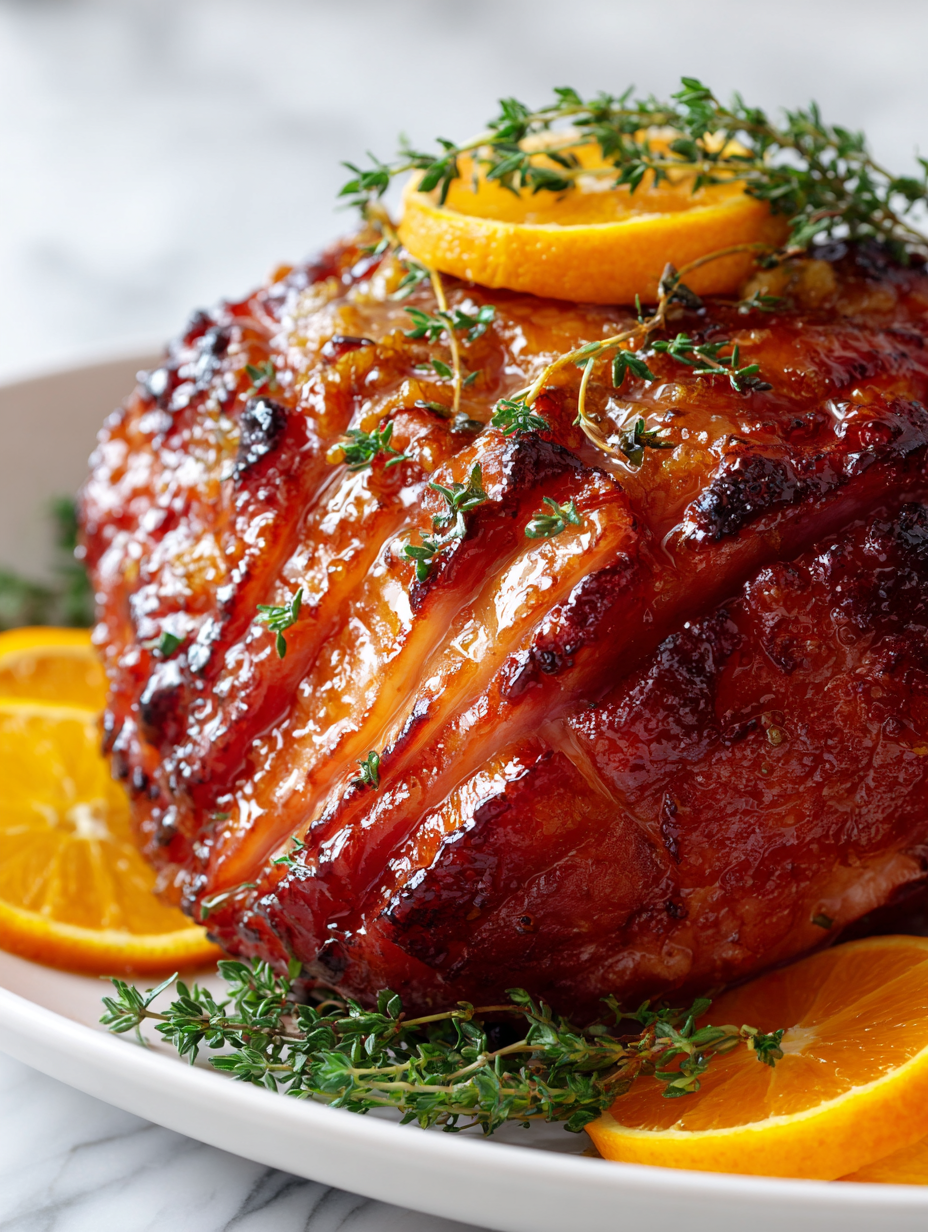

This recipe came about after a few failed attempts with overly sweet or under-flavored glazes. I wanted something that would cling to the ham, offering a tangy punch that cuts through the fatty richness. It’s the kind of glaze that makes you want to lick the serving spoon.
Why I keep returning to this glaze
It’s the perfect harmony of sweet, tangy, and smoky. Every time I make it, it reminds me of holiday dinners where everyone reaches for seconds. The sticky, glossy surface makes the ham look as festive as it tastes. Plus, I always find new tweaks to make it even better — more lemon zest, a dash of hot sauce, whatever feels right that year.
What’s in the glaze and why it works

- Honey: Gives a sticky, glossy finish and caramelizes beautifully, bringing sweet depth.
- Dijon mustard: Adds tang and a slight heat, balancing the sweetness with a sharp, spicy kick.
- Apple cider vinegar: Brightens the glaze with acidity, cutting through the richness of the ham.
- Soy sauce (optional): Adds umami and saltiness, enhancing overall flavor, but can be skipped for a milder taste.
- Brown sugar or maple syrup: For extra sweetness and a deeper caramel color, but use sparingly if you prefer a tangy punch.
- A splash of whiskey or bourbon (optional): Adds smoky warmth; omit if you prefer a more straightforward glaze.
Tools of the trade for a glossy glaze
- Small saucepan: To simmer and thicken the glaze.
- Pastry brush: To brush the glaze evenly over the ham.
- Sharp knife: To score the ham’s surface for better glaze absorption.
- Roasting pan: To hold the ham and catch drippings.
- Meat thermometer: To monitor internal temperature.
Step-by-step for a glossy, tangy Christmas ham glaze
Step 1: Preheat your oven to 160°C (320°F).
Step 2: Score the ham’s surface in a diamond pattern, about 1 inch apart.
Step 3: Mix your glaze ingredients in a small saucepan: honey, Dijon, apple cider vinegar, a splash of soy sauce, and a touch of Dijon.
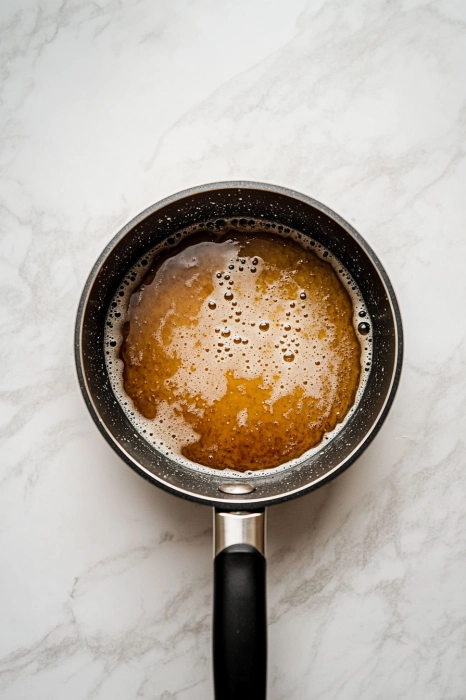
Step 4: Bring the mixture to a gentle simmer over medium heat. Let it thicken slightly, about 5 minutes, until it’s syrupy and fragrant.
Step 5: Place the ham in a roasting pan, fat side up. Brush generously with the glaze.
Step 6: Bake the ham uncovered, basting every 20 minutes with more glaze, until heated through and beautifully caramelized, about 1.5–2 hours.
Step 7: During baking, keep an eye for golden, crackly edges and a smell of smoky-sweet richness.
Step 8: If the glaze starts to burn, tent the ham with foil and lower the oven temp slightly.
Step 9: Remove from oven, let rest 15 minutes before carving.
Step 10: Brush with a little more glaze for a shiny, sticky finish.
Step 11: Serve slices with extra sauce on the side.
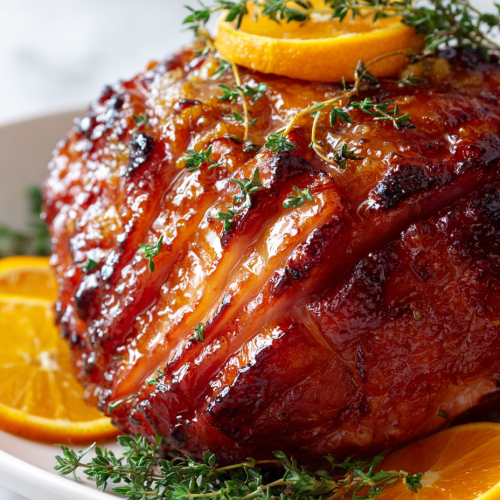
Tangy Glazed Christmas Ham
Equipment
- Small saucepan
- Pastry brush
- Sharp Knife
- Roasting Pan
- Meat thermometer
Ingredients
- 1 whole ham (preferably a pre-cooked ham) about 8-10 lbs
- 0.25 cup honey for a sticky, glossy glaze
- 2 tbsp Dijon mustard adds tang and a slight heat
- 1/4 cup apple cider vinegar brightens the glaze with acidity
- 2 tbsp soy sauce (optional) adds umami and saltiness
- 2 tbsp brown sugar or maple syrup for extra sweetness and color
- 1 tbsp whiskey or bourbon (optional) for smoky warmth
Instructions
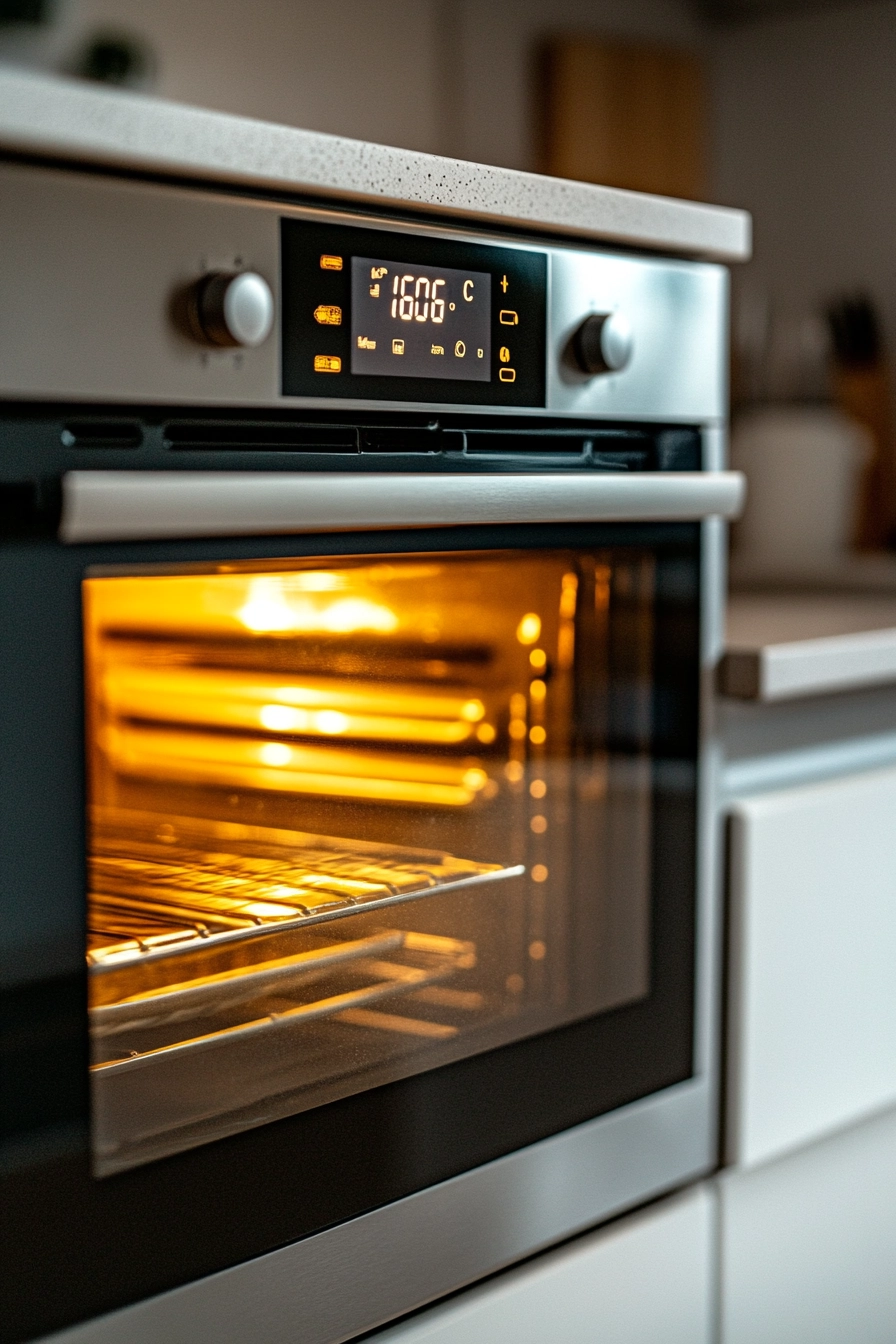
- Preheat your oven to 160°C (320°F).
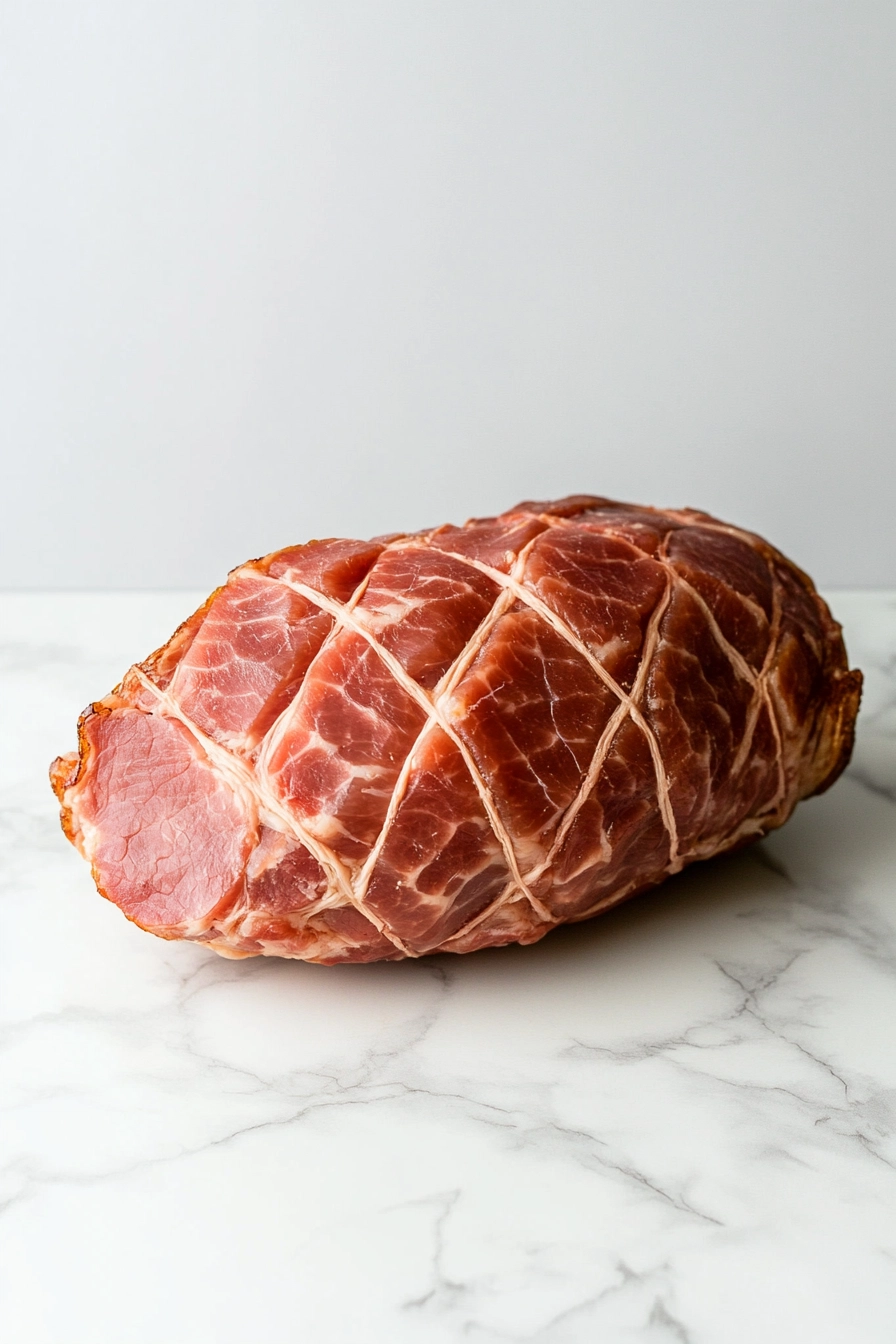
- Use a sharp knife to score the surface of the ham in a diamond pattern, about 1 inch apart, making shallow cuts that help the glaze seep in and create a festive look.
- Combine honey, Dijon mustard, apple cider vinegar, soy sauce (if using), brown sugar, and whiskey in a small saucepan. Stir well to incorporate all ingredients and bring to a gentle simmer over medium heat.
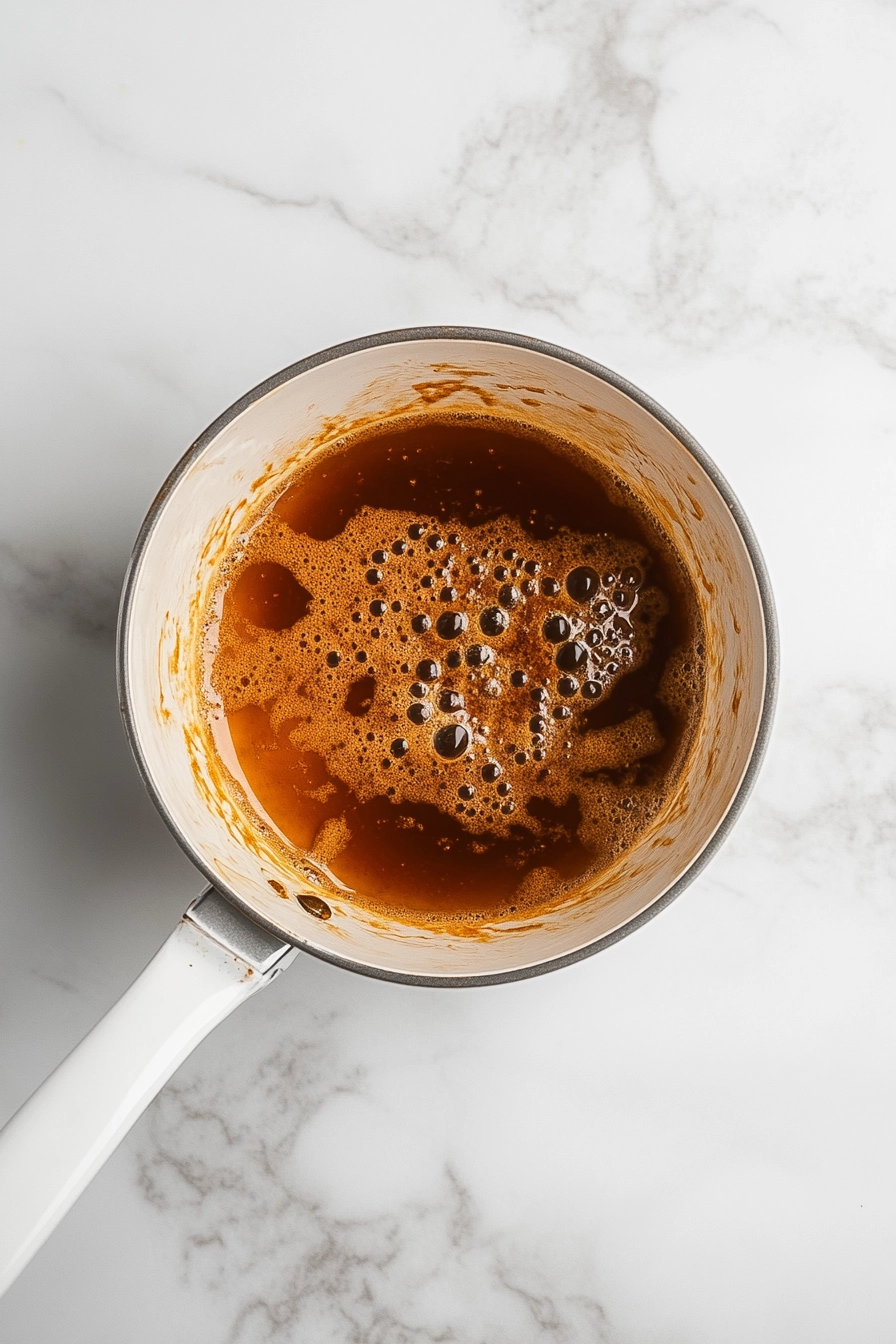
- Let the mixture simmer for about 5 minutes until it thickens slightly, becoming syrupy and fragrant. This helps it cling better to the ham during baking.
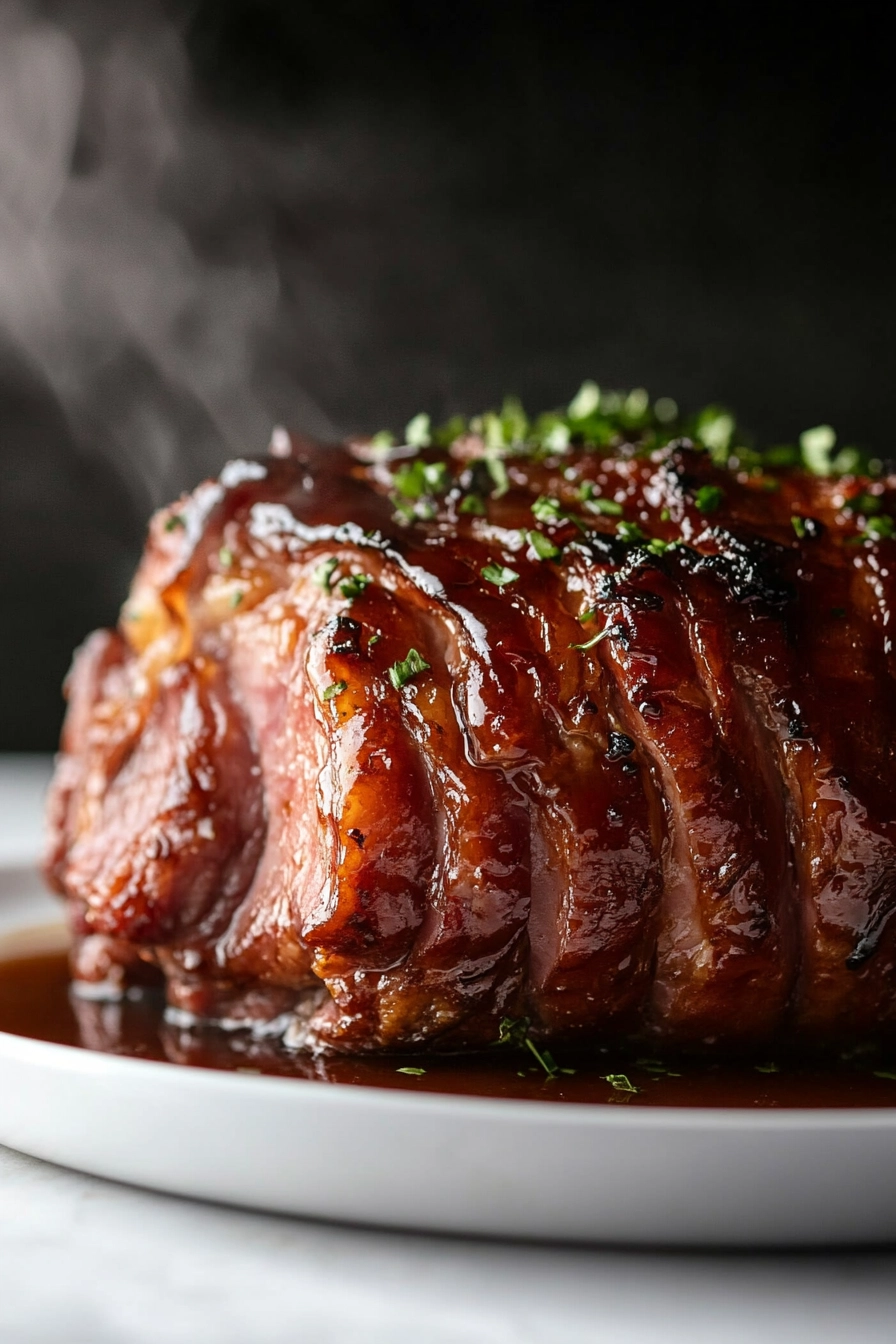
- Place the scored ham in a roasting pan, fat side up. Use a pastry brush to generously coat the ham with the warm glaze, covering all the scored surfaces.
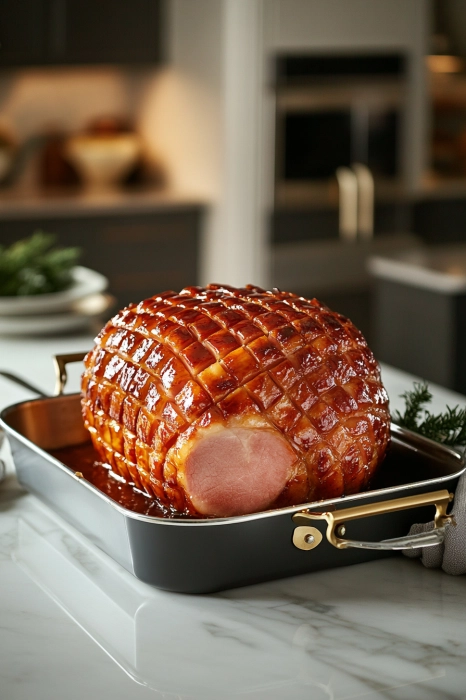
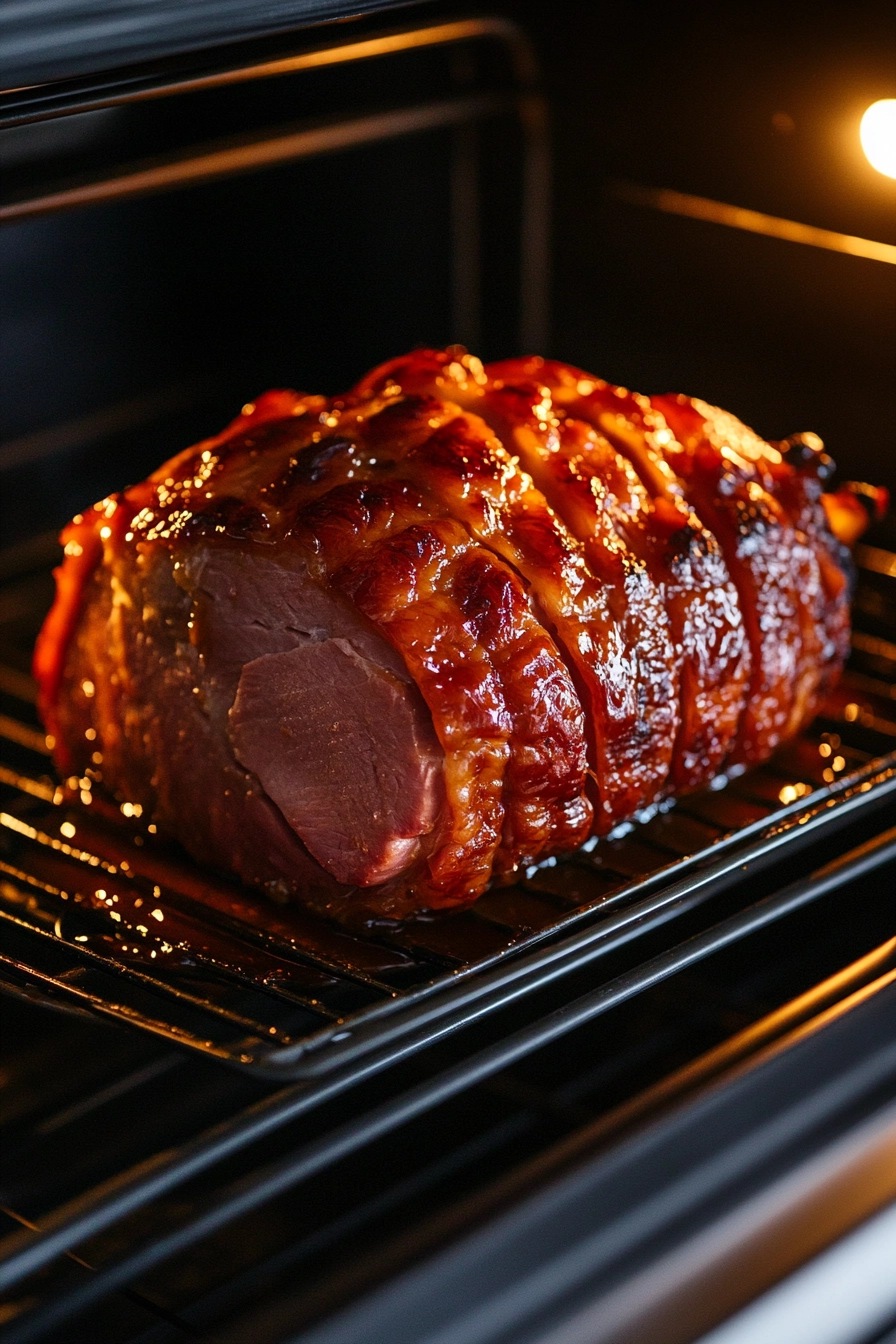
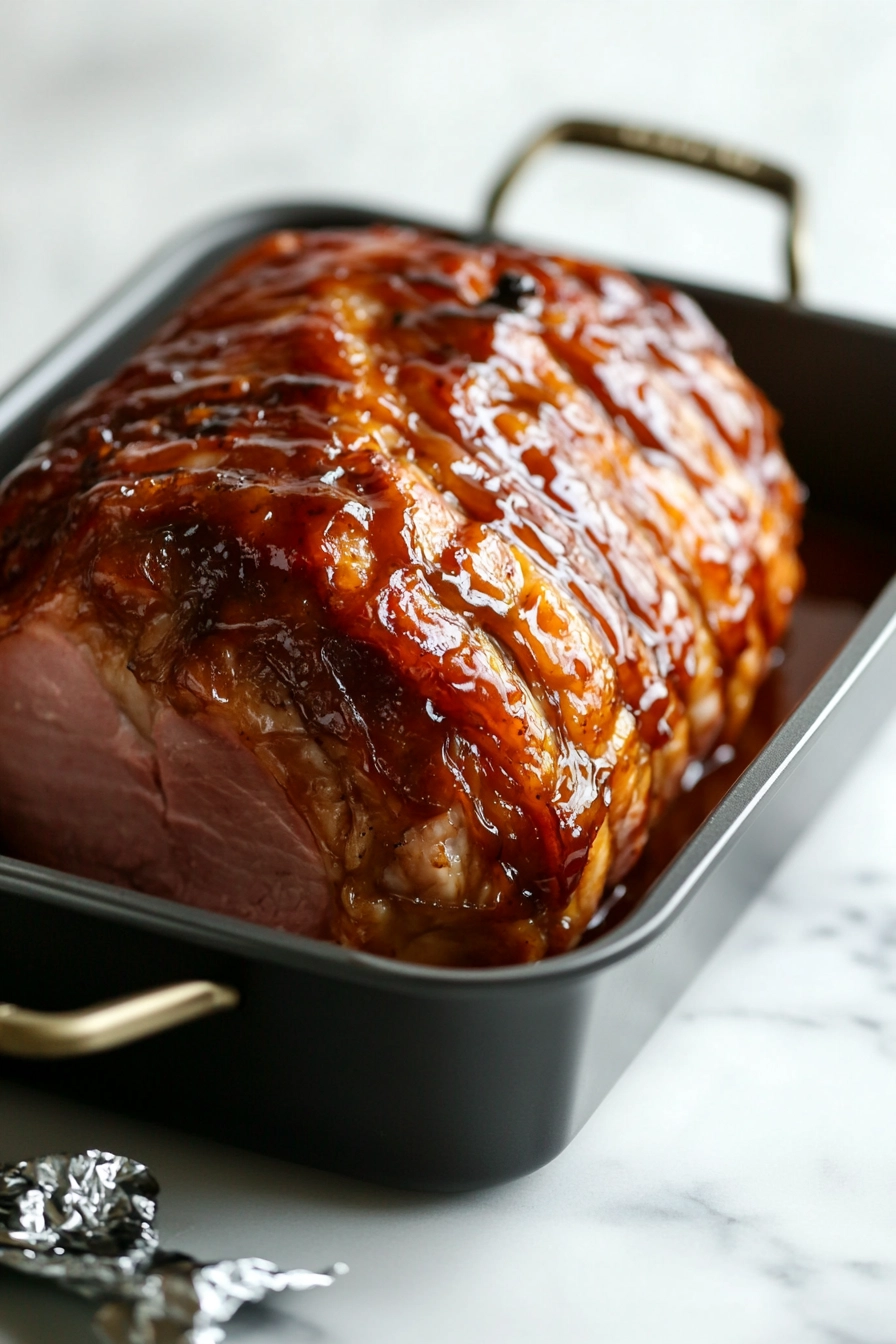
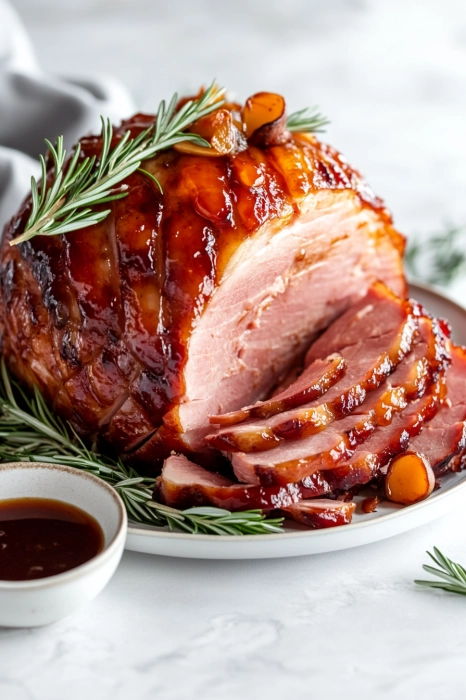
- Once the ham is heated through and the glaze is beautifully caramelized, remove it from the oven and let it rest for 15 minutes. During this time, the juices redistribute, ensuring a tender, juicy bite.
Cooking checkpoints for a perfect glaze
- Look for a deep amber color in the glaze — it should be shiny and slightly thickened.
- Smell for a fragrant mix of honey, vinegar, and smoky notes — that’s when it’s ready to brush.
- Check the ham’s internal temperature; it should hit 60°C (140°F) for reheating, without drying out.
- Observe the edges of the glaze; they should crackle slightly without burning.
Common pitfalls and how to fix them
- Applying glaze too early, resulting in a burnt, bitter coating.? Brush the glaze early? Wait until the last hour to prevent burning.
- Overcooking the ham, making it dry and tough.? Overbake? Cover with foil and lower heat to save the moisture.
- Glaze remains runny and doesn’t stick well.? Glaze too thin? Simmer longer or add a touch of cornstarch slurry.
- Edges turn black and bitter.? Burnt edges? Tent with foil promptly to shield from direct heat.
This glaze isn’t just about the shiny surface; it’s about balancing sweetness and acidity in a way that cuts through the richness of the ham. It’s messy in the best way, sticky and aromatic, and it makes the whole table smell like a festive dream. Enjoy slicing into the tender meat with that crispy, caramelized top — a real highlight of any holiday spread.

hi there,
The Freshman Cook started as a place to keep track of recipes I wanted to make again. Somewhere along the way, it grew into a collection of meals that friends requested, desserts that disappeared too quickly, and weeknight dinners that made life a little easier.
know more