
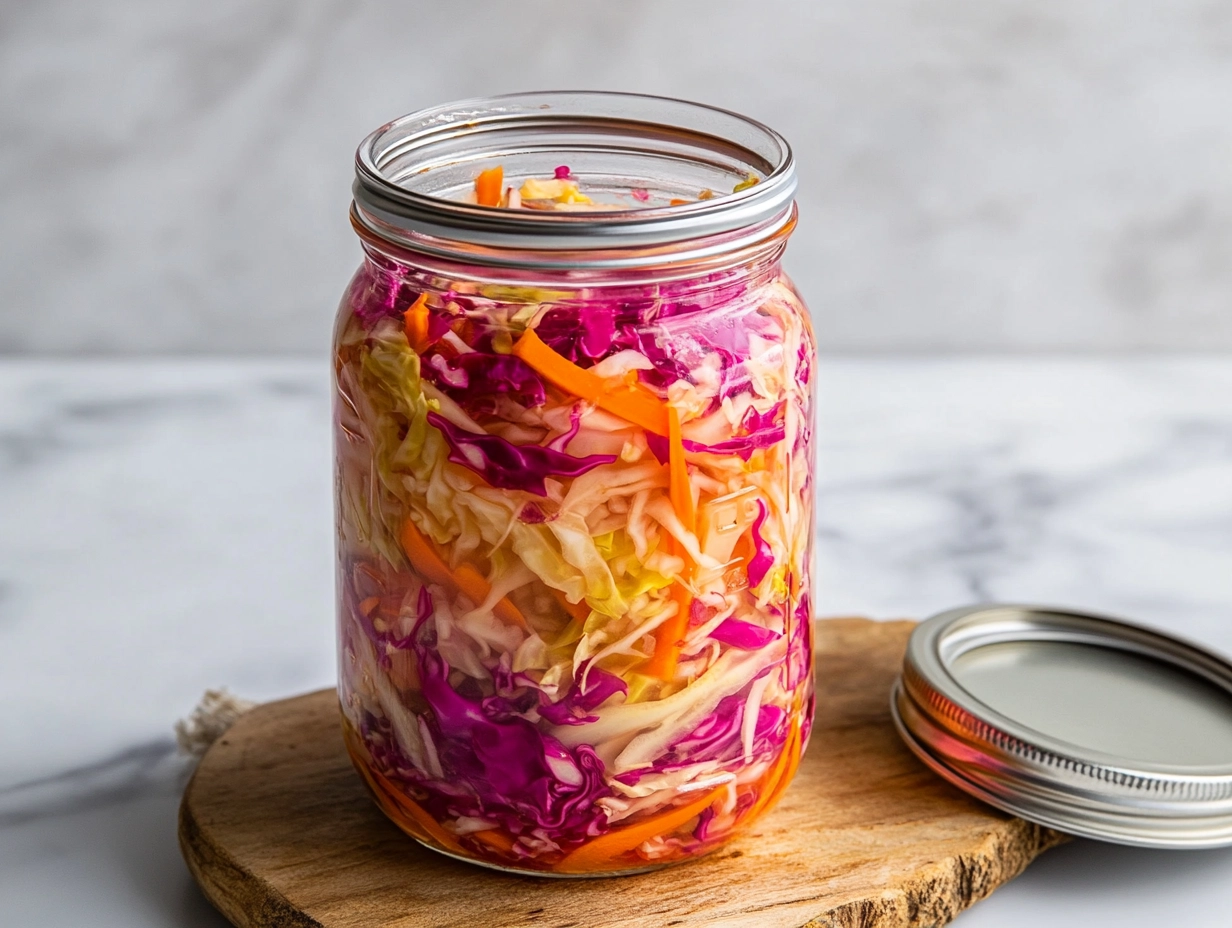

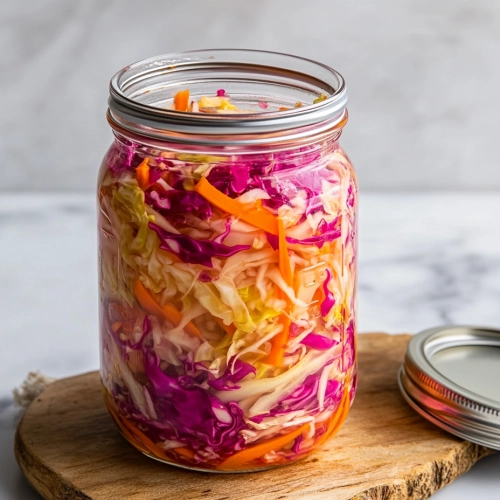
This homemade sauerkraut recipe is a simple, nourishing way to bring fermented goodness into your kitchen using just a handful of fresh ingredients. While the prep takes only about 30 minutes, the real magic happens during fermentation, when the cabbage slowly transforms into a tangy, crunchy, probiotic-rich side dish.
Salt draws out water and creates an anaerobic environment where lactic acid bacteria convert sugars into lactic acid, preserving the vegetables.
Table of Contents
Why You’ll Love This Recipe
This recipe is a fantastic way to make your own fermented food at home without any complicated equipment. Once the jars are packed, the fermentation process does most of the work for you.
It’s also budget-friendly and easy to customize with different vegetables and spices. Plus, homemade sauerkraut keeps well for months, making it great for meal prep and healthy everyday meals.
Kitchen Tools You’ll Need
- Large mixing bowl: For massaging and mixing
- Knife or mandoline: For shredding vegetables
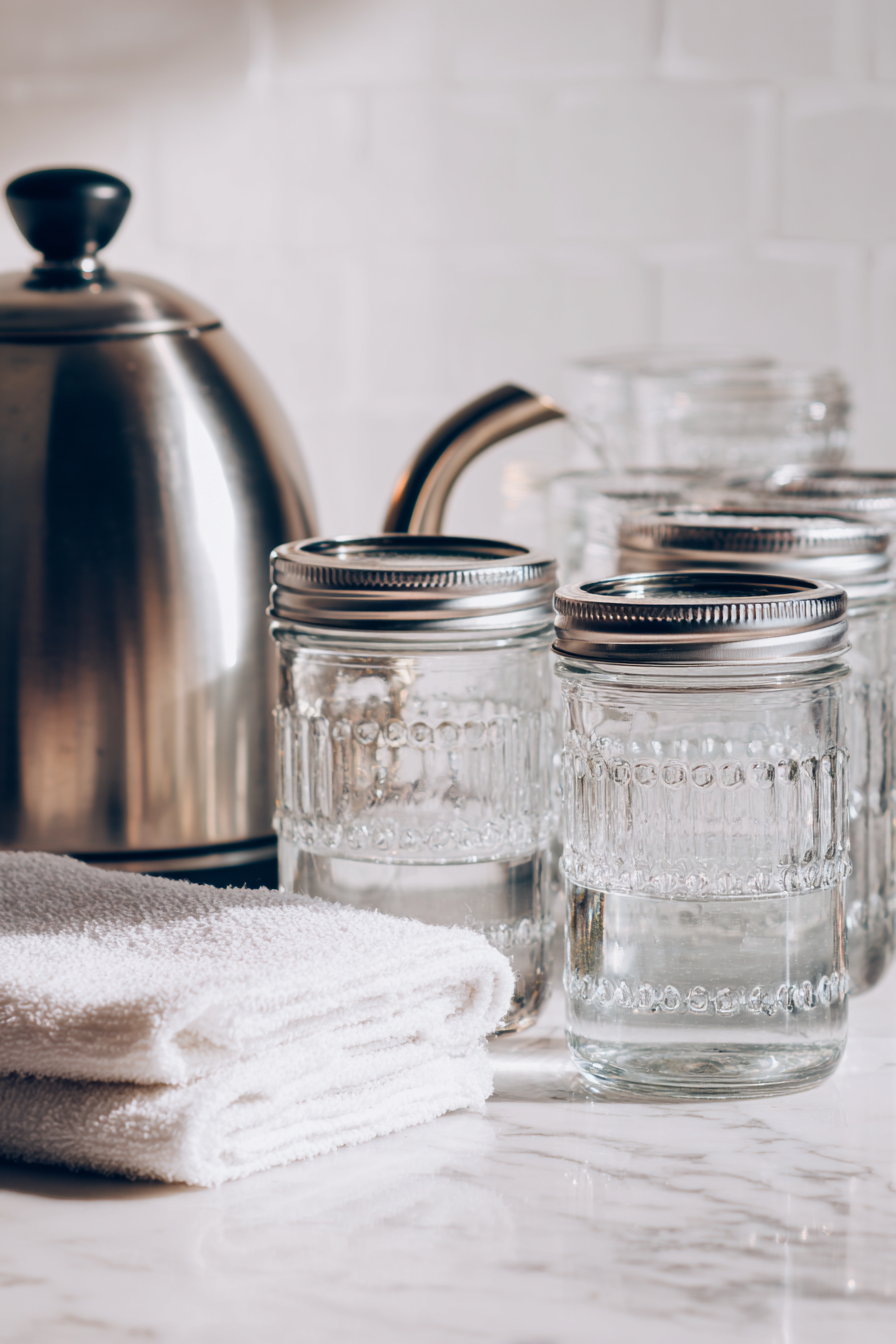
- Sterilized jars: For fermentation
- Clean spoon or tamper: For packing the jars
- Clean kitchen towel: For wiping jar rims
Sauerkraut Recipe Ingredients

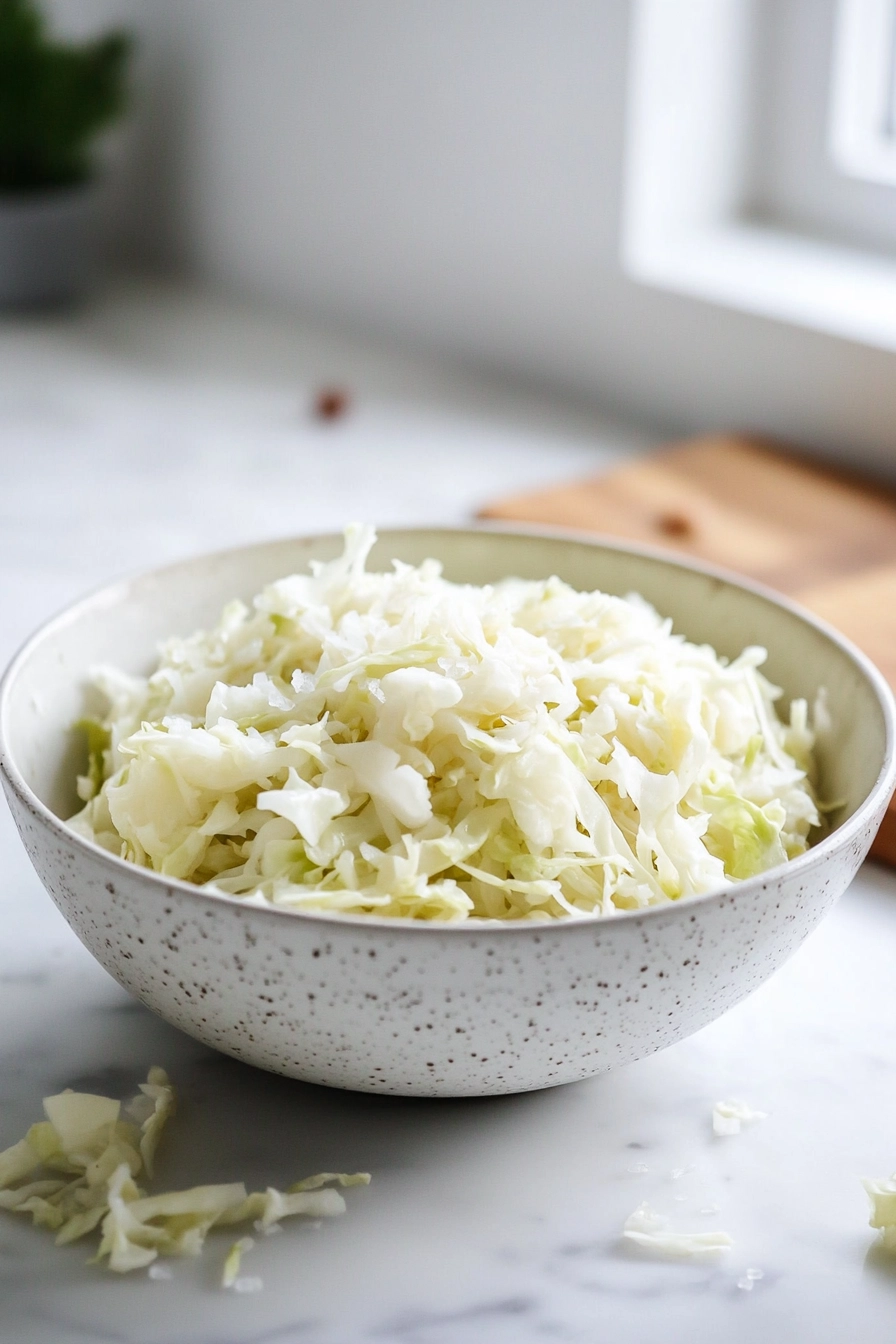
- Red or green cabbage: 8 cups, finely grated or chopped
- Sea salt: 3-4 teaspoons, plus more to taste
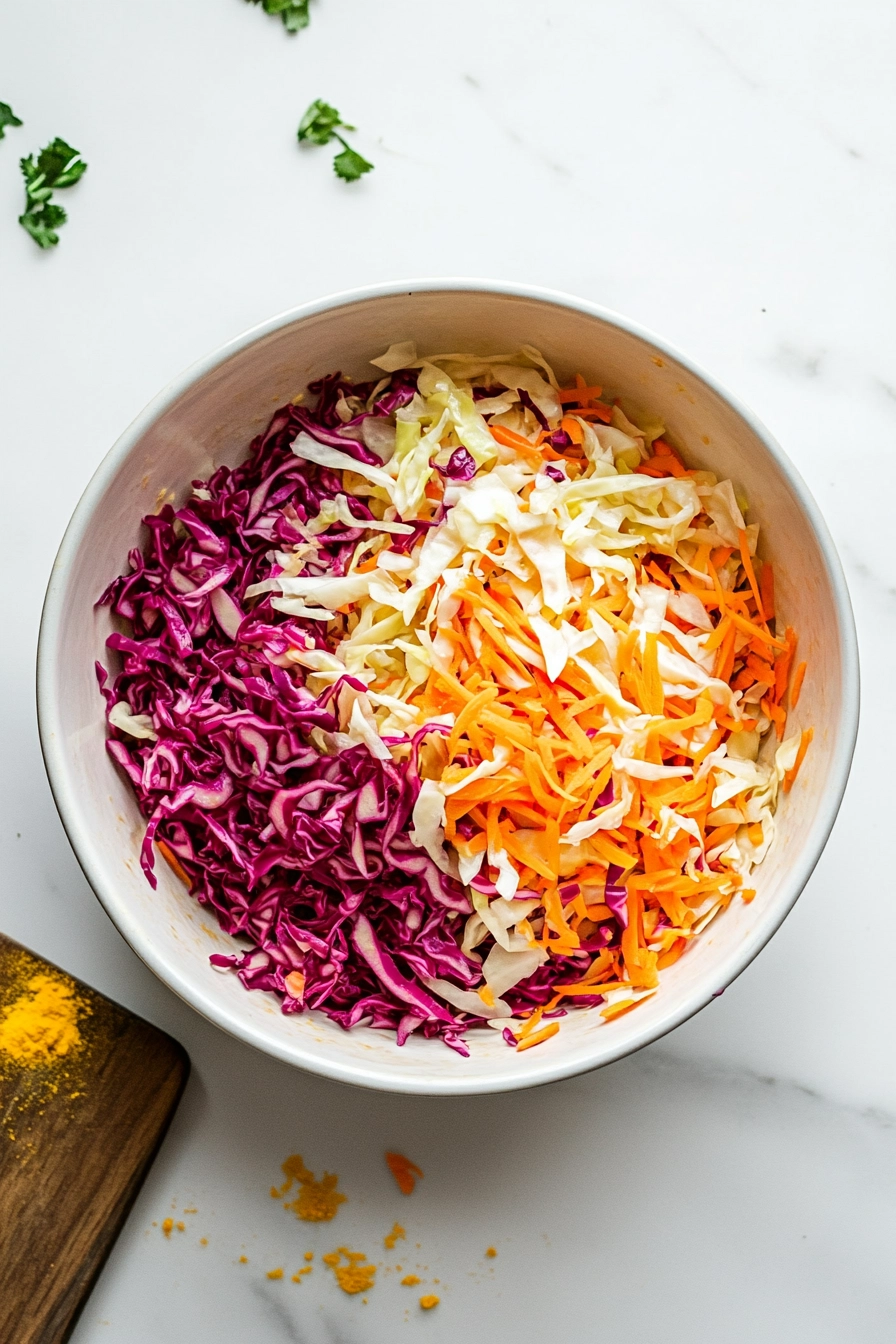
- Small beet: 1, finely shredded
- Carrots: 3 whole, finely shredded
- Fresh ginger: 1 tablespoon, grated
- Fresh turmeric: 1 tablespoon, grated
- Garlic: 4 cloves, finely minced
Spotlight on Key Ingredients
1. Cabbage
Texture: Crunchy at first, then beautifully tender-crisp after fermentation.
Flavor: Mild and slightly sweet before turning tangy.
2. Sea Salt
Texture: Helps draw moisture from the vegetables.
Flavor: Enhances the natural tangy taste.
3. Ginger and Turmeric
Texture: Blend evenly into the shredded vegetables.
Flavor: Warm, earthy, and slightly spicy.
Ingredient Substitutions for Different Needs
- No Beet: Simply skip it or use extra carrot.
- No Turmeric: Use a little ground turmeric.
- No Ginger: Add extra garlic instead.
- Different Veggies: Add radish or purple cabbage.
- More Heat: Add chili flakes.
Sauerkraut Recipe
Equipment
- Mixing bowl
- Knife
- Sterilized Jars
Ingredients
- 8 cups Red or green cabbage finely grated or chopped
- 3-4 tsp Sea salt plus more to taste
- 1 small Beet finely shredded
- 3 whole Carrots finely shredded
- 3 Tbsp fresh Ginger shredded/grated
- 3 Tbsp fresh Turmeric shredded/grated
- 4 cloves Garlic finely minced
Instructions
- Sterilize jars and equipment by pouring boiling water over them, then dry completely. Let them cool to room temperature.
- Add finely grated cabbage and 1 ½ teaspoons sea salt to a large bowl. Massage cabbage with clean hands for 10 minutes until it softens and releases water.
- Add shredded beet, carrot, ginger, turmeric, and garlic. Massage again for 4-5 minutes until well combined.
- Taste and adjust flavor with more salt, ginger, or garlic if needed.
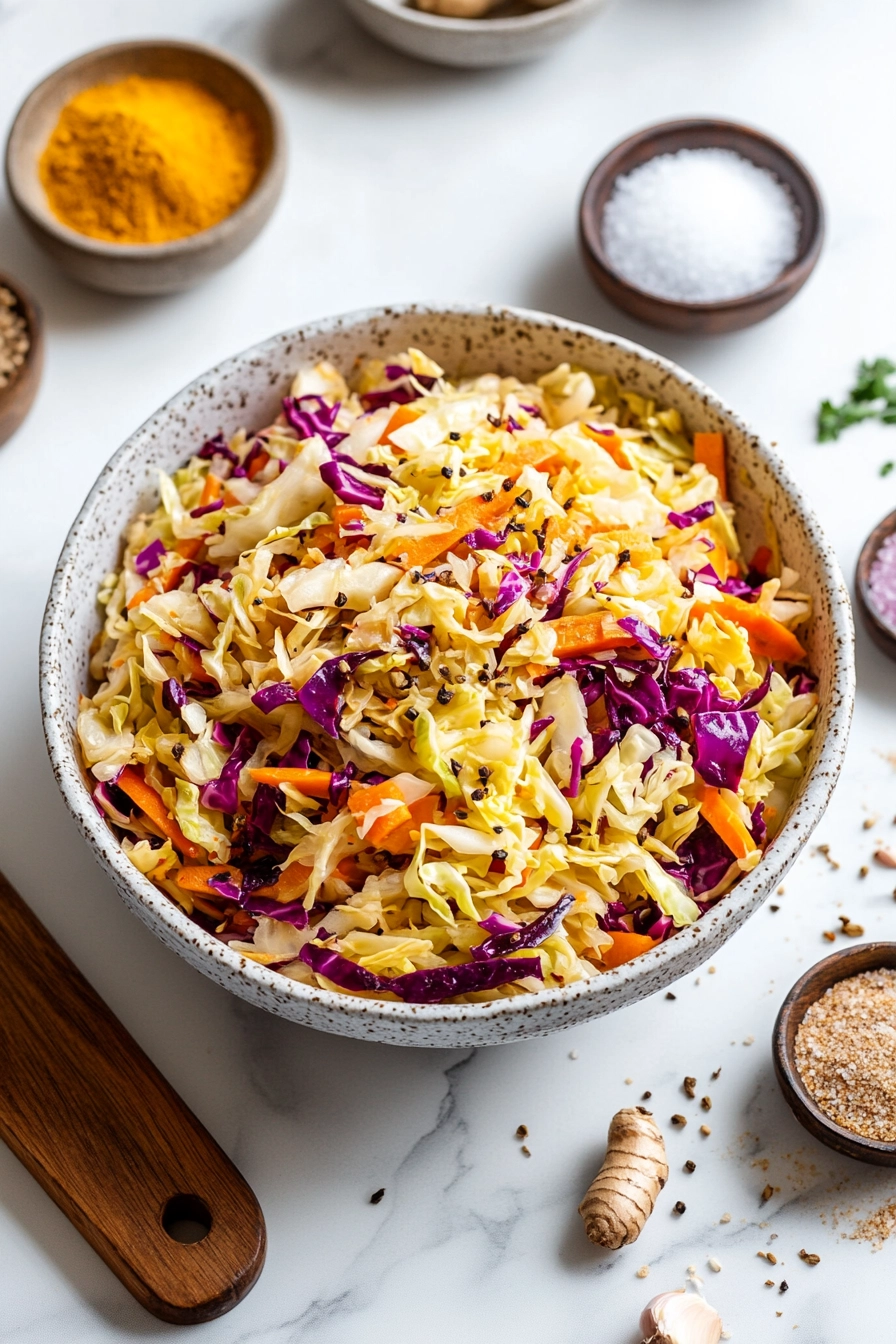
- Pack the mixture firmly into sterilized jars, ensuring the liquid covers the vegetables. If liquid is insufficient, continue massaging or rest for 10–15 minutes. Do not dilute with plain water unless properly salted.
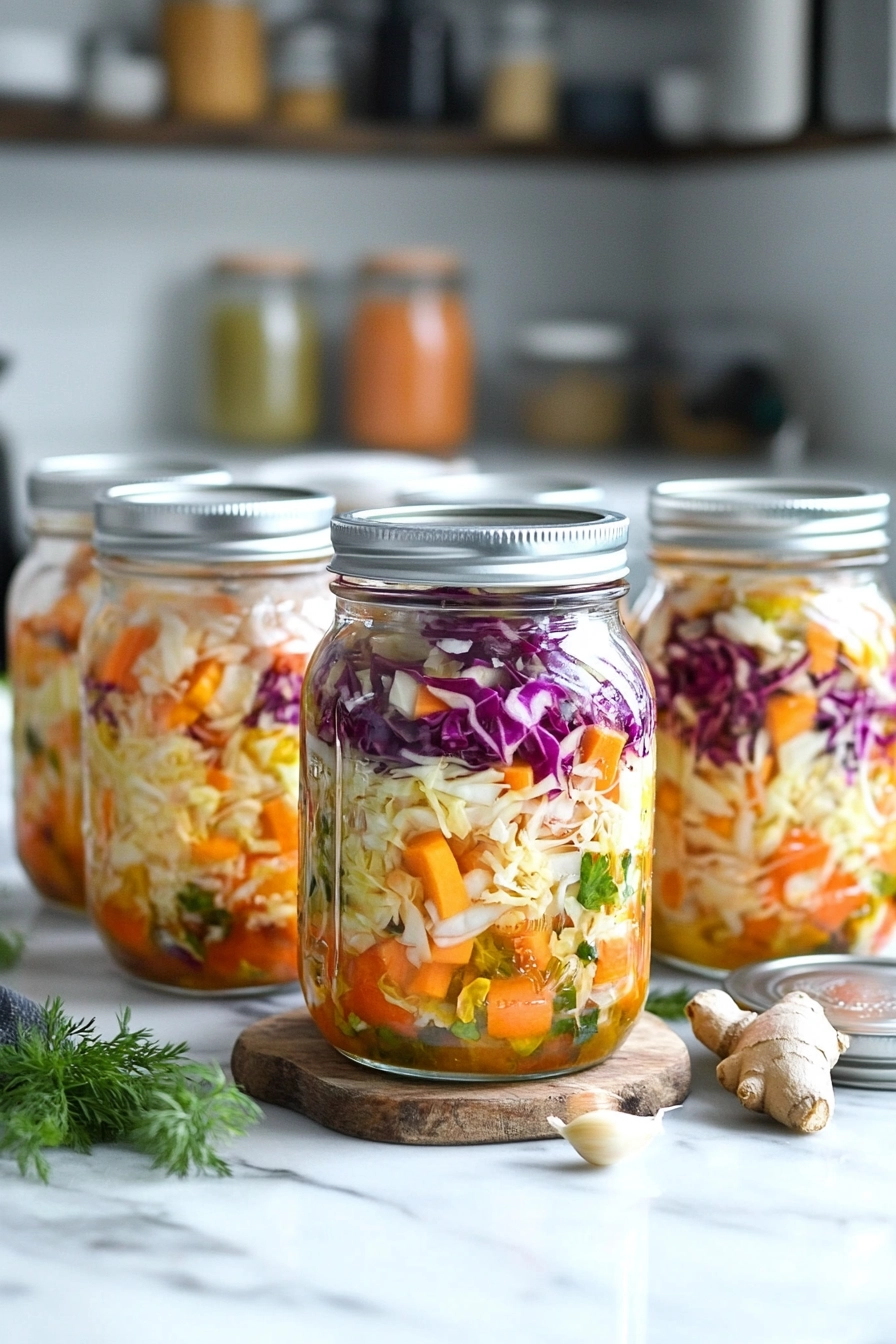
- Leave about 1 ½ inches of space between the contents and the lid for expansion. Seal with a lid.
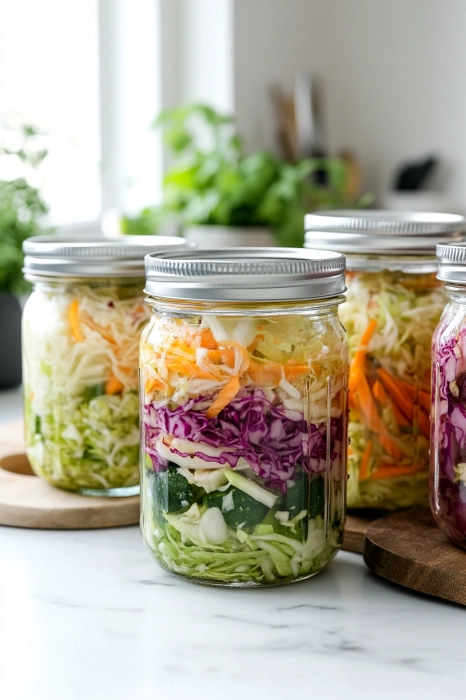
- Place jars on the counter away from direct sunlight or in a cabinet. Keep the temperature above 65°F (18°C) for proper fermentation.
- Open jars daily to release air and press vegetables down to keep them submerged in liquid.
- Fermentation can take 24 hours to 2 weeks depending on the temperature. Taste periodically to check tanginess.
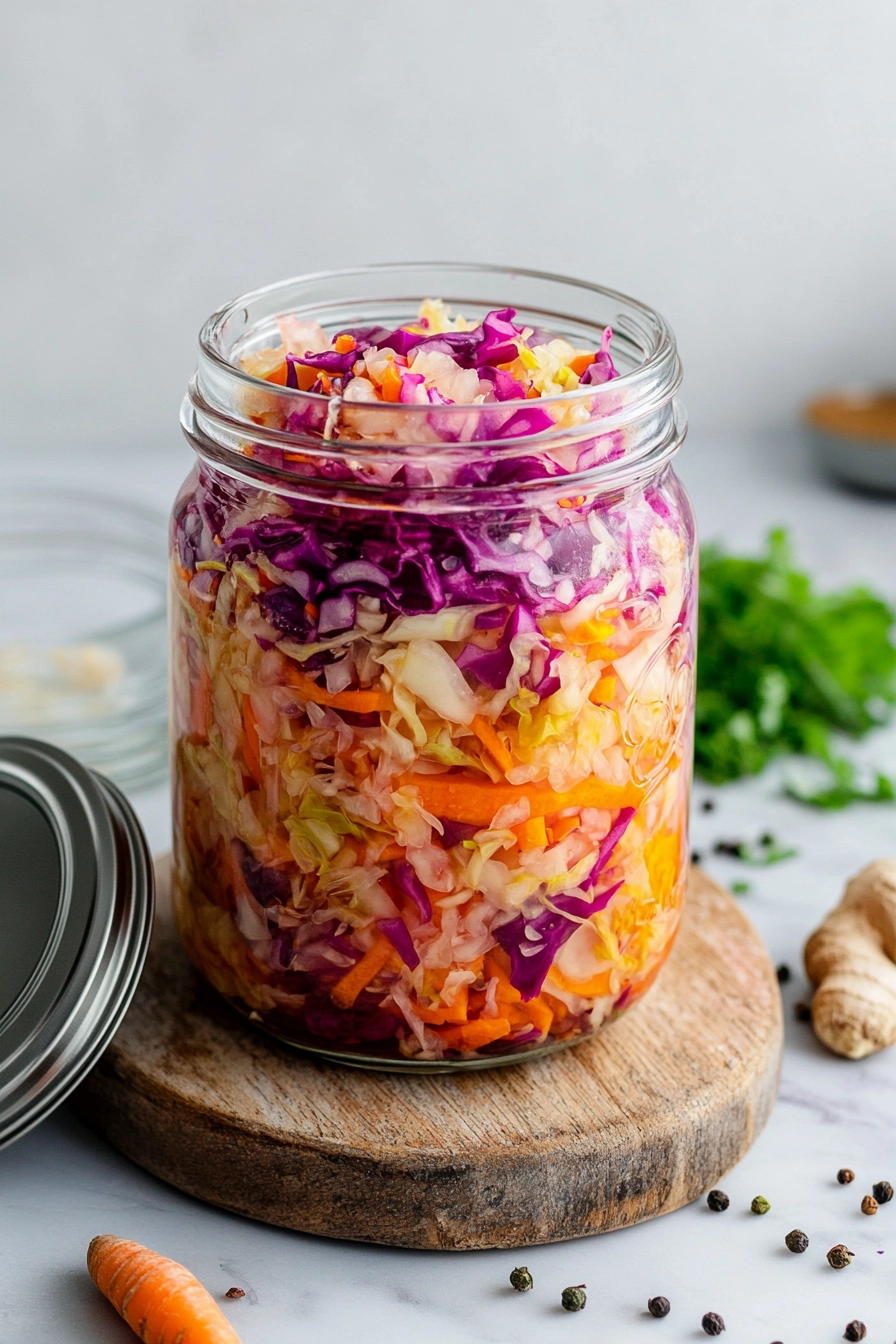
- Once desired tanginess is achieved, secure the lid and transfer the jars to the fridge. Sauerkraut will keep for 3 to 6 months. Avoid double-dipping when serving to prevent contamination.
Notes
- Use Fresh Ingredients: Fresh vegetables and spices give the best flavor and texture.
- Even Slicing: Use a mandolin slicer to get uniformly thin slices of cabbage for even fermentation.
- Temperature Control: Keep the jars in a warm spot, but out of direct sunlight, for the best fermentation.
Nutrition Facts:
| Nutrition | Value |
|---|---|
| Calories | 65 kcal |
| Carbohydrates | 7g |
| Protein | 1g |
| Vitamin A | 108IU |
| Vitamin C | 45mg |
| Iron | 1mg |
| Sugar | 4g |
| Calcium | 43mg |
Common Mistakes to Avoid
- Dry Mixture: Massage until plenty of liquid is released.
- Vegetables Above Liquid: Always keep them submerged.
- Dirty Equipment: Sterilize jars and tools well.
- Too Warm: Avoid direct sunlight and extreme heat.
- Too Cold: Fermentation slows significantly below 18°C.
- Skipping Daily Burping: Open jars daily to release gases.
Cooking Tips and Tricks
- Use Fresh Cabbage: Fresher cabbage releases more liquid.
- Pack Firmly: This removes air pockets.
- Taste Daily: Fermentation speed varies with temperature.
- Store Cold After Fermentation: Helps preserve texture and flavor.
- Use Clean Utensils: Prevents contamination.
Delicious Variations You Should Not Miss
This recipe is easy to customize with different flavors.
- Classic Style: Use only cabbage and salt.
- Spicy Kraut: Add red chili flakes.
- Apple Twist: Add thin apple shreds.
- Purple Kraut: Use all red cabbage.
- Caraway Seed Version: Add classic German-style caraway.
- Garlic Lovers Version: Double the garlic.
- Herbal Twist: Add dill seeds.
- Extra Crunch: Add radish slices.
Try More Fermented and Healthy Side Recipes
Best Make-Ahead and Storage Tips
- Counter Fermentation: Keep for up to 2 weeks.
- Fridge Storage: Lasts 3 to 6 months once fermented.
- Always Use Clean Forks: Prevents spoilage.
- Keep Submerged: Press down after each use.
- Flavor Deepens Over Time: It gets tangier in storage.
Frequently Asked Questions
- How do I know it’s ready?
Taste it daily until it reaches your preferred tanginess. - Should it smell strong?
Yes, a pleasantly sour fermented smell is normal. - Can I use green or red cabbage?
Yes, both work beautifully. - Is bubbling normal?
Yes, bubbles are a sign of active fermentation. - Can I make it less sour?
Yes, refrigerate it sooner to stop fermentation earlier. - What foods go well with it?
Sandwiches, sausages, grain bowls, and salads pair perfectly. - Why must it stay under the liquid?
This helps safe fermentation and prevents spoilage. - Is homemade better than store-bought?
It often tastes fresher and lets you control the flavor.

hi there,
The Freshman Cook started as a place to keep track of recipes I wanted to make again. Somewhere along the way, it grew into a collection of meals that friends requested, desserts that disappeared too quickly, and weeknight dinners that made life a little easier.
know more