

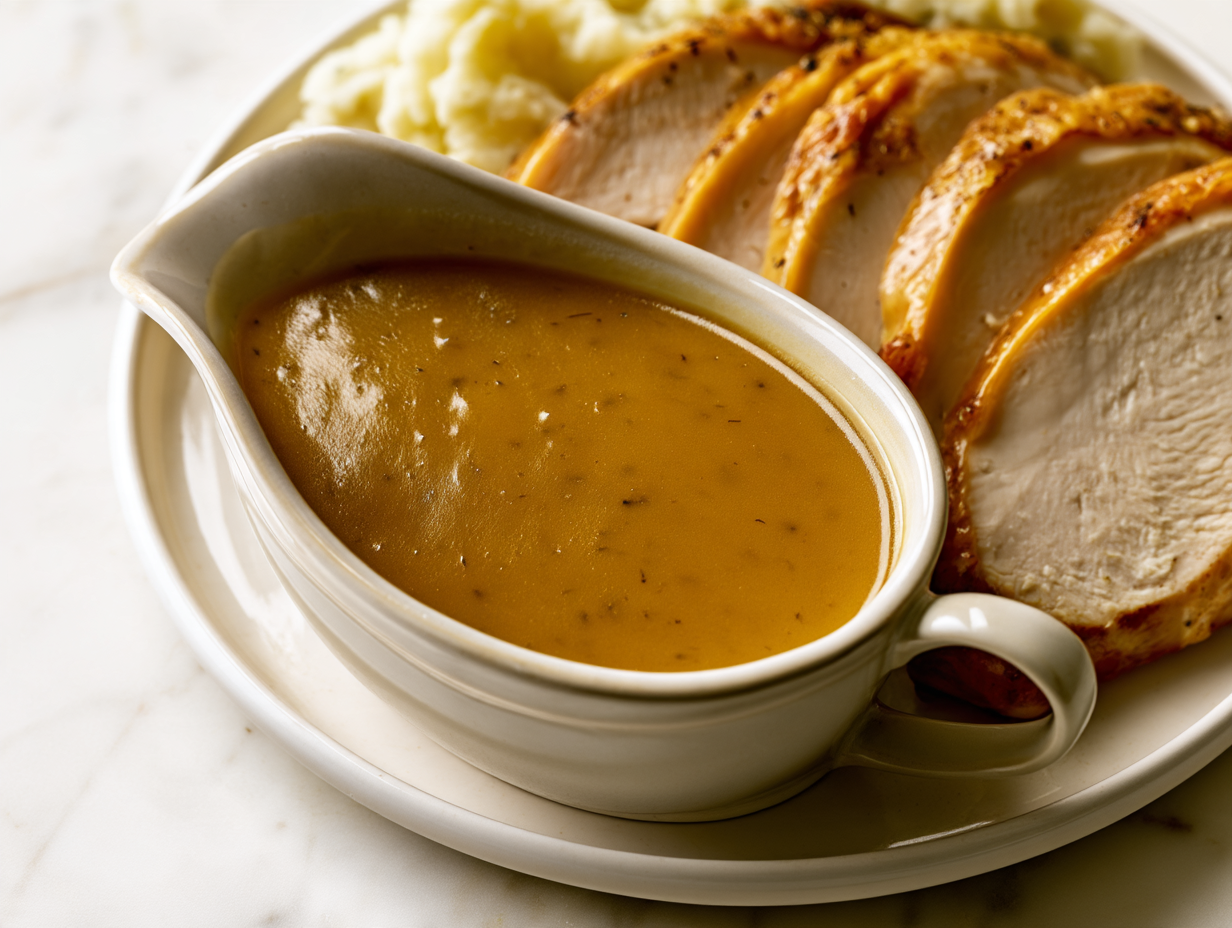

A good turkey gravy can turn a plate of Thanksgiving leftovers into something special. This Turkey Gravy Recipe uses the flavorful drippings from a roasted turkey, thickens them with a simple flour roux, and finishes with a smooth, savory consistency that’s perfect for spooning over turkey, mashed potatoes, stuffing, and more.
The best part is that you don’t need a complicated list of ingredients. The turkey drippings already contain much of the flavor you need, while a little broth or water helps loosen the pan juices and create enough gravy for the table.
Why the Turkey Drippings Matter
The drippings are what make this gravy taste like turkey gravy rather than simply a flour-thickened sauce. As the turkey roasts, its juices combine with the browned bits and aromatics in the pan.
If your turkey produces plenty of drippings, you may need less additional broth or water. If the pan is relatively dry, use the liquid to loosen everything and build enough gravy for serving.
Ingredient Breakdown
- Turkey drippings: The foundation of the gravy and the source of its roasted, savory flavor. Keeping the aromatics from the roasting pan adds even more depth.
- Low-sodium broth or water: Loosens the concentrated drippings and gives you control over the final consistency and saltiness.
- Vegetable oil or butter: Provides the fat needed to cook the flour and form the roux.
- All-purpose flour: Thickens the gravy and gives it a smooth, spoon-coating consistency.
- Kosher salt and black pepper: Finish the gravy and bring the flavors into balance.
- Sherry or wine: Optional, but a small splash can add extra depth and acidity.
- Rosemary, thyme, or sage: Optional herbs that complement roasted turkey beautifully.

Turkey Gravy Recipe
Equipment
- Measuring spoons
- Measuring Cups
- 1 Whisk
- 3 Quart Saucepan
- 1 Fine mesh strainer
- 1 Gravy boat
Ingredients
- Pan drippings from a 12- to 14-pound roast turkey
- 1 to 2 cups low-sodium broth or water divided.
- Vegetable oil or butter as needed.
- 1/4 cup all-purpose flour
- Kosher salt
- Freshly ground black pepper
- Optional extras: splash of sherry splash of wine, teaspoon of minced herbs like rosemary, thyme, or sage
Instructions
- The roasting pan should be placed on the burner and heated to a medium temperature. You can get by with a single burner, but it would be great if it could fit across two. It is important to keep the garlic, onion, and other flavorings in the pan.
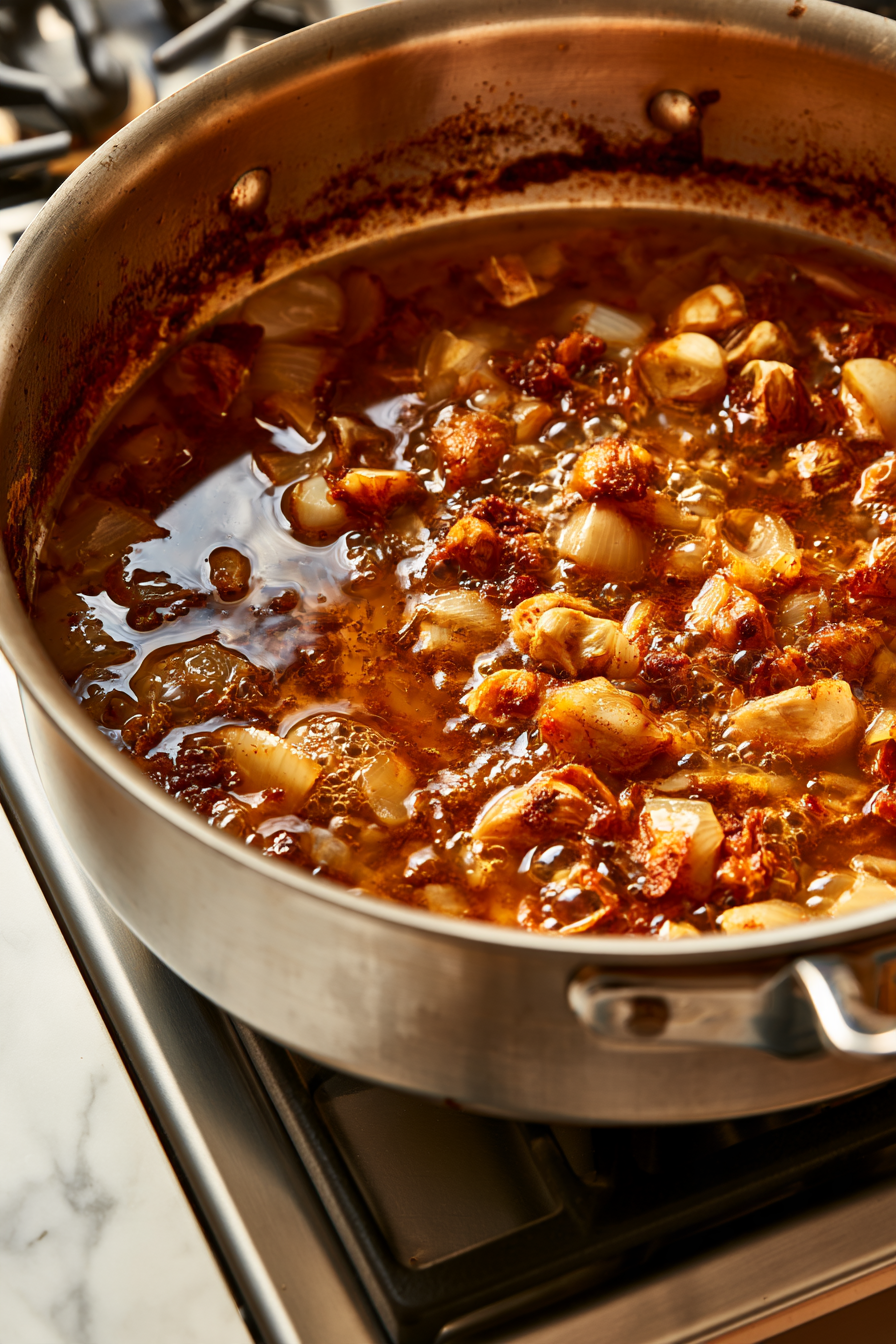
- Add the flour after it begins to bubble or sizzle. Cook for one minute while stirring the mixture often.
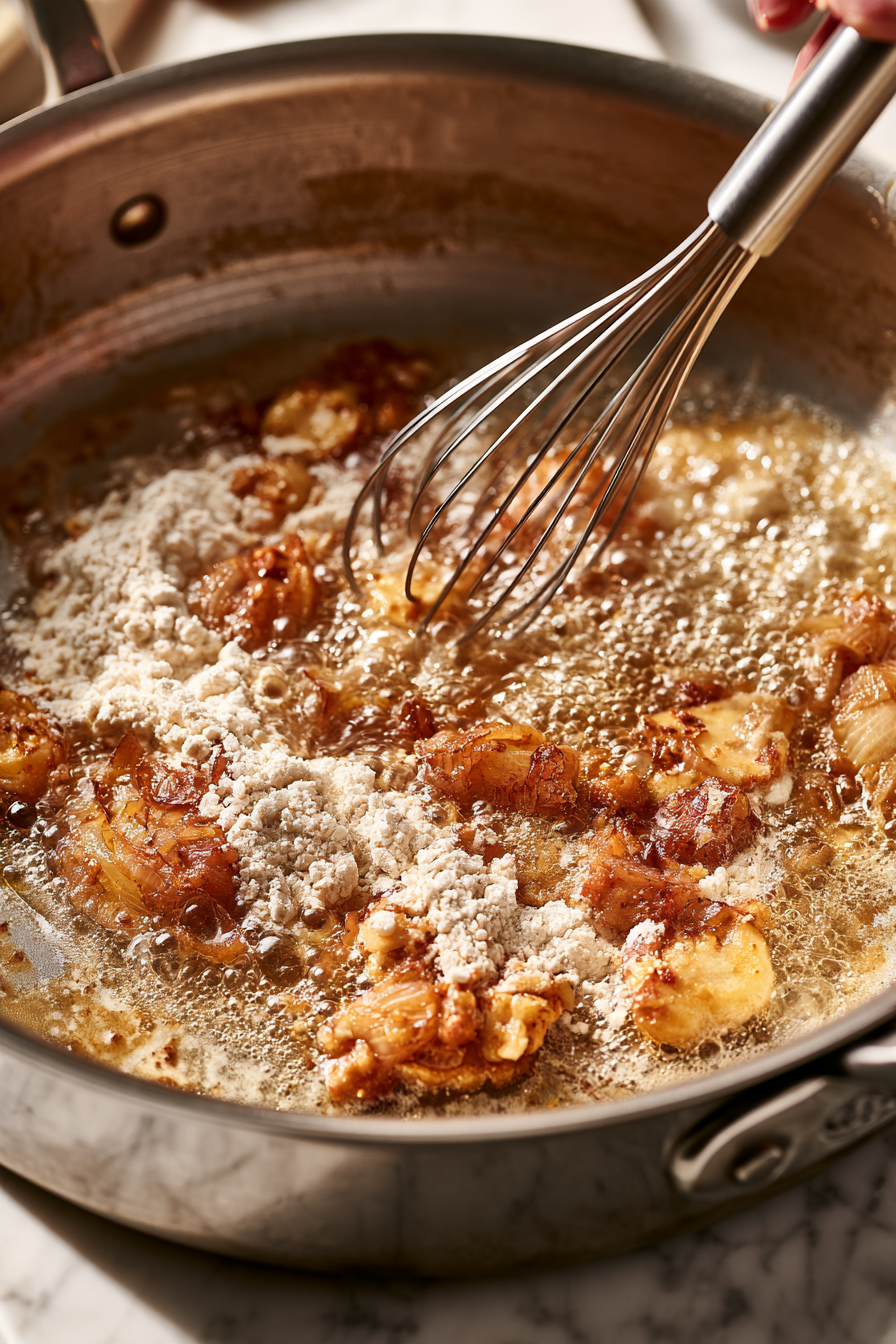
- While continuously mixing, gradually pour the liquid into the container. It ought to be lump free once everything has been accounted for. In that case, you can use a whisk to stir things around, such as the onion.
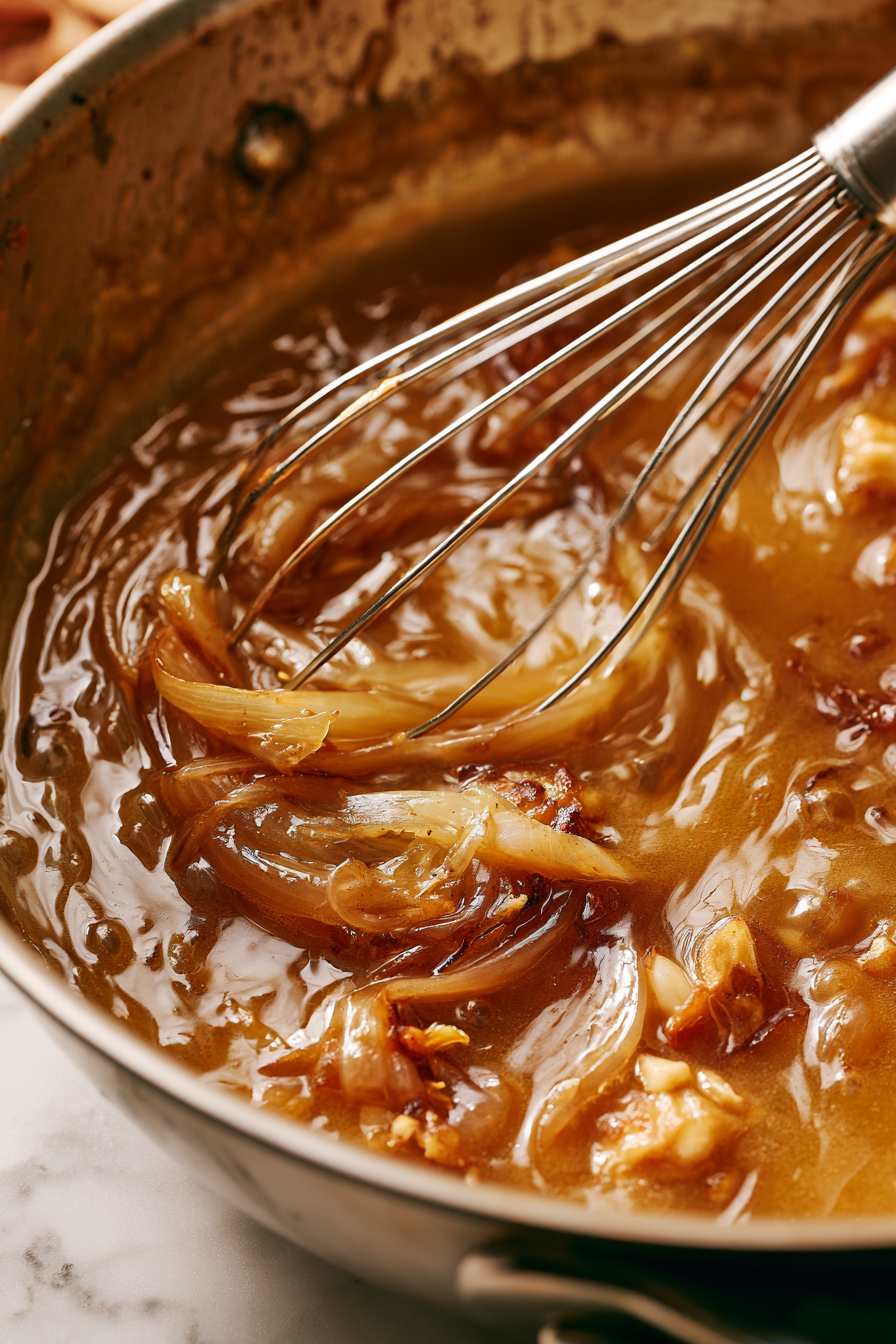
- The gravy will become thicker as it cools, so continue to simmer it until it reaches the desired consistency. Make any necessary adjustments to the salt and pepper right before serving.
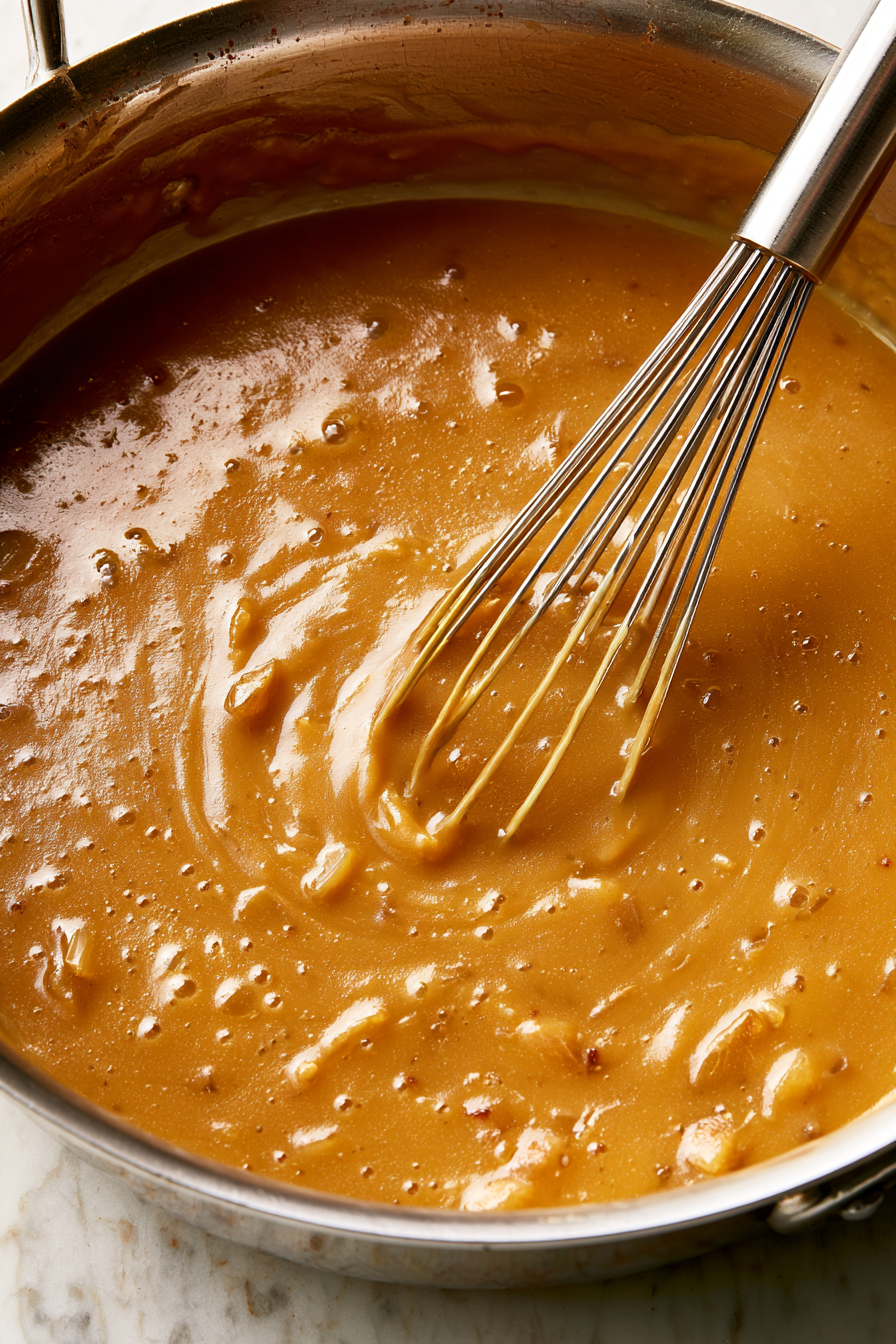
- Make sure to massage the fluids out of the onion, garlic, and other ingredients before discarding them. Strain the mixture into a basin.
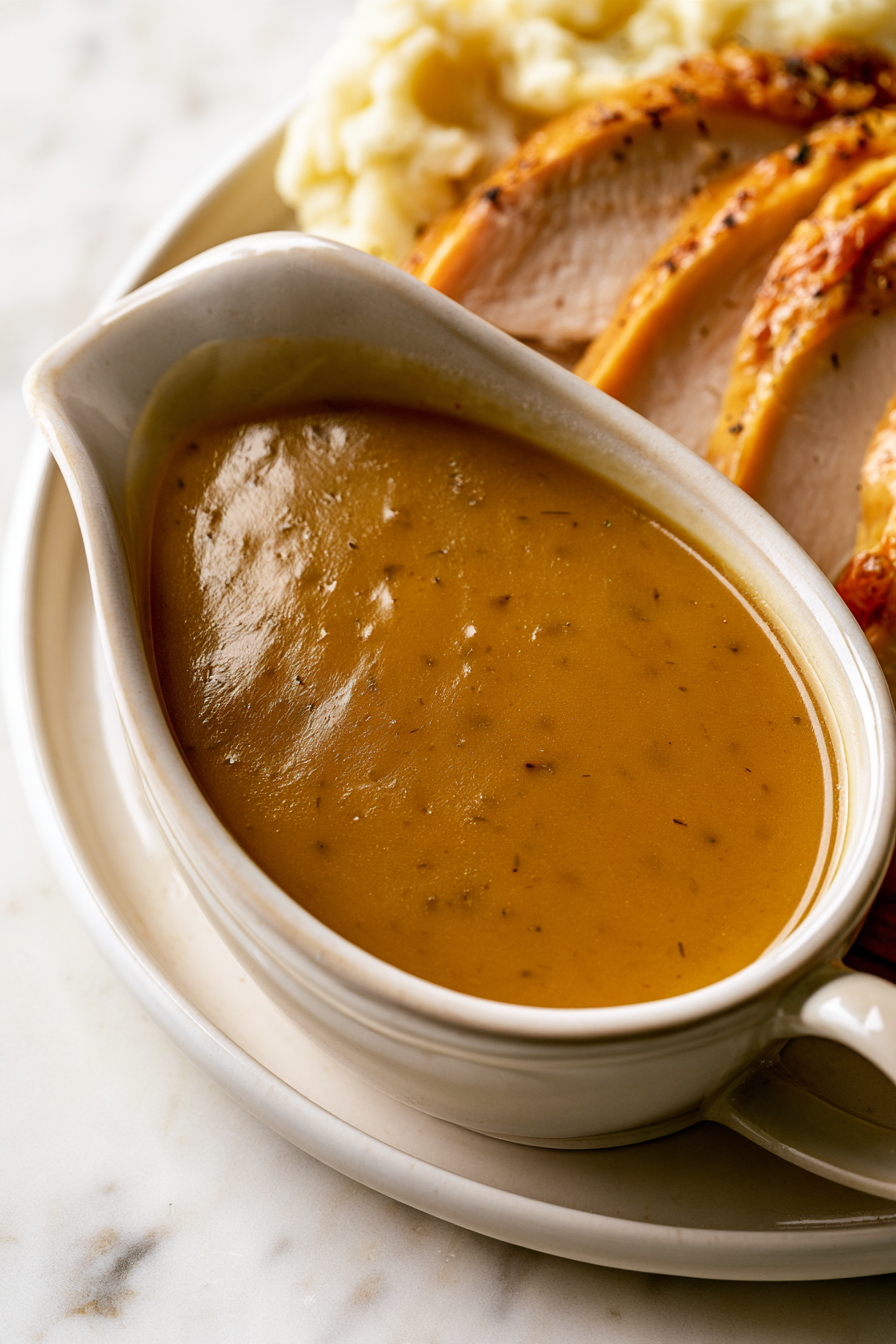
- Serve the turkey with the gravy that has been poured into the jug.
Nutrition
| Nutrient | Per Serving |
|---|---|
| Calories | 215 kcal |
| Total Fat | 15 g |
| Saturated Fat | 5 g |
| Trans Fat | 0 g |
| Cholesterol | 15 mg |
| Sodium | 390 mg |
| Total Carbohydrates | 14 g |
| Dietary Fiber | 1 g |
| Total Sugars | 1 g |
| Protein | 5 g |
| Calcium | 15 mg |
| Iron | 1 mg |
| Potassium | 120 mg |
Nutrition values are estimates and can vary considerably depending on the amount of fat in the turkey drippings, whether butter or oil is used, the type of broth, and how much gravy is produced after straining.
How to Get the Right Gravy Consistency
The amount of liquid you need can vary because every turkey produces a different quantity of drippings. Start with the lower amount of broth or water and add more as needed.
If the gravy is too thick, gradually whisk in a little more broth or water.
If it is too thin, continue simmering until some of the liquid evaporates and the gravy thickens.
Don’t forget that the gravy will become thicker as it cools.
Easy Ways to Add More Flavor
The pan drippings should provide most of the flavor, but you can customize the finished gravy if desired.
- Add a splash of sherry for a deeper, slightly nutty flavor.
- Use a splash of wine for extra complexity.
- Stir in a small amount of minced rosemary, thyme, or sage for a more herb-forward gravy.
- Use the aromatics from the roasting pan rather than throwing them away before the gravy is finished.
Gluten-Free Turkey Gravy
For a gluten-free version, the provided recipe notes recommend using a 1:1 gluten-free all-purpose flour blend in place of regular all-purpose flour.
Check the specific flour blend’s instructions because different gluten-free products can behave differently when used as thickeners.
What to Serve With Turkey Gravy
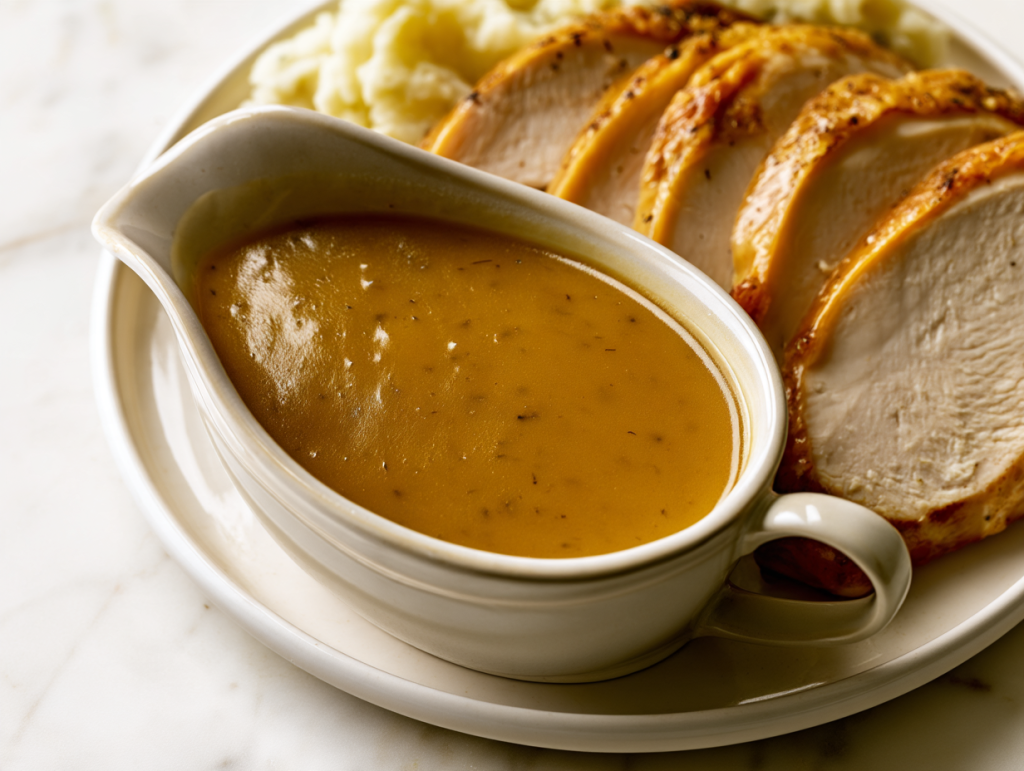
Turkey gravy is obviously excellent over sliced turkey, but its uses don’t stop there.
Serve it with:
How to Store and Reheat Turkey Gravy
Store leftover gravy in an airtight container in the refrigerator. The provided recipe notes recommend keeping it refrigerated for up to 1 week.
Don’t be concerned if refrigerated gravy becomes very thick or almost solid. This is normal as the fat cools and the flour-thickened sauce firms up.
To reheat a portion, spoon it over your leftovers and warm everything together in the microwave or oven. You can also reheat the gravy itself in the microwave or gently warm it in a saucepan over low heat.
If the reheated gravy is thicker than you want, whisk in a small amount of broth or water until it reaches your preferred consistency.
Frequently Asked Questions
- Can I make turkey gravy without broth?
Yes. The recipe allows either low-sodium broth or water. Broth will provide additional flavor, while water lets the roasted turkey drippings take center stage. - Why is my turkey gravy lumpy?
Lumps can form when flour isn’t incorporated properly or when liquid is added too quickly. Whisk continuously while gradually adding the broth or water. Straining the finished gravy also helps create a smooth texture. - Why did my gravy become too thick?
Gravy naturally thickens as it cools. If it becomes thicker than desired, gradually whisk in a little broth or water while reheating. - Can I make turkey gravy ahead of time?
Yes. It can be prepared ahead, refrigerated, and gently reheated when needed. Adjust the consistency with a little additional liquid if necessary. - Can I use gluten-free flour?
Yes. A 1:1 gluten-free all-purpose flour blend can replace the regular all-purpose flour. - What if I don’t have enough turkey drippings?
Use the drippings you have and supplement them with low-sodium broth or water. The roasting-pan aromatics can also contribute additional flavor.


hi there,
i’m Lily
A California-born chef with roots in the Central Valley’s farming community, transforming salads from diet staple to culinary art.


