

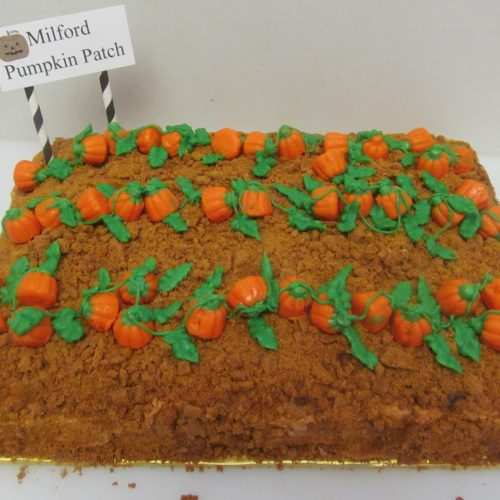
Pumpkin Patch Spice Cake turns a simple boxed spice cake into a playful fall dessert that looks like a tiny pumpkin field. The cake is flavored with canned pumpkin, cinnamon, and ginger, then covered with tan buttercream and crushed Biscoff cookies to create the look of soil.
The decoration is what makes this cake memorable. Rows of pumpkin candies are surrounded by piped green vines and buttercream leaves, creating a whimsical pumpkin patch across the top. It is a fun project for fall parties, Halloween gatherings, Thanksgiving tables, or an afternoon of seasonal baking.
What Makes This Cake Look Like a Pumpkin Patch?

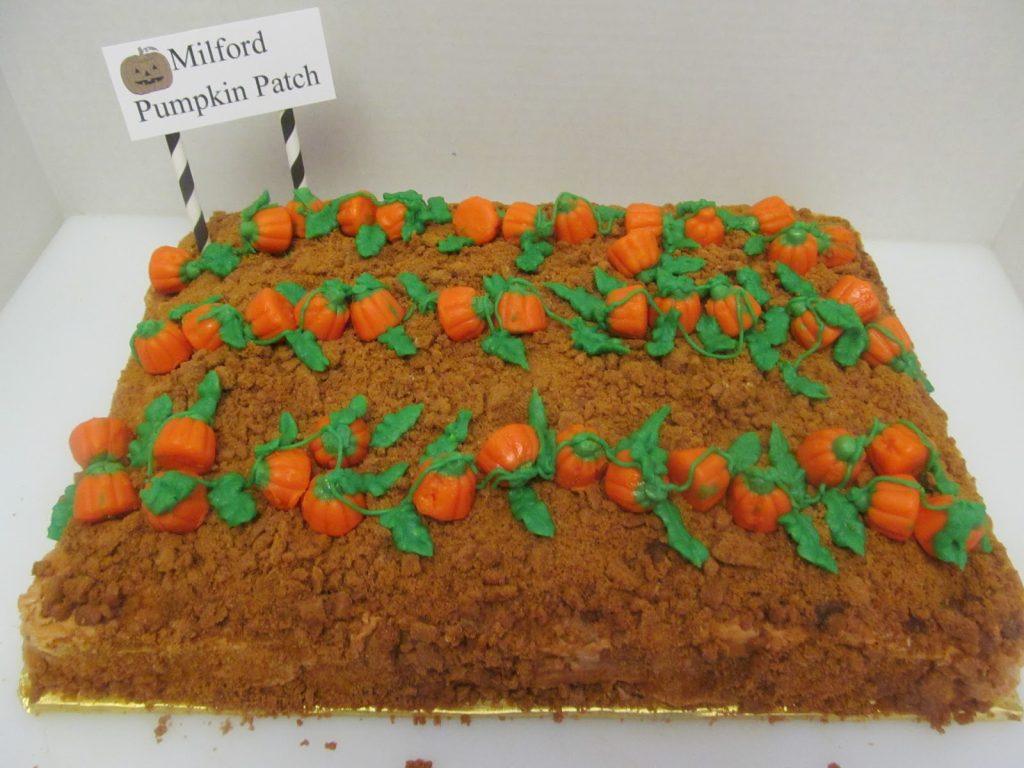
The decorating technique is surprisingly simple. The tan buttercream provides the base, while crushed Biscoff cookies cover the surface and sides to create a soil-like background.
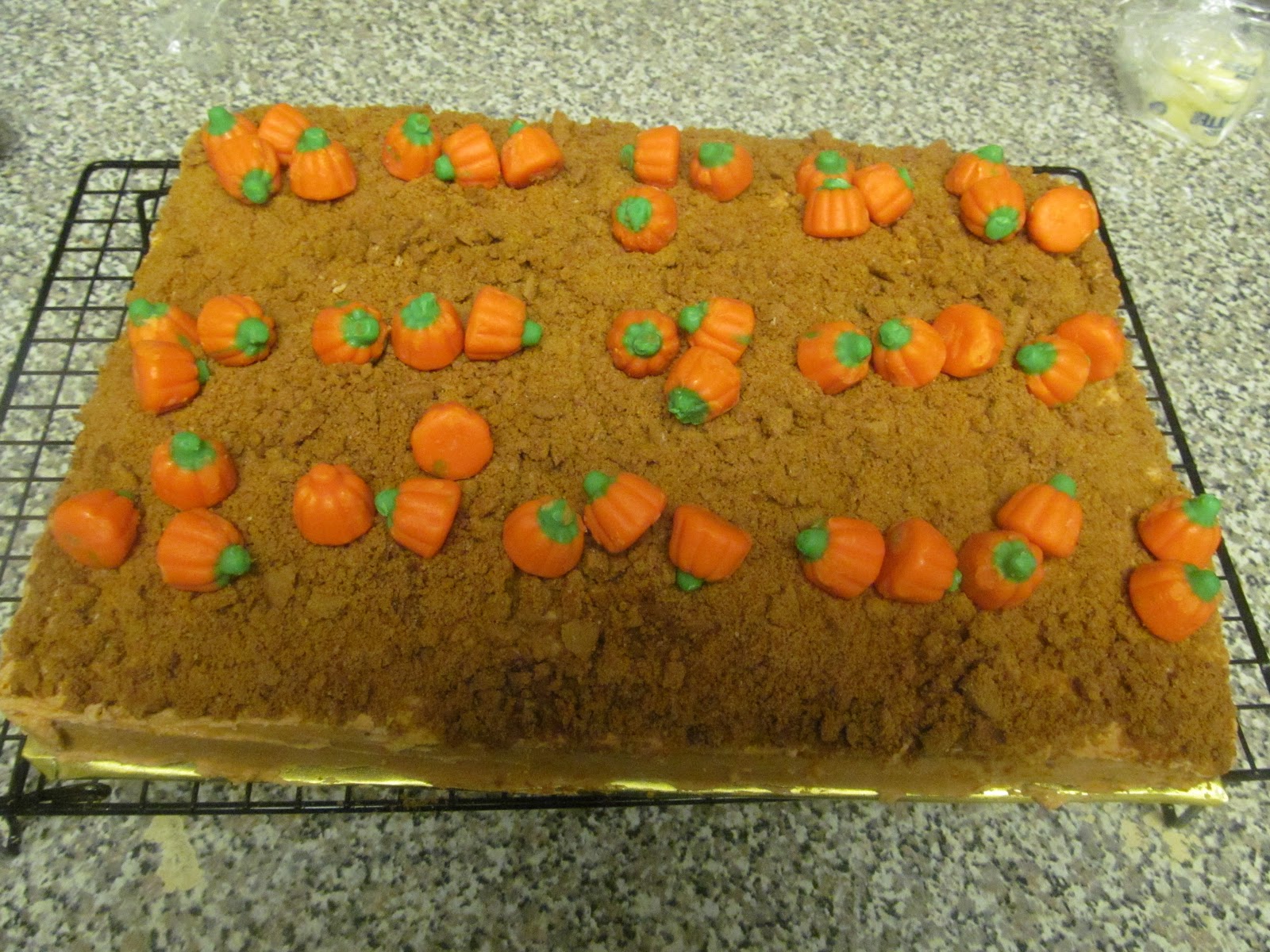
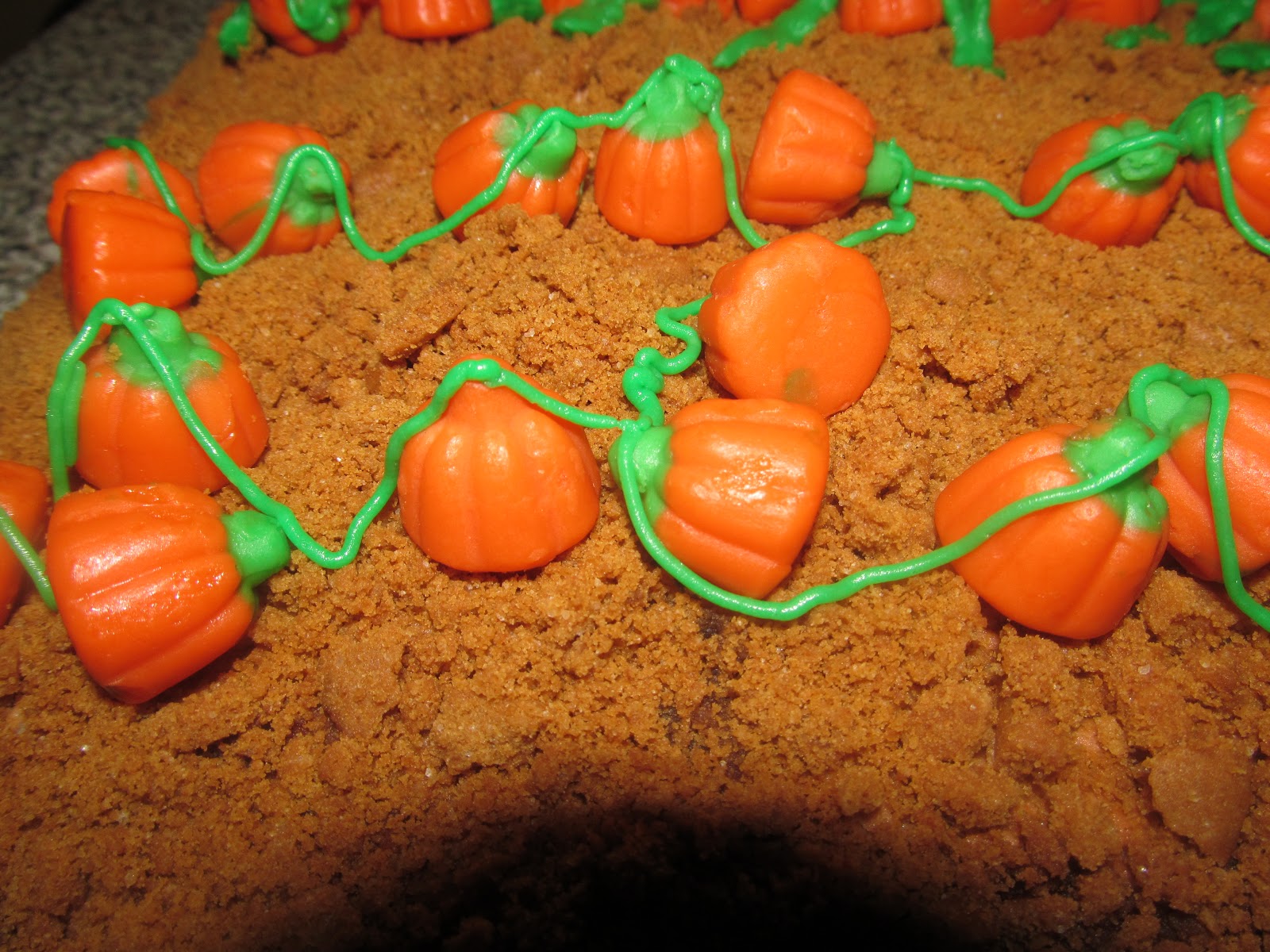
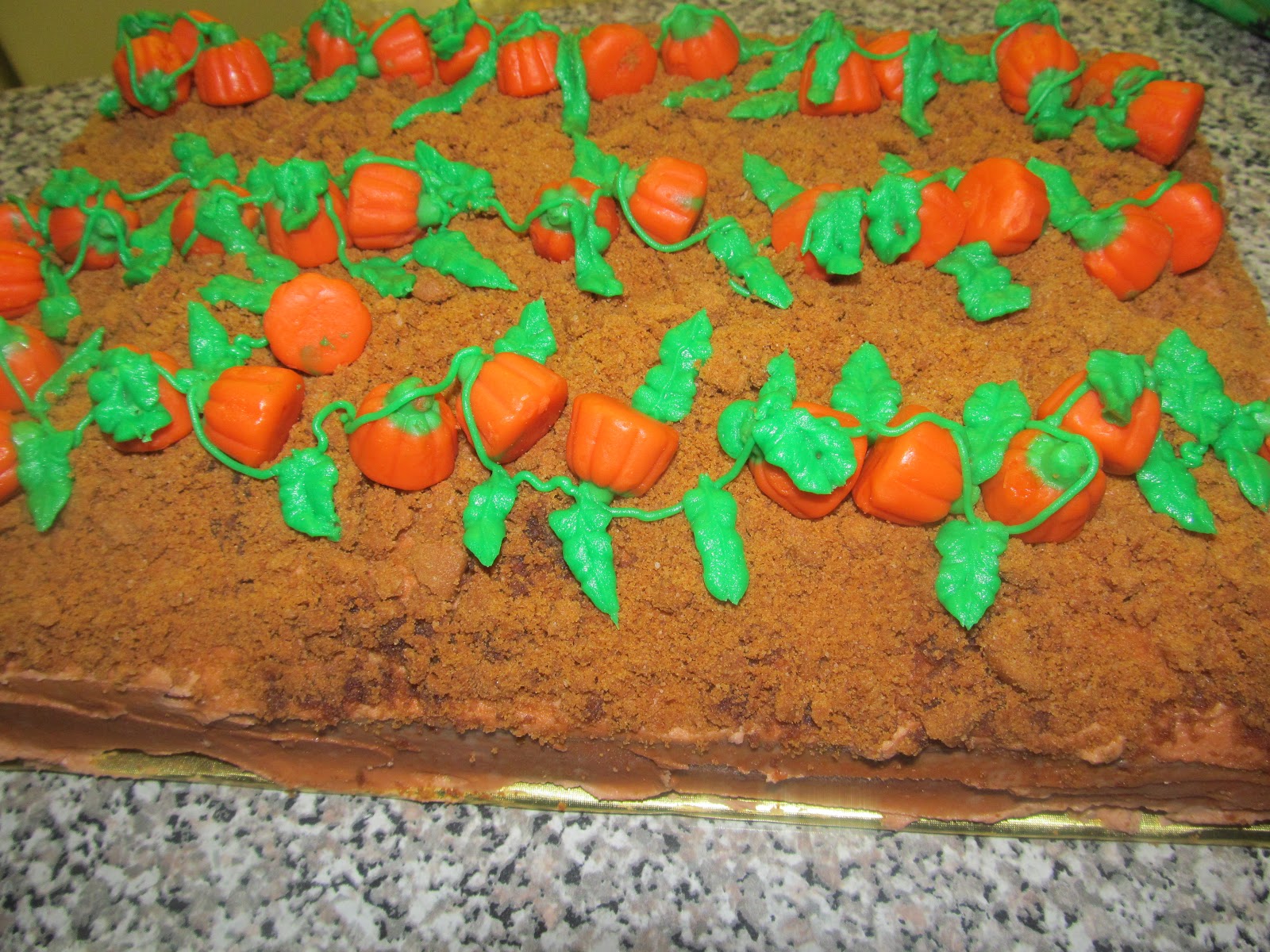
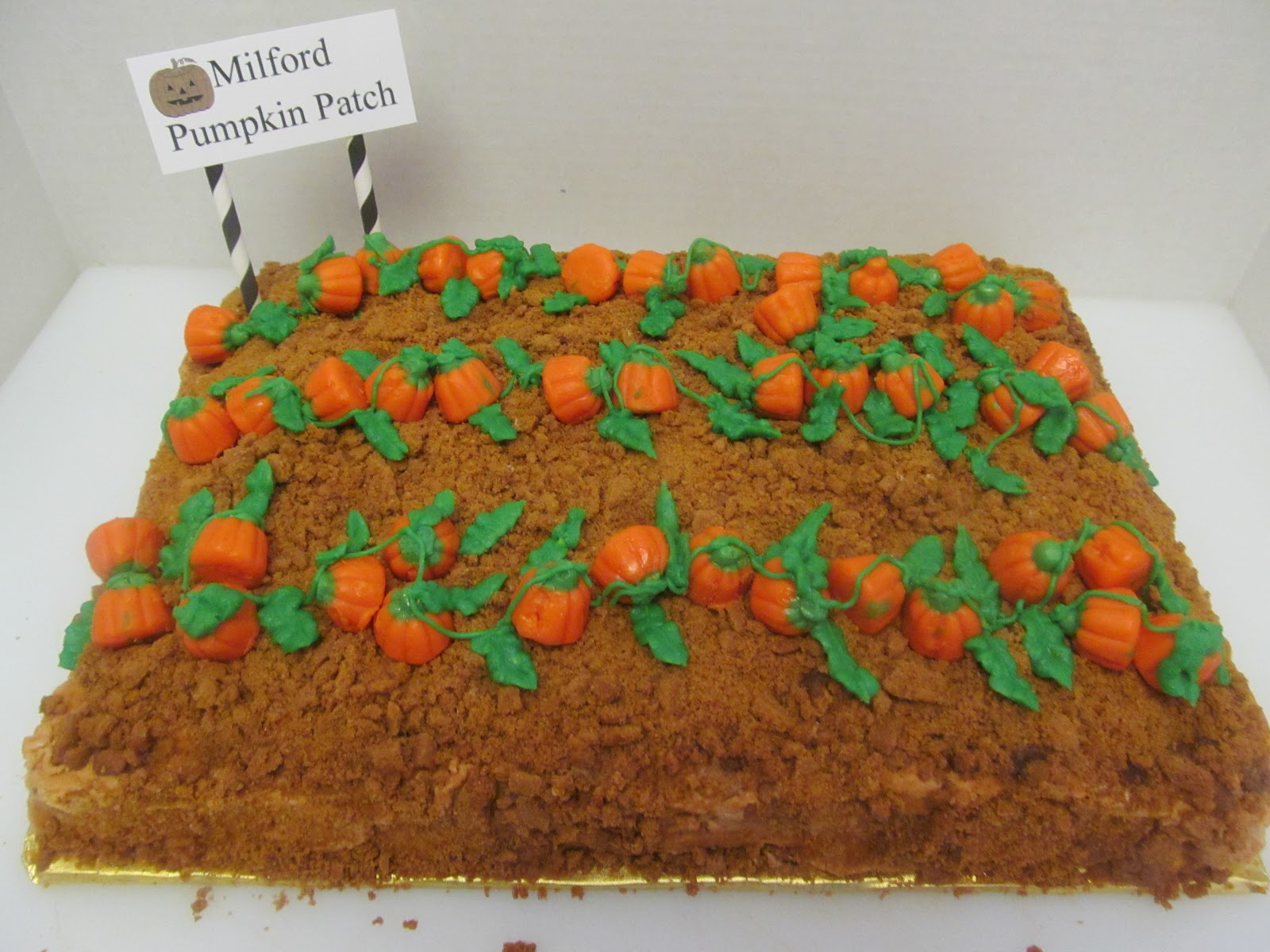
Pumpkin candies are then arranged in loose rows rather than perfectly straight lines. Green buttercream connects the pumpkins with vines, and piped leaves are added around the pumpkins and along the vines.
The slightly irregular arrangement is actually part of the charm. A real pumpkin patch isn’t perfectly symmetrical, so there is no need to make every row identical.
Pumpkin Patch Spice Cake
Equipment
- 10×13-inch baking pan
- Electric mixer
- Mixing bowls
- Rolling Pin
- Piping bag
- Wilton #2 and #352 piping tips
Ingredients
Spice Cake
- 1 box Duncan Hines Spice Cake Mix
- 1 package 3.4 oz vanilla instant pudding mix
- 1 cup canned pumpkin puree
- ½ cup vegetable oil
- ½ cup water
- 3 large eggs
- 1 teaspoon ground cinnamon
- ½ teaspoon ground ginger
Buttercream & Decoration
- 8 tablespoons unsalted butter softened
- 3¾ cups confectioners’ sugar
- 3-4 tablespoons milk
- 2 teaspoons pure vanilla extract
- Brown gel food coloring
- Leaf-green gel food coloring
- 12-15 Biscoff cookies
- Pumpkin-shaped candies
Instructions
- Preheat oven to 350°F (175°C). Grease and flour a 10×13-inch baking pan.
- Beat cake mix, pudding mix, pumpkin, oil, water, eggs, cinnamon, and ginger on low for 1 minute.
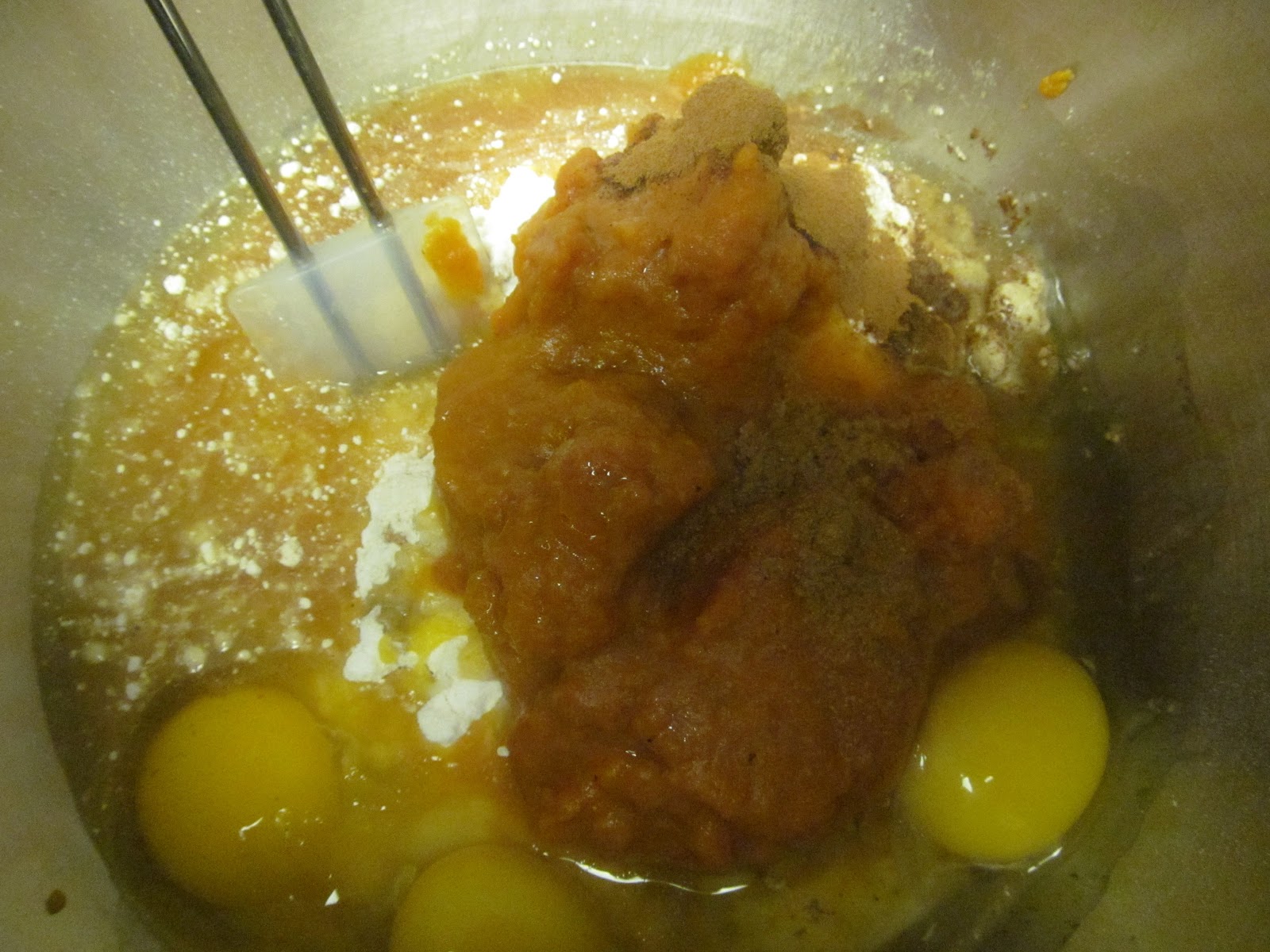
- Scrape your bowl, and then mix on high for 2 minutes.
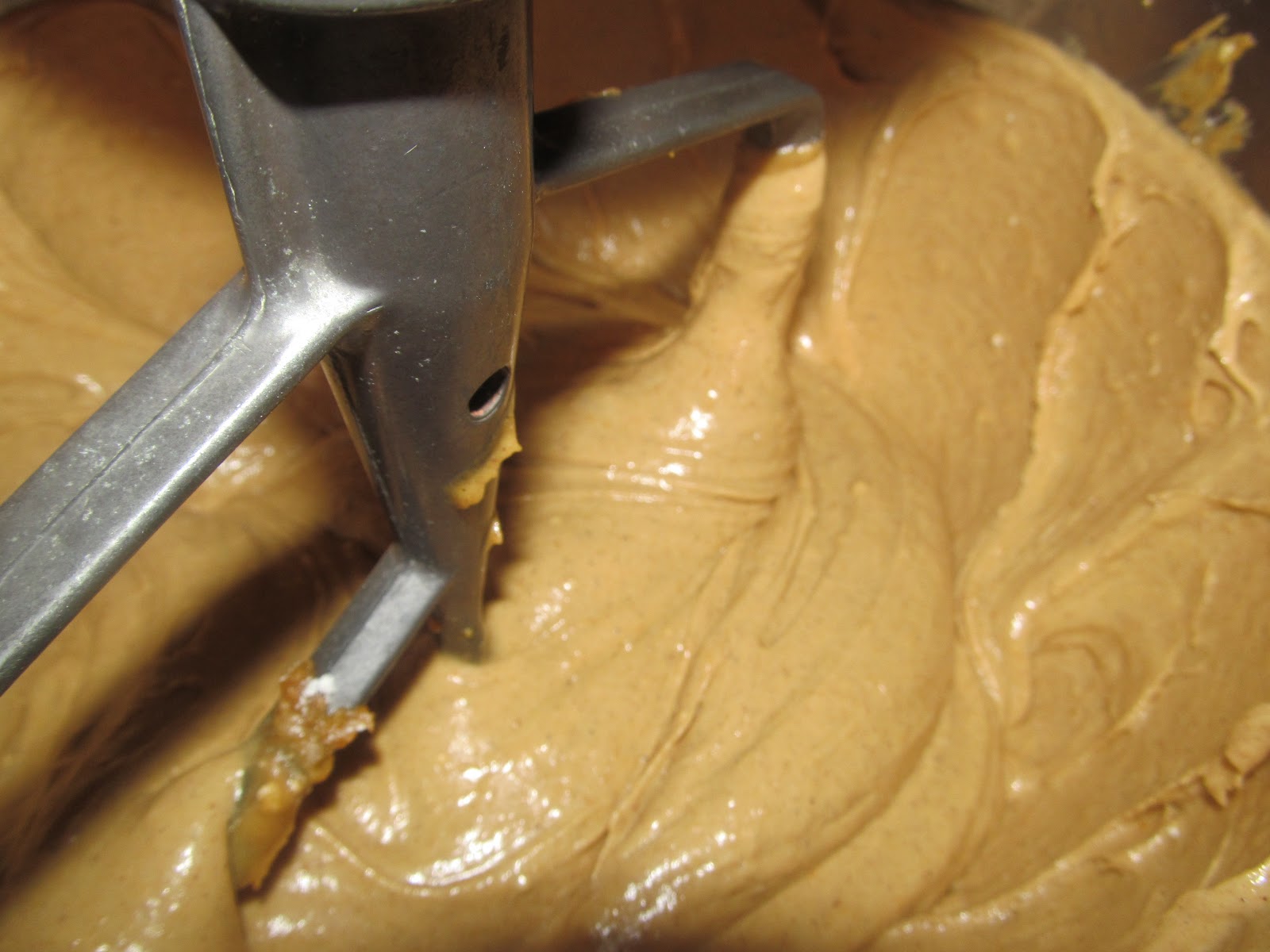
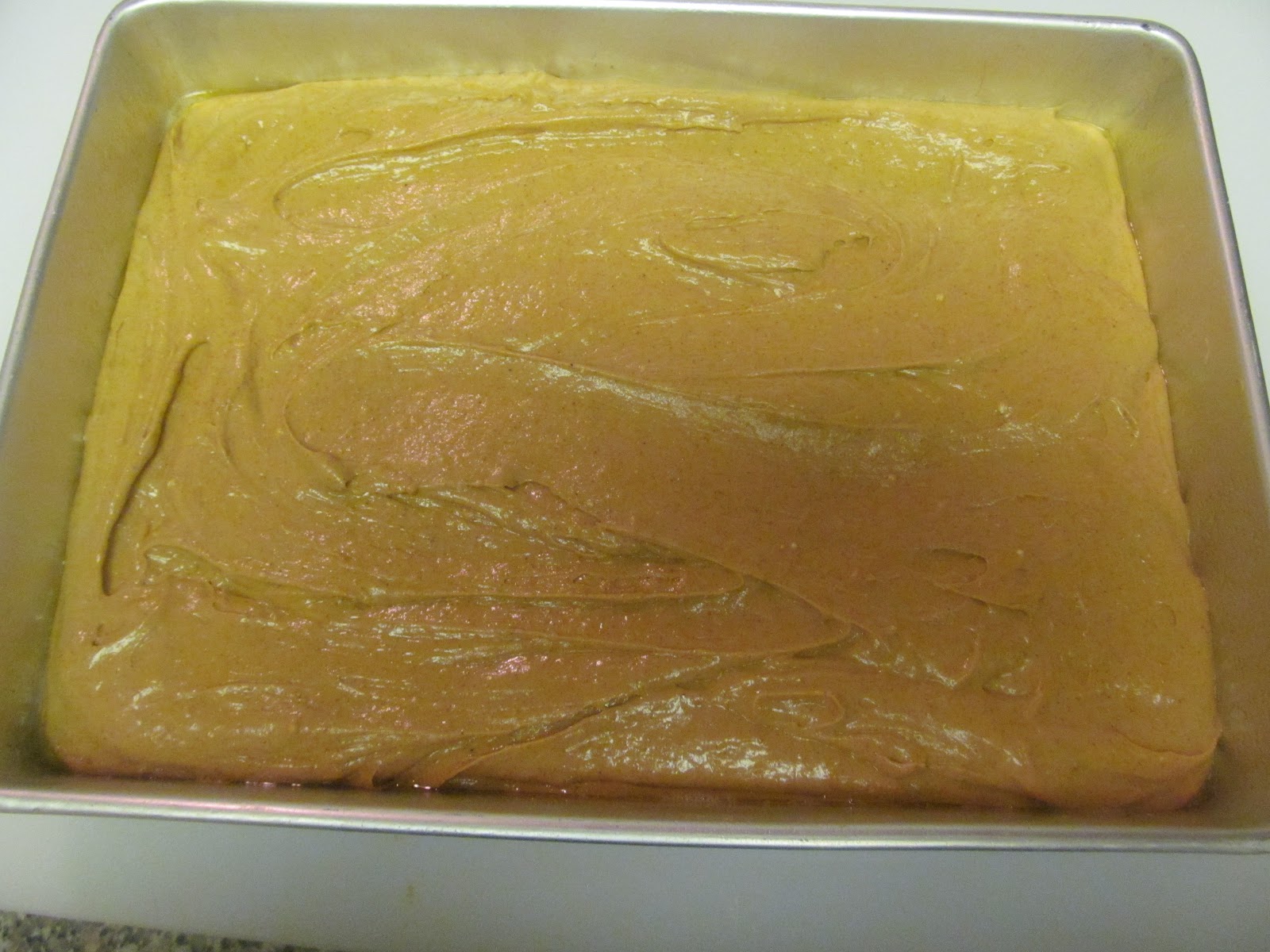
- Spread batter evenly in the prepared pan.
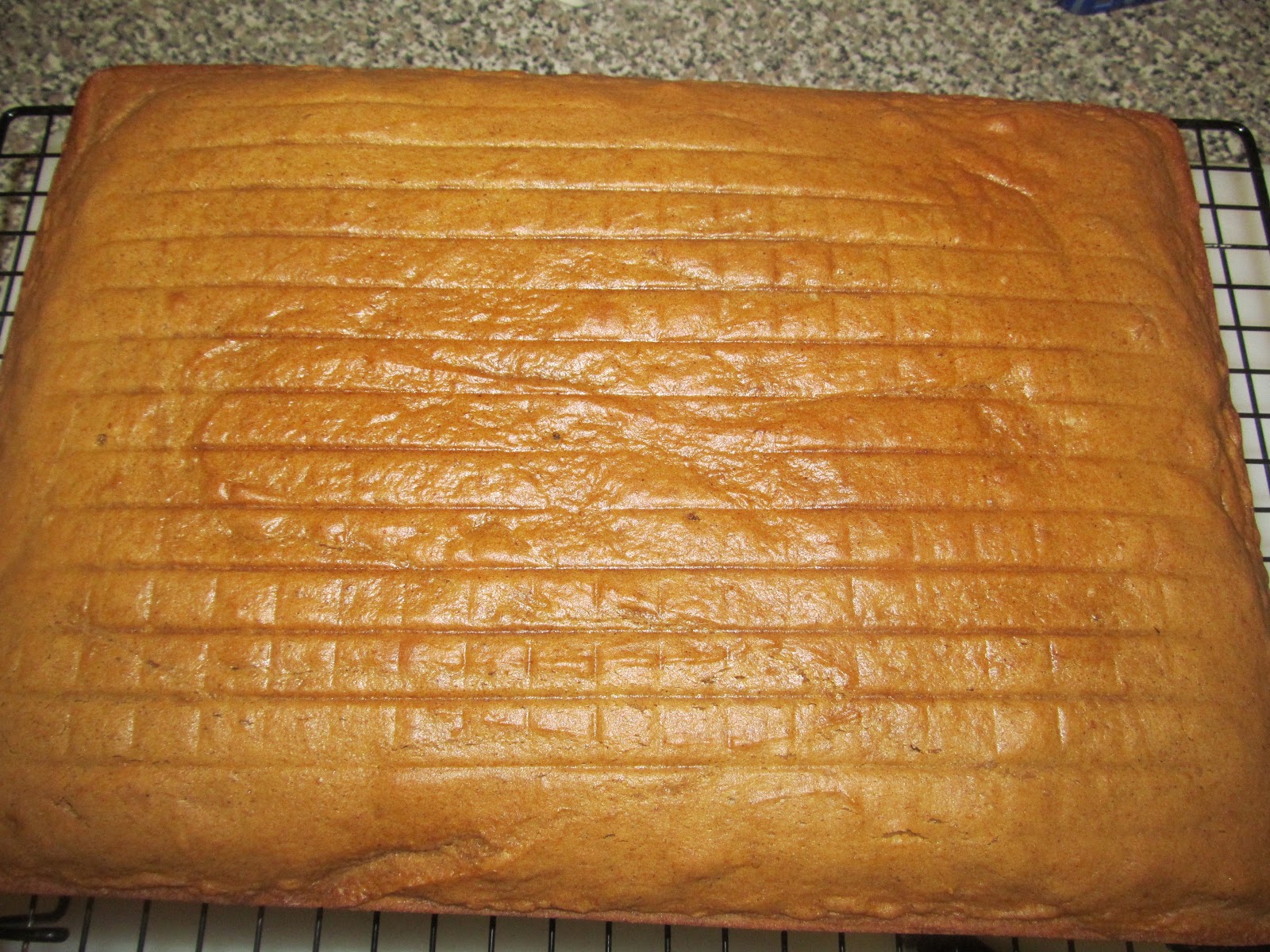
- Bake for 30–35 minutes, until a toothpick inserted in the center comes out clean. Cool completely.
- Make the buttercream by beating softened butter until smooth. Gradually add confectioners' sugar on low, then add milk and vanilla and beat until creamy.
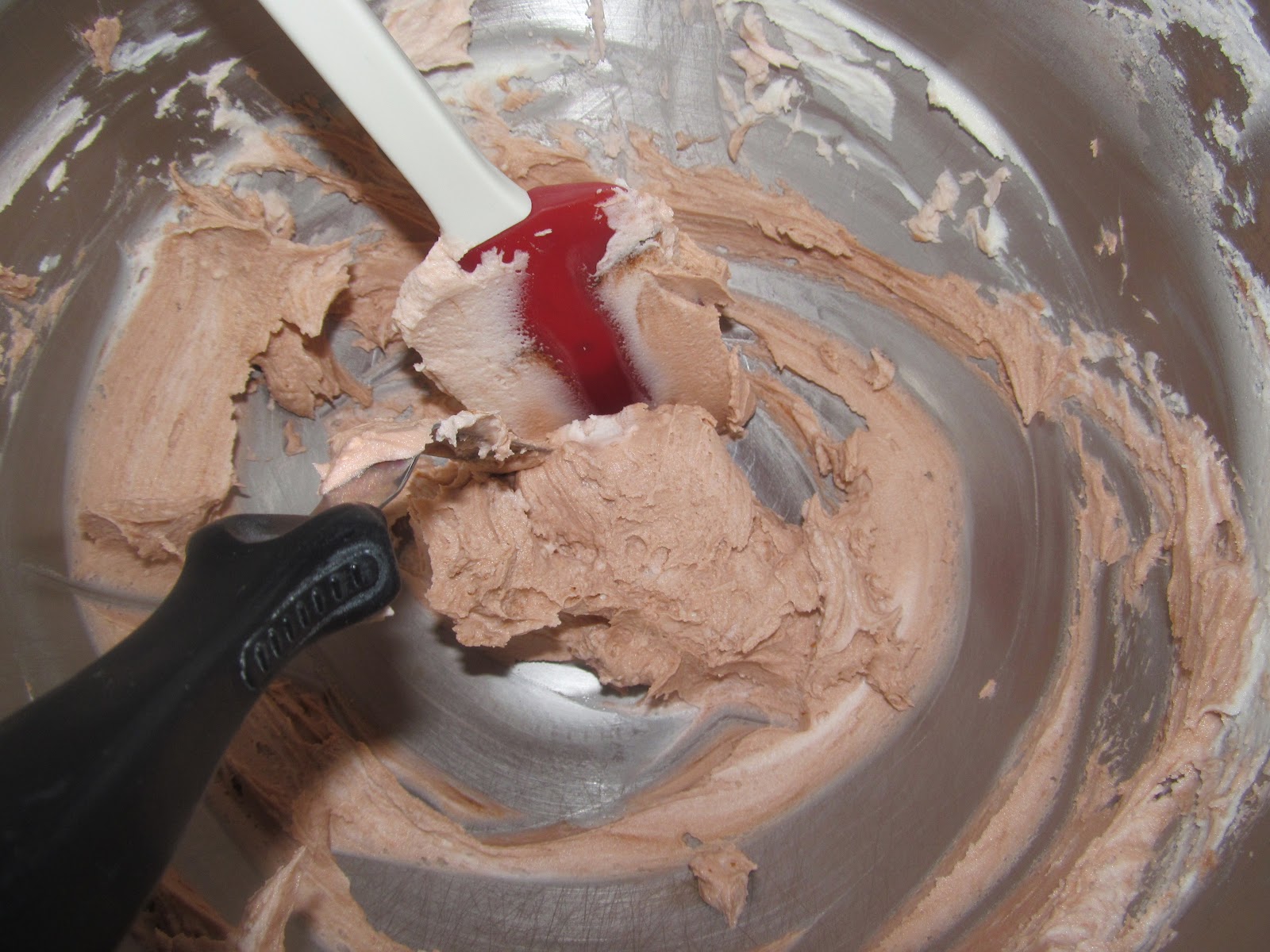
- Reserve 1 cup buttercream for the vines and leaves. Tint the remaining frosting lightly brown to create a tan color, then frost the cooled cake.
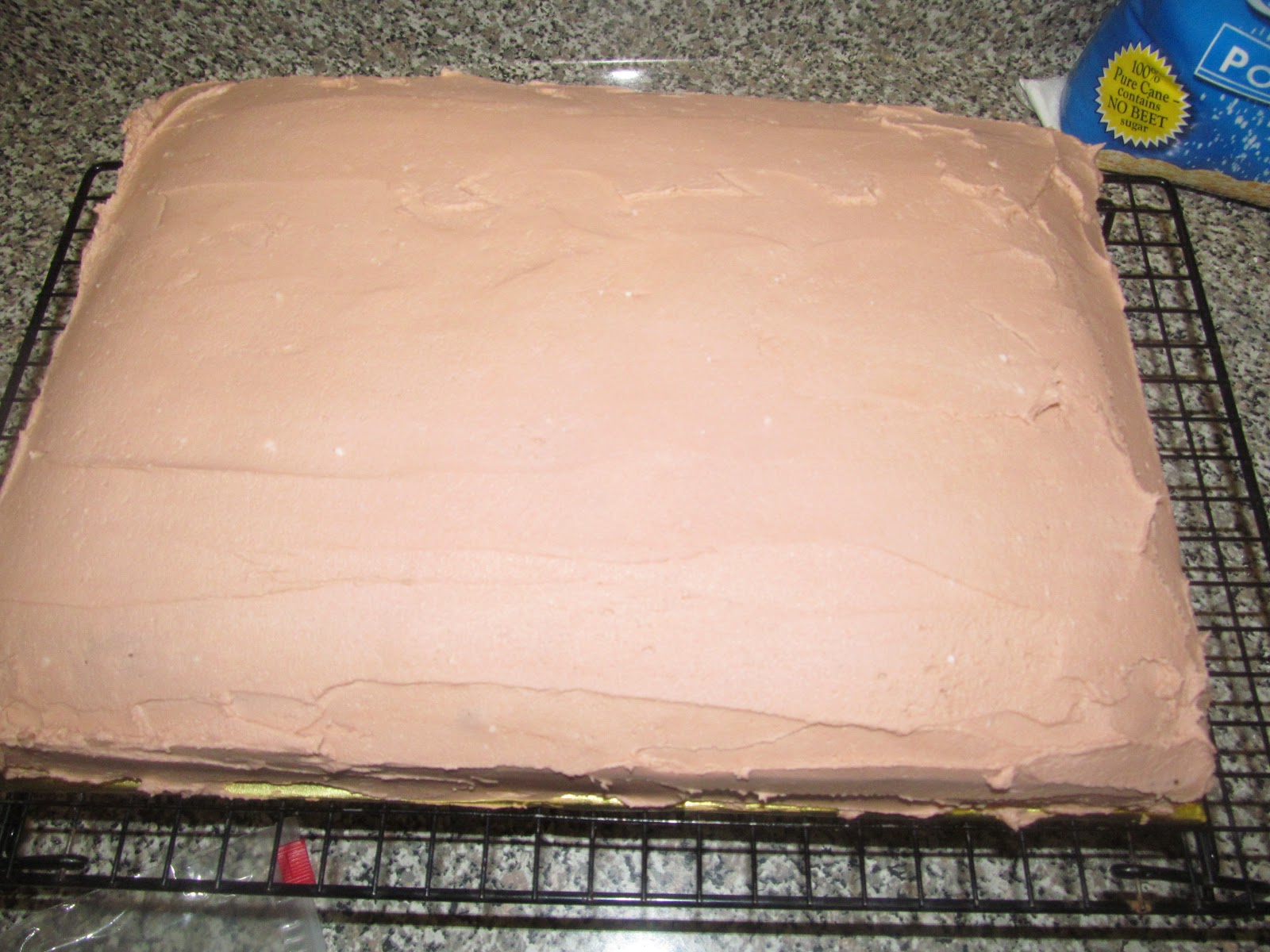
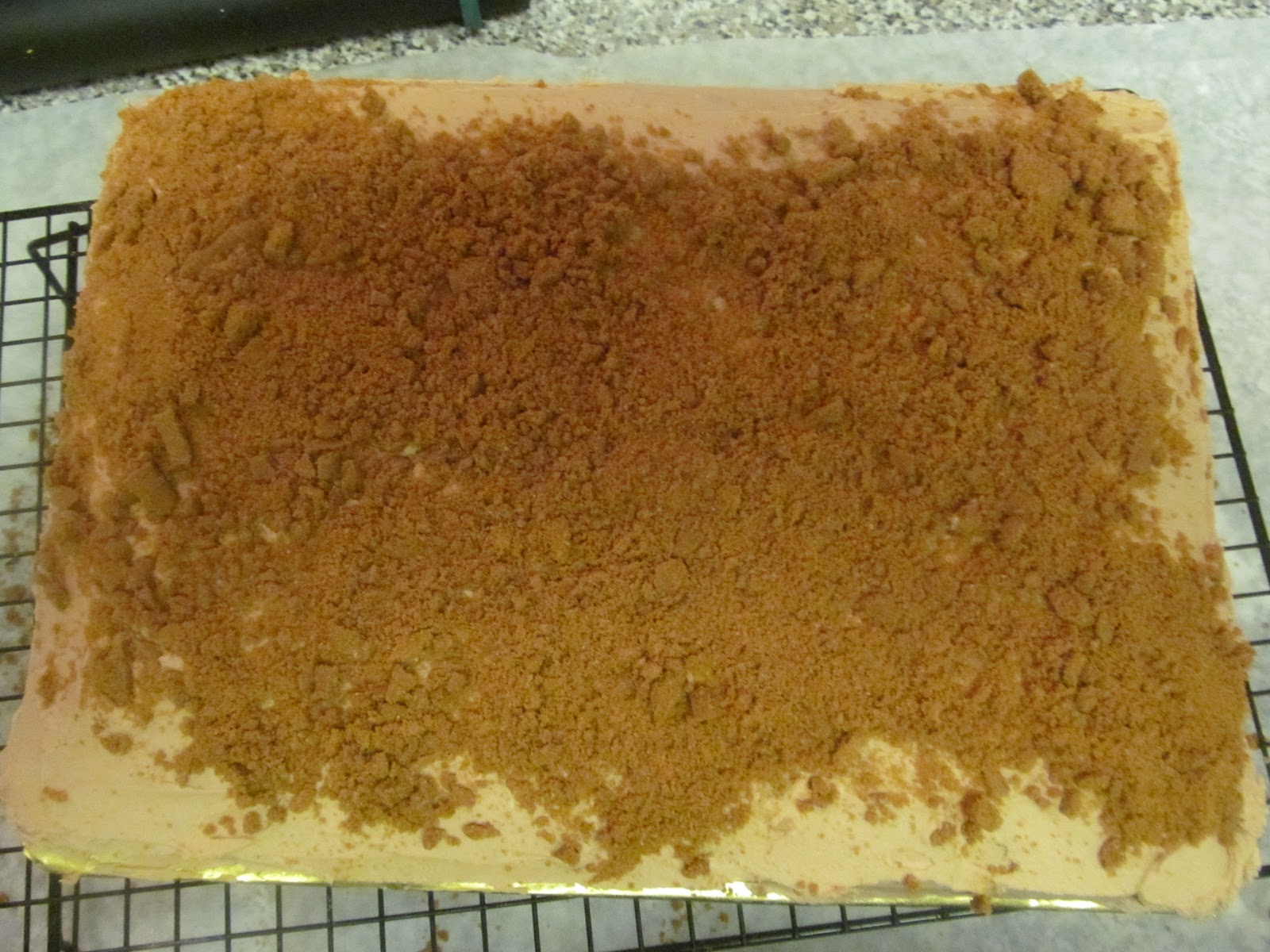
- Crush Biscoff cookies into fine crumbs. Press them over the top and sides of the frosted cake. If the frosting has crusted, lightly mist it with water so the crumbs adhere.
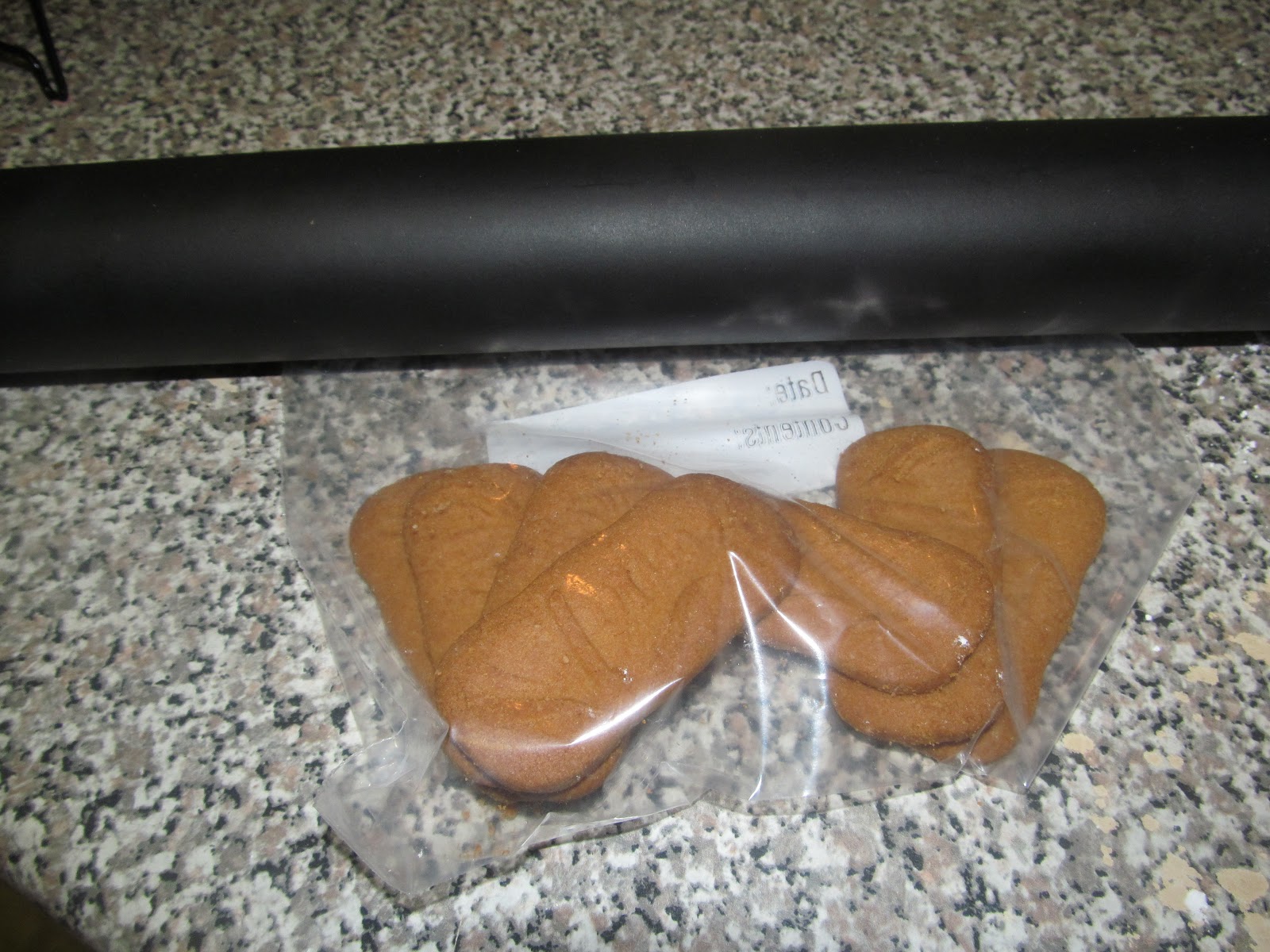
- Press them over the top and sides of the frosted cake. If the frosting has crusted, lightly mist it with water so the crumbs adhere.
- Arrange pumpkin candies across the cake in loose rows to create the pumpkin patch.
- Tint the reserved buttercream green. Pipe connecting vines around the pumpkins using a #2 tip.
- Add leaves with a #352 tip.
- Serve and enjoy.
Notes
- Cool completely: Warm cake will soften the buttercream and make decorating difficult.
- Biscoff crumbs: Crush them finely enough to resemble soil, but leave a few slightly larger pieces for texture.
- Food coloring: Use gel coloring for stronger color without thinning the frosting.
- Decorating: The pumpkin rows do not need to be perfectly straight; an irregular arrangement gives the patch a natural look.
Nutrition
Serving Size: 1 serving
| Nutrient | Estimated Amount |
|---|---|
| Calories | 390 kcal |
| Carbohydrates | 60 g |
| Protein | 3 g |
| Fat | 16 g |
| Saturated Fat | 7 g |
| Cholesterol | 45 mg |
| Sodium | 400 mg |
| Fiber | 1 g |
| Sugar | 43 g |
Nutrition information is an estimate and can vary considerably depending on the specific cake mix, pudding mix, Biscoff cookies, candy, and amount of frosting used.
Decorating Without Overthinking It
This cake is unusually forgiving when it comes to decoration.
The vines don’t have to follow a particular pattern, and the leaves can be placed wherever there is an open area. Instead of trying to reproduce an exact arrangement, focus on creating a mixture of pumpkins, vines, and leaves across the cookie-covered surface.
That makes this a particularly approachable decorated cake for anyone who doesn’t have extensive piping experience.
Common Problems and Easy Fixes
- Cookie Crumbs Won’t Stick: Lightly spritz the frosting with water to restore a little tackiness.
- Cake Difficult to Decorate: Make sure it has cooled completely before frosting.
- Vines Look Too Uniform: Vary the direction and curves of the piped lines.
- Leaves Look Crowded: Leave some cookie-covered space between groups of decorations.
- Frosting Too Soft: Let it cool slightly before piping the vines and leaves.
Choosing the Right Decorating Tools
A few simple tools make the pumpkin patch much easier to create:
- Wilton #2 tip: Use for the thin green vines.
- Wilton #352 tip: Use for the buttercream leaves.
- Rolling pin: Crushes the Biscoff cookies directly inside a plastic bag.
- Piping bag: Makes the vines and leaves easier to control.
- Small offset spatula: Useful for spreading the tan buttercream evenly across the cake.
Try More Halloween Recipes
- Halloween Eyeball Jello Shots
- Halloween Cake Pops
- Halloween Sandwich Cookies
- Halloween Thumbprint Cookies!
Storage
Keep the decorated cake covered and store it according to the storage conditions appropriate for the buttercream and ingredients used.
For the cleanest appearance, avoid stacking anything directly on top of the decorated surface, since the pumpkin candies, vines, and leaves can be disturbed.
Frequently Asked Questions
1. Can I use a different cake pan?
The recipe is written specifically for a 10×13-inch pan, which creates the broad surface needed for the pumpkin patch decoration.
2. Do the Biscoff cookies need to be finely crushed?
No. A mixture of crumbs and slightly larger pieces gives the cake surface more visual texture and helps create the look of soil.
3. Why do I need to cool the cake completely before decorating?
Warm cake can soften buttercream and make the cookie crumbs difficult to apply cleanly. A completely cooled cake provides a firmer surface for decorating.
4. Can I make the pumpkin rows perfectly straight?
You can, but you don’t need to. The original decorating approach intentionally uses loosely arranged rows to make the cake resemble a natural pumpkin patch.
5. What is the Wilton #2 tip used for?
The #2 tip is used to pipe the thin green buttercream lines that represent the pumpkin vines.
6. What is the Wilton #352 tip used for?
The #352 tip is used to create the buttercream leaves. Its shape makes it possible to pipe recognizable leaf forms with a simple squeeze-and-release motion.
7. Can I use another type of cookie for the soil?
The recipe specifically calls for Biscoff cookies. Another crisp spiced cookie could change the flavor and appearance, so Biscoff gives the closest result to the original recipe.
8. Do the vines need to look perfect?
Not at all. The loose, irregular placement of the vines is part of the pumpkin-patch design. Letting some lines curve in different directions can actually make the finished cake look more natural.

hi there,
The Freshman Cook started as a place to keep track of recipes I wanted to make again. Somewhere along the way, it grew into a collection of meals that friends requested, desserts that disappeared too quickly, and weeknight dinners that made life a little easier.
know more