

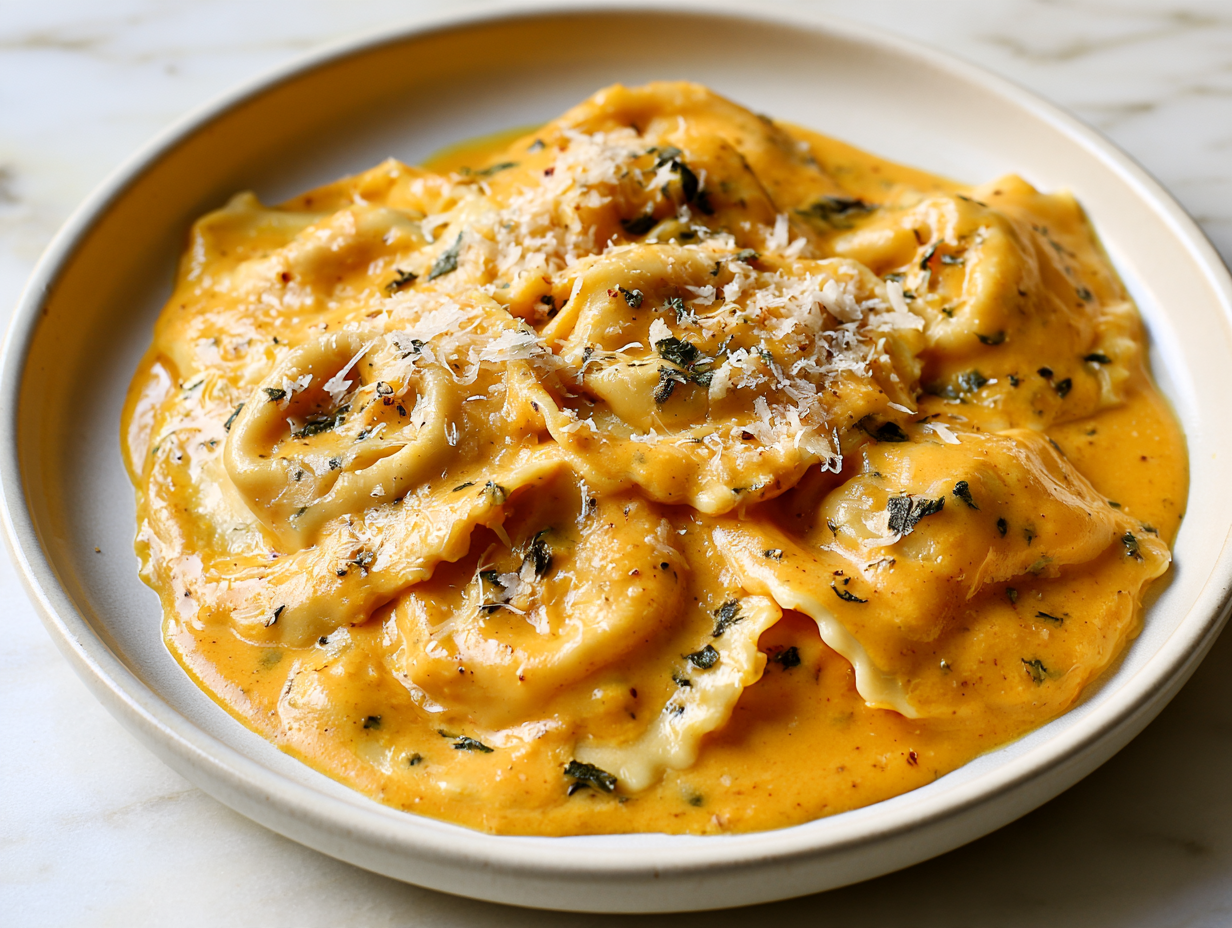

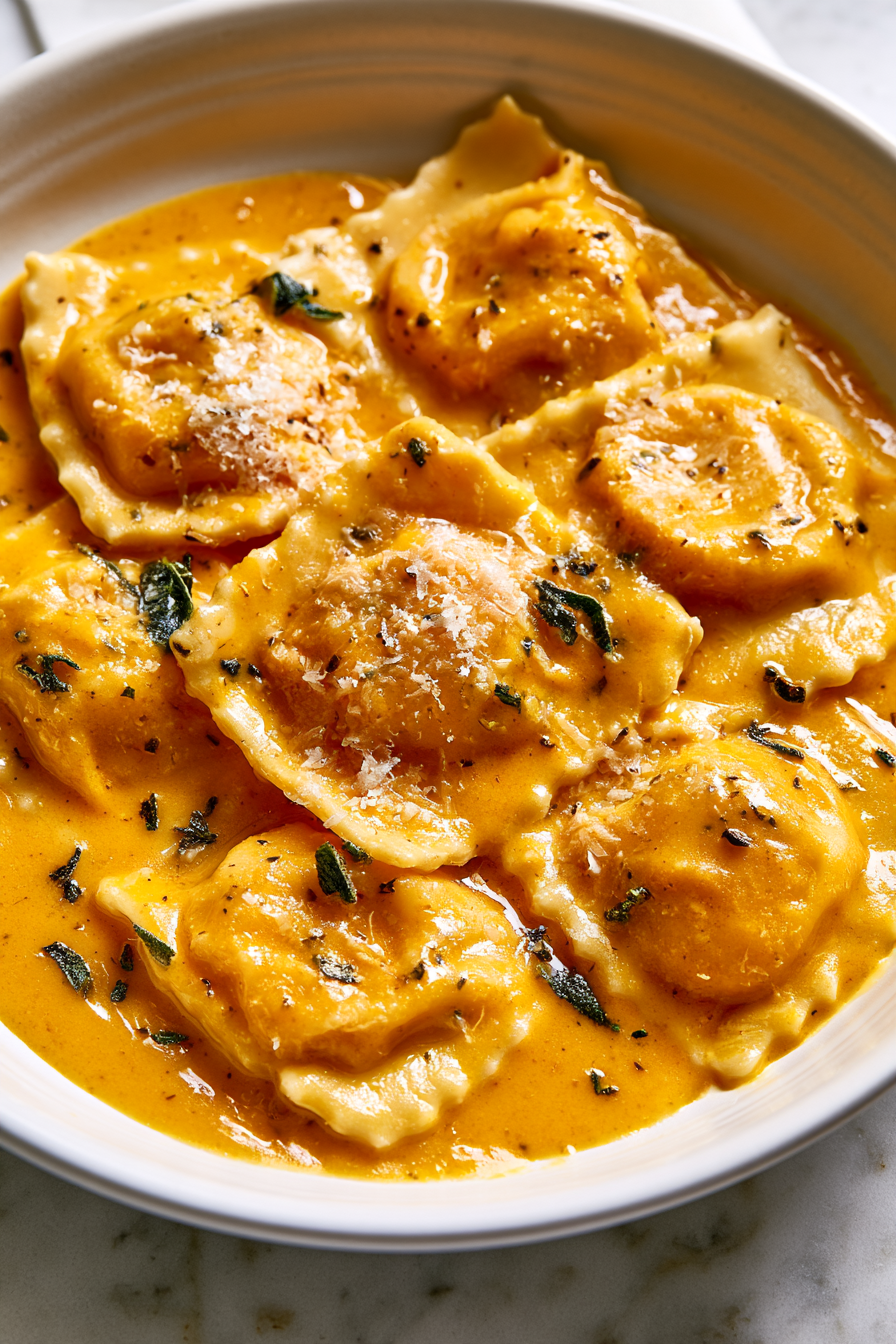
This Butternut Squash Ravioli Sauce is creamy, velvety, and full of cozy fall flavor. Sweet butternut squash blends with garlic, sage, vegetable stock, a splash of cream, and Parmesan to create a rich sauce that makes stuffed pasta feel restaurant-worthy.
The best part is that the squash does most of the work. Once cooked until tender and blended, it creates a naturally creamy base without needing lots of heavy cream. Toss it with tender ravioli, finish with extra Parmesan, and you have a comforting dinner that works beautifully for a fall weeknight or a special meal at home.
What Makes This Sauce So Creamy?
The secret is blending the cooked squash rather than relying on cream alone. Once the squash becomes completely tender, it breaks down into a smooth purée that naturally thickens the sauce.
The cream adds a little extra richness, while Parmesan brings a savory, salty finish. Together, they create a sauce that coats the ravioli without feeling overly heavy.
For the smoothest result, blend the squash and cooking liquid thoroughly before adding the cream and cheese.
Ingredient Breakdown
- Butternut squash: The heart of the sauce. Its naturally sweet, smooth flesh creates the creamy texture and warm golden color.
- Butter: Adds richness and helps carry the flavor of the garlic and sage.
- Garlic: Brings a savory note that balances the sweetness of the squash.
- Dried sage: Complements the earthy, slightly sweet flavor of butternut squash.
- Vegetable stock: Helps cook the squash and provides the liquid needed to blend it into a smooth sauce.
- Single cream or light cream: Adds extra richness without making the sauce too heavy.
- Parmesan cheese: Brings salty, savory flavor and helps give the sauce a fuller finish.
- Ravioli: The recipe uses 250 g (8 oz) of ravioli, but the sauce also works with other stuffed pasta varieties.

Butternut Squash Ravioli Sauce Recipe
Equipment
- Large pot
- Butter Pot
- Spatula for mixing
- Colander
- Grater
Ingredients
- 3 tbsp Butter
- 3 cloves Garlic
- ½ tsp Dried sage
- 600 g / 4 cups cubed Butternut squash
- 350 ml / 1½ cups Vegetable stock
- 125 ml / ½ cup Single cream or light cream
- 50 g / ½ cup Parmesan cheese
- 250 g/8 oz Ravioli
Instructions
- Melt butter in a large pan on low heat.
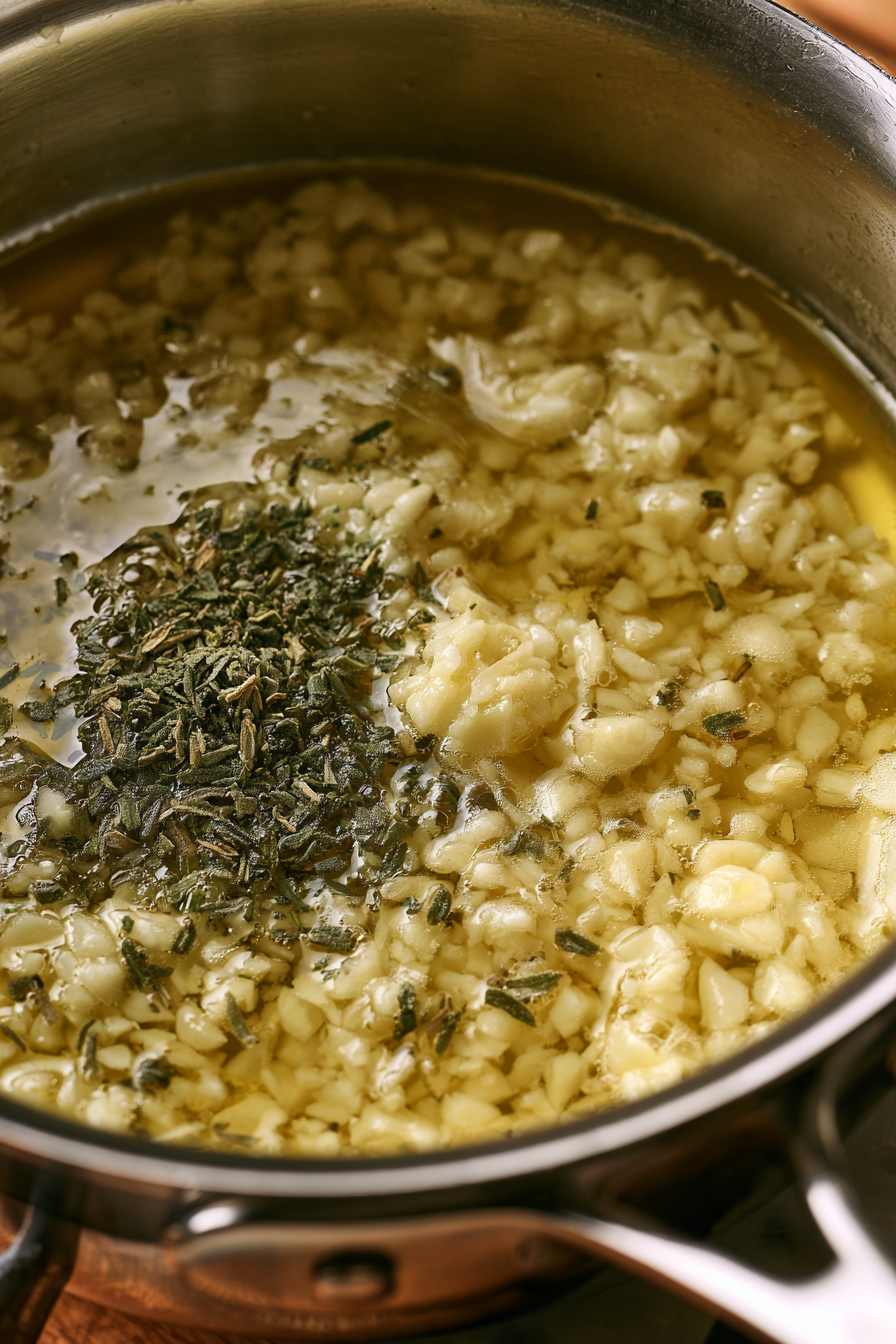
- Add minced garlic and dried sage, cook for 1 minute.
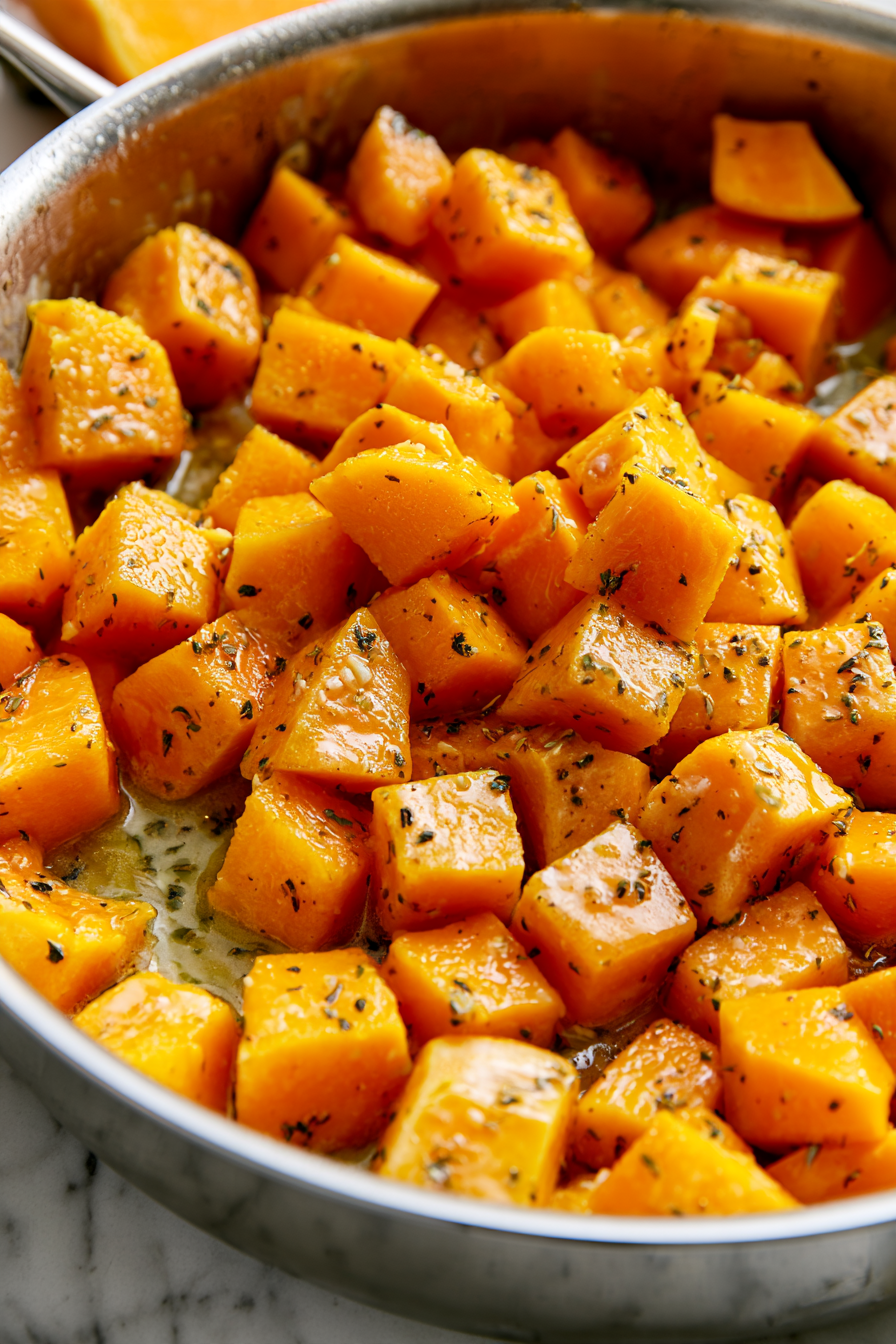
- Add cubed squash and a pinch of salt, cook for 5 minutes on medium heat.
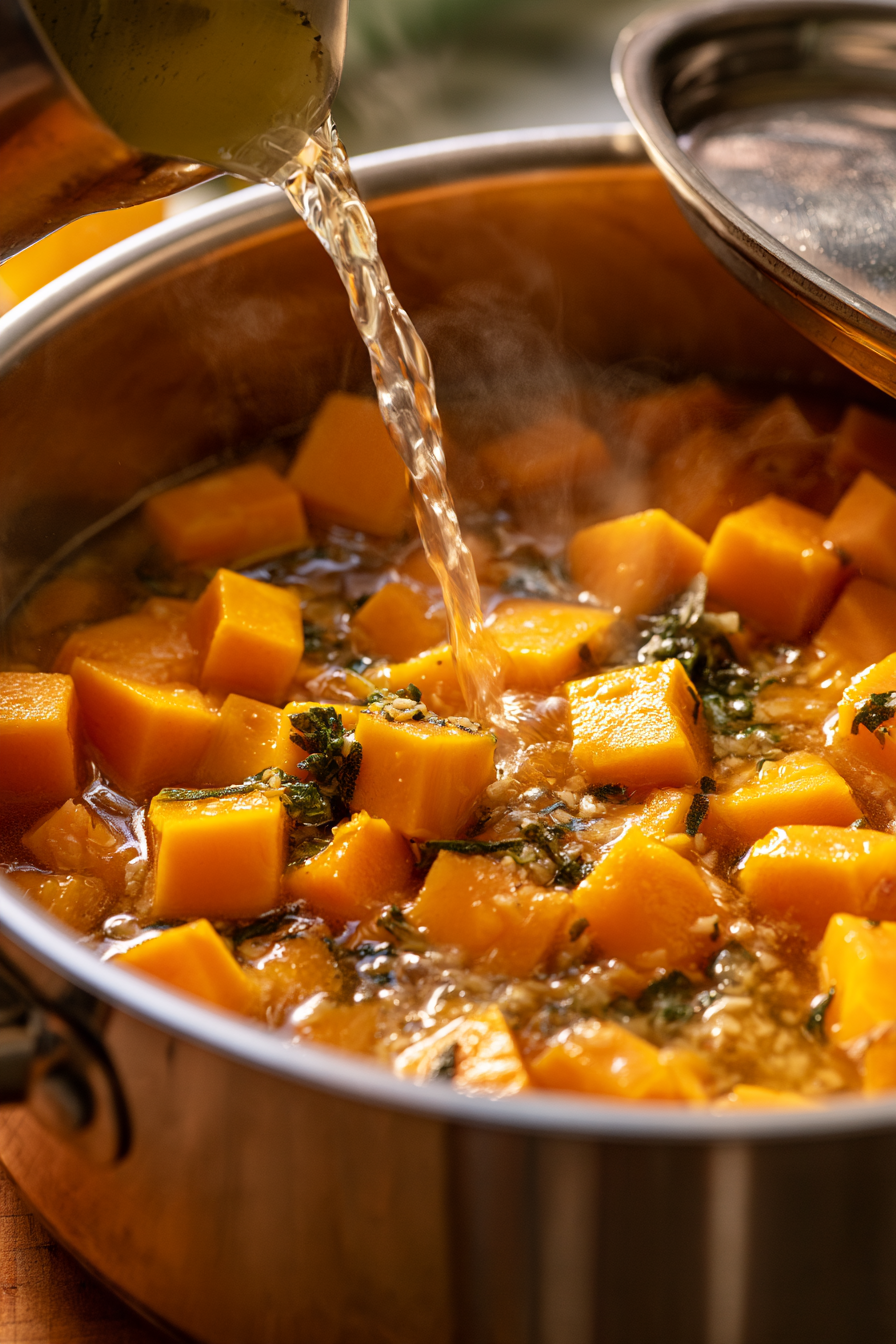
- Pour in vegetable stock, bring to a boil, then simmer covered for 15-20 minutes until squash is soft.
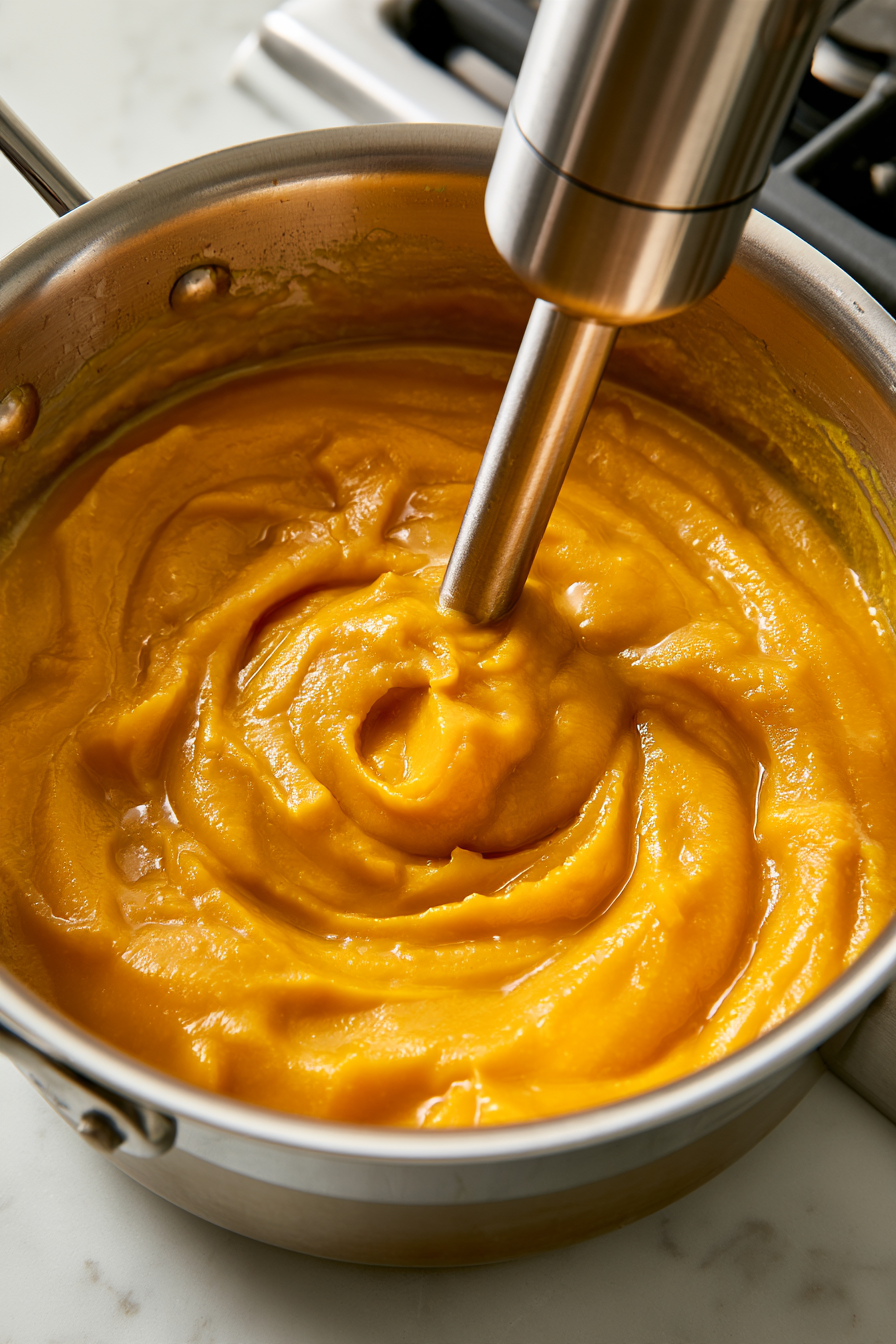
- Blend cooked squash and liquid until smooth.
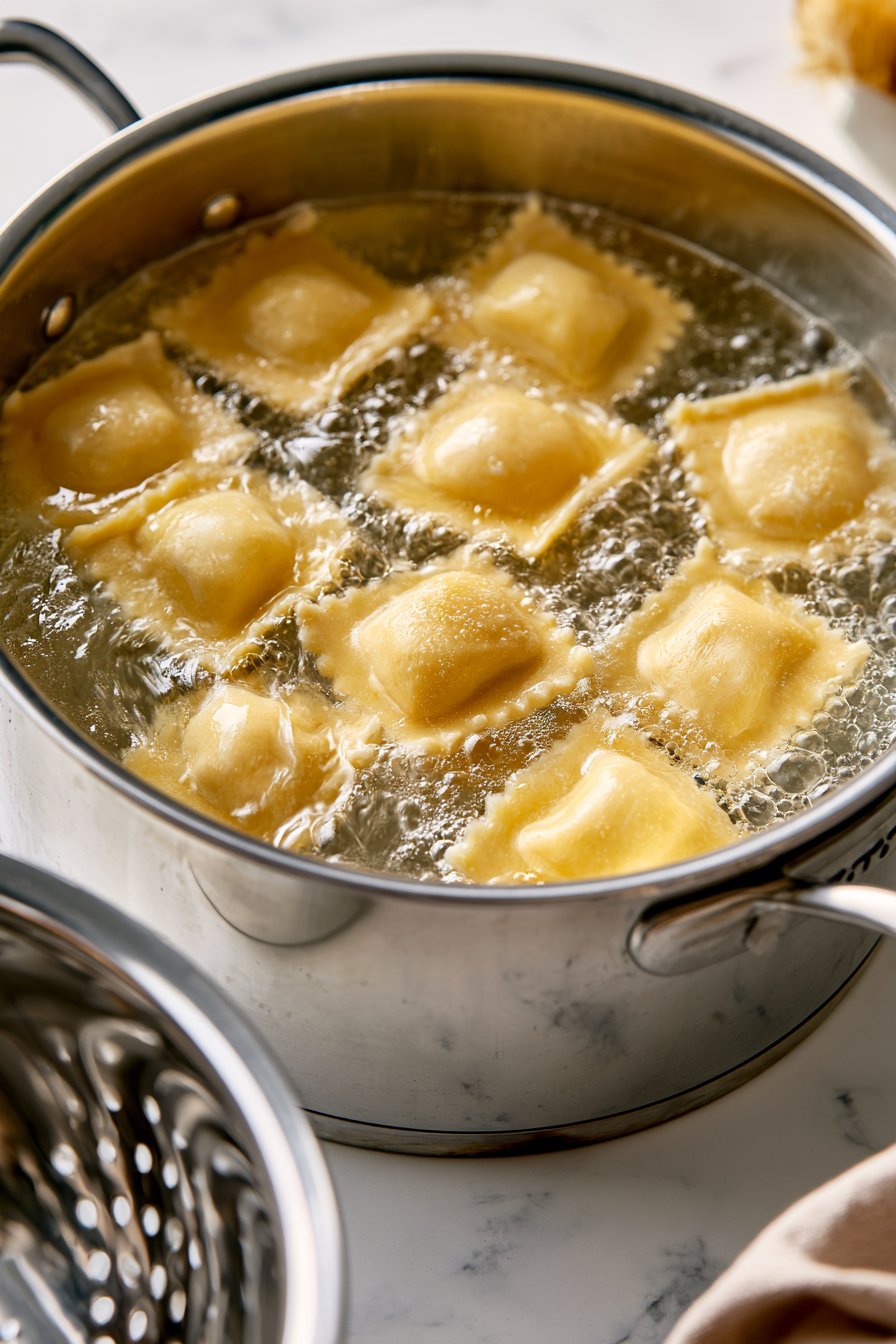
- Cook ravioli according to package instructions.
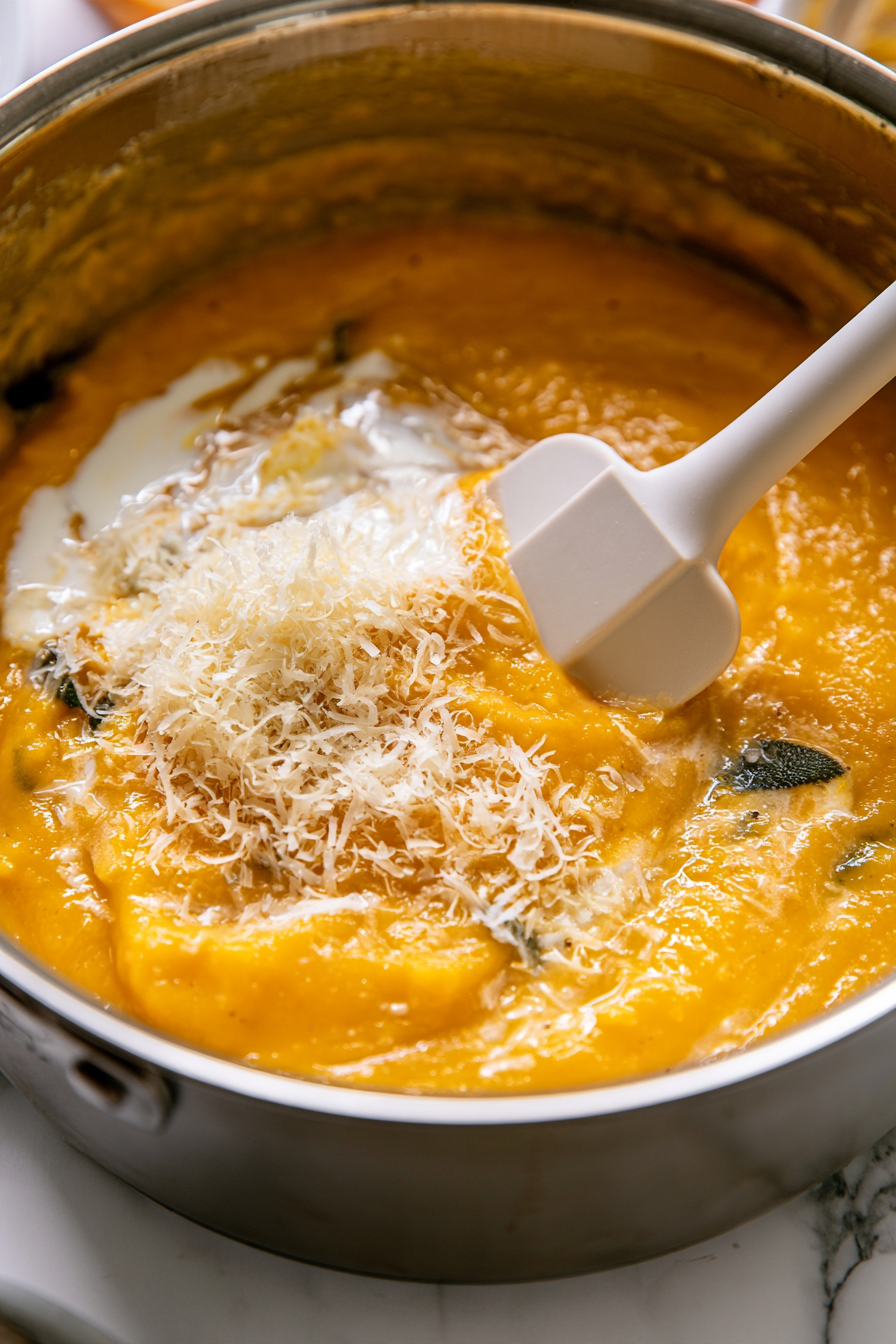
- Warm blended squash in pan, then add cream and grated Parmesan cheese, stirring until melted.
- Add cooked ravioli to pan, gently mix with sauce.
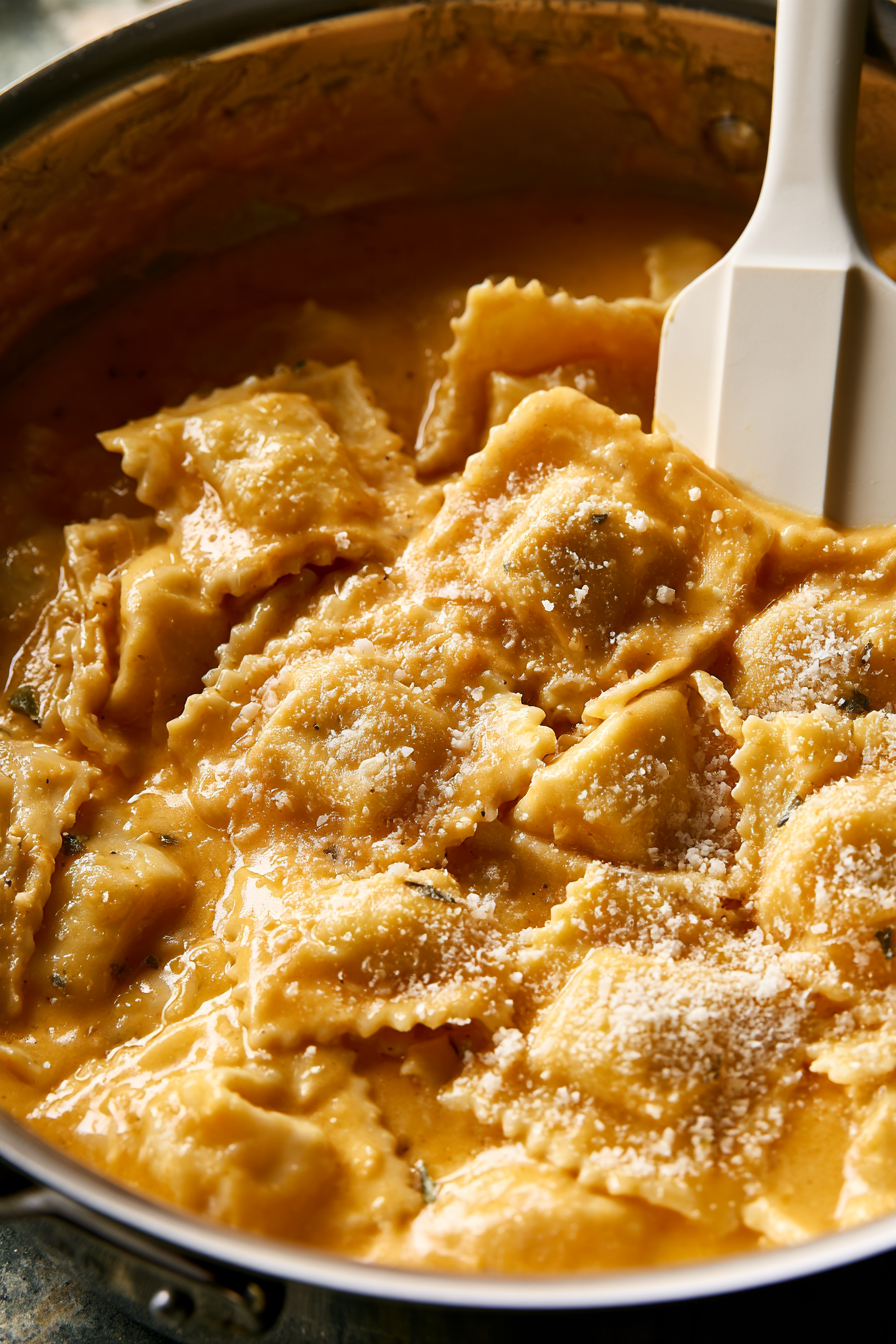
- Serve topped with grated Parmesan cheese.
Notes
- Blended butternut squash makes a creamy sauce on its own. We only add a little cream for extra richness.
- When prepping the squash, be careful! You’ll need a strong peeler, a sharp knife, and a steady hand. Late-season squashes can be tougher to work with.
- Use a stick blender or food processor to blend the squash until it’s smooth and creamy.
- You can pair this sauce with any stuffed pasta you like! Spinach and ricotta ravioli or basil and pine nut tortellini are some tasty options.
Nutrition Facts:
| Nutrition | Value |
|---|---|
| Calories | 198 kcal |
| Carbohydrates | 16g |
| Protein | 5g |
| Fat | 14g |
| Saturated Fat | 8g |
| Cholesterol | 47mg |
| Sodium | 434mg |
| Fiber | 3g |
| Iron | 1mg |
How to Get the Best Sauce Consistency
A good squash sauce should be thick enough to cling to the pasta but loose enough to coat it easily.
- Too thick? Stir in a little vegetable stock or pasta water.
- Too thin? Let the sauce simmer gently for a few minutes before adding the ravioli.
- Not smooth enough? Blend the squash longer, making sure the cubes are fully tender first.
- Too sweet? Add a little extra Parmesan to bring more savory balance.
Which Ravioli Goes Best With This Sauce?
The sweet, earthy flavor of butternut squash pairs especially well with stuffed pasta that has a mild, savory filling.
- Butternut squash ravioli: Doubles down on the squash flavor for a cozy fall dish.
- Spinach and ricotta ravioli: Adds a creamy, mildly savory filling that balances the sauce.
- Cheese ravioli: Keeps the dish simple and lets the sauce take center stage.
- Basil and pine nut tortellini: Offers an herbal, nutty contrast to the sweet squash.
Easy Ways to Add More Flavor
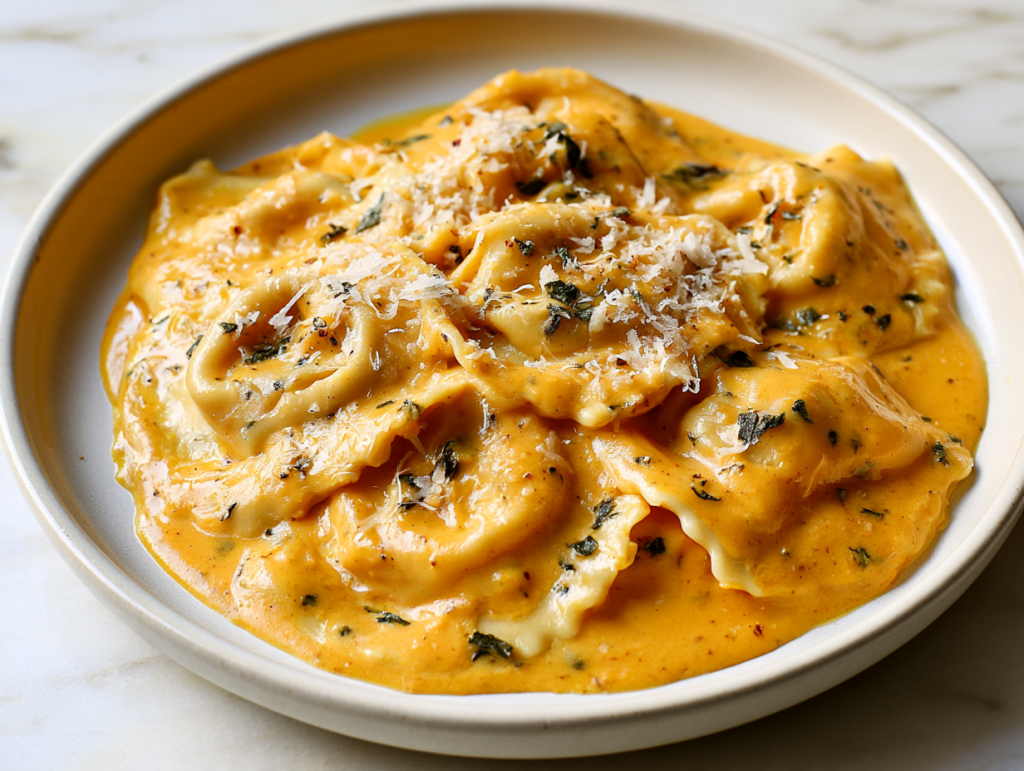
The sauce is delicious as written, but a few finishing touches can make it feel even more special.
- Add freshly cracked black pepper just before serving.
- Sprinkle extra Parmesan over each portion.
- Garnish with a few crispy sage leaves for a more pronounced herbal flavor.
- Add toasted walnuts or pecans for crunch, if desired.
More Pasta Reipes You’ll Love
- Pumpkin Alfredo Pasta
- Pumpkin Ravioli
- Vegan Lemon Spinach Pasta
- Vegan Spring Pea Pasta
- Chicken Tortellini Alfredo
Make-Ahead and Storage Tips
You can prepare the squash sauce ahead and refrigerate it separately from the ravioli. Store it in an airtight container and reheat gently in a saucepan, stirring frequently.
The sauce will thicken as it cools. Add a little vegetable stock or water during reheating to restore its consistency.
For the best texture, cook the ravioli fresh and combine it with the warmed sauce just before serving. This helps prevent the pasta from becoming too soft while sitting in the sauce.
Frequently Asked Questions
- Can I use frozen butternut squash?
Yes. Frozen cubed squash can save preparation time. Cook it until completely tender before blending, adjusting the cooking time as needed. - Can I make this sauce without cream?
Yes. The blended squash creates a creamy texture on its own. The cream is included for extra richness, so you can omit it if you prefer a lighter sauce. - Can I use fresh sage instead of dried sage?
Yes. Fresh sage works well with butternut squash. Since fresh and dried herbs differ in intensity, start with a modest amount and adjust to taste. - Why is my sauce grainy?
The squash may not have been cooked until fully tender, or it may need more blending. Cook the squash until it mashes easily with a fork, then blend until smooth. - Can I use chicken stock instead of vegetable stock?
Yes, if you don’t need the dish to be vegetarian. Vegetable stock is the recipe’s listed option, while chicken stock will give the sauce a slightly different savory flavor. - Can I freeze the sauce?
The sauce may be frozen separately, although the texture can change slightly after thawing because of the cream and cheese. Thaw it in the refrigerator and reheat gently, stirring well before serving.


hi there,
The Freshman Cook started as a place to keep track of recipes I wanted to make again. Somewhere along the way, it grew into a collection of meals that friends requested, desserts that disappeared too quickly, and weeknight dinners that made life a little easier.
know more


