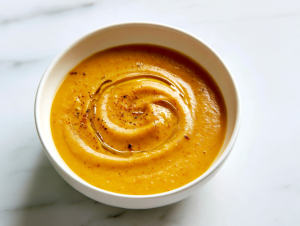

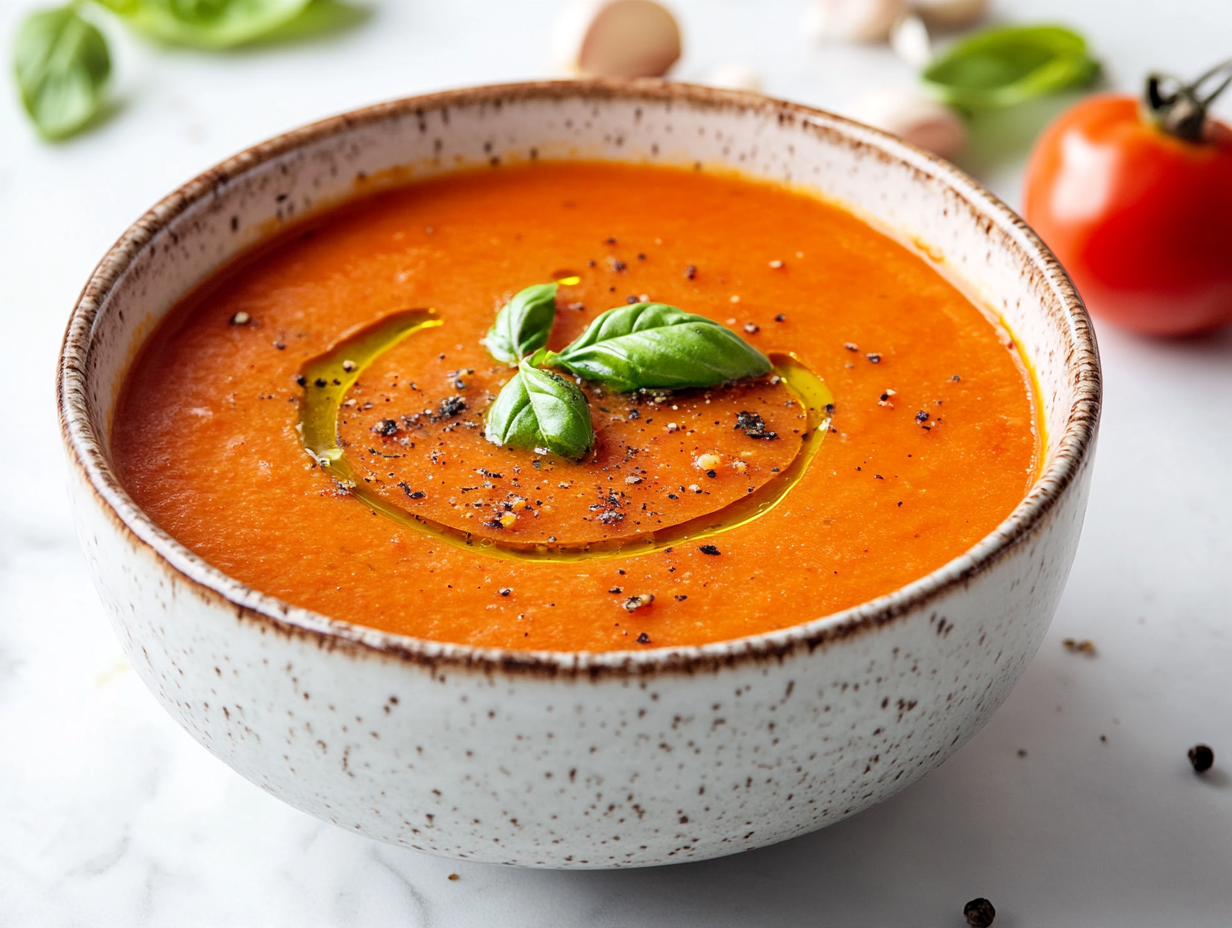

Slow-Cooked Roasted Tomato Soup combines oven-roasted tomatoes, garlic, olive oil, and herbs to create a deeply flavored homemade soup with a smooth, velvety texture. Roasting the tomatoes first helps concentrate their natural sweetness before they slowly break down in the crockpot.
The slow cooking process allows the roasted vegetables to develop a richer taste while creating a thick, comforting puree. This simple soup is ideal for cool evenings, easy lunches, or a cozy homemade meal served with your favorite toppings and sides.
Why This Roasted Tomato Soup Method Works
- Roasting Adds Depth: High heat caramelizes the tomatoes and brings out their natural sweetness.
- Slow Cooking Develops Flavor: The crockpot allows the roasted ingredients to blend together gradually.
- Simple Ingredients Shine: Fresh tomatoes, garlic, and herbs create a flavorful base without complicated additions.
- Smooth Homemade Texture: Blending transforms the softened vegetables into a silky soup.
- Hands-Off Cooking: Most of the flavor development happens while the slow cooker works.
- Seasonal Flexibility: Works especially well when fresh tomatoes are ripe and flavorful.
The Ingredients Behind the Rich Tomato Flavor
- Fresh Tomatoes: Ripe tomatoes provide the main flavor and determine the soup’s sweetness, acidity, and color. Choose tomatoes that feel heavy for their size and have a fragrant aroma.
- Garlic Cloves: Whole roasted garlic becomes mellow and slightly sweet, adding depth without the sharpness of raw garlic.
- Olive Oil: Olive oil helps the tomatoes roast evenly while adding richness to the finished soup.
- Basil: Basil complements the tomatoes with a fresh herbal note that balances their natural acidity.
- Salt and Pepper: Proper seasoning brings out the tomatoes’ natural flavors and prevents the soup from tasting flat.

Slow-Cooked Roasted Tomato Soup
Equipment
- Crockpot
- Knife
Ingredients
- 6 cups fresh tomatoes, halved preferably ripe and juicy
- 4 cloves garlic cloves, peeled whole for slow roasting
- 2 tablespoons olive oil for roasting
- 1 teaspoon dried basil or fresh basil if preferred
- to taste salt and pepper for seasoning
Instructions
- Arrange the halved tomatoes and whole garlic cloves on a baking sheet, then drizzle with olive oil and season with salt and pepper.
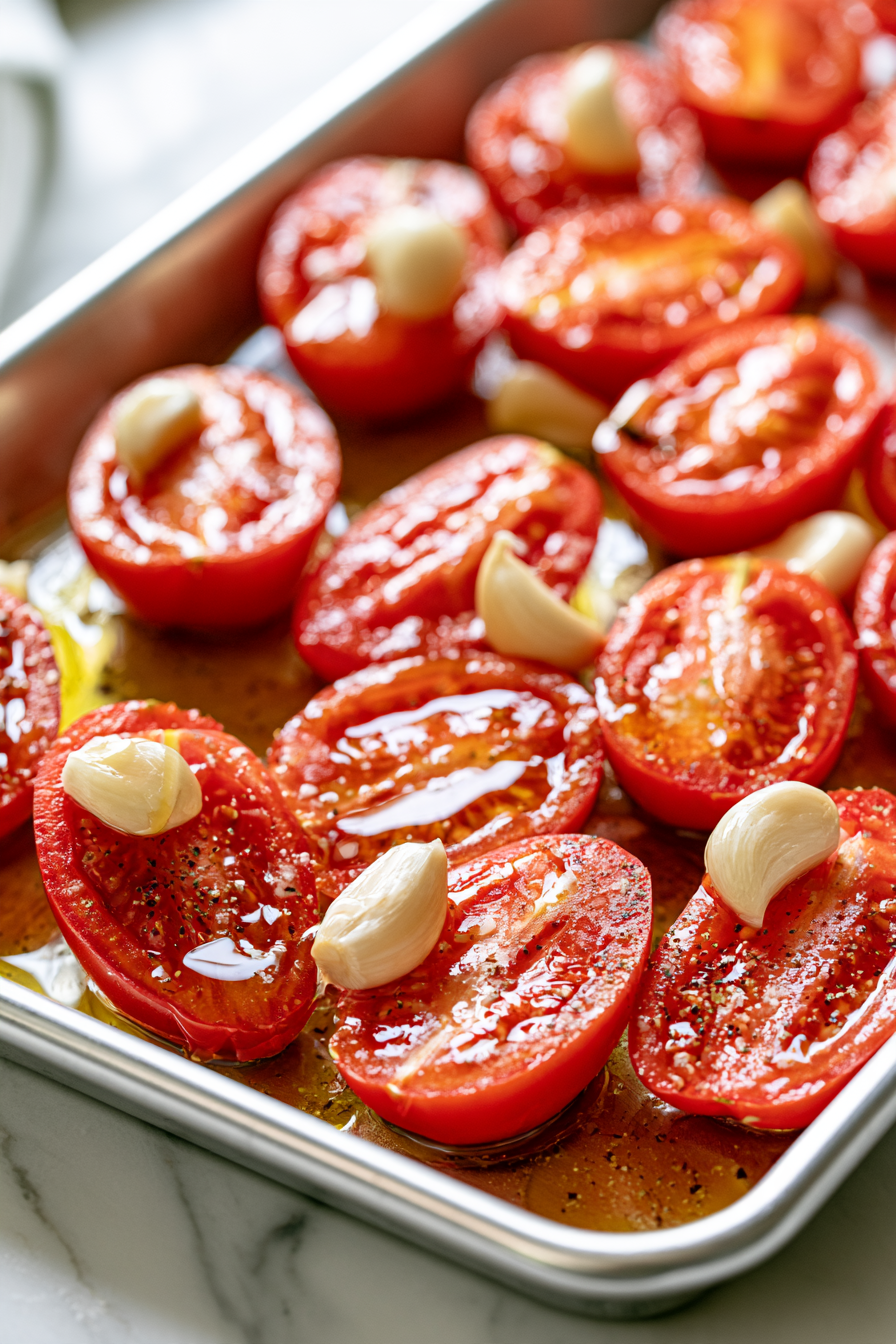
- Roast in the oven at 400°F (200°C) for about 30 minutes until the tomatoes are soft and slightly caramelized, filling your kitchen with a sweet, toasted aroma.
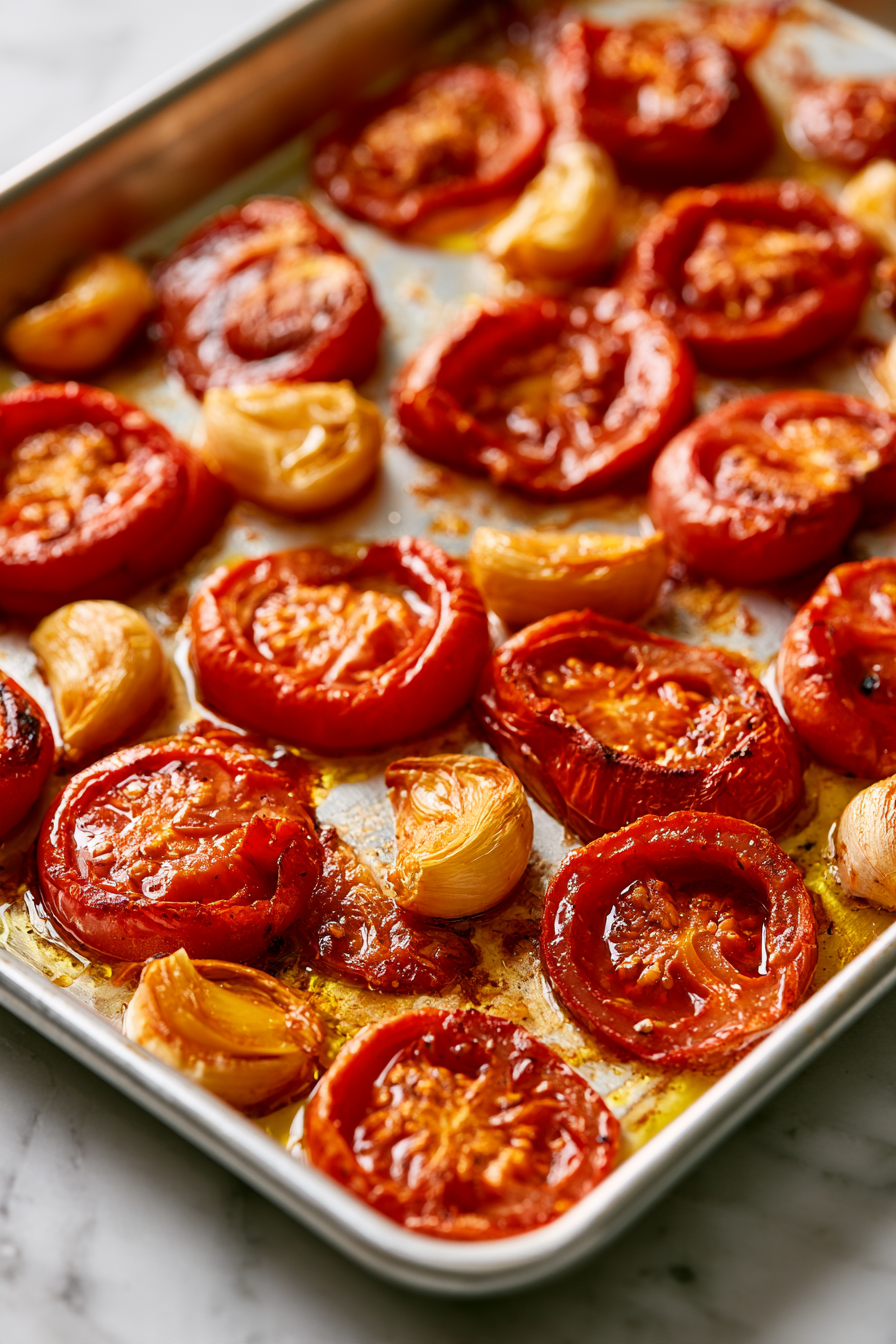
- Transfer the roasted tomatoes and garlic into the crockpot, spreading them out evenly. Sprinkle the dried basil over the top for added flavor.
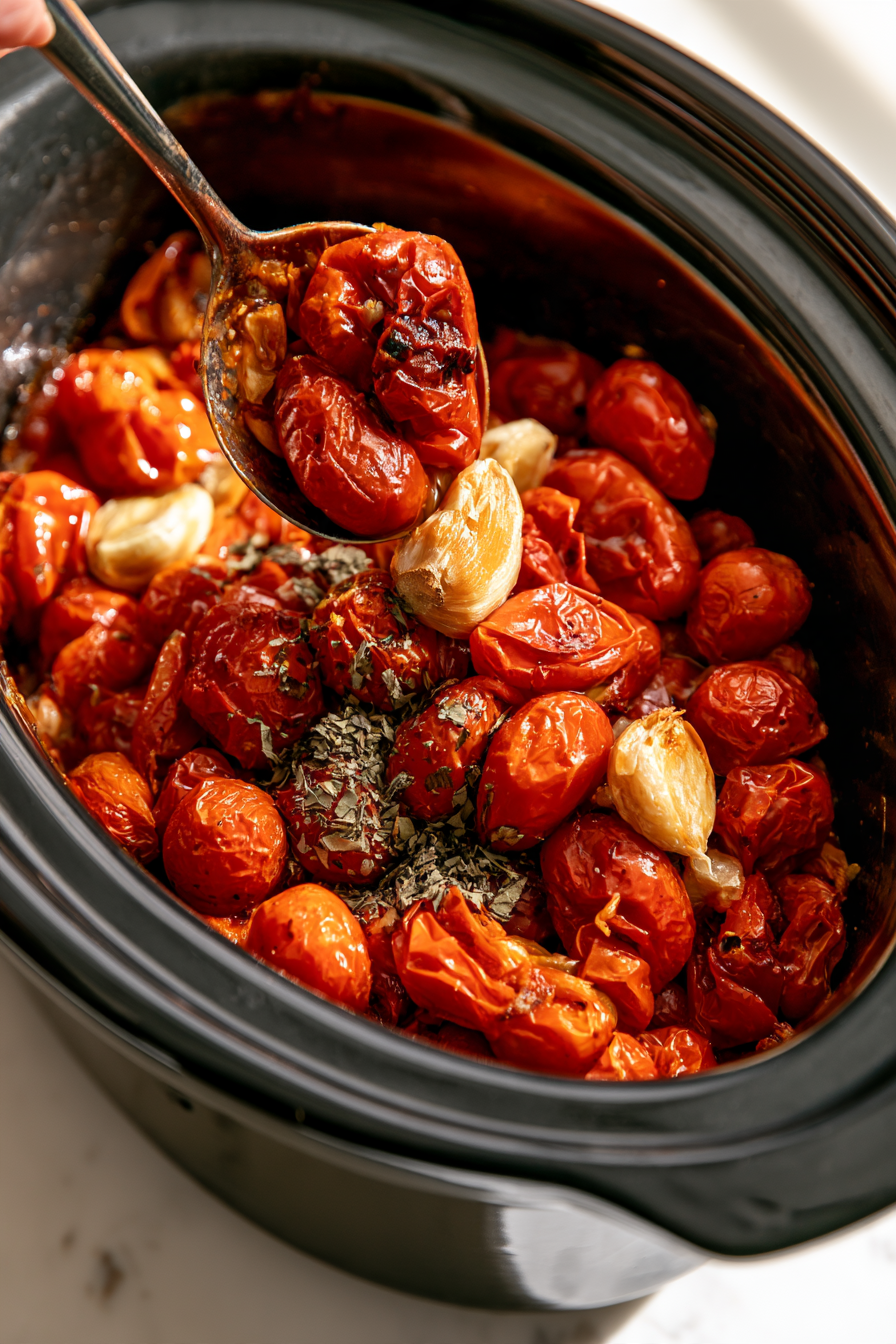
- Pour in a cup of vegetable broth or water to help facilitate blending later, then cover the crockpot with its lid.
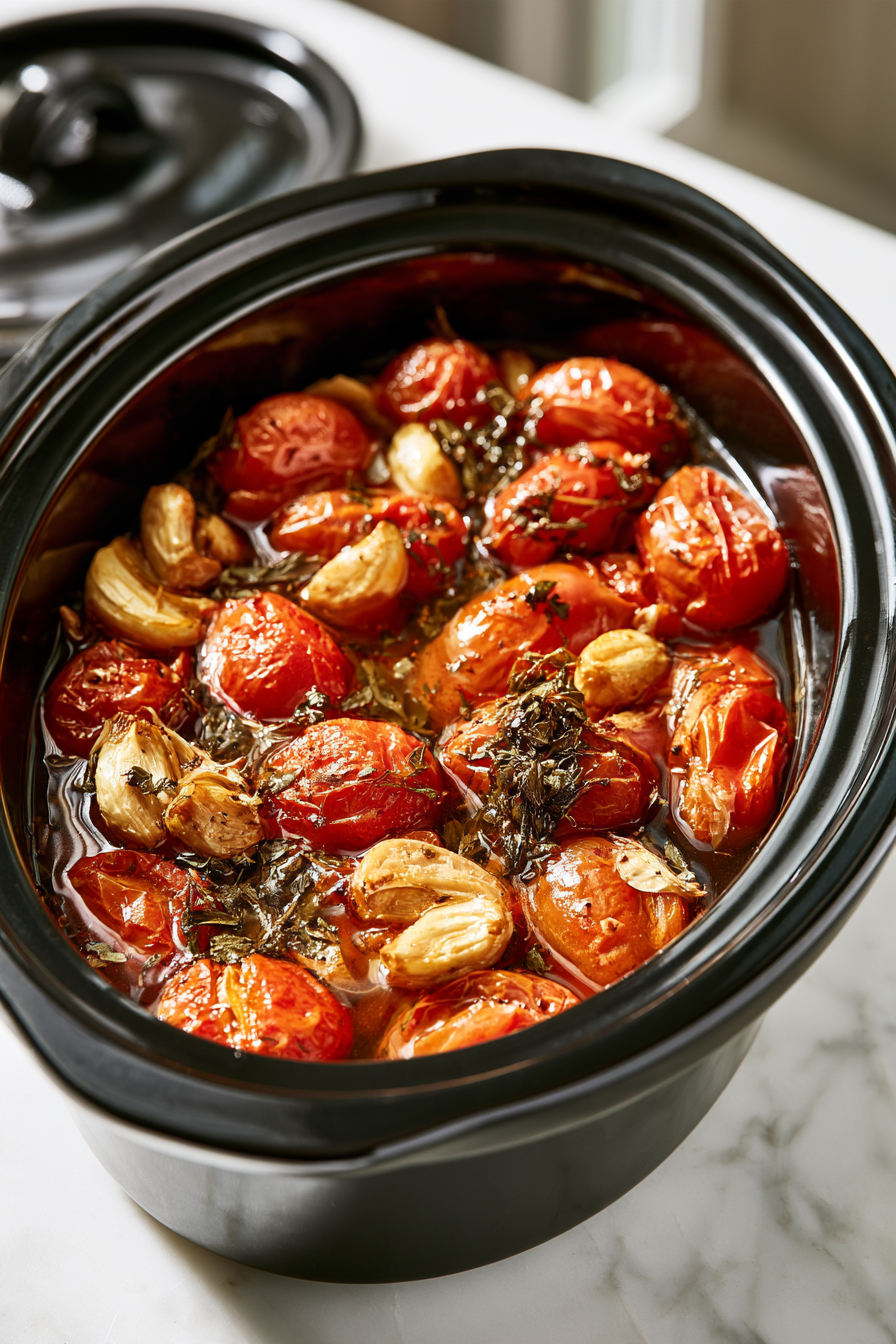
- Set the crockpot to low and cook for 6 to 8 hours, allowing the flavors to deepen and the tomatoes to break down into a thick, sauce-like texture. The house will fill with a warm, savory smell.
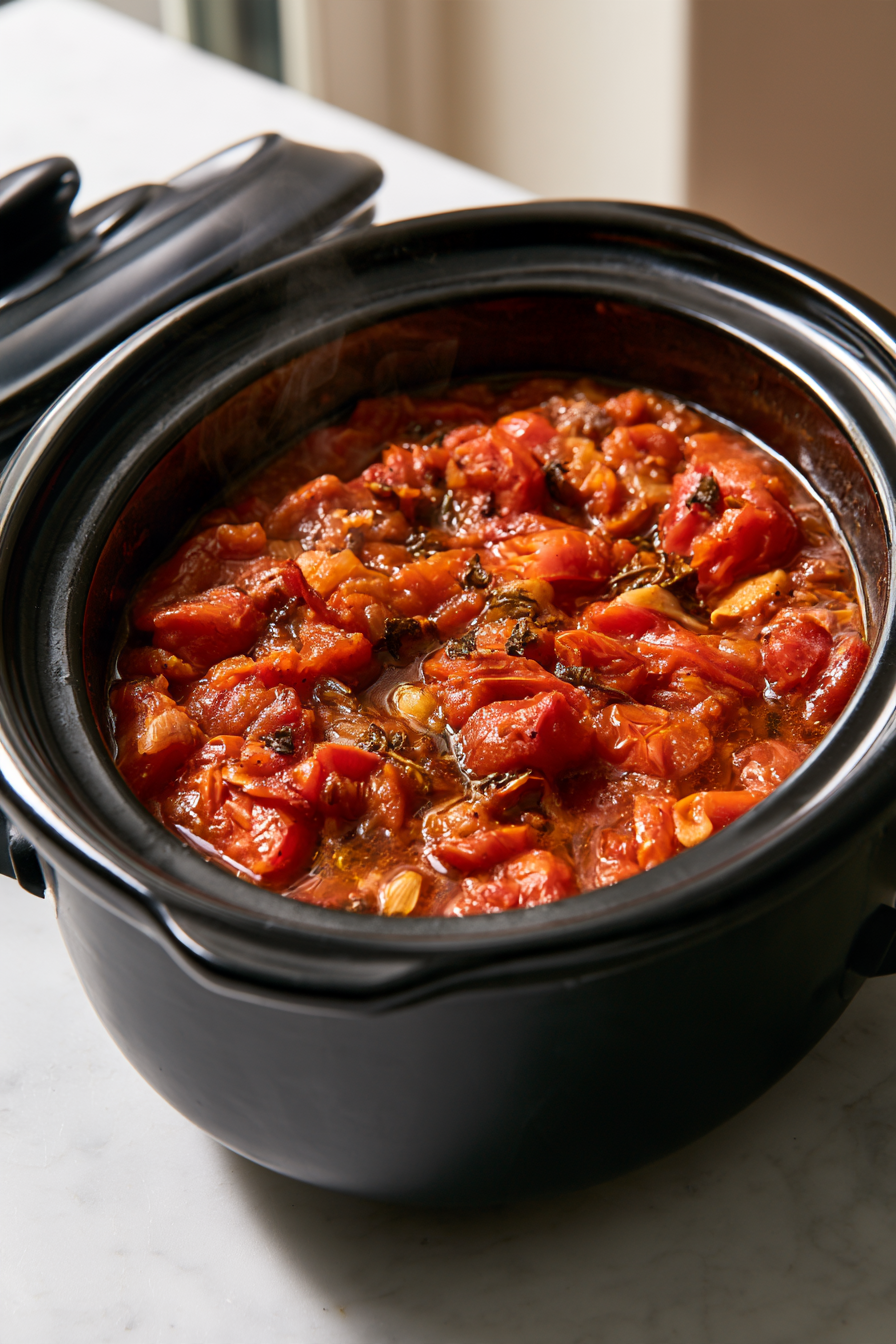
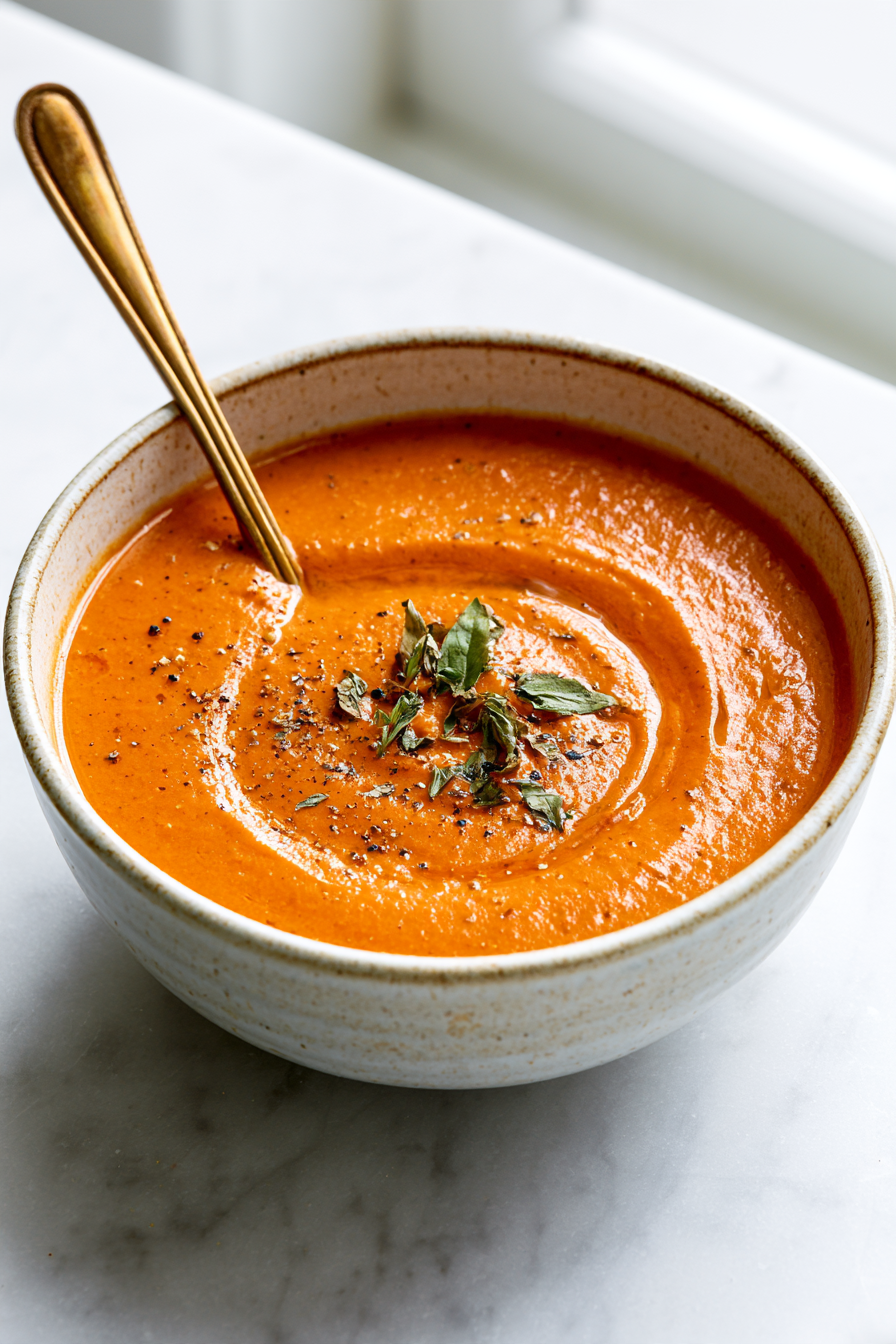
- Once cooking is complete, use an immersion blender or transfer the contents carefully into a blender. Puree until the soup is smooth and velvety, tasting and seasoning with additional salt and pepper if needed.
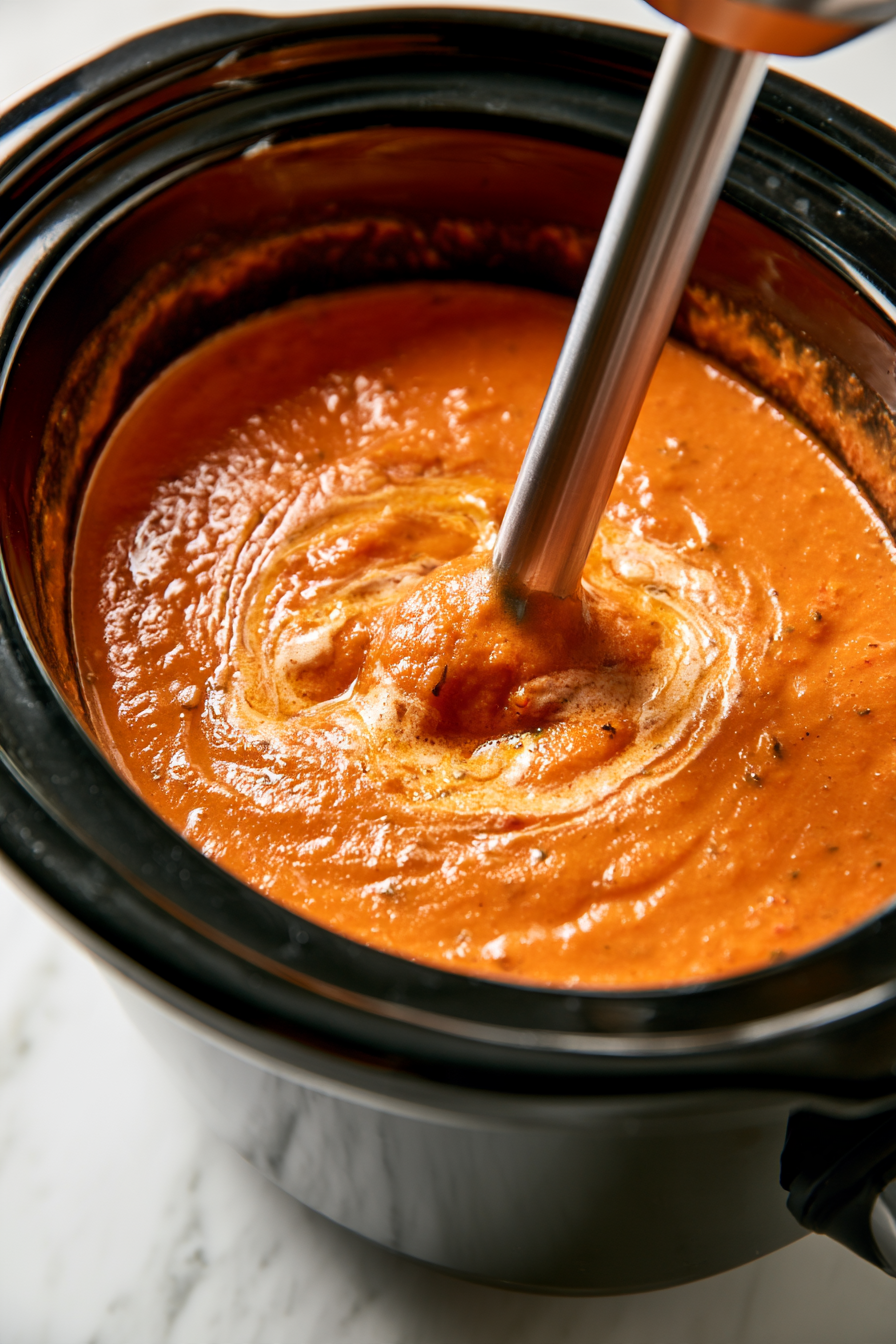
- Pour the hot, blended soup back into the crockpot or a serving bowl. Optionally, swirl in a splash of cream for extra richness.
Notes
The Secret to Better Tomato Soup: Roasting First
Roasting tomatoes before slow cooking changes the overall character of the soup.
Fresh tomatoes contain natural moisture and acidity, but roasting helps remove some excess water while concentrating their flavor. The heat also creates browned edges that add a deeper, slightly caramelized taste.
This extra step takes very little active time but makes a noticeable difference in the final result.
Choosing the Best Tomatoes for Soup
- Ripe Tomatoes: Use tomatoes that are naturally fragrant and full of color.
- Roma Tomatoes: Create a thicker soup because they contain less water.
- Vine-Ripened Tomatoes: Add a brighter tomato flavor.
- Summer Tomatoes: Often provide the sweetest flavor when in season.
- Mixed Tomato Varieties: Combining tomatoes can create a more balanced flavor.
How to Get the Smoothest Tomato Soup Texture
- Blend the soup while the ingredients are still warm.
- Add liquid gradually until you reach your preferred consistency.
- Use an immersion blender for convenience.
- Use a countertop blender for an extra-smooth texture.
- Strain the soup if you prefer a completely refined finish.
Common Mistakes That Affect Tomato Soup
- Using Unripe Tomatoes: Less flavorful tomatoes can make the soup taste flat.
- Skipping the Roasting Step: The soup may lack the deeper roasted notes developed from caramelization.
- Adding Too Much Liquid: Extra broth or water can dilute the concentrated tomato flavor.
- Underseasoning: Tomatoes often need enough seasoning to balance their natural acidity.
- Not Blending Thoroughly: Larger vegetable pieces can affect the smooth texture.
- Overheating After Adding Cream: High heat can affect the texture of dairy additions.
Ways to Customize Roasted Tomato Soup
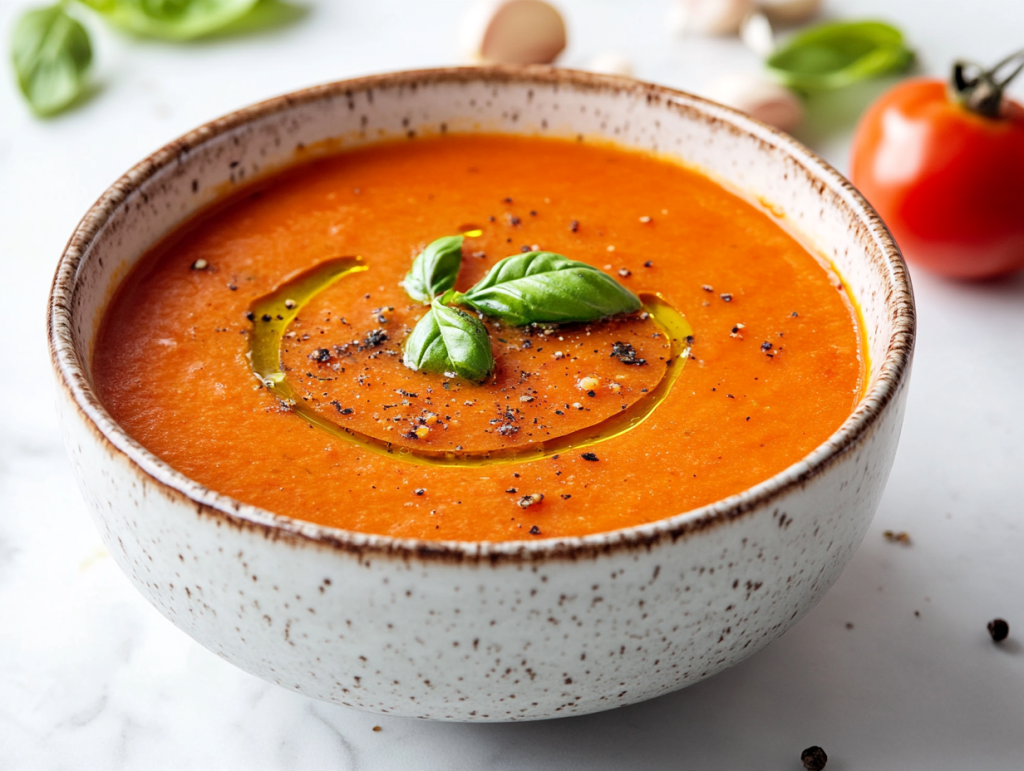
- Creamy Tomato Version: Add heavy cream or coconut milk after blending.
- Cheesy Tomato Soup: Stir in Parmesan for a savory finish.
- Spicy Tomato Soup: Add crushed red pepper flakes before serving.
- Roasted Red Pepper Version: Blend in roasted peppers for extra sweetness.
- Herb Garden Style: Add oregano, thyme, or parsley with the basil.
- Protein Boost: Add white beans or cooked lentils for a heartier soup.
Serving Ideas for Roasted Tomato Soup
This soup pairs well with simple sides and toppings that complement its smooth texture.
Storage and Reheating Guide
- Refrigerator Storage: Store leftover soup in an airtight container for up to 4 days.
- Gentle Reheating: Warm slowly on the stovetop or microwave.
- Stir Before Serving: Blended soups may separate slightly after storage.
- Add Liquid if Needed: A small amount of broth can loosen the soup after chilling.
- Freeze Without Cream: If freezing, add cream after reheating for the best texture.
Frequently Asked Questions
- Can I use canned tomatoes instead of fresh tomatoes?
Yes. Canned tomatoes can work, although fresh roasted tomatoes provide a different flavor profile. - Why roast tomatoes before making soup?
Roasting concentrates the tomatoes’ natural sweetness and creates deeper flavor through caramelization. - Can I make this soup without a blender?
Yes. The soup can be mashed for a more rustic texture, although blending creates the smoothest result. - How can I reduce the acidity of tomato soup?
Adding cream, olive oil, or slightly increasing seasoning can help balance tomato acidity. - What tomatoes are best for roasted tomato soup?
Ripe, flavorful tomatoes with good moisture content work best. Roma and vine-ripened varieties are popular choices. - Can I add herbs other than basil?
Yes. Thyme, oregano, and parsley pair well with roasted tomatoes. - Why does my tomato soup taste watery?
Too much added liquid or tomatoes with high water content can thin the soup. Simmering longer can help concentrate the flavor. - Can I make this soup dairy-free?
Yes. Simply skip the cream or use a dairy-free alternative if you want a richer finish.


hi there,
The Freshman Cook started as a place to keep track of recipes I wanted to make again. Somewhere along the way, it grew into a collection of meals that friends requested, desserts that disappeared too quickly, and weeknight dinners that made life a little easier.
know more