

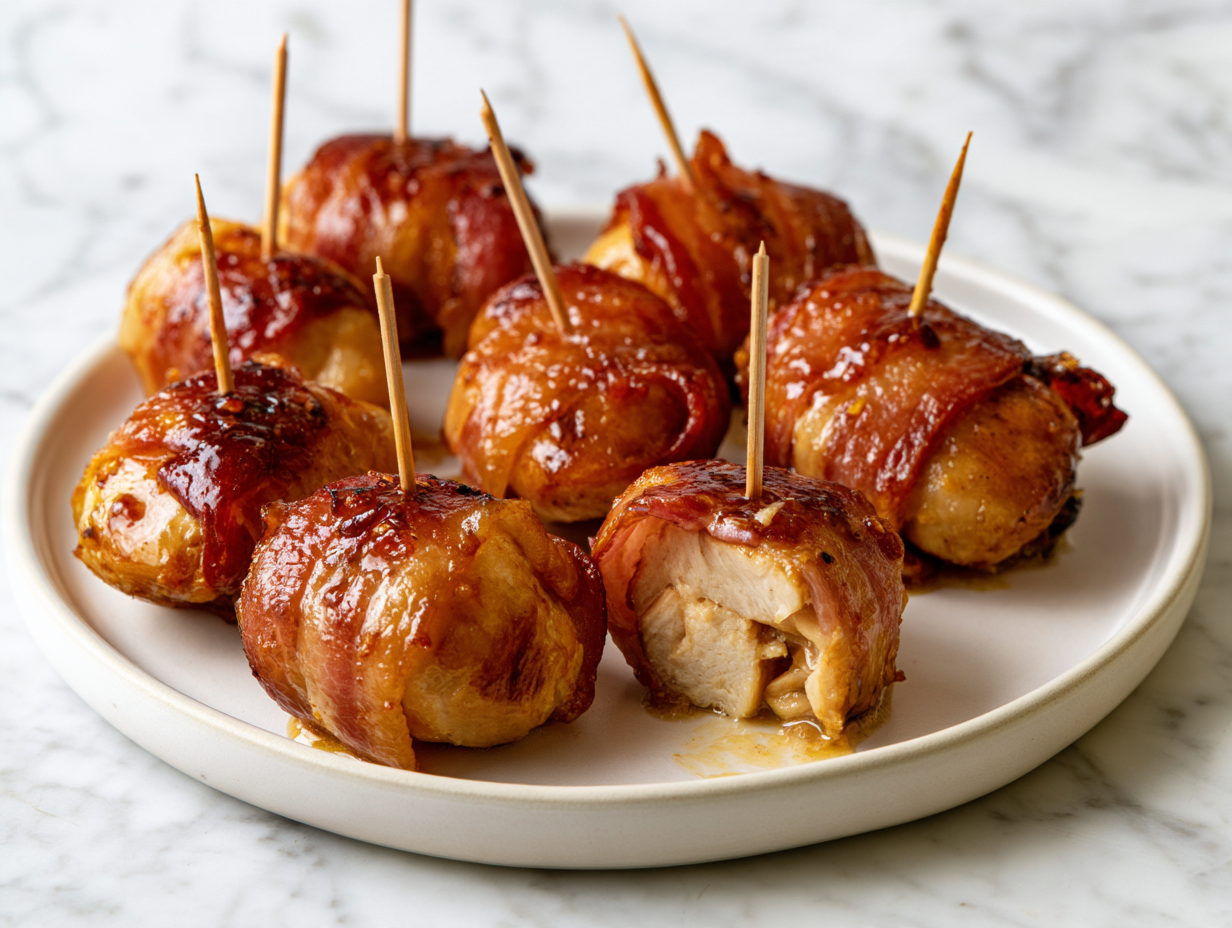

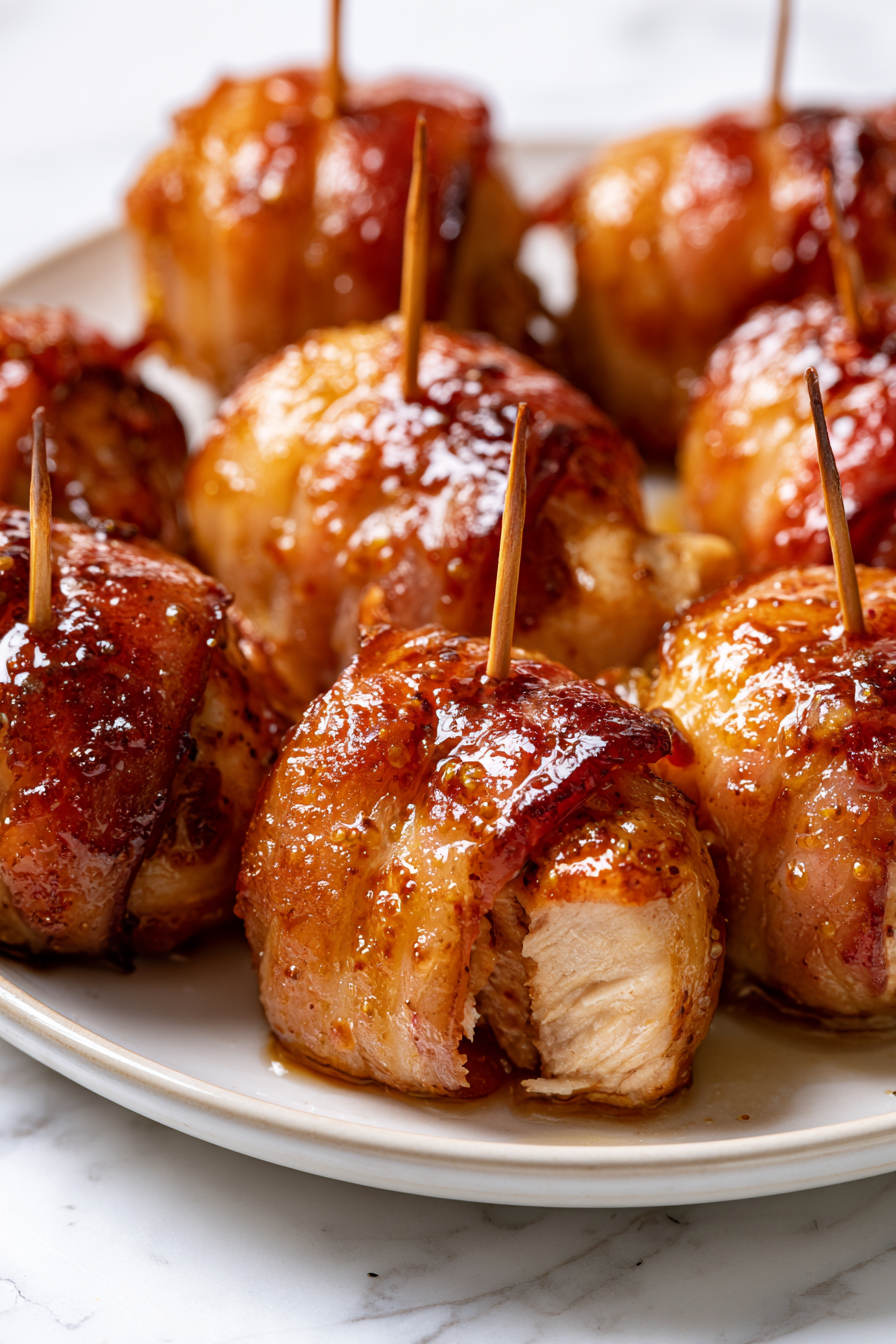
These Maple Bacon Chicken Bites are juicy pieces of chicken wrapped in smoky bacon and coated with a sweet, tangy maple-mustard glaze.
Baked until the bacon is crisp and the chicken is tender, they’re an easy appetizer that works beautifully for game days, holiday gatherings, or a party snack platter.
The maple syrup adds a subtle sweetness, while Dijon mustard balances it with a sharp, tangy flavor.
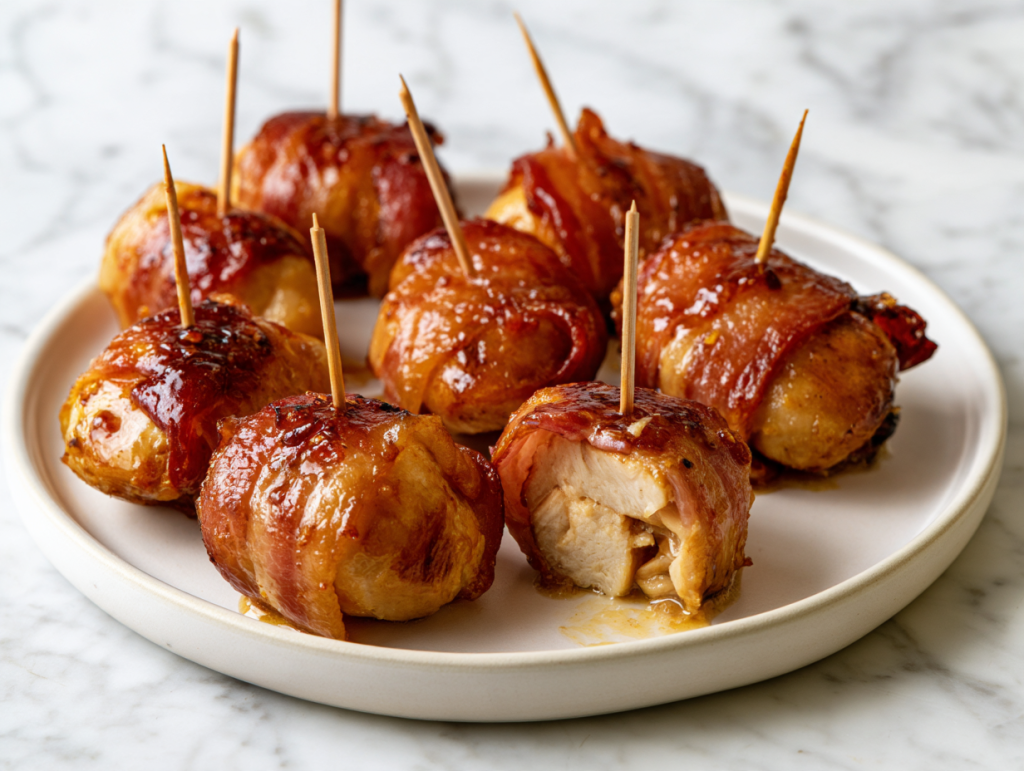
Each bite has a crisp bacon exterior and tender chicken inside, making them easy to serve with toothpicks and a dipping sauce on the side.
What Makes These Bites So Easy to Prepare and Serve
These appetizers use just a handful of ingredients and don’t require complicated preparation.
Partially cooking the bacon before wrapping helps it crisp up in the oven while the chicken cooks through. The maple-mustard glaze also serves as both a coating and a finishing brush, keeping the preparation simple.
They’re easy to arrange on a serving platter, and the toothpicks make them convenient for guests to grab without needing plates or utensils.
Whether you’re preparing a small batch for family or making a tray for a gathering, they’re straightforward to assemble and bake.
Ingredients That Bring the Sweet, Smoky, and Tangy Flavors Together

- Chicken breasts: Boneless, skinless chicken breasts are easy to cut into uniform pieces and cook quickly. Aim for similar-sized bites so they bake evenly.
- Bacon: Cutting the bacon slices in half gives you the right length to wrap around each chicken piece. Partially cooking it beforehand helps reduce the amount of time it needs in the oven.
- Pure maple syrup: Use real maple syrup for its natural sweetness and distinctive maple flavor. It helps create a glaze that coats the chicken and bacon.
- Dijon mustard: Dijon adds tanginess and balances the sweetness of the syrup. It also helps the glaze cling to the chicken.
- Black pepper: A little black pepper adds mild heat and seasoning without overpowering the glaze.
- Toothpicks: These hold the bacon securely around each chicken piece while baking and make the bites easier to serve.
Chef’s Tip: Cut the chicken into evenly sized pieces and avoid wrapping the bacon too tightly. This helps the chicken cook evenly and gives the bacon enough room to crisp as it shrinks.
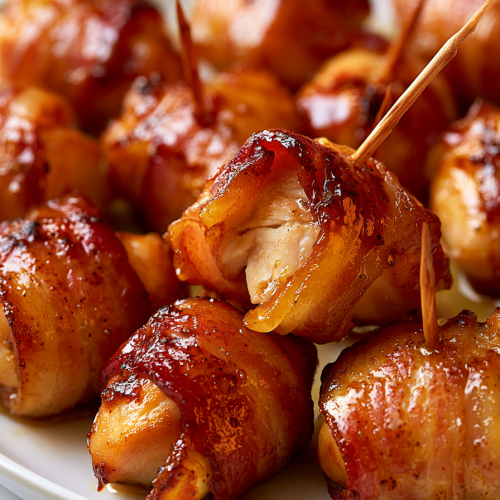
Maple Bacon Chicken Bites Recipe
Equipment
- Baking sheet
- Parchment paper or aluminum foil
- Mixing bowl
- Sharp knife or kitchen scissors
- Cutting Board
- Toothpicks
- Measuring cups and spoons
- Small Bowl
Ingredients
- 1½ pounds boneless skinless chicken breasts, cut into bite-sized pieces
- 12 slices bacon cut in half
- ¼ cup pure maple syrup
- 2 tablespoons Dijon mustard
- ½ teaspoon black pepper
- 24 toothpicks
Instructions
- Preheat the oven to 400°F (200°C) and line a baking sheet with parchment paper. If using wooden toothpicks, soak them in water for about 10 minutes to help prevent burning.
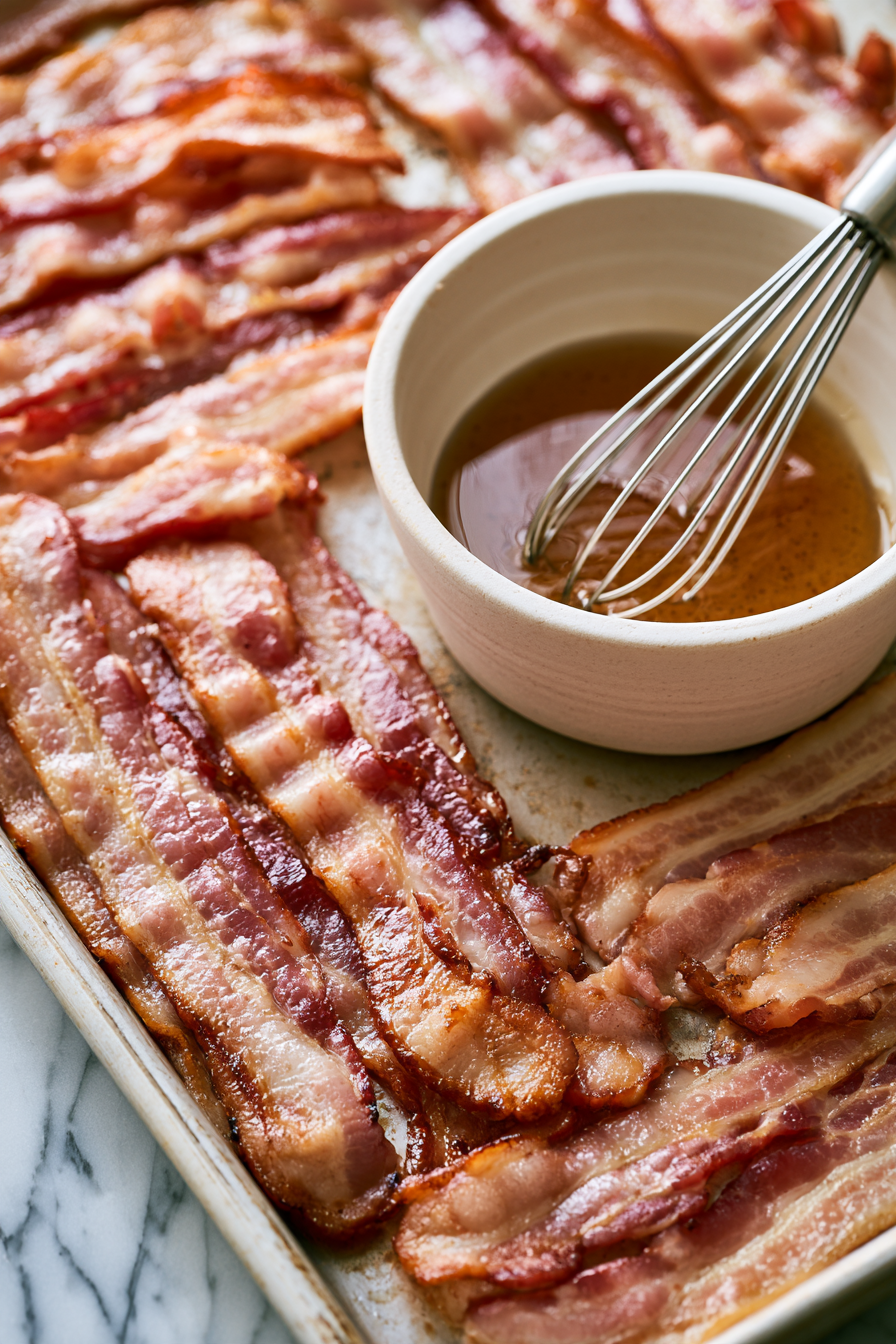
- Cut the bacon slices in half crosswise and cook them in a skillet or microwave until partially cooked but still flexible. In a mixing bowl, whisk together the maple syrup and Dijon mustard until smooth.
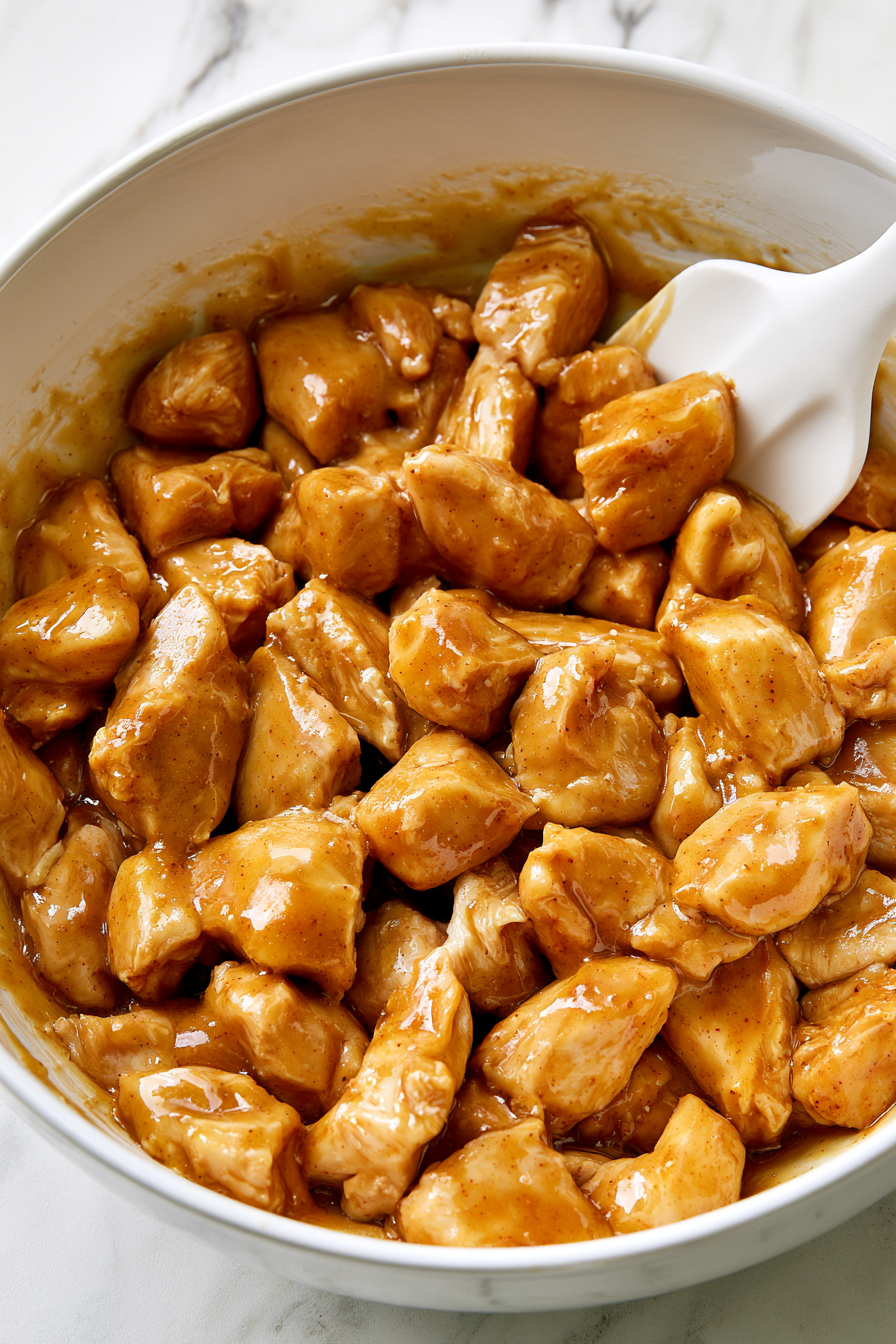
- Cut the chicken into bite-sized pieces and toss them in the maple-mustard mixture until evenly coated. Wrap each chicken piece with a half slice of bacon and secure with a toothpick.
- Arrange the bacon-wrapped chicken bites on the prepared baking sheet. Brush them with any remaining maple-mustard mixture and sprinkle with black pepper. Bake for 20–25 minutes, turning halfway through, until the bacon is crisp and the chicken reaches an internal temperature of 165°F (74°C).
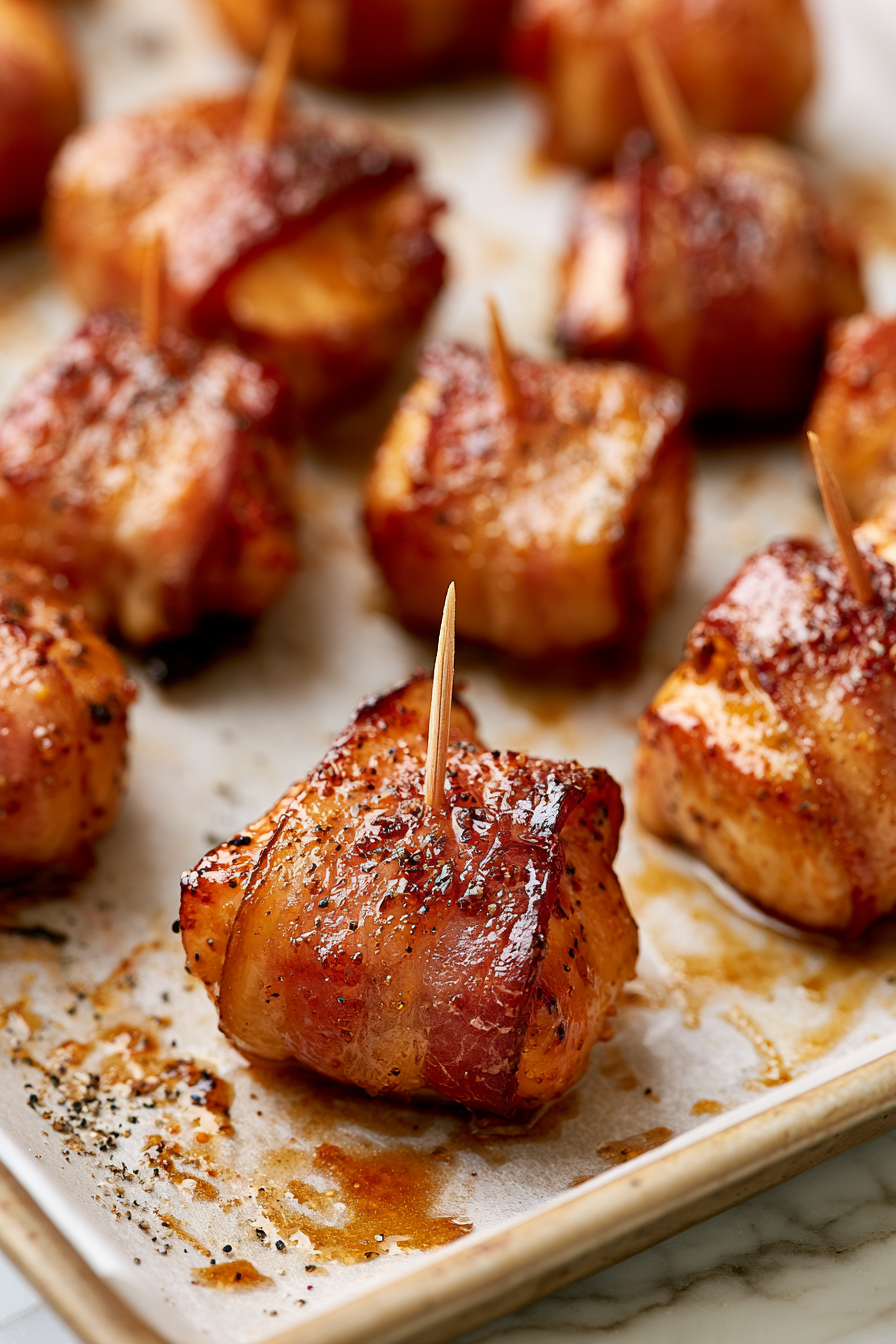
- Remove the chicken bites from the oven and let them rest for a few minutes. Serve warm with extra maple-mustard sauce for dipping.
Nutrition Information Per Serving
| Nutrient | Amount |
|---|---|
| Calories | 115 kcal |
| Carbohydrates | 4g |
| Protein | 12g |
| Fat | 6g |
| Saturated Fat | 2g |
| Fiber | 0g |
| Sugar | 3g |
| Sodium | 320mg |
| Cholesterol | 35mg |
Common Problems to Watch For When Baking Bacon-Wrapped Chicken
- Bacon stays soft instead of crisp: Partially cook the bacon before wrapping and avoid overcrowding the baking sheet. Spacing the bites apart allows hot air to circulate.
- Chicken turns dry: Cut the chicken into uniform pieces and check the internal temperature toward the end of baking. Remove the bites once they reach 165°F (74°C).
- Glaze burns too quickly: Maple syrup contains sugar, which can darken during baking. If the bites are browning too fast, loosely cover them with foil for the remaining cooking time.
- Bacon slips off the chicken: Wrap the bacon snugly and secure the overlapping ends with a toothpick. Placing the seam underneath when arranging them on the baking sheet can also help.
- Chicken pieces cook unevenly: Make sure all the pieces are approximately the same size. Larger pieces may take longer to cook, while smaller ones can dry out quickly.
- Glaze doesn’t stick properly: Toss the chicken thoroughly in the maple-mustard mixture before wrapping. Brushing the remaining glaze over the bites before baking helps add another layer of coating.
Easy Ways to Change the Flavors or Add a Little Variety
- Add a little heat: Stir a pinch of cayenne pepper or red pepper flakes into the maple-mustard mixture for a spicy-sweet glaze.
- Use smoked paprika: Add smoked paprika to the glaze for an extra smoky flavor that complements the bacon.
- Try honey instead: Replace the maple syrup with honey for a slightly different sweetness and a honey-mustard flavor.
- Add garlic: Mix a little garlic powder into the glaze for a savory note that works well with the bacon.
- Make them extra peppery: Add freshly cracked black pepper just before baking or after the bites come out of the oven.
- Use chicken thighs: Boneless, skinless chicken thighs can be used instead of breasts for a slightly richer bite that is more forgiving if the cooking time varies.
More Comfort Food Recipes to Try
- Garlic Parmesan Chicken Meatloaf
- BBQ Chicken Thighs Crockpot
- Fall Chicken Stew
- Roasted Chicken with Sweet Potatoes and Sage Butter
- Autumn Root Vegetable Casserole
How to Store, Freeze, and Reheat Leftovers
| Storage method | Instructions |
|---|---|
| Make ahead | Wrap the chicken pieces with partially cooked bacon, secure with toothpicks, and refrigerate covered for up to 24 hours before baking. |
| Refrigerator | Store cooked and cooled bites in an airtight container for up to 3–4 days. |
| Freezer | Freeze fully cooked and cooled bites in a freezer-safe container for up to 2 months for best quality. |
| Reheating | Reheat in a 375°F oven for about 8–10 minutes or until heated through. An air fryer can also help crisp the bacon. |
| Serving | Serve warm with extra maple-mustard sauce or another dipping sauce of your choice. |
Frequently Asked Questions About Preparing These Appetizers
- Can I use thick-cut bacon?
Thin or regular-cut bacon is generally easier to use because it cooks and crisps more quickly. Thick-cut bacon may need additional cooking time, which could cause the chicken to overcook. - How do I know when the chicken is fully cooked?
Use an instant-read thermometer inserted into the thickest part of a chicken piece. The internal temperature should reach 165°F (74°C). - Can I make these in an air fryer?
Yes. Arrange the bites in a single layer in the air fryer basket without overcrowding. Cook at approximately 375°F, checking the chicken temperature and bacon crispness as they cook. Cooking time will vary depending on the size of the bites and your air fryer. - What dipping sauces work well with these bites?
Extra maple-mustard glaze, honey mustard, barbecue sauce, ranch dressing, or a spicy dipping sauce all work well alongside the sweet and smoky flavors. - Can I use pre-cooked bacon?
You can, but fully cooked bacon may not wrap as easily around raw chicken. Partially cooked bacon is generally the better choice because it remains flexible while wrapping and finishes crisping in the oven. - Why should I partially cook the bacon before wrapping the chicken?
Chicken cooks relatively quickly, but bacon can take longer to become crisp. Partially cooking the bacon beforehand helps the two ingredients finish cooking at a more similar rate.