


Sweet Pumpkin Persimmon Ginger Crème Brûlée is an elegant fall dessert built around a surprisingly delicate combination of fruit, cream, and fresh ginger. The persimmons are gently infused with cream and ginger before being blended into the custard, giving the dessert a smooth fruit flavor without leaving pieces of pulp behind.
After baking and chilling, each ramekin is covered with coarse sugar and torched until the surface becomes a thin, golden shell. Beneath that crisp topping is a cool, silky custard with gentle pumpkin-persimmon sweetness and a subtle ginger finish.
Why Sweet Pumpkin Persimmons Work in Crème Brûlée
Sweet Pumpkin Persimmons are naturally suited to a dessert like this because their soft flesh blends easily into a creamy base. Their sweetness also means the fruit can contribute flavor without requiring a large amount of additional sugar.
The ginger provides an important contrast. Rather than making the dessert taste strongly spiced, the fresh ginger adds a warm aromatic note that keeps the rich cream and sweet fruit from feeling flat.
Infusing the Cream Without Losing the Fruit Flavor
The cream, persimmons, and ginger are heated together only until the mixture reaches a gentle simmer. The pan is then covered and left to steep for 30 minutes.
This resting period allows the ginger to infuse into the cream while the persimmon flavor becomes more pronounced.
Remove the ginger before blending. Once the fruit and cream are completely smooth, the mixture becomes the flavorful base for the custard.

Sweet Pumpkin Persimmon Ginger Crème Brûlée
Equipment
- 8 crème brûlée ramekins
- Roasting Pan
- Medium saucepan
- Blender
- Fine-Mesh Sieve
- Cheesecloth
- Kitchen torch
Ingredients
- 4 small Sweet Pumpkin Persimmons peeled and cubed
- 2 cups heavy whipping cream
- ½ inch piece fresh ginger peeled
- 8 large egg yolks
- 6 tablespoons granulated sugar
- 8 tablespoons coarse sugar for topping
Instructions
- Heat cream, persimmons, and ginger in a saucepan over medium heat until just simmering. Remove from heat, cover, and steep for 30 minutes.
- Remove the ginger and blend the persimmon-cream mixture until completely smooth.
- Whisk egg yolks and granulated sugar until smooth. Slowly whisk in the warm cream mixture.
- Strain the custard through a cheesecloth-lined fine-mesh sieve for an especially smooth texture.
- Preheat oven to 300°F (150°C). Divide custard among 8 ramekins placed in a roasting pan. Pour hot water into the pan until it reaches halfway up the ramekins.
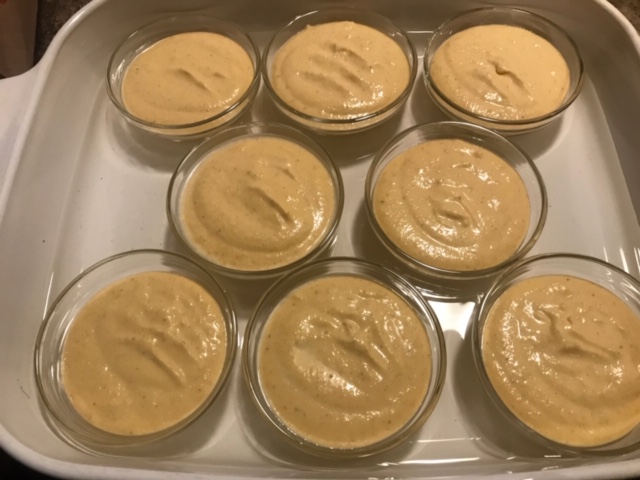
- Bake for 20–25 minutes, until the custards are set around the edges but still slightly jiggly in the center.
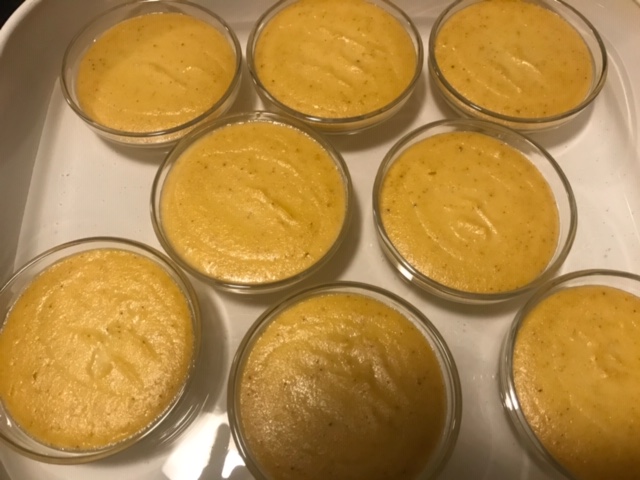
- Carefully remove ramekins from the water bath and cool completely. Cover and refrigerate for at least 2 hours, or up to 2 days.
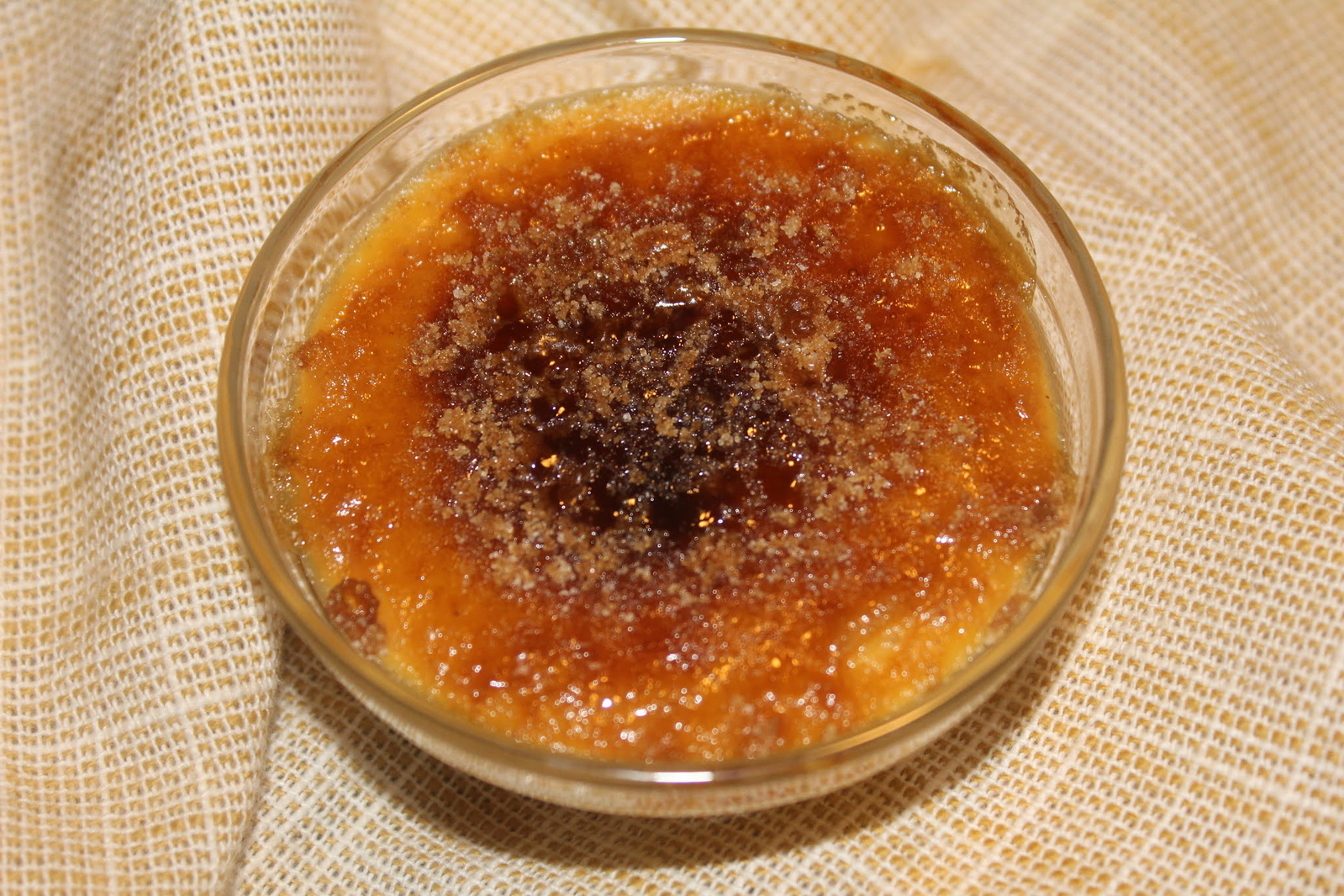
- Sprinkle about 1 tablespoon coarse sugar over each custard. Torch until melted and golden brown, then let stand for a few minutes until the sugar hardens into a crisp shell.
Notes
- Use ripe persimmons: They should be soft and sweet but not fermented or overly mushy.
- Strain the custard: This removes remaining fruit pulp and helps create a silky crème brûlée.
- Don’t overbake: The centers should still have a gentle jiggle when removed from the oven.
Nutrition
Serving Size: 1 crème brûlée
| Nutrient | Amount |
|---|---|
| Calories | ~360 kcal |
| Carbohydrates | 30 g |
| Protein | 6 g |
| Fat | 25 g |
| Saturated Fat | 15 g |
| Cholesterol | 285 mg |
| Sodium | 35 mg |
| Fiber | 2 g |
| Sugar | 27 g |
Nutrition information is an estimate and will vary depending on persimmon size and the amount of sugar caramelized on top.
Getting That Classic Crack
The contrast between the chilled custard and brittle sugar topping is what makes crème brûlée so satisfying.
Spread the coarse sugar into an even layer before torching. If some areas are much thicker than others, they can remain chewy while thinner areas burn before the sugar underneath has fully melted.
Move the torch continuously rather than holding it in one spot. The sugar should turn golden brown, not dark and bitter.
Once caramelized, give the topping a few minutes to harden before serving.
Common Problems and Easy Fixes
- Grainy Custard: Keep the oven temperature gentle and avoid overbaking.
- Fruit Pulp in the Custard: Strain the blended mixture thoroughly.
- Custard Too Firm: Remove it while the center still has a slight jiggle.
- Burnt Sugar: Keep the torch moving and stop once the sugar is evenly golden.
- Soft Caramel Shell: Caramelize the sugar immediately before serving.
Ways to Finish the Crème Brûlée
- Fresh Persimmon: Add a few very thin persimmon slices beside each ramekin.
- Candied Ginger: Place a tiny piece of candied ginger on top after caramelizing.
- Cinnamon: Add an extremely light dusting for a warmer visual finish.
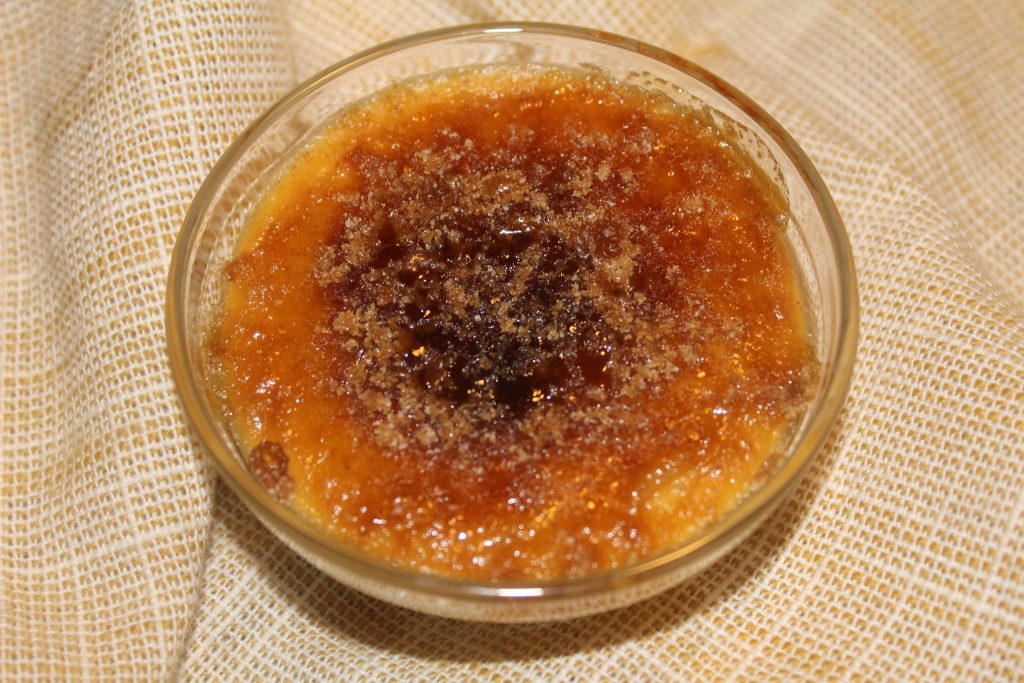
- Minimalist: Leave the golden sugar shell completely undecorated so its crackly surface remains the focus.
- Ginger Accent: Add a very small sliver of fresh ginger as a garnish if you want to emphasize the infusion.
More Dessert Recipe You’ll Love
- Brown Sugar Pop Tart Cookies
- Pumpkin Cheesecake Truffles
- Pumpkin Pie Crisp with Cinnamon Streusel
- Chocolate Mousse Cups
- Apple Cider Donut Cake
Storage and Make-Ahead
The custards can be prepared and refrigerated for up to 2 days before serving.
Keep them covered and wait to add the coarse sugar until shortly before serving. The caramelized topping gradually loses its crisp texture when refrigerated.
For the best contrast, caramelize the sugar immediately before bringing the crème brûlée to the table.
Frequently Asked Questions
1. What are Sweet Pumpkin Persimmons?
They are a sweet persimmon variety with soft flesh that works particularly well when blended into desserts. Choose fruit that is ripe and sweet without signs of fermentation.
2. Can I use another type of persimmon?
Yes, provided it is ripe, sweet, and suitable for blending. The exact flavor and sweetness may vary with the variety.
3. Why does the recipe use a water bath?
The water bath provides gentle, even heat around the ramekins, helping the egg-based custard cook without becoming tough or grainy.
4. How much should the crème brûlée jiggle when it comes out?
The edges should be set while the center still has a gentle wobble. It will firm further as it cools and chills.
5. Can I make the custards two days ahead?
Yes. The baked custards can be covered and refrigerated for up to 2 days before the sugar is caramelized.
6. Why shouldn’t I caramelize the sugar ahead of time?
Moisture from refrigeration can soften the caramelized sugar. Caramelizing immediately before serving gives you the crispest shell.
7. Can I use regular granulated sugar for the topping?
The recipe calls for coarse sugar because its larger crystals are well suited to creating a caramelized shell. If substituting, watch the sugar closely because the melting rate can differ.
8. Can I make the caramelized topping without a kitchen torch?
Yes. The sugared ramekins can be placed briefly under a hot broiler, but they need close attention because the sugar can move from caramelized to burnt very quickly.

hi there,
The Freshman Cook started as a place to keep track of recipes I wanted to make again. Somewhere along the way, it grew into a collection of meals that friends requested, desserts that disappeared too quickly, and weeknight dinners that made life a little easier.
know more


