
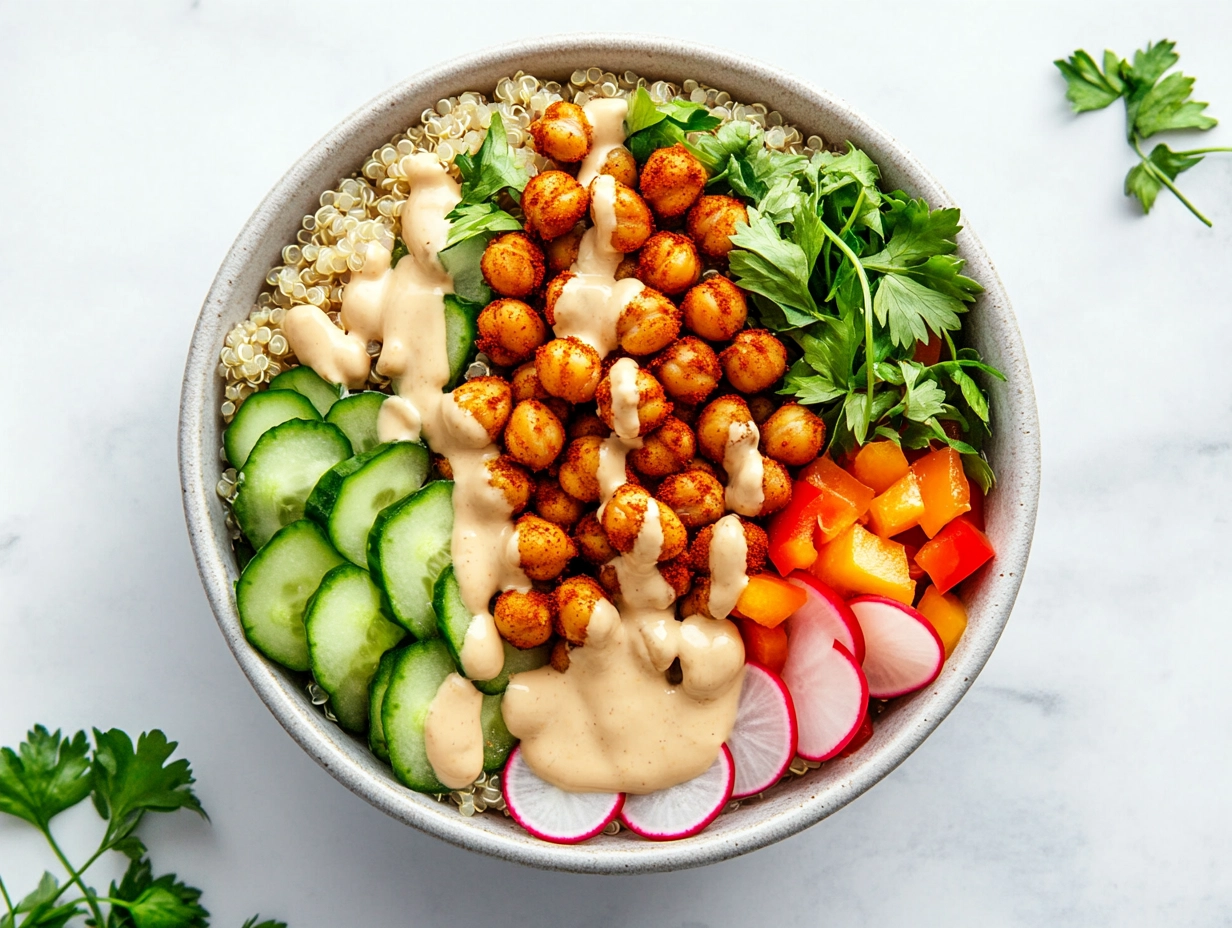
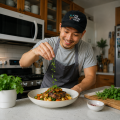
Buddha bowls are about the perfect harmony of textures and flavors, especially when you focus on the sensory journey. I love how the crunch of roasted chickpeas contrasts with the silky tahini drizzle and the crispness of fresh veggies. It’s not just a meal; it’s a little ritual in balancing vibrant, earthy, and bright notes.
When I first started making these bowls, I was obsessed with getting every component just right crisp, creamy, tangy, fresh. It became my go-to lunch when I needed something hearty yet nourishing, with textures that keep your senses engaged from first bite to last. It’s become a way to honor simple ingredients and give them a moment to shine.
Focusing on the sensory experience of assembling and eating a Chickpea Buddha Bowl, emphasizing textures and flavors that evoke comfort and freshness.
Why This Recipe Matters to Me
- I love how this bowl feels like a complete meal, yet it’s so easy to throw together.
- It’s my favorite way to get a variety of textures in one bite—crunch, creaminess, freshness.
- Sharing this dish with friends always sparks praise for its vibrant flavors.
- Making these bowls reminds me to keep simple ingredients interesting.
- It’s become a weekly ritual—colorful, nutritious, and comforting all at once.
The Inspiration Behind the Chickpea Buddha Bowl
I was tired of dull salads and wanted something more texturally interesting. The idea of roasting chickpeas came from a craving for crunch and warmth. I started layering all these elements—grain, crisp chickpeas, fresh veggies, tangy sauce and it clicked. Seeing how each component complements the others makes me appreciate simple cooking more than ever.
Origin and Trivia of the Chickpea Buddha Bowl
- Buddha bowls, also known as nourish bowls, have roots in traditional Asian cuisine but have become a Western health trend.
- The term ‘bowl’ emphasizes the casual, all-in-one nature of the meal.
- Chickpeas have been a staple in Middle Eastern and Mediterranean diets for thousands of years.
- Roasting chickpeas enhances their nutty flavor and adds a satisfying crunch.
- Tahini, made from ground sesame seeds, has been used in Middle Eastern cooking for centuries.
Ingredient Breakdown and Tips

- Chickpeas: I prefer canned for convenience, but dried soaked and cooked taste earthier. Watch for firm, not mushy.
- Tahini: It’s naturally rich and nutty. If too thick, thin with lemon juice or water—oozy and smooth.
- Fresh veggies: Crunchy, juicy, and vibrant—keep them cold for maximum snap.
- Lemon: Brightens the dressing, adds zing—use fresh for that crisp, citrus aroma.
- Herbs: Fresh parsley or cilantro add a fragrant, herbal note that ties everything together.
Focus on Chickpeas and Tahini
Chickpeas:
- They turn golden and crispy in the oven, releasing a warm, nutty aroma.
- Watch for the crackle of roasting as they crisp up—this signals done.
- They can become too dark quickly—keep an eye after 20 minutes.
Tahini:
- It’s thick, creamy, and has a toasted sesame scent—vividly nutty.
- It thickens when cold, so whisk in lemon juice and water to loosen.
- Stir well before drizzling—settles and separates.
Ingredient Substitutions for Flexibility
- Dairy-Free: Use coconut yogurt instead of tahini for a tropical twist, slightly sweeter.
- Grains: Swap quinoa for brown rice or barley—different textures but equally hearty.
- Vegetables: Carrots or roasted sweet potatoes add sweetness and color.
- Herbs: Basil or mint can replace parsley for a different aroma.
- Spices: Add cumin or smoked paprika to chickpeas for a smoky kick.
- Extra: Use lemon zest for extra brightness.
Equipment & Tools
- Baking sheet: Roast chickpeas evenly.
- Saucepan: Cook grains.
- Whisk: Make the tahini sauce.
- Sharp knife: Chop vegetables.
- Bowls: Assemble and serve.
Step-by-Step Guide to the Chickpea Buddha Bowl
- Preheat your oven to 200°C (400°F). Spread drained chickpeas on a baking sheet, toss with olive oil, salt, and spices. Roast for 20-25 minutes until crispy and golden, shaking halfway.
- Meanwhile, cook your grains—quinoa or rice—according to package instructions, around 15 minutes, until fluffy and tender.
- While grains cook, chop fresh vegetables—cucumbers, radishes, bell peppers—into bite-sized pieces. Set aside.
- Make the tahini lemon sauce: whisk tahini, lemon juice, a splash of water, garlic, and a pinch of salt until smooth. Adjust water for desired consistency.
- Assemble the bowls: start with a base of grains, add vegetables, roasted chickpeas, and a drizzle of tahini sauce. Finish with herbs.
- Serve immediately to enjoy the crispy chickpeas and fresh crunch. If needed, keep components separate and assemble just before eating.
Serve immediately for the best texture. Optionally, drizzle extra sauce and sprinkle herbs just before eating.
How to Know It’s Done
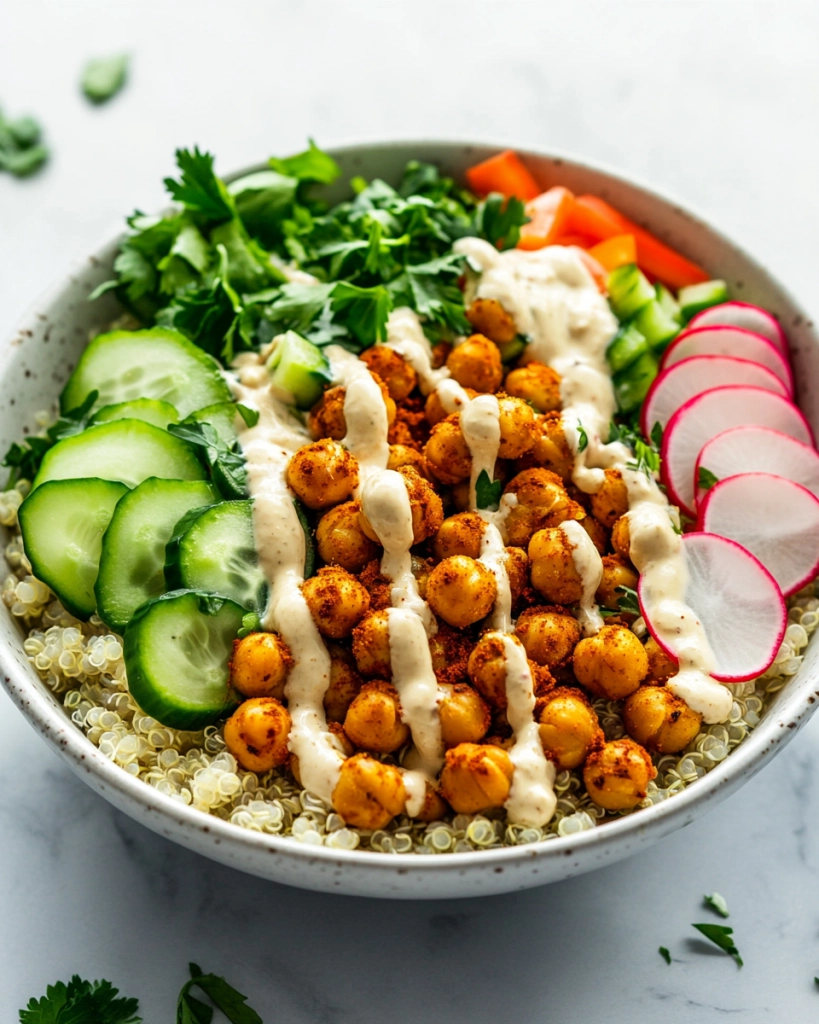
- Chickpeas are deep golden and crispy.
- Grains are fluffy and well-cooked.
- Vegetables are crisp and colorful.
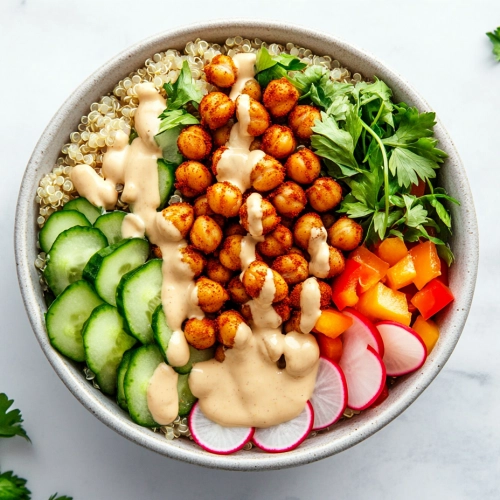
Chickpea Buddha Bowl
Equipment
- Baking sheet
- Saucepan
- Whisk
- Sharp Knife
- Bowls
Ingredients
- 1 can can cooked chickpeas drained and rinsed
- 1 cup quinoa rinsed
- 1 cucumber diced
- 1 radishes sliced thin
- 1 bell pepper any color, chopped
- 1/4 cup fresh parsley chopped
- 1/4 cup lemon juice freshly squeezed
- 1/4 cup tahini sesame seed paste
- 2 cloves garlic minced
- 2 tbsp olive oil for roasting
- 1/2 tsp cumin optional, for chickpeas
- Salt and pepper to taste
Instructions
- Preheat your oven to 200°C (400°F). Spread the drained chickpeas on a baking sheet, toss with olive oil, cumin, salt, and pepper. Roast for 20-25 minutes until crispy and golden, shaking the pan halfway through to ensure even crispness.
- While the chickpeas roast, rinse the quinoa under cold water, then cook in a saucepan with 2 cups of water. Bring to a boil, reduce heat, cover, and simmer for 15 minutes until fluffy and tender. Fluff with a fork and set aside.
- Chop the cucumber into small cubes, thinly slice the radishes, and dice the bell pepper. Place all chopped vegetables in a bowl and set aside for assembling.
- In a small bowl, whisk together the tahini, lemon juice, minced garlic, and a pinch of salt. Add water a teaspoon at a time until the sauce reaches a smooth, drizzly consistency. Taste and adjust acidity if needed.
- Once the chickpeas are crispy, remove them from the oven and let them cool slightly. They should be crisp and aromatic.
- Assemble the bowls by dividing the cooked quinoa among four bowls as a base. Arrange the chopped vegetables on top in sections or mixed for a colorful presentation.
- Scatter the crispy roasted chickpeas over the vegetables and grains.
- Drizzle the tahini lemon sauce generously over each bowl, letting it pool slightly for flavor.
- Finish by sprinkling chopped parsley over the bowls for a fresh herbal touch.
- Serve immediately to enjoy the contrast of crunchy chickpeas, crisp vegetables, and creamy tahini sauce. Dig in and savor the vibrant textures and flavors!
Tips & Tricks for a Better Buddha Bowl
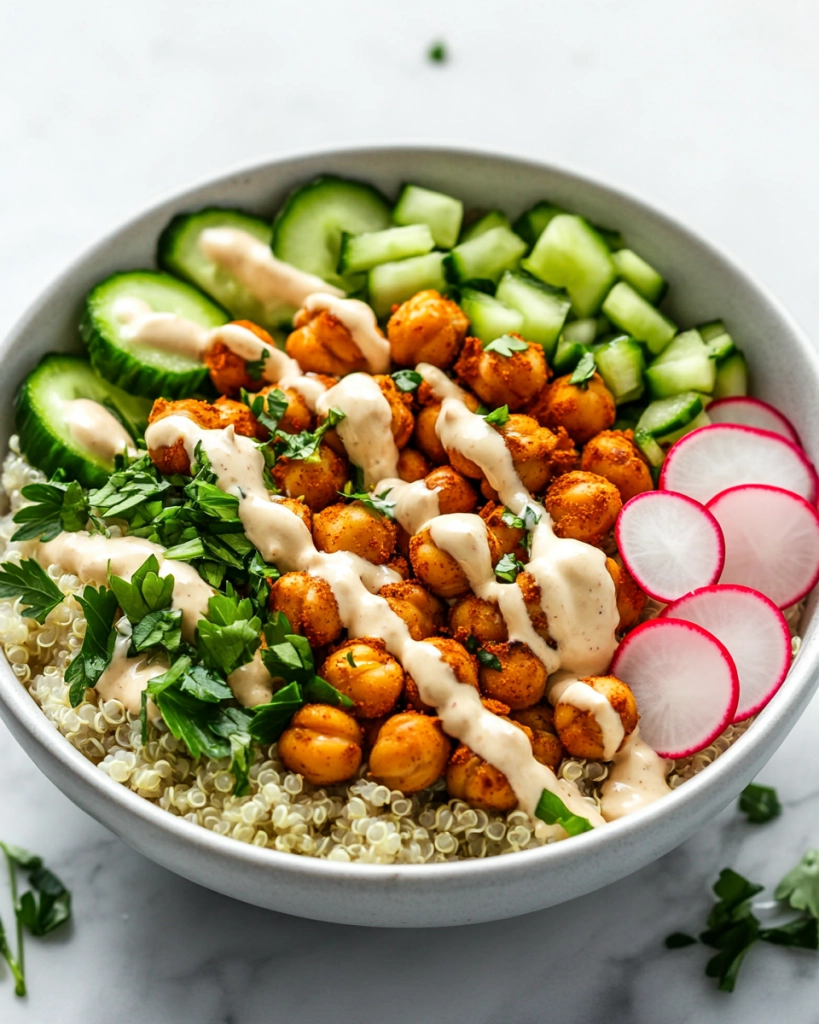
- Perfect Crispy Chickpeas → Roast at 200°C (400°F) and shake halfway.
- Fluffy Grains → Rinse grains before cooking to remove excess starch.
- Bright Flavor → Use fresh lemon juice for the dressing.
- Even Veggie Cuts → Keep veggies uniform in size for even crunch.
- Quick Assembly → Prep ingredients beforehand to assemble swiftly.
Common Mistakes and How to Fix Them
- FORGOT to rinse chickpeas? Rinse well and dry before roasting for crispiness.
- DUMPED too much oil on chickpeas? Toss with a bit less oil next time—less greasy but still crunchy.
- OVER-TORCHED chickpeas? Lower oven temp or reduce roasting time—check at 20 minutes.
- SOUR sauce? Balance with a touch more lemon or a pinch of honey for sweetness.
Quick Fixes for Common Issues
- When chickpeas aren’t crispy, give them a few more minutes, shaking the pan.
- Splash a little water into the tahini if it’s too thick to drizzle.
- Patch soggy grains by reheating with a splash of water or broth.
- Shield delicate herbs from the heat when serving.
- Rescue burnt chickpeas by scraping off char and tossing with fresh spices.
What to Serve With Chickpea Buddha Bowl
Make-Ahead and Storage Tips
- Cook grains and roast chickpeas ahead—store separately in airtight containers for up to 3 days.
- Chop vegetables in advance—keep in fridge for 1-2 days, wrapped well to retain freshness.
- Dressing can be made 2-3 days ahead—store in a jar, shake before use.
- Reheat grains gently in microwave or on stovetop, add fresh veggies and sauce just before serving.
- For longer storage, freeze roasted chickpeas in an airtight container for up to a month. Reheat in oven for crispiness.
10 Practical Q&As about Chickpea Buddha Bowl
1. Can I use dried chickpeas instead?
Use canned chickpeas for convenience—rinse them well to remove any metallic taste.
2. How do I make chickpeas crispy?
Roast chickpeas at 200°C (400°F) for 20-25 minutes until crispy and golden.
3. What’s a good dressing for this bowl?
A simple tahini lemon sauce adds creaminess and brightness, perfect for drizzling.
4. Can I prepare grains ahead?
Cook grains like quinoa or rice until fluffy, about 15 minutes, then fluff with a fork.
5. What vegetables work best?
Use fresh veggies for crunch and color—bell peppers, cucumbers, radishes.
6. How small should I chop the toppings?
Chop everything into bite-sized pieces—no one wants a giant forkful of something unwieldy.
7. Can I skip the herbs?
A sprinkle of herbs like parsley or cilantro adds fresh aroma and flavor.
8. How long does this bowl stay good?
Serve immediately for the best texture—crisp chickpeas, fresh veggies, warm grains.
9. Should I add salt beforehand?
Adjust seasoning and dressings just before serving to keep everything lively.
10. Can I customize this recipe?
This bowl is versatile—swap ingredients based on what’s in your fridge or season.
This bowl is a snapshot of what I crave—healthy, satisfying, with enough variety to keep me interested. It’s perfect for those days when I want a quick, no-fuss meal that feels like a little celebration of everyday ingredients.
Plus, it’s endlessly adaptable. Swap in seasonal veggies, change up the grains, or toss different herbs on top. That flexibility makes it a trusty, comforting staple, especially in busy weeks when I want something nourishing without a lot of fuss.


hi there,
The Freshman Cook started as a place to keep track of recipes I wanted to make again. Somewhere along the way, it grew into a collection of meals that friends requested, desserts that disappeared too quickly, and weeknight dinners that made life a little easier.
know more