



This recipe shifts the focus from fancy ingredients to the magic of time and technique. It’s about making a pot of soup that feels like a warm hug, especially when you’re craving something honest and filling.
Cooking it feels like a small act of rebellion against the rush, a moment to pause and enjoy the simple pleasure of a hot bowl. It’s not about perfection, but about what it offers in return: comfort, warmth, and a little bit of quiet happiness.
Turning humble potatoes into a comforting, creamy bowl with just a handful of pantry staples — a reminder that simple ingredients can create something truly satisfying.
Why This Soup Matters to Me
- I love how simple ingredients like potatoes and onions can turn into something so comforting.
- There’s a nostalgic feeling in peeling and boiling potatoes—it reminds me of home.
- Seeing the soup turn silky after blending feels like a small miracle every time.
A Personal Connection to Simple Comfort Food
This recipe came from a day when I had just a handful of potatoes and a craving for warmth. I wanted something hearty but effortless, with ingredients I always keep on hand. It’s become a go-to when I need comfort without fuss.
A Little History of Potato Soup
- Potato soup has roots in many cultures, from Irish colcannon to Russian zharkoye.
- The first recorded potato soup recipes date back to the 18th century.
- Potatoes were once called ‘heart-nourishing’ in folk remedies—probably because they’re so filling.
Ingredient Insights for a Richer Soup

- Potatoes: I prefer russets for their fluffy, creamy texture. Swap with sweet potatoes for a sweeter, denser soup.
- Onion: Adds sweetness when sautéed, but leeks can be a milder, more delicate alternative.
- Garlic: The aroma is intoxicating; use fresh for the best punch. Dried garlic powder can substitute, but less vibrant.
- Vegetable broth: Use homemade or store-bought; rich broth makes a more flavorful soup.
- Salt: Essential for flavor. Use sea salt or Himalayan pink salt for mineral complexity.
- Pepper: Freshly ground black pepper adds depth. White pepper offers a milder, less visible spice.
Spotlight on Potatoes and Onion
Potatoes:
- When boiling, they release a comforting starchy aroma; the skin adds earthiness.
- Onions: Sizzle and soften into a sweet, fragrant base—don’t rush the caramelization process for depth.
Onions:
- Their initial sharpness mellows into a sweet aroma as they cook—look for a golden hue.
- They melt into the soup, adding a subtle sweetness and body.
Smart Substitutions for Different Tastes and Needs
- Dairy-Free: Use coconut milk or cashew cream for richness, slightly altering the flavor profile.
- Gluten-Free: The recipe is naturally gluten-free, just ensure your broth is labeled gluten-free.
- Low-Sodium: Opt for low-sodium broth and add salt gradually to control flavor.
- Extra Protein: Toss in cooked lentils or beans for added substance.
- Spicy Kick: Add a dash of cayenne or smoked paprika for heat and smoky depth.
Equipment & Tools
- Large pot: Cook and simmer the soup
- Immersion blender or potato masher: Puree or mash the soup
- Knife and cutting board: Prepare potatoes and aromatics
- Ladle: Serve the soup
Step-by-step Guide to a Cozy Bowl of Vegan Potato Soup
- Peel potatoes, cut into 2 cm cubes. Rinse and set aside.
- Heat 2 tbsp olive oil over medium in a large pot—about 180°C (356°F).
- Sauté diced onion and garlic until fragrant, about 5 minutes, until translucent and aromatic.
- Add potatoes and enough vegetable broth to cover. Bring to a boil, then simmer for 15-20 minutes, until potatoes are tender.
- Check doneness: potatoes should be soft and easily pierced with a fork.
- Use an immersion blender to puree the soup until smooth, or mash with a potato masher for a chunkier texture.
- Stir in salt, pepper, and optional nutritional yeast or plant-based cream. Adjust seasoning.
- Let sit for 5 minutes to meld flavors. Serve hot, garnished with herbs or a drizzle of oil.
Let the soup rest for 5 minutes off the heat, then taste and adjust seasoning. Serve immediately or store.
How to Know It’s Done
- Potatoes are fully cooked and mashable.
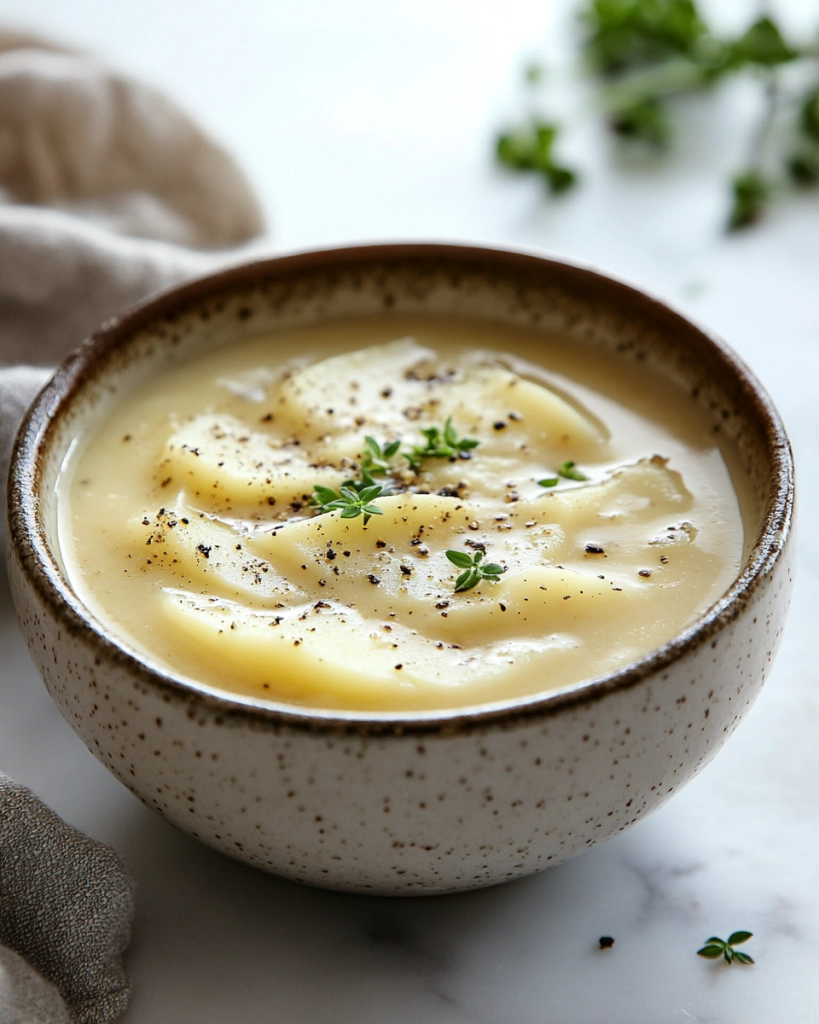
- Soup has a velvety texture, no chunks unless desired.
- Flavor is balanced: salt, pepper, and aromatic elements come through.

Creamy Potato Soup
Equipment
- Large pot
- Immersion blender or potato masher
- Knife and Cutting Board
- Ladle
Ingredients
- 4 large potatoes Russet potatoes preferred for creaminess
- 1 medium onion yellow or white onion, diced
- 2 cloves garlic minced
- 4 cups vegetable broth preferably homemade or low-sodium
- 2 tbsp olive oil for sautéing
- to taste salt adjust at the end
- to taste black pepper preferably freshly ground
- optional to taste nutritional yeast or plant-based cream for extra richness
Instructions
- Peel the potatoes and cut them into 2 cm cubes. Rinse them under cold water and set aside.
- Heat the olive oil in a large pot over medium heat until it shimmers and starts to ripple, about 1 minute.
- Add the diced onion to the pot and sauté until it becomes translucent and fragrant, about 5 minutes. Stir occasionally and listen for a gentle sizzling sound.
- Stir in the minced garlic and cook for another minute until it releases a rich aroma, being careful not to burn it.
- Add the cubed potatoes to the pot, stirring to coat them with the aromatic base. Pour in the vegetable broth, ensuring the potatoes are fully submerged.
- Bring the mixture to a boil over high heat, then reduce the heat to low and cover the pot. Let it simmer gently for 15-20 minutes, or until the potatoes are fork-tender and soft.
- Check the doneness by piercing a potato with a fork; it should slide in easily. Remove the pot from heat.
- Use an immersion blender to carefully blend the soup directly in the pot until smooth and velvety. Alternatively, transfer it to a blender in batches, blending until creamy.
- Return the blended soup to a gentle simmer. Stir in salt, freshly ground black pepper, and optional nutritional yeast or plant-based cream for added richness. Taste and adjust the seasoning as needed.
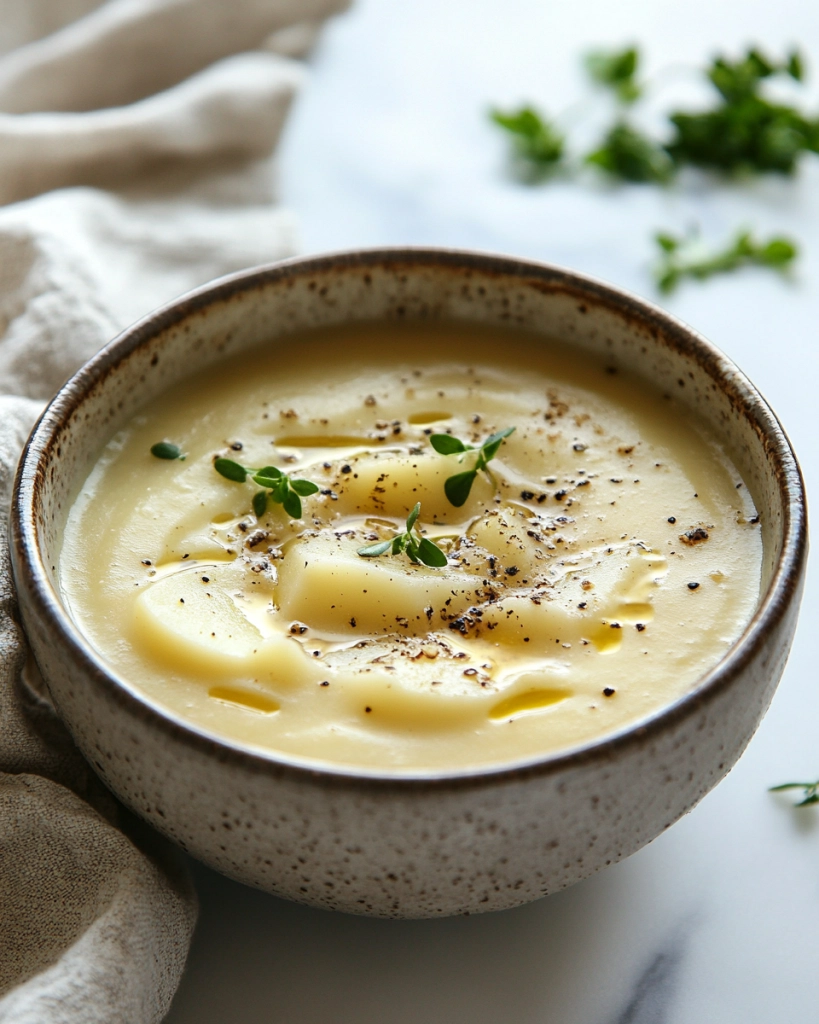
- Let the soup sit off the heat for 5 minutes to allow flavors to meld. Serve hot, garnished with herbs or a drizzle of olive oil if desired.
Tips and Tricks for Perfect Vegan Potato Soup
- Use a high-quality olive oil for sautéing, it adds depth.
- Don’t over-blend; leave some texture for a heartier feel.
- Season gradually, taste often—potatoes absorb salt.
- Add herbs at the end to keep their fresh aroma.
- For extra creaminess, stir in a spoonful of vegan yogurt or cashew cream.
Common Mistakes and How to Fix Them
- FORGOT TO TASTE? Adjust salt and pepper before serving—flavor can dull overnight.
- DUMPED TOO MUCH WATER? Add a splash more broth or a dollop of plant cream for richness.
- OVER-TORCHED? Cool the pot immediately and stir in a little water or broth to cool down.
- SOLUTION: Keep an eye on the heat during sautéing; garlic burns quickly and ruins the aroma.
Fast Fixes for Common Kitchen Hiccups
- WHEN THE SOUP IS TOO THICK, splash in hot water or broth and stir.
- IF YOU’RE SHORT ON TIME, use pre-cooked potatoes; skip peeling for convenience.
- WHEN THE SOUP TURNS TOO SALTY, dilute with a bit of water or add a raw potato to absorb salt.
- IF THE SOUP IS FLAT, add a squeeze of lemon or splash of vinegar for brightness.
- PATCH A SPLATTERED STOVE with a damp cloth—hot oil can shimmer and crackle.
What to Serve With Easy Vegan Potato Soup
- Crusty bread
- Garlic bread
- Side salad
- Vegan grilled cheese
- Roasted vegetables
Prepping, Storing, and Reheating
- Peel and chop potatoes ahead of time; store in water in the fridge for up to 24 hours.
- Soup can be made a day ahead; refrigerate for up to 3 days or freeze for 1 month.
- Reheat on the stove over low heat, stirring occasionally, until steaming.
- Flavors deepen overnight, but texture may soften—re-blend or stir before serving.
10 Practical Q&As for Easy Vegan Potato Soup
1. Can I use different potatoes?
Use russet potatoes for a creamy texture, but Yukon Gold works well if you want a slightly sweeter, buttery note.
2. Should I peel the potatoes?
Yes, just peel the potatoes if they have thick skins. For a chunkier soup, leave some skins on for texture.
3. Can I substitute the broth?
Vegetable broth adds flavor, but water with a splash of soy sauce or miso can deepen the umami.
4. What oil should I use?
Use a high-quality olive oil for sautéing; it adds a fruity note. Coconut oil works too, for a slightly sweet aroma.
5. How can I make it more decadent?
Add nutritional yeast for cheesy flavor, or a splash of plant-based cream for extra richness.
6. Should I blend the soup?
Blend part of the soup for creaminess or leave it chunky depending on your preference.
7. Can I use a regular blender?
Use an immersion blender for easy pureeing directly in the pot, or transfer to a blender carefully.
8. What herbs or spices work well?
Add herbs like thyme or chives at the end for fresh flavor, or smoked paprika for a smoky kick.
9. When should I season the soup?
Adjust salt and pepper at the end, tasting as you go to balance the flavors.
10. How should I serve the soup?
Serve hot, topped with chopped green onions or a sprinkle of nutritional yeast for added flavor.
Sometimes, I think the best meals are the ones that don’t ask for much but give so much in return. This vegan potato soup is no exception—just honest, hearty, and easy enough to make on a weekday.
It’s perfect for those days when you need something familiar but still want to keep it plant-based. Filling and gentle, it’s a reminder that good food comes from simple, mindful steps.


hi there,
The Freshman Cook started as a place to keep track of recipes I wanted to make again. Somewhere along the way, it grew into a collection of meals that friends requested, desserts that disappeared too quickly, and weeknight dinners that made life a little easier.
know more