
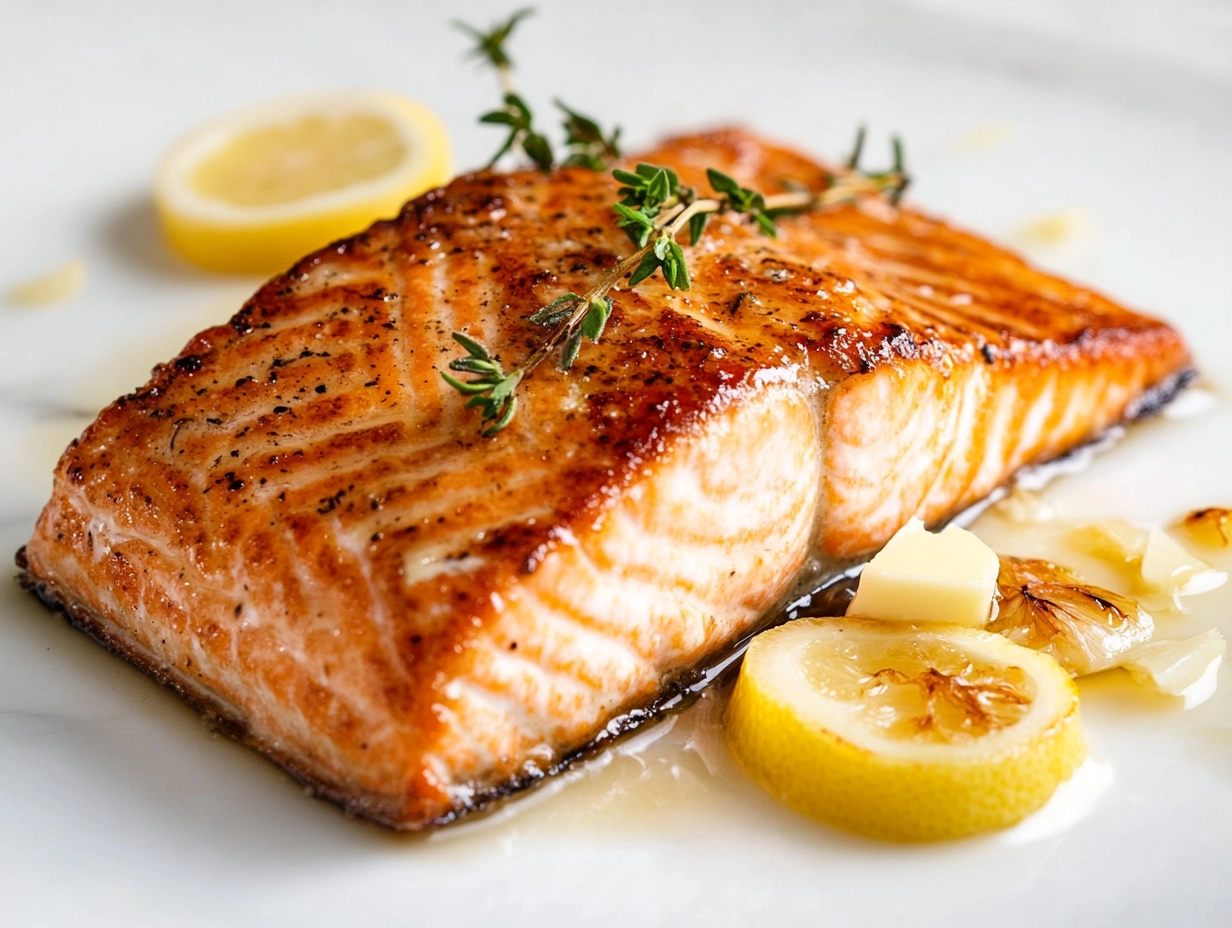

Crispy skin salmon is one of those dishes that instantly separates good cooking from great cooking. When done right, the skin turns golden and crackly while the flesh stays moist, tender, and full of flavor. Gordon Ramsay’s approach to crispy skin salmon is all about control — heat, timing, and restraint — allowing the fish to shine without heavy sauces or complicated steps.
This recipe focuses on achieving that perfect contrast: ultra-crispy skin, buttery flesh, and bright lemon notes that lift the richness. It’s fast, elegant, and incredibly satisfying, making it ideal for both weeknight dinners and special occasions.
Why This Recipe Feels Like Comfort Food
Even though salmon is often considered refined, this dish feels deeply comforting.
- The sound of salmon skin sizzling in hot butter is instantly satisfying
- Crispy skin adds texture without heaviness
- Lemon and herbs keep the dish fresh and balanced
- It feels nourishing, warm, and complete
This is comfort food built on simplicity and technique.
The Inspiration Behind This Recipe
Crispy skin fish is a cornerstone of professional kitchens, especially in French and British cooking. Gordon Ramsay’s method emphasizes patience — letting the skin render slowly so it crisps without burning, while basting the flesh gently with butter and aromatics. The goal is not to rush the process but to respect the ingredient and let the salmon cook evenly from the skin side up.
What Makes Gordon Ramsay’s Crispy Skin Salmon Different
This recipe stands out because of its disciplined technique.
- The salmon is cooked skin-side down for most of the time
- Heat is controlled to prevent burning
- Butter is added after the skin crisps
- Aromatics are used to perfume, not overpower
The result is restaurant-quality salmon with minimal ingredients.
Ingredients Overview
This recipe relies on fresh, high-quality salmon and a short list of supporting ingredients. Each one enhances the natural richness of the fish without masking its flavor.
The balance of fat, acid, and seasoning is what makes this dish feel complete.
Ingredient Breakdown

Salmon Fillet (Skin-On)
The skin protects the fish during cooking and becomes irresistibly crispy when rendered properly.
Salt & Pepper
Season the fish simply to enhance its natural flavor.
Cayenne Pepper
Adds subtle warmth without overpowering the salmon.
Olive Oil
Helps start the cooking process without burning.
Butter
Adds richness and allows for basting.
Garlic
Infuses the butter with gentle aroma.
Fresh Thyme
Adds herbal freshness and depth.
Lemon Zest & Juice
Brighten the dish and cut through the richness.
Spotlight on Salmon Skin and Butter Basting
Salmon Skin
Dry skin and steady heat are key. The skin should be pressed gently at the start to prevent curling and ensure even crisping.
Butter Basting
Butter is added once the skin is crisp, gently spooned over the flesh to finish cooking and add flavor without greasiness.
Together, these techniques create contrast and balance.
Smart Substitutions and Variations
- Use rosemary instead of thyme
- Add capers for a briny finish
- Swap cayenne for smoked paprika
- Finish with a splash of white wine in the pan
The core technique remains unchanged.
Equipment You’ll Need
- Heavy skillet (cast iron or stainless steel)
- Fish spatula
- Paper towels
- Spoon for basting
- Plate for resting
Step-by-Step Method
- Pat salmon skin completely dry with paper towels
- Season flesh side with salt, pepper, and cayenne
- Heat skillet over medium-high heat and add olive oil
- Place salmon skin-side down in the pan
- Gently press the salmon for 30 seconds to prevent curling
- Cook without moving until skin is deeply golden and crisp
- Lower heat slightly and add butter, garlic, and thyme
- Tilt pan and baste salmon with melted butter
- Flip salmon briefly to finish cooking the flesh
- Add lemon zest and juice, then remove from heat
How to Know the Salmon Is Done
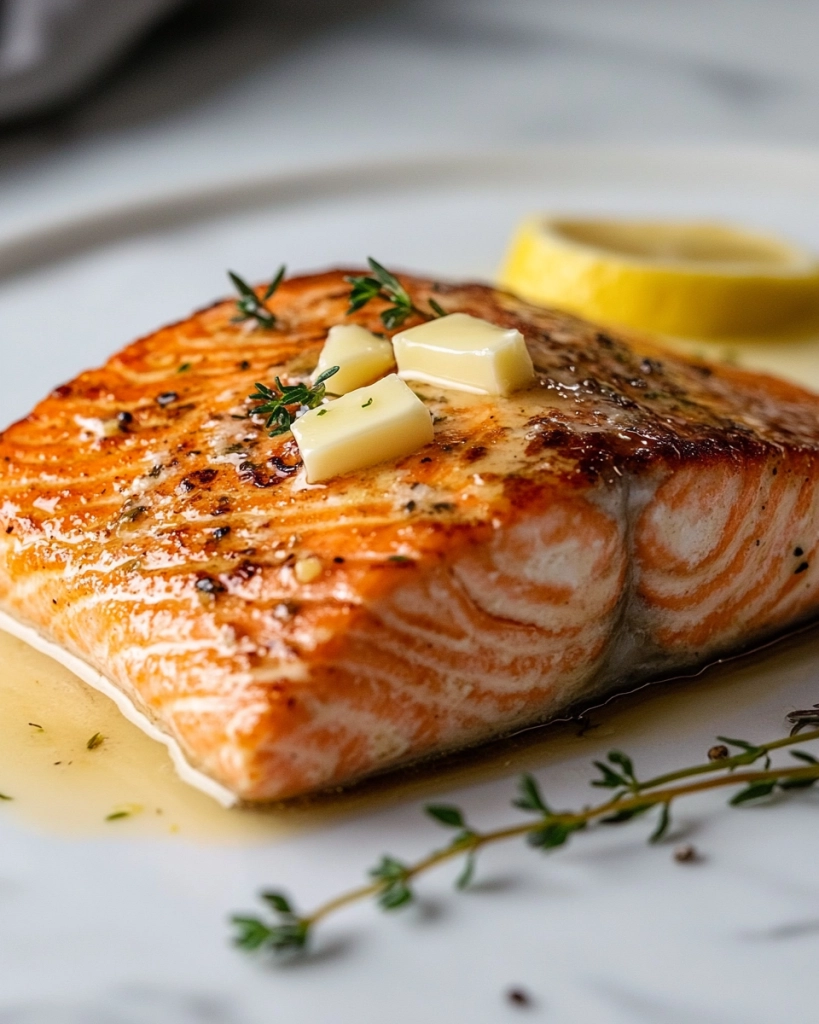
- Skin is crisp and golden
- Flesh flakes easily but remains moist
- Center is slightly translucent
- Salmon feels firm but springy
Overcooked salmon will feel dry and tight.
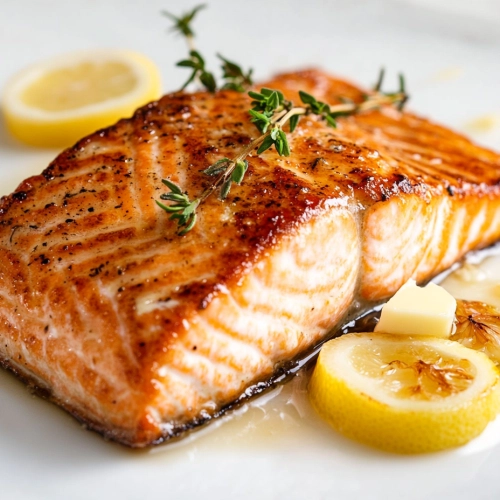
Gordon Ramsay Crispy Skin Salmon Recipe
Equipment
- Heavy skillet (cast iron or stainless steel)
- Fish Spatula
- Paper towels
- Spoon for basting
- Plate for resting
Ingredients
- 10 oz fresh salmon fillet skin-on and deboned
- ¾ tsp salt
- Pinch freshly ground black pepper
- ½ tsp cayenne pepper
- 1 tbsp olive oil
- 3 tbsp butter divided
- 2 cloves garlic sliced
- 4 sprigs fresh thyme
- Zest of ½ lemon about 1 tsp
- 2 tbsp fresh lemon juice
Instructions
- Pat salmon skin completely dry with paper towels
- Season flesh side with salt, pepper, and cayenne
- Heat skillet over medium-high heat and add olive oil
- Place salmon skin-side down in the pan
- Gently press the salmon for 30 seconds to prevent curling
- Cook without moving until skin is deeply golden and crisp
- Lower heat slightly and add butter, garlic, and thyme
- Tilt pan and baste salmon with melted butter
- Flip salmon briefly to finish cooking the flesh
- Add lemon zest and juice, then remove from heat
Tips and Tricks for Best Results
- Always start with dry salmon skin
- Don’t move the fish too early
- Use medium-high heat, not extreme heat
- Finish with lemon off the heat for brightness
Common Mistakes and How to Fix Them
Skin isn’t crispy
The pan wasn’t hot enough or the skin wasn’t dry.
Salmon curled in the pan
Press gently at the start to keep it flat.
Fish tastes greasy
Too much butter or heat was too low.
Salmon is dry
It cooked too long — remove sooner.
What to Serve With Crispy Skin Salmon
Make-Ahead and Storage Tips
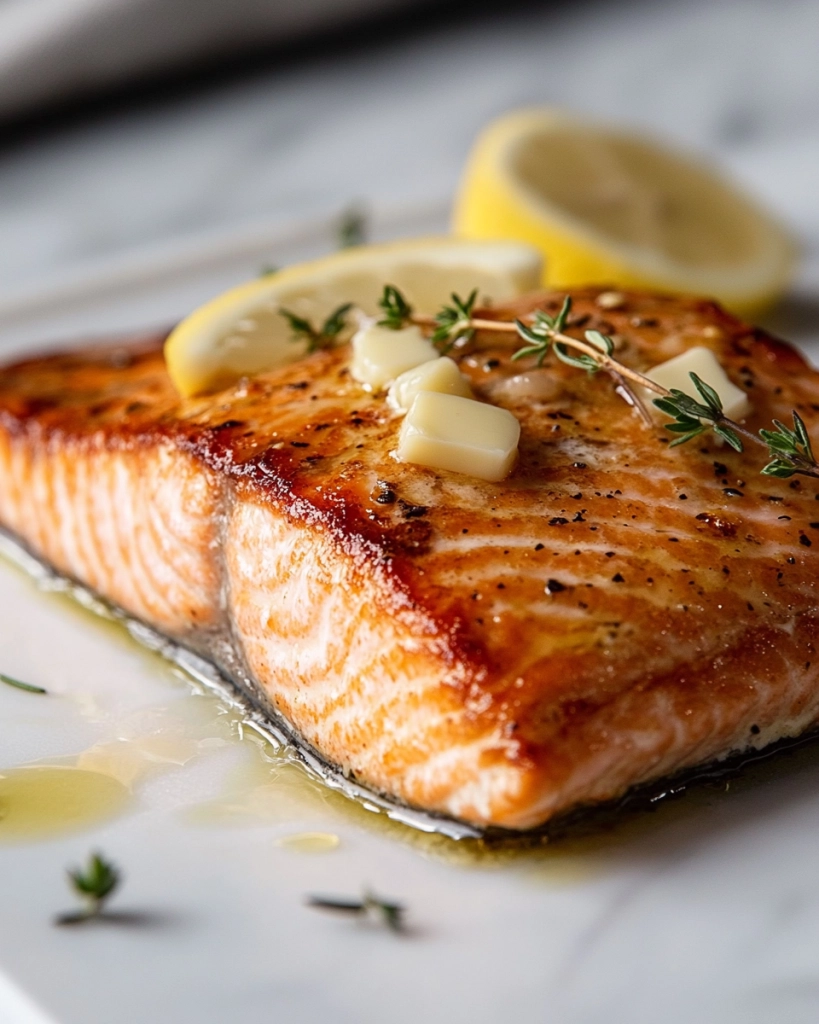
- Salmon is best cooked fresh
- Store leftovers in an airtight container for up to 2 days
- Reheat gently in a pan, skin-side down
- Avoid microwaving to preserve texture
Frequently Asked Questions
1. Should salmon skin be eaten?
Yes, when cooked properly it becomes crispy and delicious.
2. Do I need to remove salmon scales?
Most fillets are already descaled, but check before cooking.
3. Can I use frozen salmon?
Yes, thaw completely and dry thoroughly.
4. Why cook skin-side down first?
It crisps the skin and protects the flesh from overcooking.
5. How long should salmon cook?
About 6–8 minutes total, depending on thickness.
6. Can I cook this without butter?
Yes, but butter adds richness and flavor.
7. What pan works best?
Cast iron or stainless steel.
8. Should salmon be flipped more than once?
No, flip only once at the end.
9. How do I stop the skin from sticking?
Use a hot pan and don’t move the fish too early.
10. Is this a restaurant technique?
Yes, this method is widely used and refined by chefs like Gordon Ramsay.

hi there,
The Freshman Cook started as a place to keep track of recipes I wanted to make again. Somewhere along the way, it grew into a collection of meals that friends requested, desserts that disappeared too quickly, and weeknight dinners that made life a little easier.
know more