
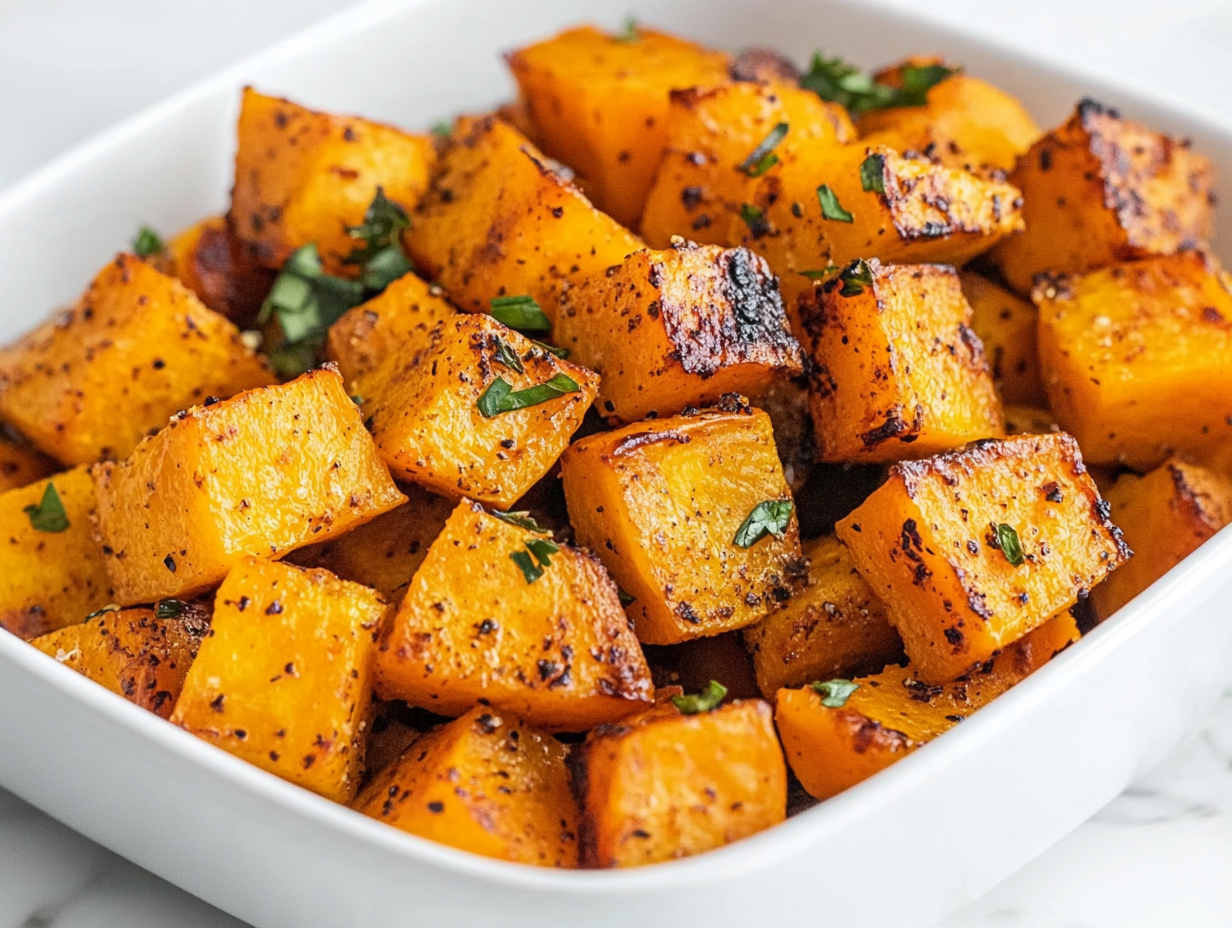

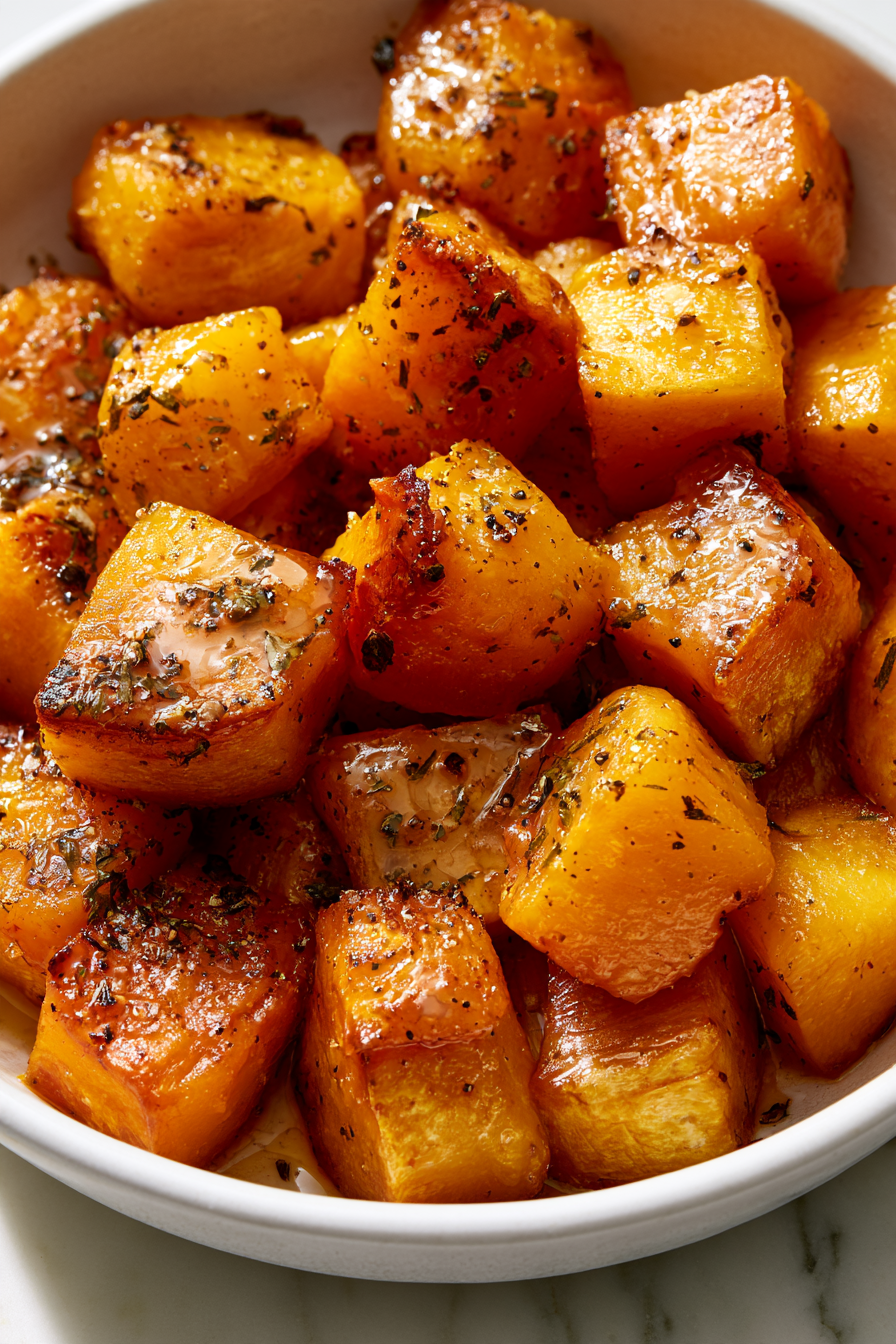
Roasted Butternut Squash is one of those simple side dishes that earns a regular spot on a fall and winter table. Cubed squash is tossed with olive oil, garlic powder, dried herbs, salt, and pepper, then roasted until tender with beautifully browned edges.
For an extra layer of richness, the finished squash can be topped with browned butter. A small amount of honey stirred into the butter adds another touch of sweetness that works especially well with the naturally sweet squash.
Why Roast Butternut Squash?
Roasting brings out the natural sweetness of butternut squash while giving the edges a lightly caramelized finish.
Unlike boiling, which can make squash watery, roasting concentrates its flavor as the pieces cook. The high oven temperature also helps the exterior brown while the inside becomes soft.
This makes roasted butternut squash useful far beyond a basic side dish. You can serve it alongside a main course, add it to salads, fold it into grain bowls, or use it as a starting point for soups and purees.
Choosing and Cutting Butternut Squash
A medium butternut squash weighing about 2–3 pounds is used in this recipe.
The hardest part can be cutting the squash. Its firm flesh and rounded shape can make it awkward to handle, so work on a stable cutting board and use a sharp knife.
The recipe recommends peeling the squash, cutting it lengthwise, removing the seeds and interior, and then cutting it into approximately 1-inch pieces.
Keeping the pieces similar in size helps them roast at roughly the same rate.

Roasted Butternut Squash
Equipment
- 1 Baking sheet
- 1 Vegetable Peeler
- 1 Cutting Board
- 1 Oven
- 1 Extra-Virgin Olive Oil
Ingredients
- 1 medium 2-3 pounds butternut squash
- 4 tablespoons olive oil
- 1 teaspoon salt
- 1/2 teaspoon cracked black pepper – or 1/4 teaspoon ground black pepper.
- 1 teaspoon dried Italian seasoning – or herbs de Provence.
- 1 teaspoon garlic powder
- 4 tablespoons butter – optional
Instructions
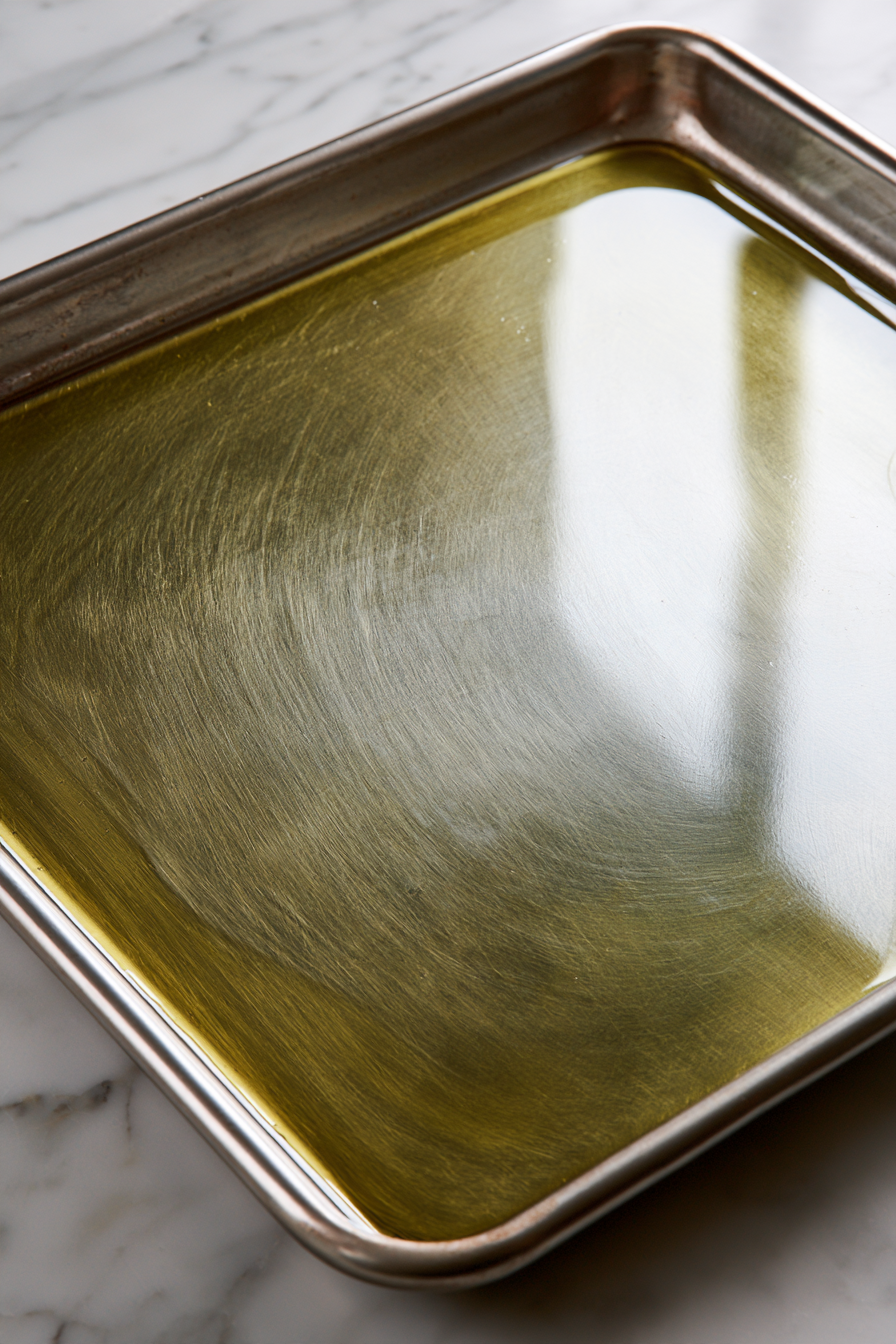
- Heat the oven to 425 degrees and coat a large baking sheet with oil.
- After peeling the butternut squash with a standard peeler, cut it lengthwise through the middle. Scoop out the seeds and insides with a spoon and throw away. Dictate into 1-inch fragments and arrange in a single layer on the baking sheet that has been prepared.
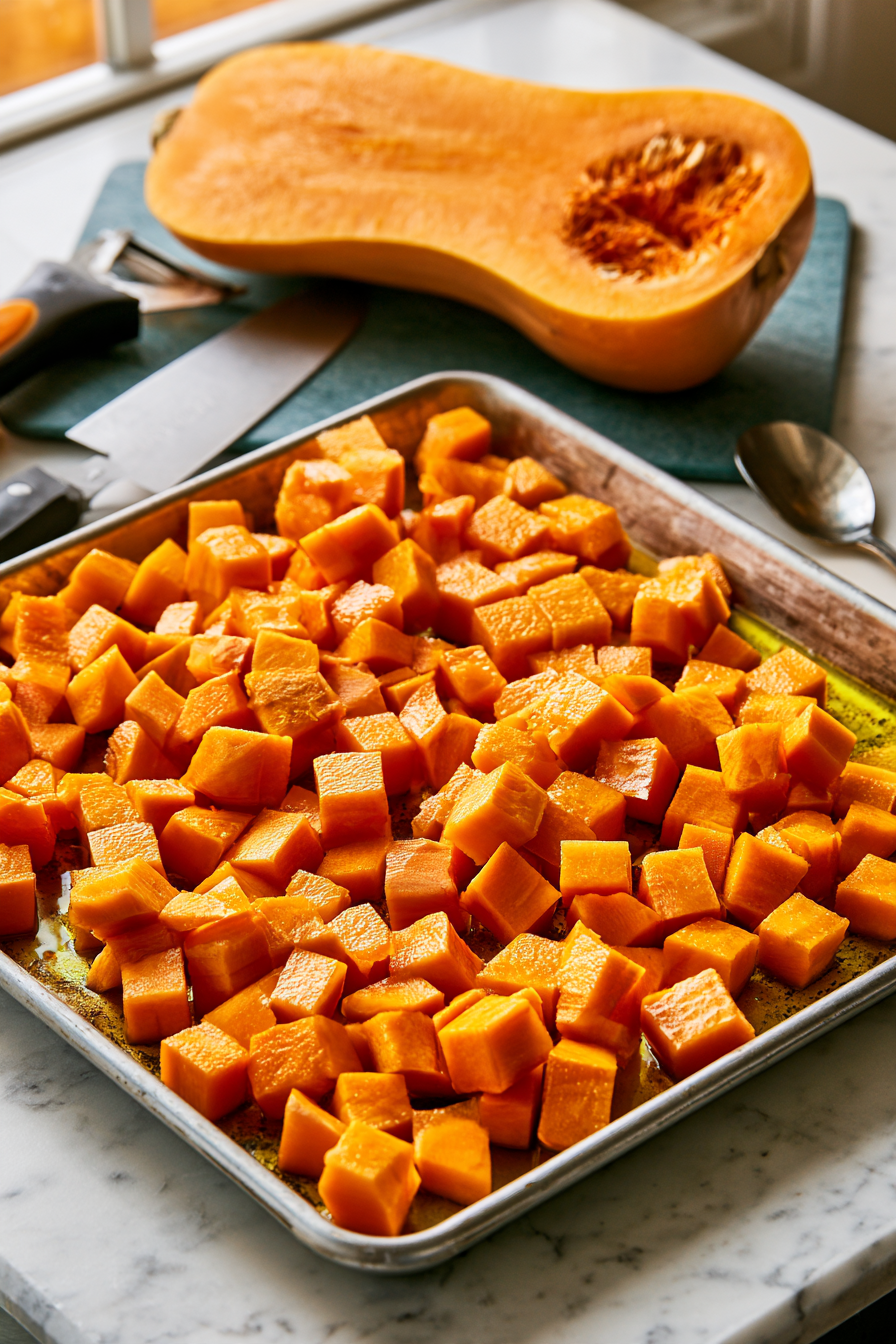
- Pour some olive oil over the squash and toss it to coat it with the oil using spoons or your hands.
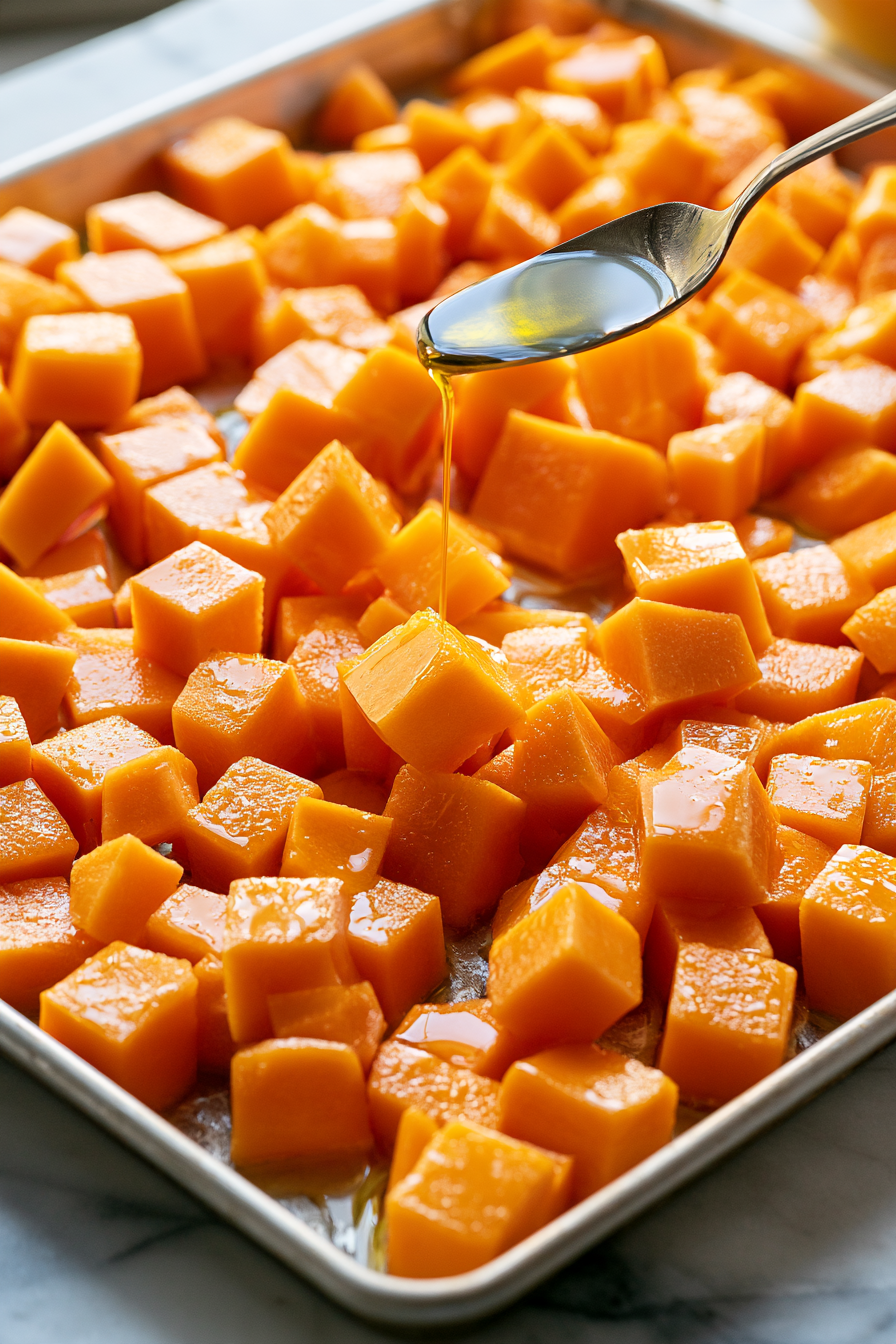
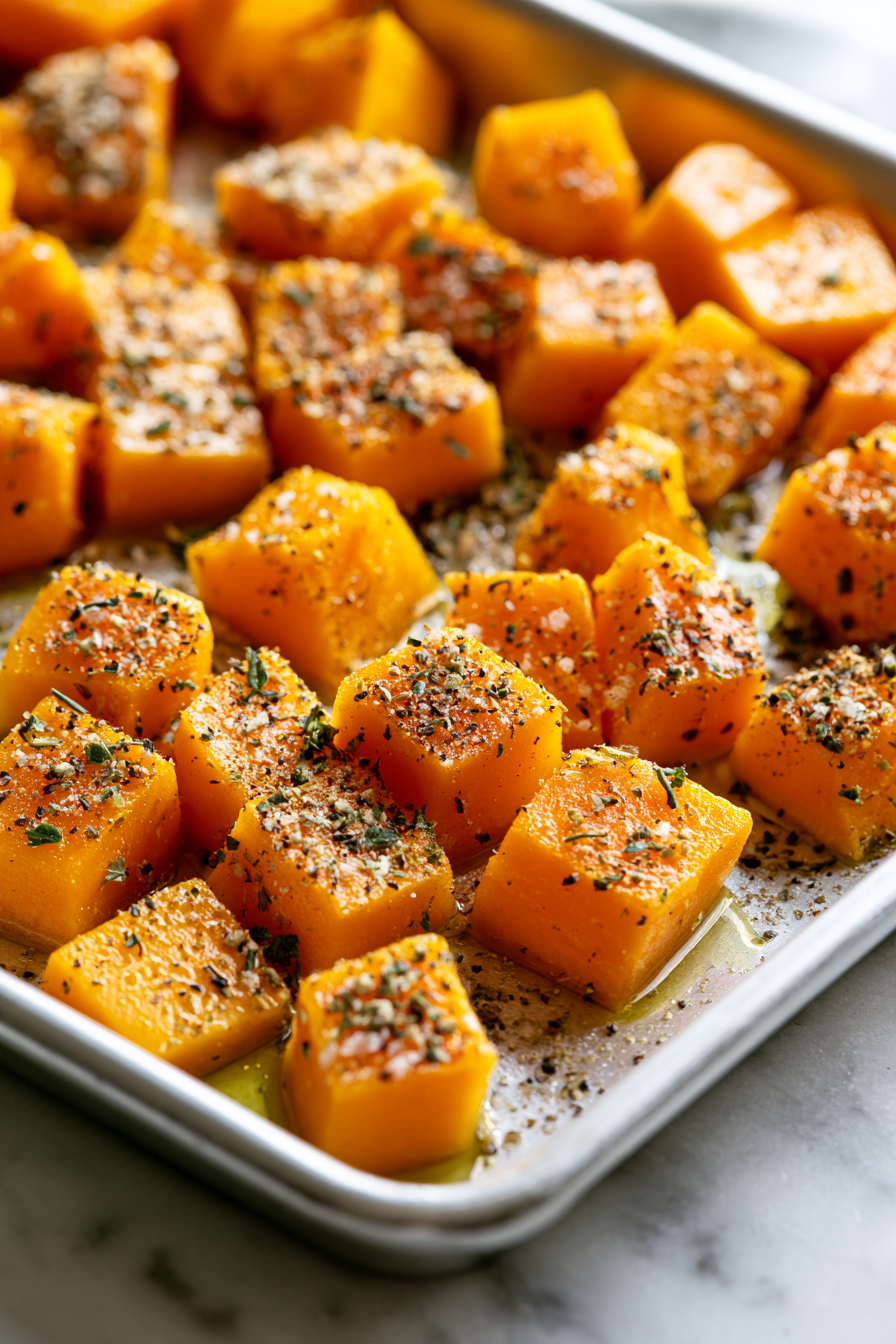
- Add garlic powder, dried herbs, salt, and pepper for seasoning.
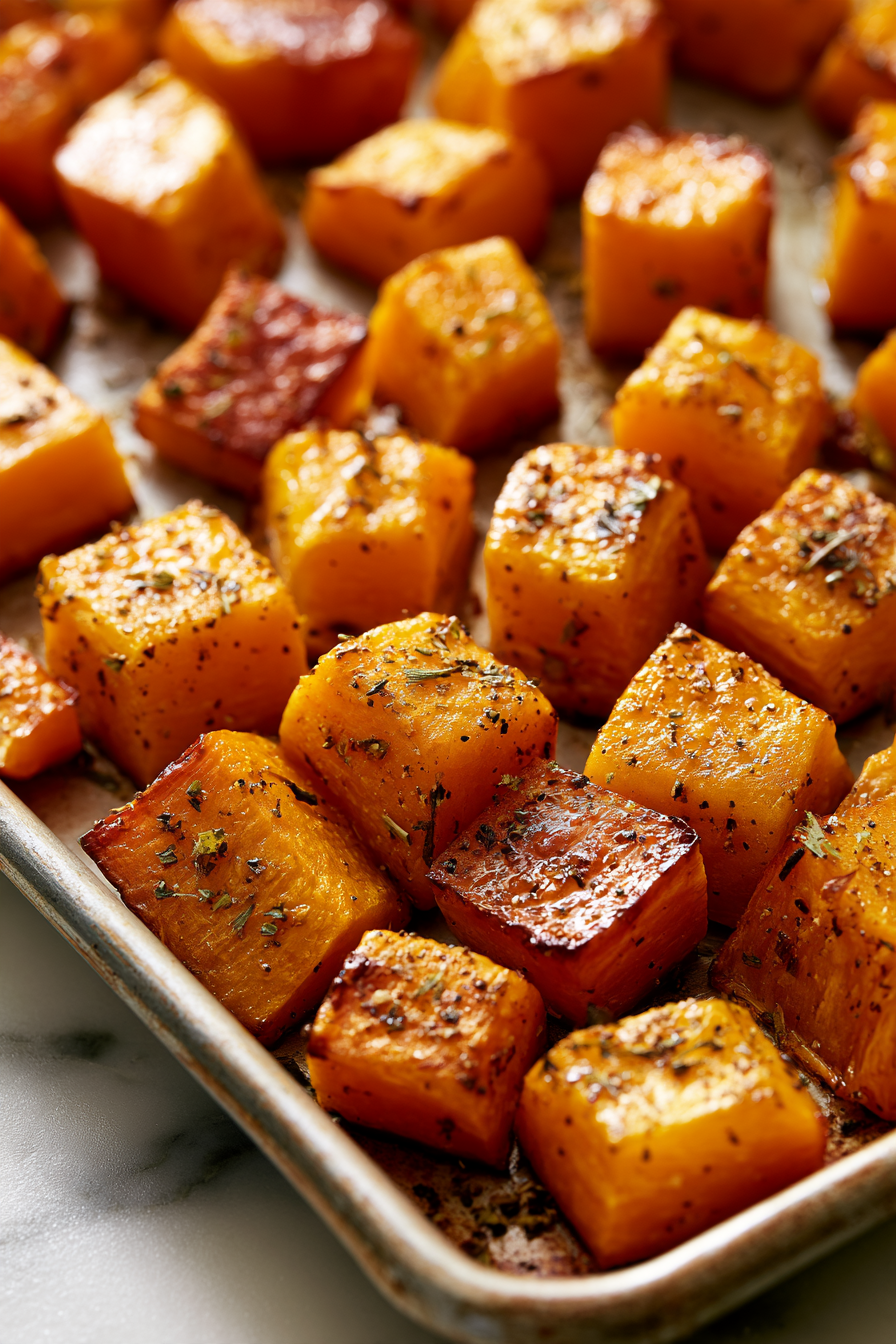
- Bake the squash for 20 to 25 minutes, or until it is very soft and starting to brown on the edges. Serve right away or, if you're using butter, move on to the next step.
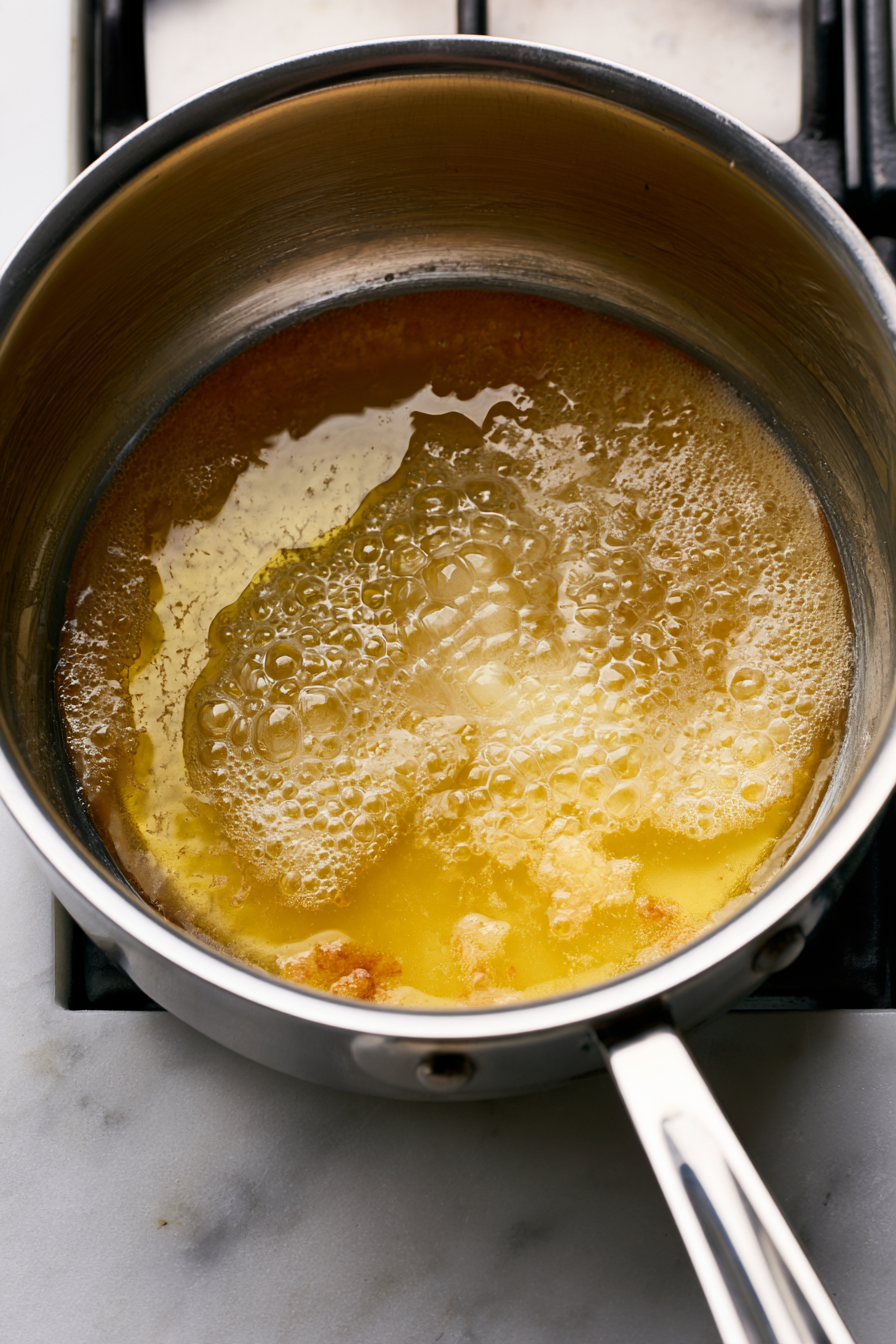
- In a medium saucepan set over medium-high heat, melt the butter. Increase heat to a simmer and cook for a short while more, until butter turns from pale yellow to a dark golden hue. After taking off the heat, move to a bowl.
- Serve the squash right away after spooning browned butter over it.
Notes
- Taste Advice: Before spreading the brown butter over the roasted squash, mix in 1 teaspoon of honey.
- Too Difficult to Cut? You can use the microwave to soften your butternut squash first if it’s just too tough to chop with a knife. Make four to five holes in the squash and cook it in the microwave for three minutes. After letting it cool, cut.
- No Need for Cubes? Alternatively, you might simply roast the squash halves as opposed to slicing them into cubes. Peel, cut in half lengthwise, then scrape out the seeds from the squash to prepare it. After that, drizzle with olive oil and season with sea salt. Roast for 30 to 40 minutes at 400ºF!
Nutrition Facts
| Nutrition | Value |
|---|---|
| Calories | 147kcal |
| Carbohydrates | 15g |
| Protein | 2g |
| Fat | 10g |
| Saturated Fat | 2g |
| Sodium | 404mg |
| Iron | 1 mg |
| Calcium | 72 mg |
| Vitamin A | 13304 IU |
| Potassium | 460MG |
Getting Those Caramelized Edges
The goal isn’t simply to make the squash soft. You also want some browning around the edges.
Start by spreading the squash pieces in a single layer on the baking sheet. Crowding the pieces together can make them steam rather than roast effectively.
The 425°F oven gives the squash enough heat to become tender while developing browned edges during the 20–25 minute cooking window.
Start checking toward the end of the cooking time. The exact roasting time can vary depending on the size of the pieces and your oven.
Seasoning the Squash
The seasoning is intentionally simple.
- Garlic powder adds savory depth without introducing moisture.
- Italian seasoning or herbs de Provence brings an herbal note that complements the natural sweetness of the squash.
- Black pepper adds a little sharpness.
- Salt brings the flavors together.
Because butternut squash is naturally sweet, you don’t need an elaborate seasoning blend to make it taste interesting.
Roasting Squash Halves Instead of Cubes
You don’t have to cut the squash into cubes.
The recipe also provides an alternative method using whole squash halves. Peel the squash, cut it lengthwise, remove the seeds, then drizzle the halves with olive oil and season with sea salt.
Roast the halves at 400°F for 30–40 minutes.
This approach is especially useful when you want a softer roasted squash that can later be mashed, pureed, or incorporated into another recipe.
Ways to Use Roasted Butternut Squash
Once roasted, the squash can be used in several different ways.
Serve it directly as a side dish with roasted chicken, pork, turkey, or another main course.
For lunch, add the squash to a hearty salad with greens, grains, nuts, or cheese.
You can also use the roasted pieces as a filling component for grain bowls or blend roasted squash into a soup.
If you’re roasting the squash specifically for another recipe, the browned edges can add extra flavor to the finished dish.
How to Serve Roasted Butternut Squash
For the simplest presentation, transfer the hot squash to a serving dish and spoon the browned butter over the top.
If you’re skipping the butter, the squash can be served directly after roasting with its garlic and herb seasoning.
For a holiday meal, the browned-butter version works particularly well alongside other roasted vegetables and traditional sides.
Frequently Asked Questions
1. How long does butternut squash take to roast?
For 1-inch cubes, this recipe calls for 20–25 minutes at 425°F. The squash should be very soft and beginning to brown around the edges.
2. Can I roast butternut squash without peeling it?
The main method in this recipe calls for peeling the squash before cutting it into cubes. The alternative method also instructs you to peel the squash halves.
3. Why is my roasted squash not browning?
Make sure the pieces are arranged in a single layer on the baking sheet. Overcrowding can interfere with browning and leave the squash softer rather than caramelized around the edges.
4. Can I use ground black pepper instead of cracked pepper?
Yes. The recipe specifies either 1/2 teaspoon cracked black pepper or 1/4 teaspoon ground black pepper.
5. Can I use herbs de Provence instead of Italian seasoning?
Yes. The recipe gives herbs de Provence as an alternative to dried Italian seasoning.
6. Is the browned butter necessary?
No. The butter is listed as optional. The roasted squash can be served directly after cooking if you prefer.
7. Can I make the squash sweeter?
The recipe’s notes suggest adding 1 teaspoon of honey to the browned butter before spooning it over the roasted squash.
8. Can I roast the squash in halves instead of cubes?
Yes. The notes provide an alternative method for roasting peeled squash halves at 400°F for 30–40 minutes.
9. What can I make with roasted butternut squash?
Use it as a side dish, or add it to soups, salads, grain bowls, and other fall or winter recipes. It can also be mashed or pureed.

hi there,
i’m Lily
A California-born chef with roots in the Central Valley’s farming community, transforming salads from diet staple to culinary art.