
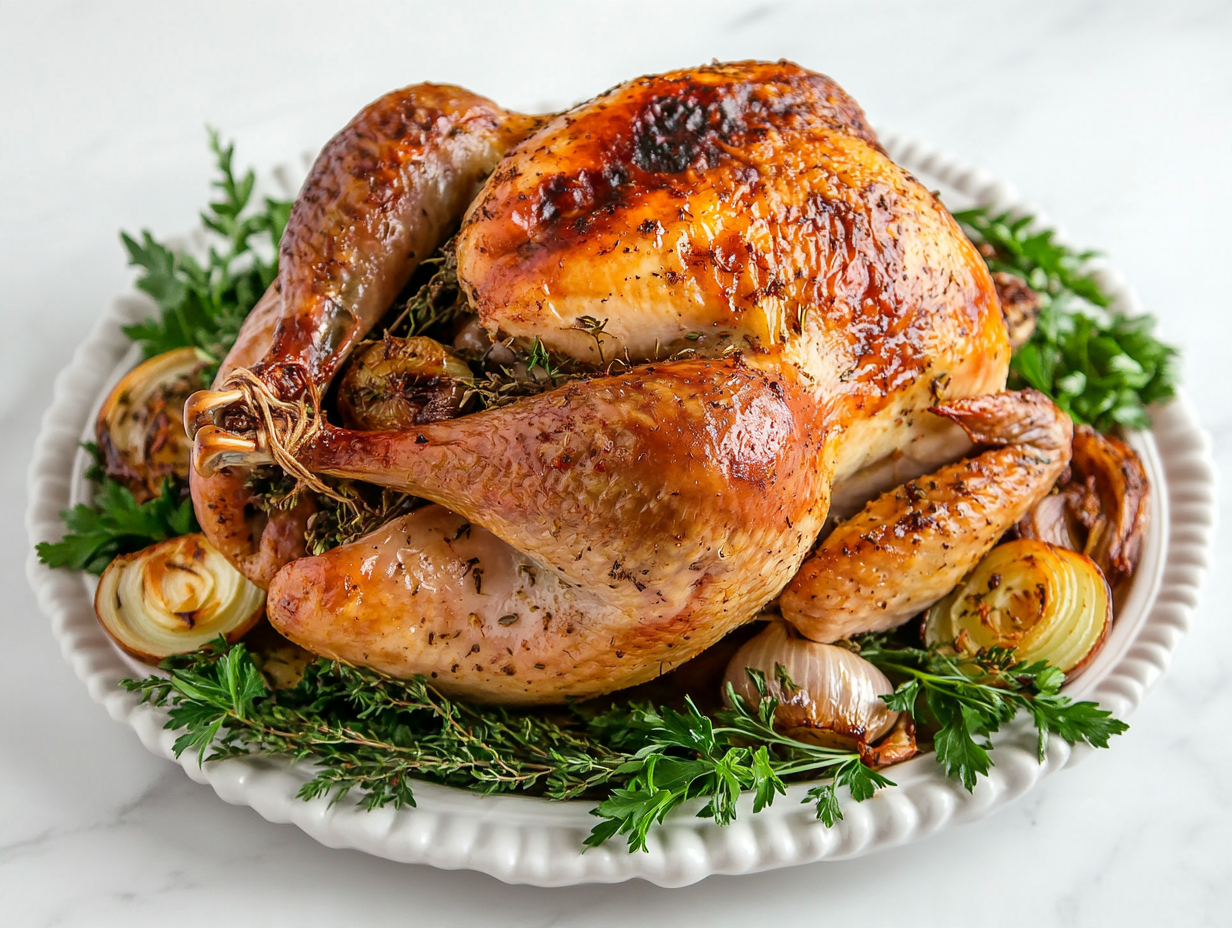
This Roast Turkey is a classic centerpiece for Thanksgiving, Christmas, and other holiday gatherings. A whole turkey is coated with lemon herb butter, seasoned generously, and roasted until the skin is beautifully browned while the meat stays tender and juicy.
The combination of softened butter, fresh thyme, rosemary, lemon zest, garlic, onion, and parsley gives the turkey plenty of aromatic flavor without making the preparation complicated. With a little planning and a reliable meat thermometer, this is a straightforward way to prepare a holiday turkey at home.
Why This Roast Turkey Works
- Herb butter under the skin: Spreading some of the butter directly beneath the breast skin puts the flavorful butter in close contact with the meat as the turkey roasts.
- Fresh herbs: Thyme, rosemary, and parsley give the turkey a classic holiday flavor without overpowering the meat.
- Lemon zest: A small amount of lemon zest adds brightness to the butter mixture and balances its richness.
- Aromatics in the cavity: Onion, garlic, and parsley gently perfume the turkey as it cooks.
- Two-stage seasoning: Butter under the skin and over the outside helps season both the meat and the skin.
- Simple roasting method: There is no complicated brining process or elaborate preparation. Most of the work happens in the oven.
The Herb Butter Makes the Difference
The butter mixture is simple, but where you put it matters.
Softened unsalted butter is mixed with lemon zest, fresh thyme, and chopped rosemary. About one-third goes underneath the turkey skin, while the remaining butter is rubbed over the outside.
Getting butter beneath the skin takes a little care. Use the back end of a wooden spoon to gently loosen the skin from the breast without tearing it. Then spread the butter underneath so it covers as much of the breast as possible.
The remaining butter goes over the exterior, where it helps the skin brown while carrying the herb and lemon flavors across the surface.
Chef’s Tip: Make sure the butter is softened rather than melted. Soft butter is much easier to spread underneath the skin and stays where you put it instead of immediately running out.

Roast Turkey Recipe
Ingredients
- 10 – 14 lb. Turkey fresh or frozen and fully thawed
- ¾ Cup Unsalted Butter softened
- 2 tsp Lemon Zest
- 1 Tbsp Fresh Thyme Leaves
- 1 Tbsp Chopped Fresh Rosemary
- Kosher Salt and Freshly Ground Black Pepper to taste
- 1 Medium Yellow Onion cut into quarters
- 8 Garlic Cloves smashed
- ½ Bunch Chopped Fresh Parsley
Instructions
- Prepare the Turkey: Let the turkey rest at room temperature for 1 hour. Near the end of the resting time, transfer the oven rack to one level below center and preheat the oven to 350°F (175°C).
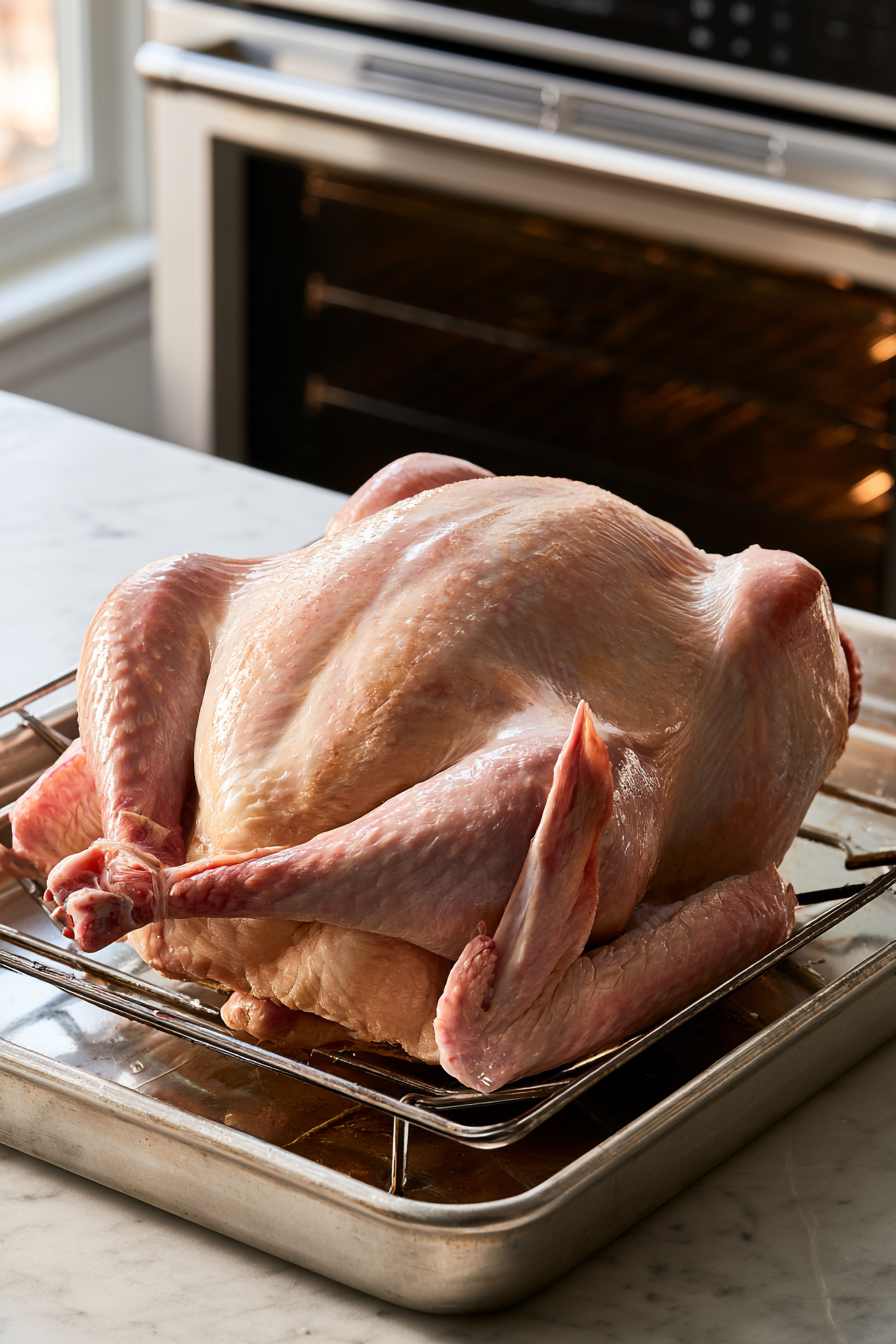
- Clean the Turkey: Remove the neck and giblets from the turkey, as well as any pin feathers left behind. Pat the outside and inside of the turkey dry with paper towels. Tuck the wings under the turkey and season the cavity well with salt and pepper.
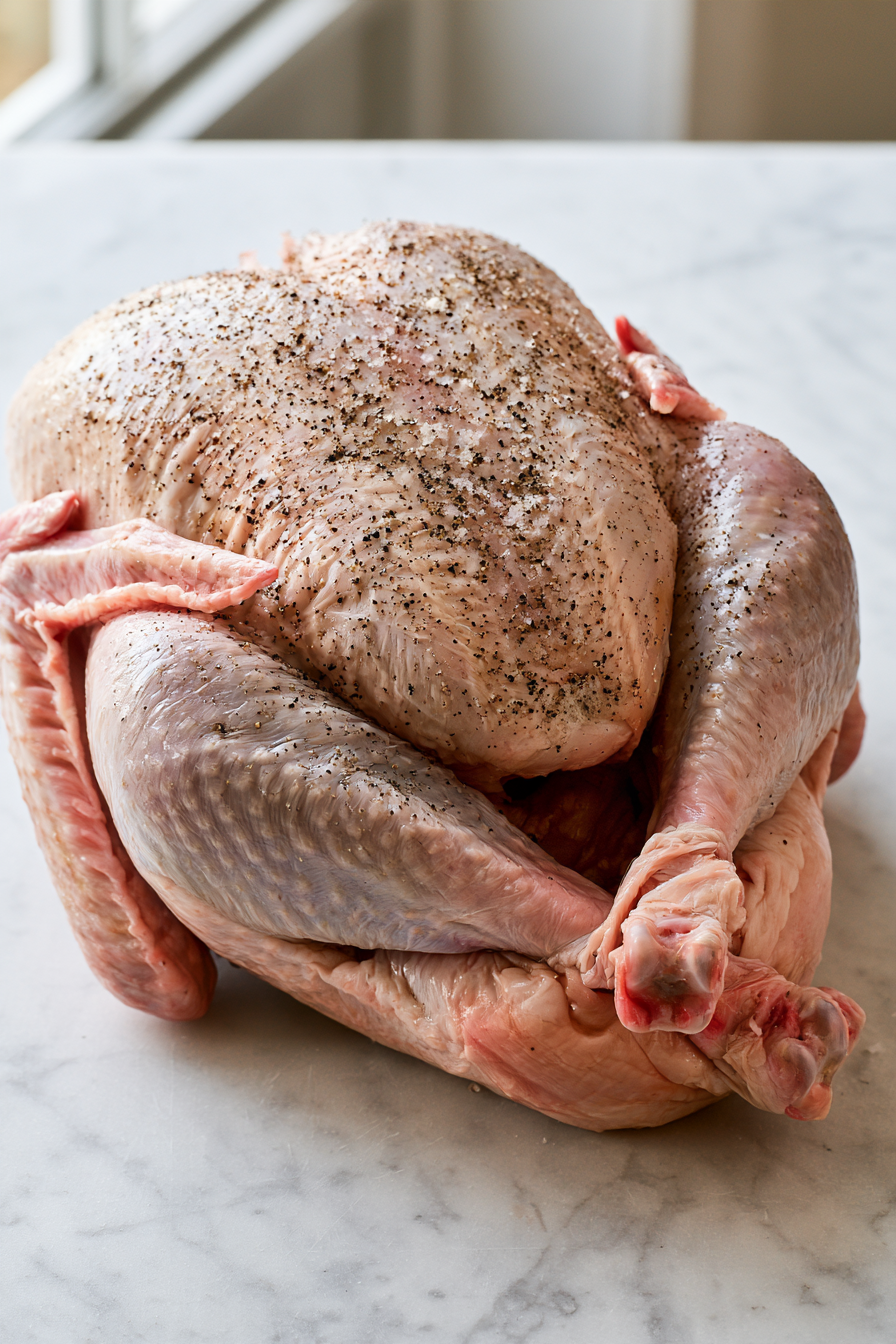
- Prepare the Herb Butter: In a mixing bowl, combine the softened butter, lemon zest, thyme, and rosemary. Mix until well combined.
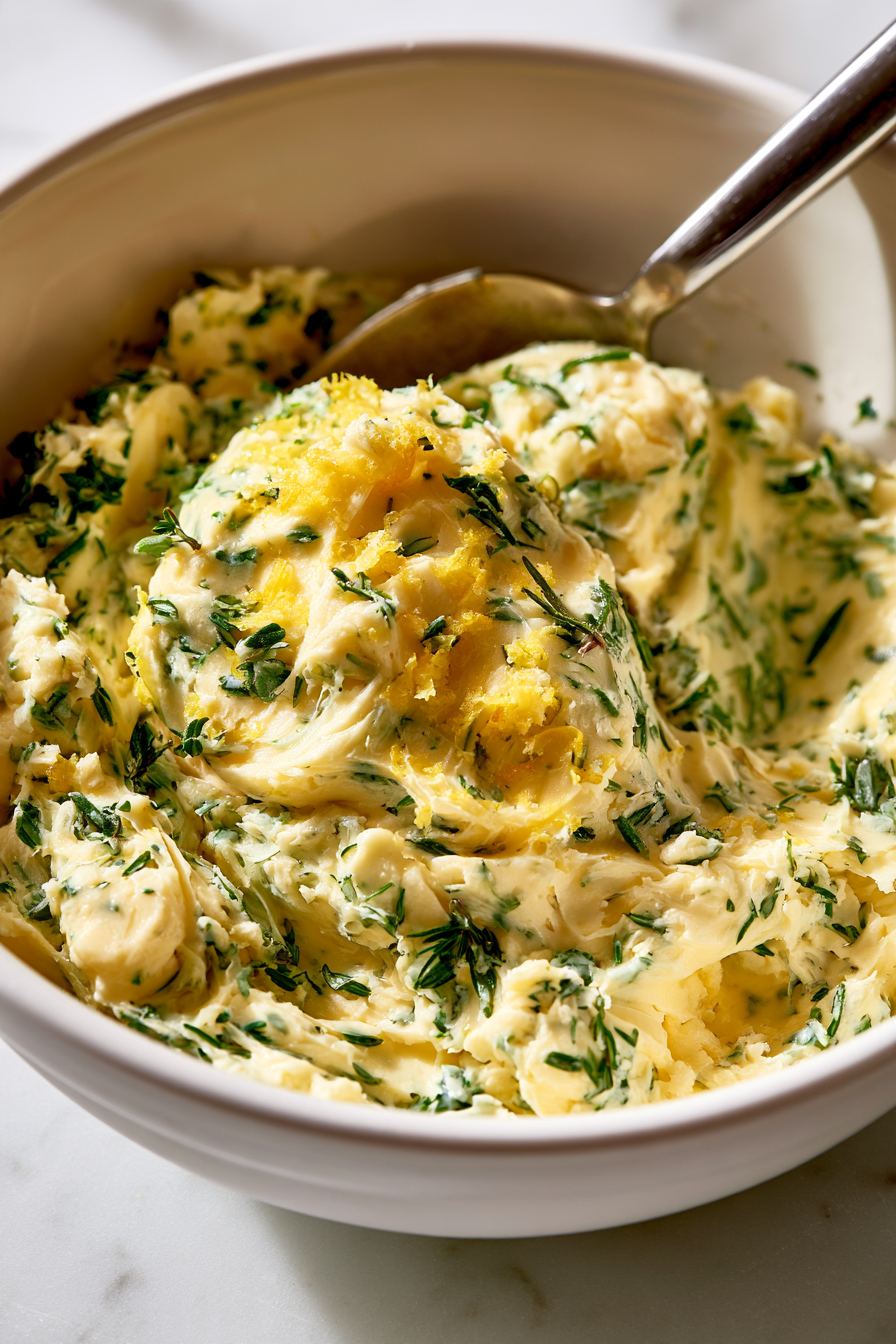
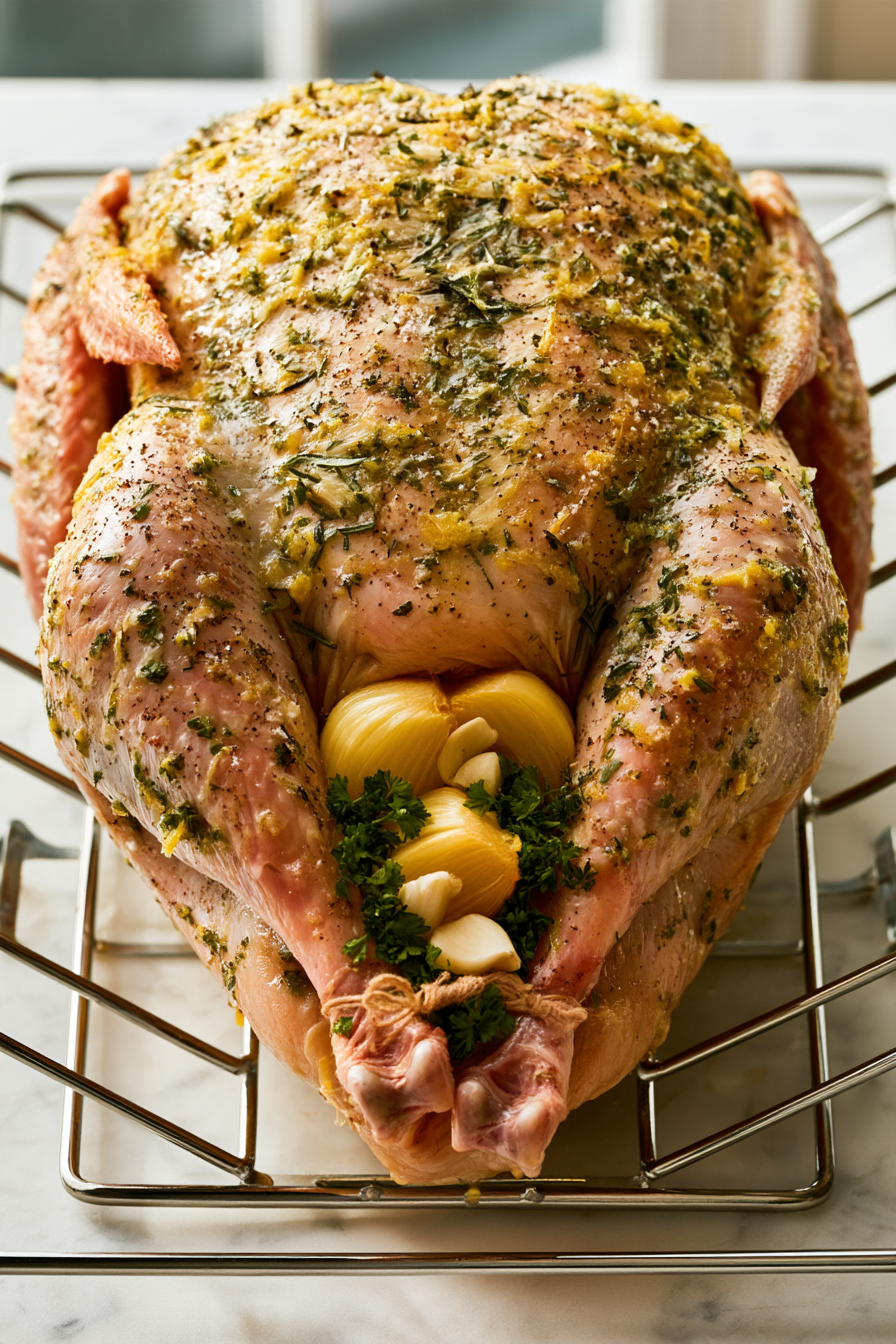
- Stuff the Turkey: Carefully separate the skin from the breast of the turkey using the back end of a wooden spoon, being careful not to tear the skin. Transfer the turkey to a large roasting pan with a roasting rack. Using the spoon, stuff and spread about one-third of the herb butter under the skin, smoothing it out over the turkey.
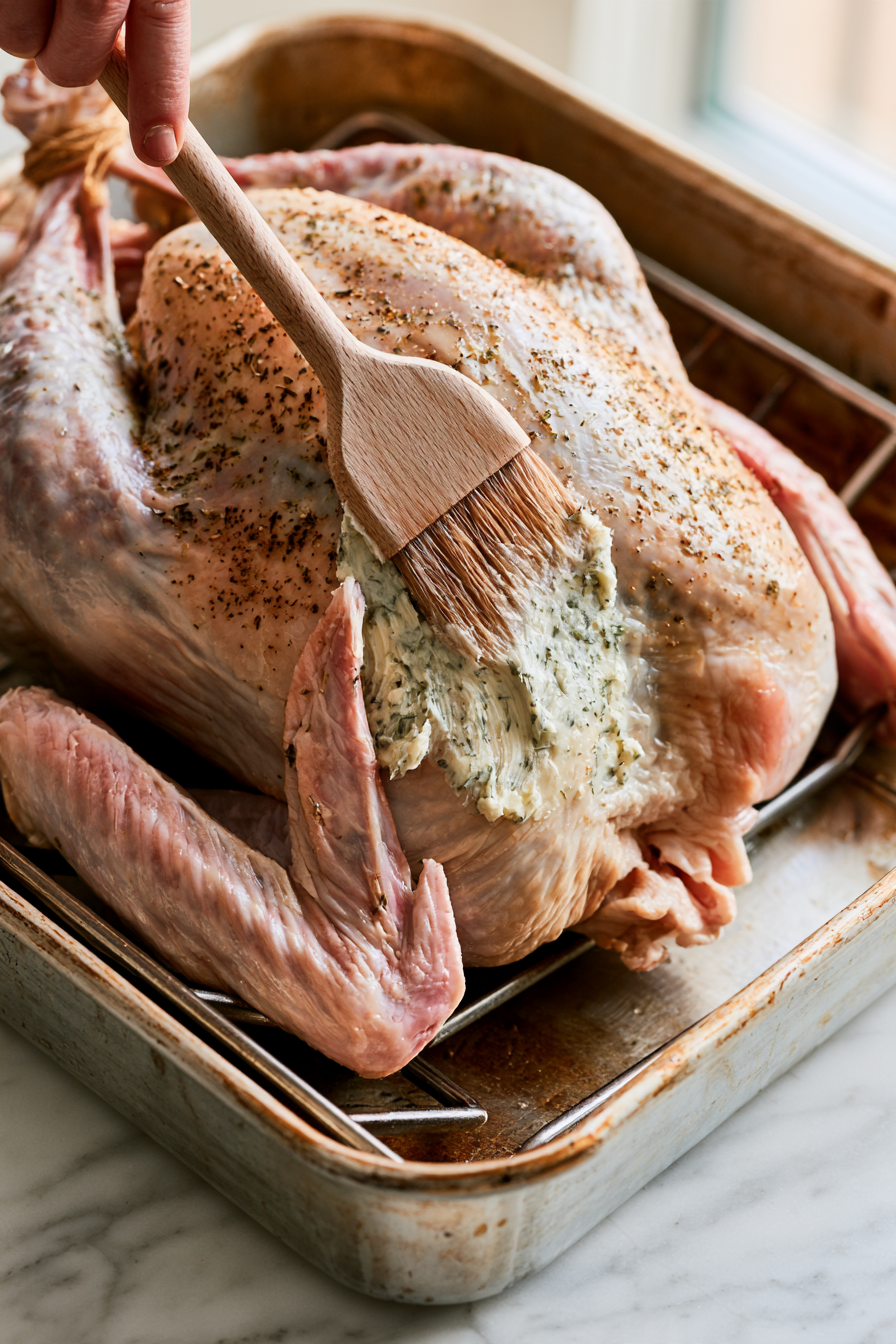
- Season the Turkey: Rub the remaining two-thirds of the butter all over the outside of the turkey (except for the underside). Season generously with salt and pepper.
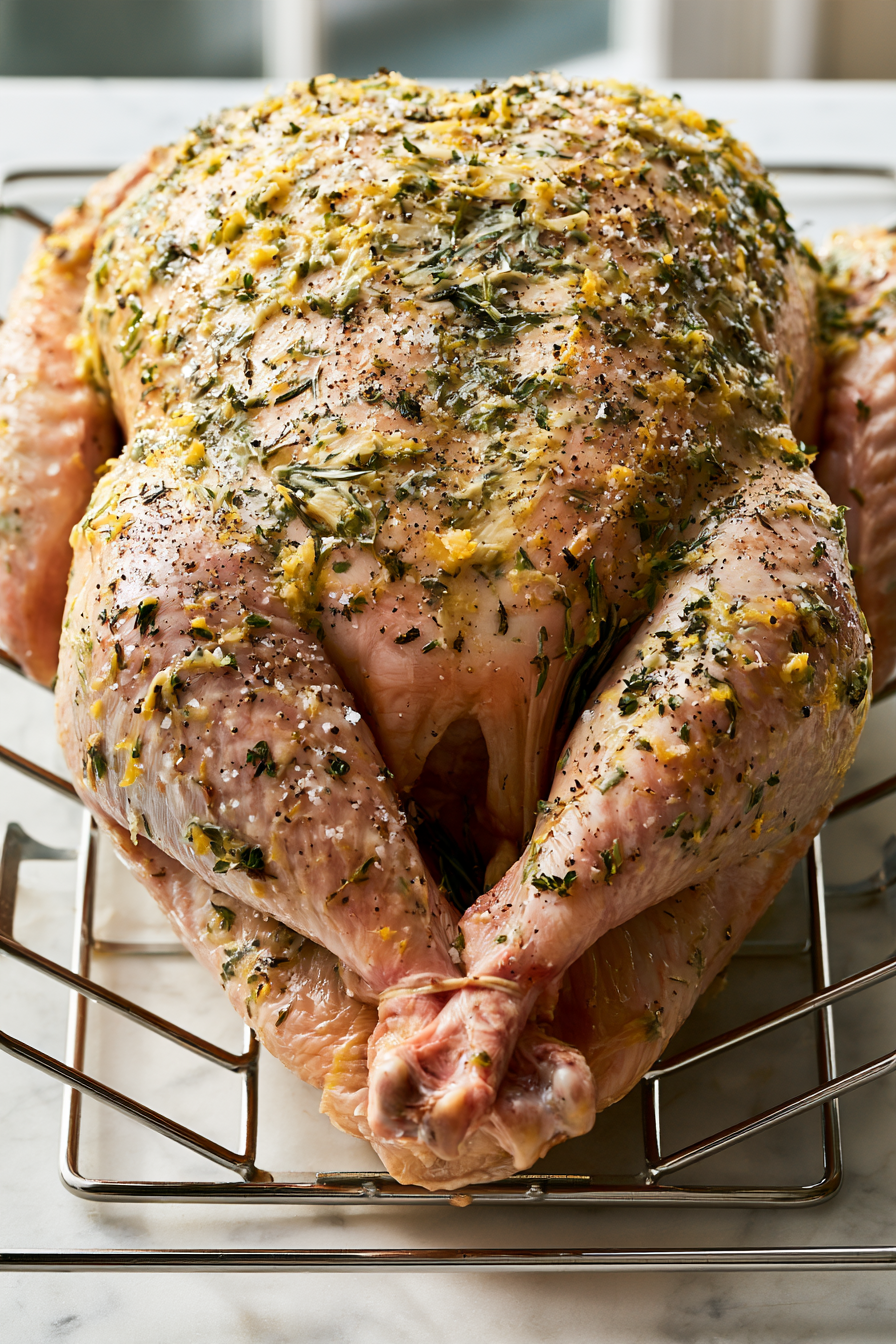
- Stuff the Cavity: Stuff the cavity of the turkey with the onion, garlic, and parsley. If desired, tie the legs together with kitchen twine for a better presentation.
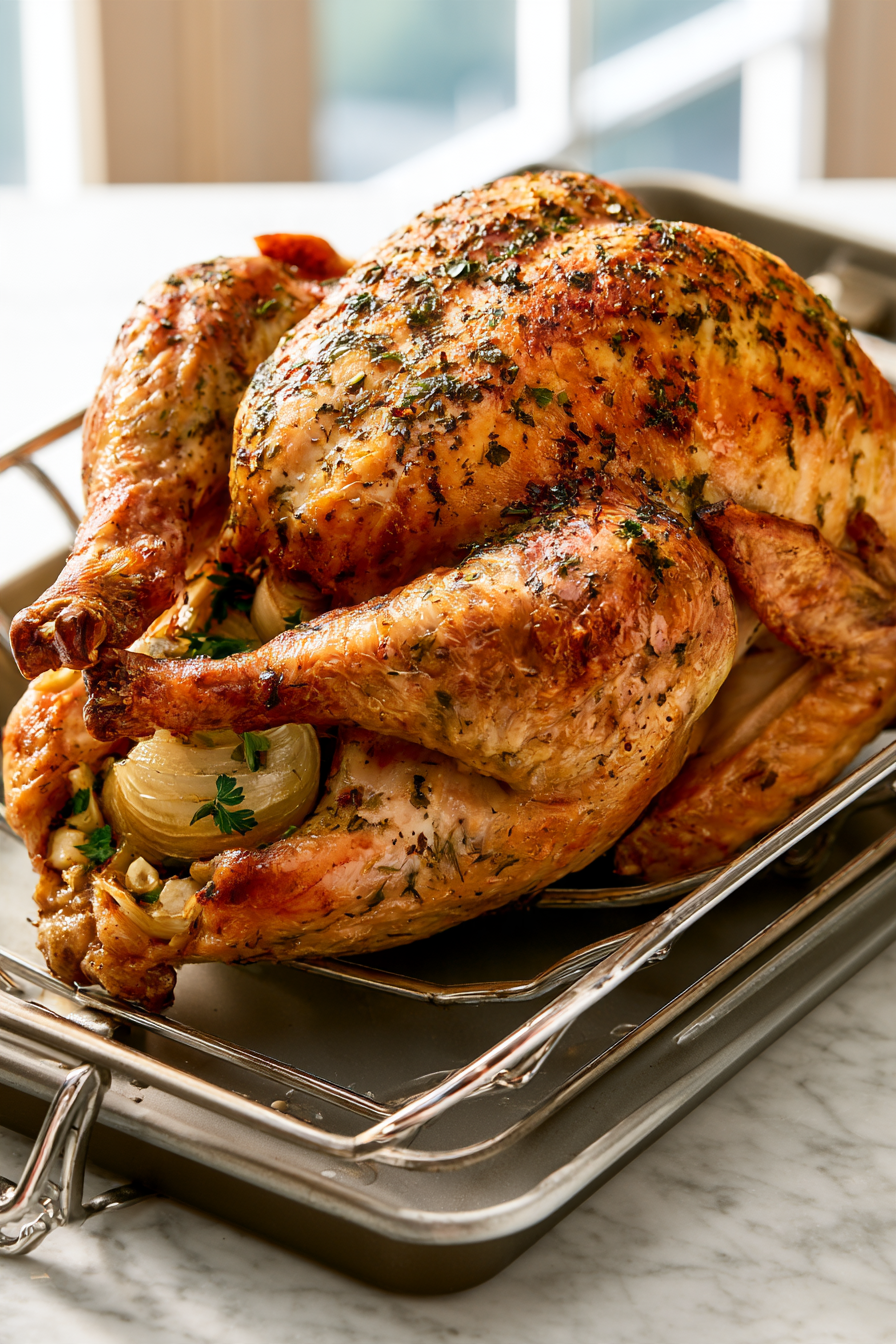
- Bake: Place the turkey in the preheated oven. Bake until the thickest part of the thigh registers 175°F (80°C) on a probe or instant-read thermometer and the breast registers 165°F (74°C), about 2 hours 20 minutes to 3 hours 30 minutes. Tent the top of the turkey with aluminum foil during baking as needed to prevent excessive browning.
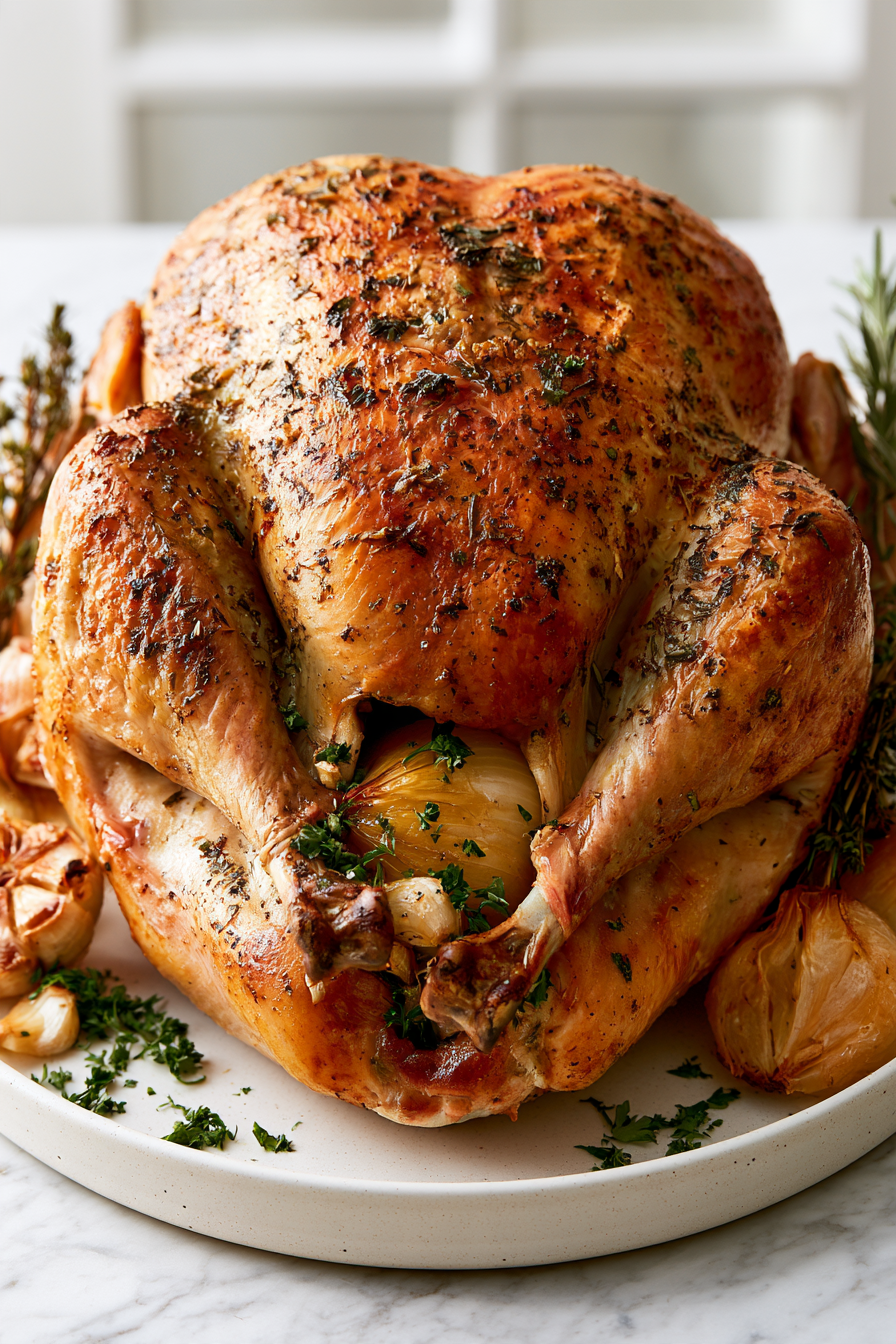
- Rest and Carve: Once done, let the turkey rest for 30 minutes (or up to 60 minutes) before carving.
Notes
- Thawing Time: It takes about 24 hours per 5 lbs of turkey to thaw in the refrigerator set at about 40°F (4°C). Giving an extra day is recommended; thawed turkey can stay in the fridge for up to 2 days before baking.
- Trussing: Trussing with kitchen twine is optional. Some chefs recommend skipping it for better air circulation, which can lead to more even cooking. If you prefer a traditional look, feel free to truss the turkey.
Nutrition Facts:
| Nutrition | Value |
|---|---|
| Calories | 345 kcal |
| Protein | 44g |
| Fat | 20g |
| Cholesterol | 115mg |
| Sodium | 500mg |
| Carbohydrates | 1g |
How to Tell When the Turkey Is Done
Cooking time is useful as a guide, but temperature should be the deciding factor.
Thickest part of the thigh to reach 175°F and the breast to reach 165°F. USDA guidance states that whole turkey should reach a minimum internal temperature of 165°F throughout, measured in the innermost thigh and wing and the thickest part of the breast.
Use an instant-read or probe thermometer rather than relying only on the color of the skin or the estimated cooking time. Turkey size, shape, starting temperature, and individual ovens can all affect how quickly it cooks.
When checking the temperature, avoid touching the thermometer to bone because that can affect the reading.
What to Do If the Turkey Browns Too Quickly
The butter helps the skin develop a beautiful golden exterior, but the surface can sometimes brown before the turkey has finished cooking.
That is where the aluminum foil becomes useful. If the top is becoming darker than you want, loosely tent the turkey with foil and continue roasting.
The goal is not to keep the turkey covered for the entire cooking process. Instead, use the foil only when needed to control the browning while the interior continues cooking.
Why Resting the Turkey Matters
Resting gives the turkey time to settle before carving.
Resting the turkey for 30 to 60 minutes after roasting is recommended. This also gives you valuable time to finish gravy, warm side dishes, set the table, or organize the serving platter.
For a holiday meal, that resting window can make the entire cooking schedule easier because the turkey does not have to go directly from the oven to the table.
How to Carve a Whole Turkey
Carving is much easier when the turkey has rested and you have a large cutting board with enough space to work.
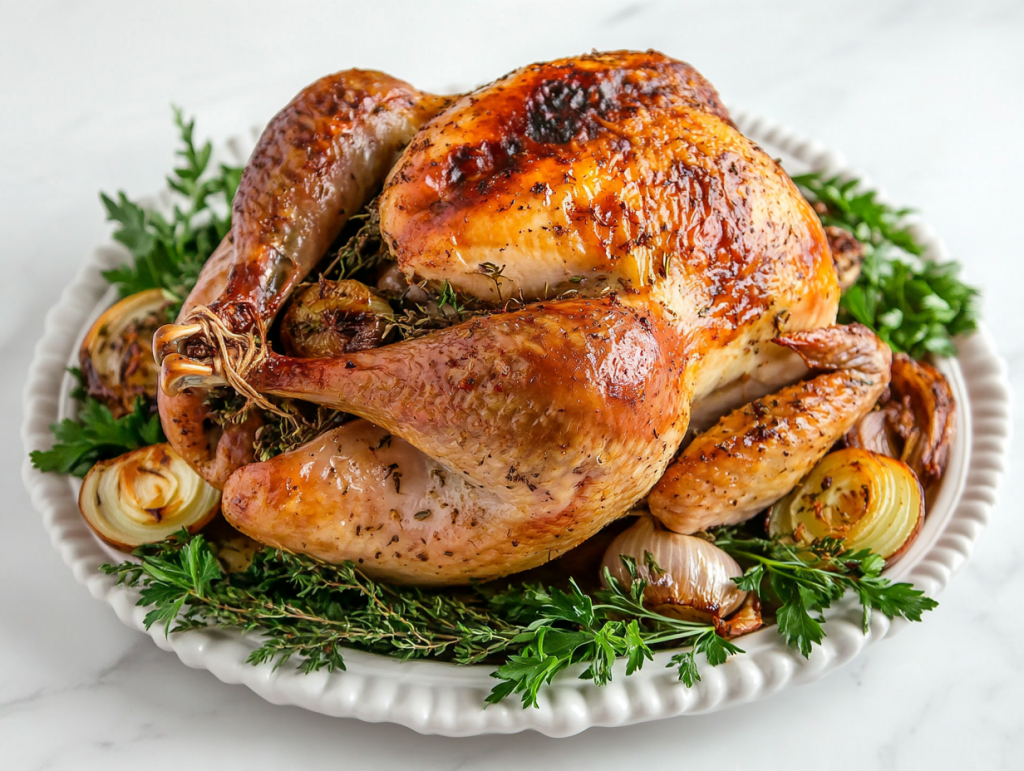
Start by removing the legs and thighs, separating them at the joints. Then remove the breast meat by following the breastbone and slicing downward in smooth strokes.
After the larger pieces are removed, separate the meat from the wings and other usable portions of the bird.
For the breast meat, slice across the grain into even pieces. Keeping the slices relatively similar in thickness makes the serving platter look more organized and helps portions stay manageable.
What Goes Well with Roast Turkey?
- Million Dollar Mashed Potatoes
- Vegan Roasted Cauliflower Soup
- Sweet Potato Casserole With Pecan Topping
- Caesar Salad
- White Cornbread
Holiday Timing Tips
A whole turkey requires more planning than most weeknight meals, especially if you are starting with a frozen bird.
- Several days before: Begin refrigerator thawing based on the turkey’s weight. Allow about 24 hours for every 5 pounds.
- The day before: Check that the turkey is fully thawed and gather the butter, herbs, aromatics, roasting pan, rack, foil, and thermometer.
- Before roasting: Prepare the herb butter and arrange the oven rack before the turkey goes into the oven.
- During roasting: Use the thermometer to monitor doneness and foil to control browning if necessary.
- After roasting: Allow the turkey to rest while you finish the rest of the meal.
What to Do With Leftover Roast Turkey
Leftover roast turkey is useful well beyond the holiday meal.
Slice it for sandwiches, add it to soups, use it in casseroles, or fold it into salads and grain bowls. Dark meat can also be pulled into smaller pieces and used in recipes that call for cooked poultry.
Refrigerate leftover turkey promptly rather than leaving it at room temperature for an extended period. USDA guidance recommends refrigerating cooked turkey leftovers within two hours and using refrigerated leftovers within three to four days.
Frequently Asked Questions
1. Can I use a frozen turkey for this recipe?
Yes. Use either a fresh or frozen turkey, but a frozen turkey must be fully thawed before preparation. Refrigerator thawing generally takes about 24 hours per 5 pounds.
2. Do I need to put butter underneath the turkey skin?
It is an important part of this recipe. The herb butter is divided so that about one-third is spread underneath the breast skin while the remaining butter coats the outside.
3. What if I accidentally tear the turkey skin?
A small tear is not a reason to start over. Continue spreading the butter as evenly as possible and roast the turkey.
4. Should I cover the turkey while it roasts?
Not necessarily. Use aluminum foil only as needed if the top begins to brown too much before the turkey is finished.
5. Can I skip trussing the turkey?
Yes. Trussing is optional here. Leaving the legs untrussed can allow more air circulation, while trussing gives the finished turkey a more traditional presentation.
6. How do I know whether my turkey needs more cooking time?
Check the internal temperature with a food thermometer. Cooking time is only an estimate because individual turkeys and ovens vary. USDA recommends a minimum internal temperature of 165°F throughout the turkey.
7. How long should I let the turkey rest before carving?
30 minutes are recommended, with up to 60 minutes being acceptable. This gives you time to finish other dishes while the turkey rests before carving.

hi there,
The Freshman Cook started as a place to keep track of recipes I wanted to make again. Somewhere along the way, it grew into a collection of meals that friends requested, desserts that disappeared too quickly, and weeknight dinners that made life a little easier.
know more