

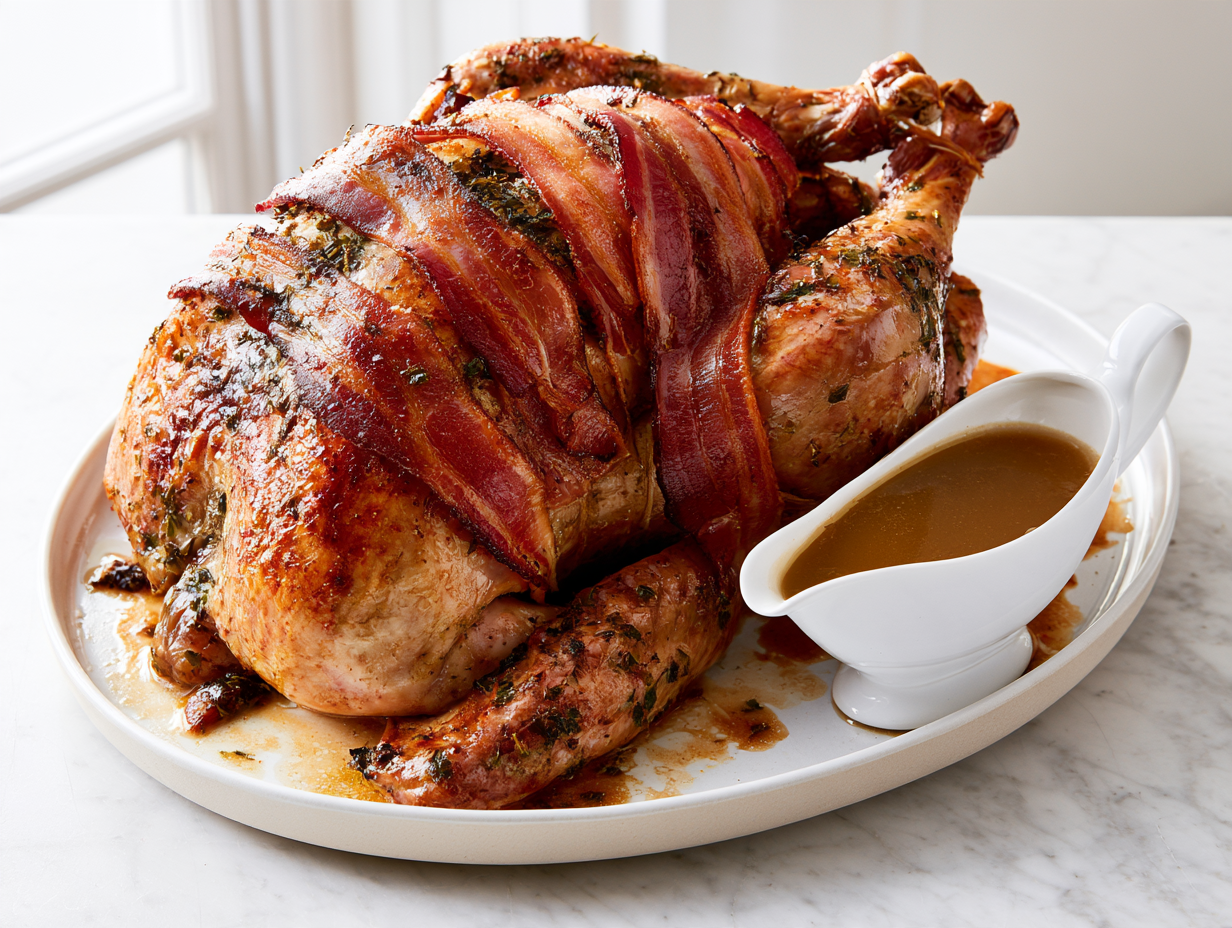

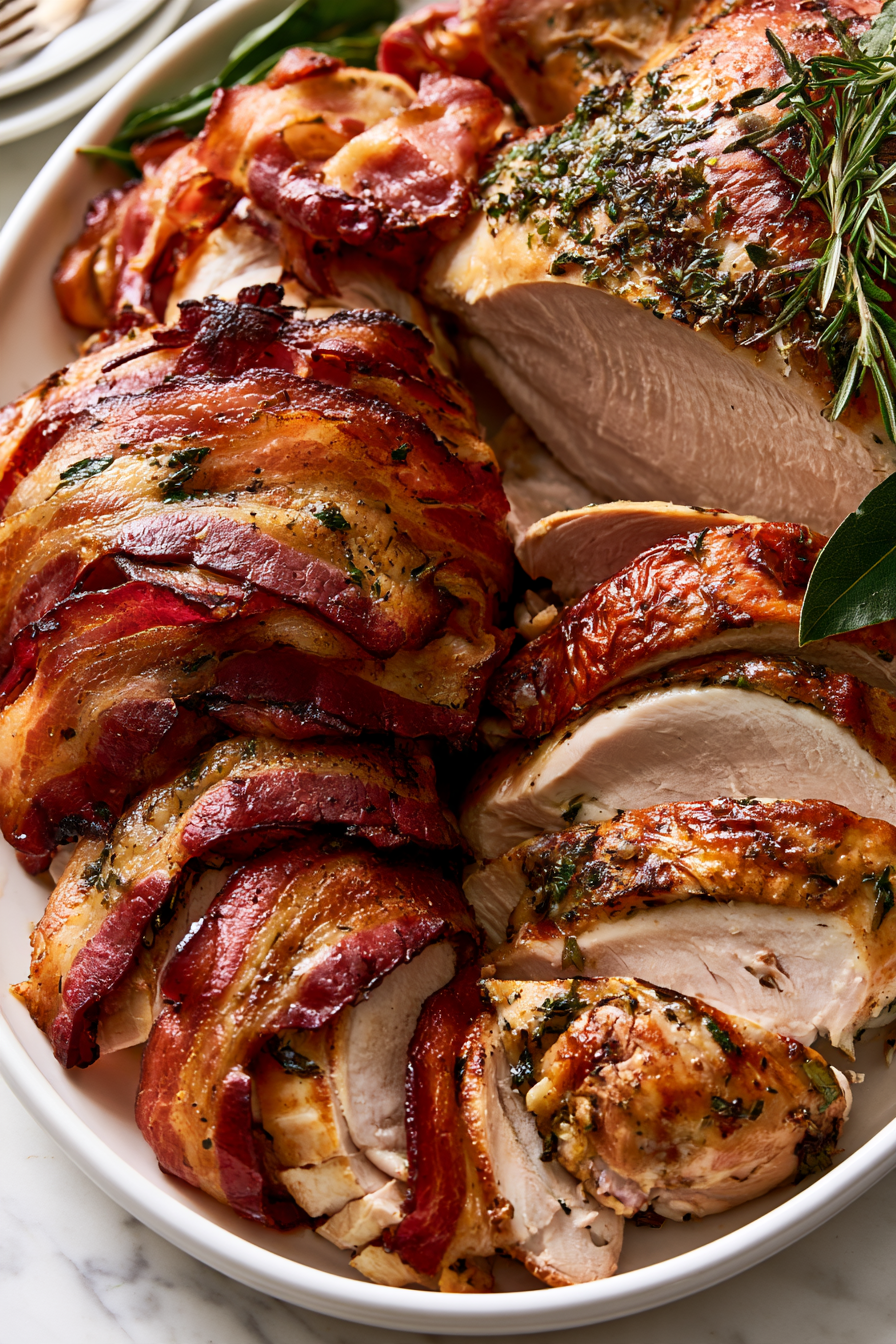
Gordon Ramsay’s Perfect Roast Turkey is a classic festive centerpiece built around a simple but clever technique: rich lemon, parsley, and garlic butter is pushed beneath the skin before roasting. This helps keep the breast moist while infusing the meat with fresh, aromatic flavor.
The turkey is finished with smoky streaky bacon across the breast, while onions, lemon, garlic, and bay leaves add flavor from inside the cavity. After a long resting period, the result is a beautifully seasoned turkey that is ready for gravy and all your favorite holiday sides.
For a truly unforgettable Christmas dinner, pair it with some Green Bean Almondine, Turkey Gravy, and Roasted Garlic Mashed Potatoes for the perfect holiday meal!
What Makes This Roast Turkey Special?

- Butter beneath the skin: The herb butter is worked directly underneath the turkey skin, allowing the flavor to reach the breast as it roasts.
- Lemon and parsley: Fresh lemon zest, juice, garlic, and parsley give the rich butter a bright, savory character.
- Smoked bacon: Bacon is added over the breast after the initial roasting period, adding smoky flavor while helping protect the breast during the longer roast.
- Aromatic cavity: Onion, lemon, garlic, and bay leaves create a fragrant base that complements the turkey.
- High-heat start: The turkey begins at 220°C/Gas 7 before the oven temperature is reduced, giving the roasting process a strong initial burst of heat.
- Long resting time: At least 45 minutes of resting makes the turkey easier to carve and leaves you with valuable time to finish the rest of the meal.
The Lemon, Parsley & Garlic Butter
The butter is the foundation of this recipe, so it is worth preparing it carefully.
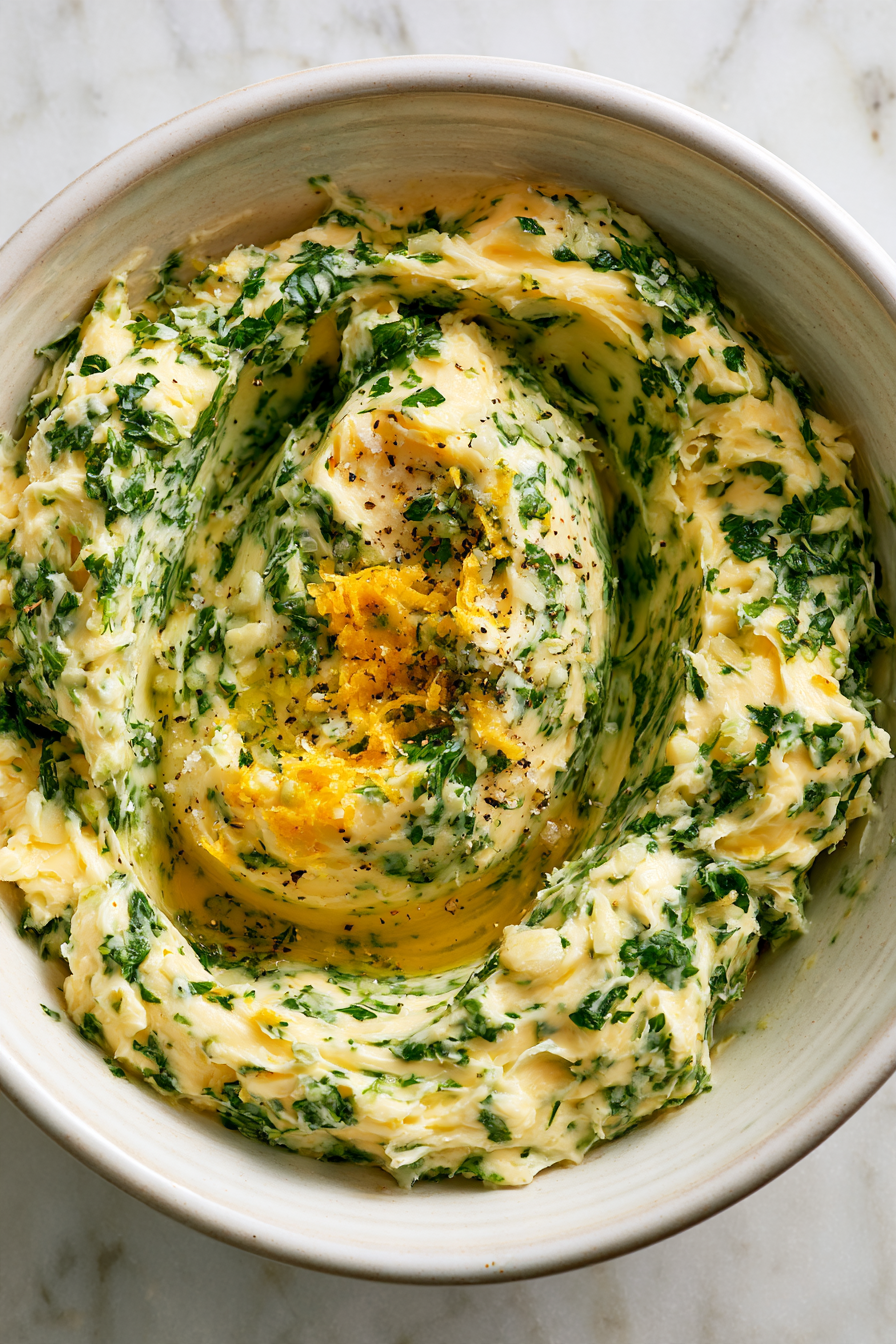
Start with butter that is properly softened at room temperature. Mix it with olive oil, lemon zest and juice, crushed garlic, chopped flat-leaf parsley, salt, and pepper until everything is evenly incorporated.
The butter is then divided between the inside of the skin and the outside of the turkey. This two-layer approach gives the bird seasoning in direct contact with the meat as well as on the surface.
Gordon Ramsay’s Perfect Roast Turkey
Equipment
- Large roasting tray
- Large mixing bowl
- Skewer or meat thermometer
- Basting Brush
- Carving board
- Carving knife
- Oven
Ingredients
For the Turkey
- 1 free-range turkey about 5–5.5 kg (11–12 lb), ideally Norfolk Black or Bronze
- Sea salt and freshly ground black pepper
- 2 onions peeled and halved
- 1 lemon halved
- 1 head of garlic halved horizontally
- 6 bay leaves
- Olive oil for drizzling
- 8 rashers smoked streaky bacon
For the Lemon, Parsley & Garlic Butter
- 375 g butter at room temperature
- 1 tablespoon olive oil
- Finely grated zest and juice of 2 small lemons
- 3 garlic cloves peeled and crushed
- Small bunch of flat-leaf parsley leaves only, chopped
- Sea salt and freshly ground black pepper
Instructions
- Preheat the oven to 220°C/Gas 7. Mix the softened butter with salt, pepper, olive oil, lemon zest and juice, crushed garlic, and parsley until well combined.
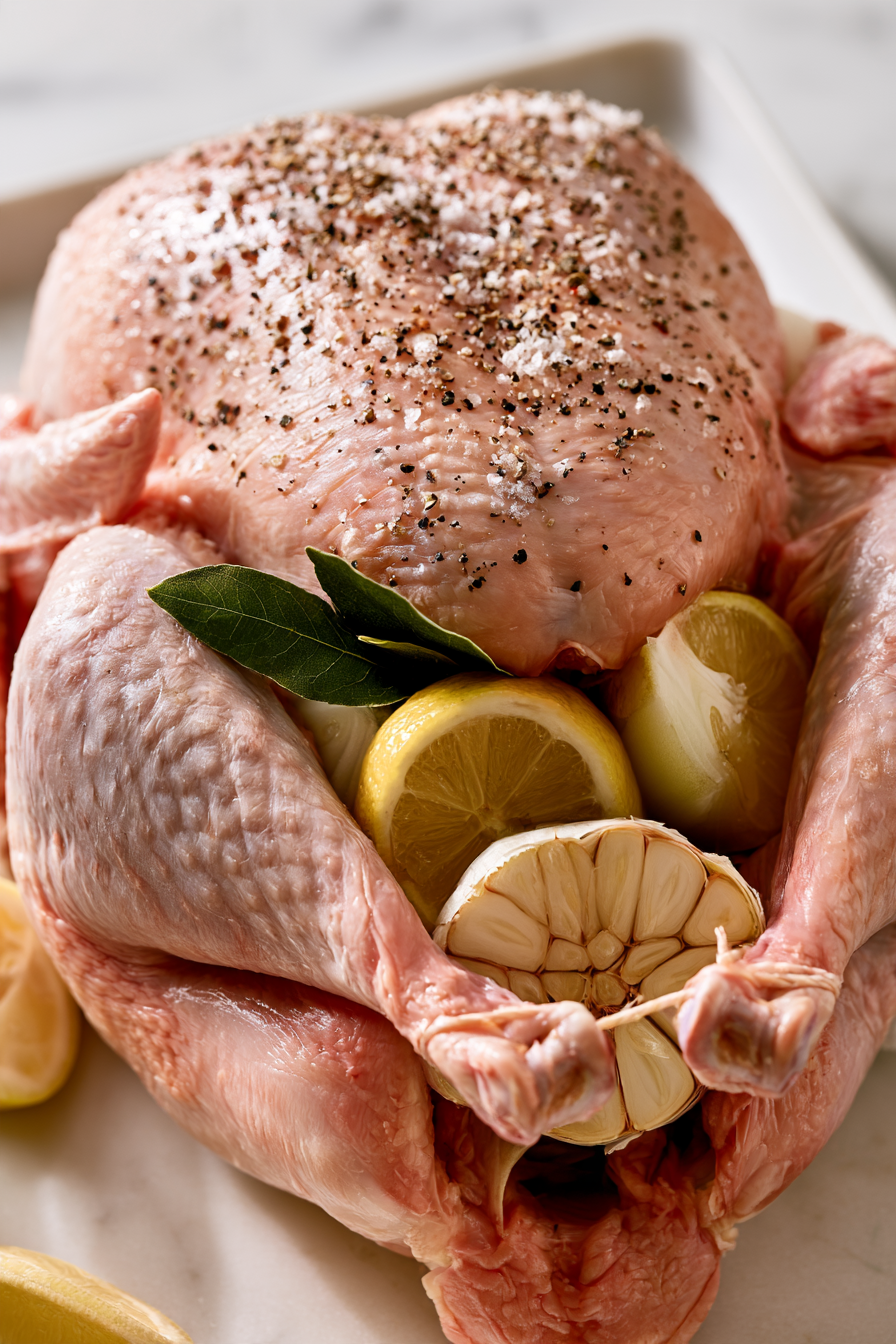
- Remove the giblets from the turkey. Season the cavity with salt and pepper, then fill it with the onions, lemon, garlic halves, and 2 bay leaves.
- Carefully loosen the skin over the breasts and legs without tearing it. Push half of the herb butter underneath the skin and gently massage it over the breasts.
- Place the remaining 4 bay leaves under the breast skin. Rub the remaining butter all over the outside of the turkey, then season with salt and pepper and drizzle with olive oil.
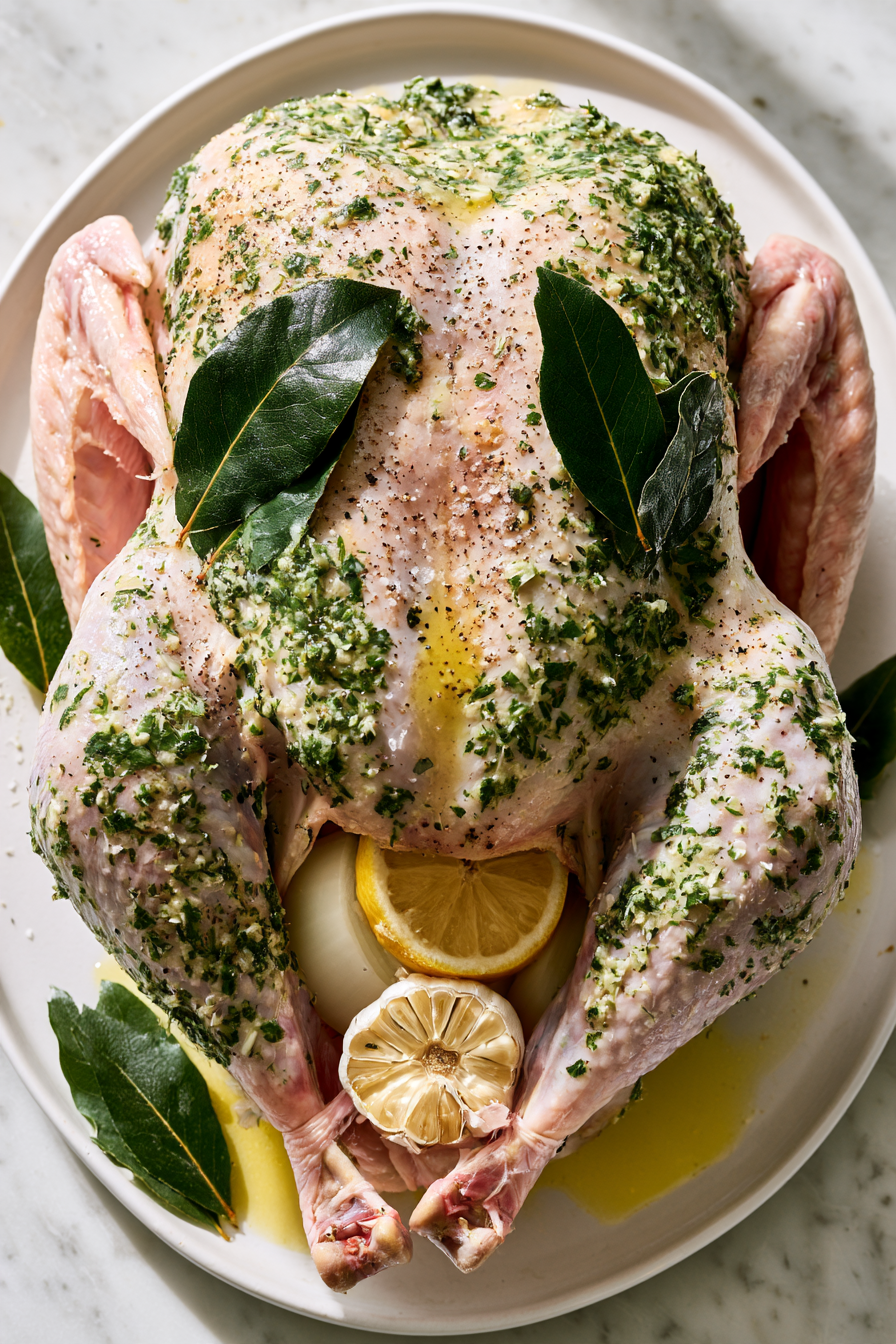
- Place the turkey breast-side up in a roasting tray and roast for 10–15 minutes.
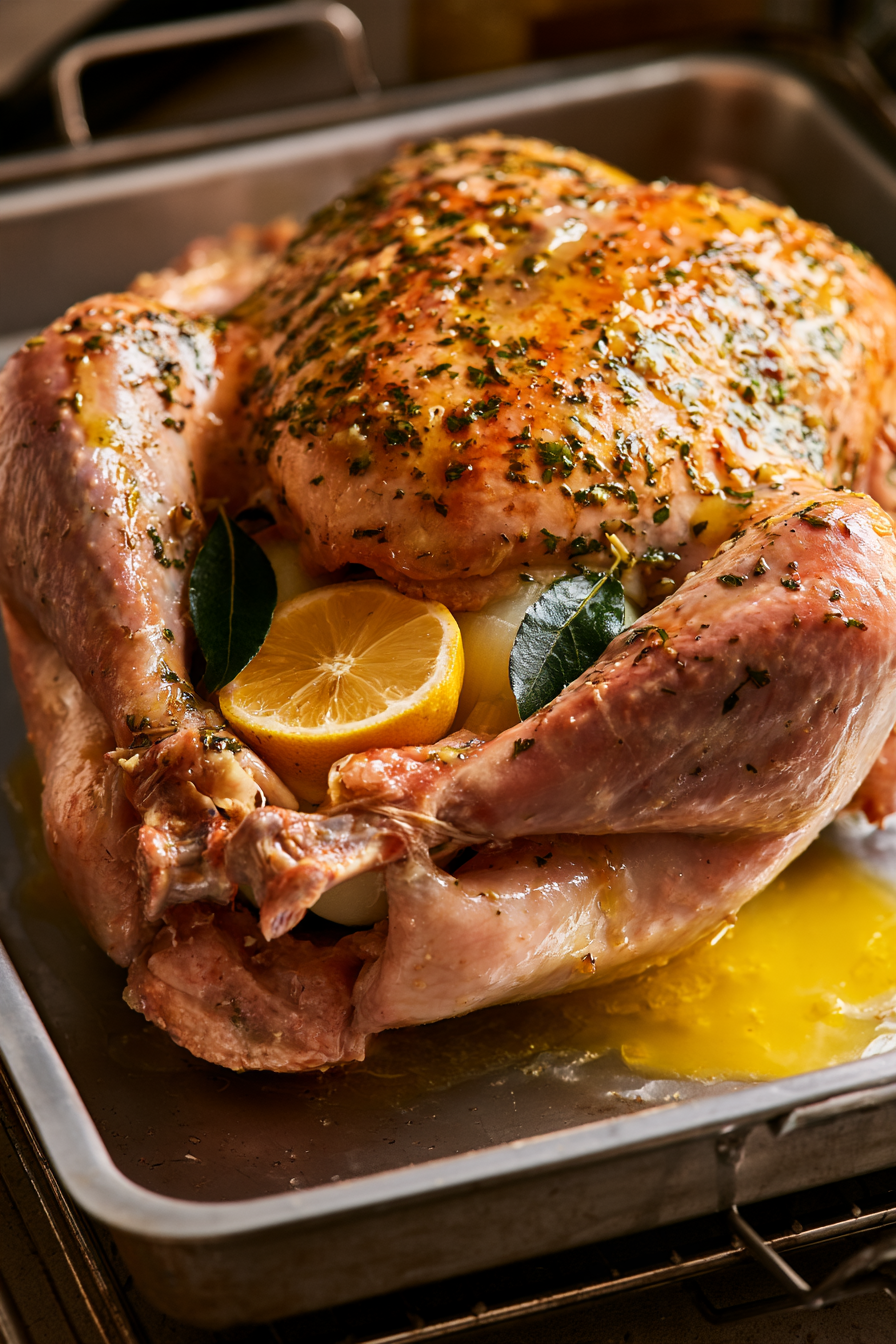
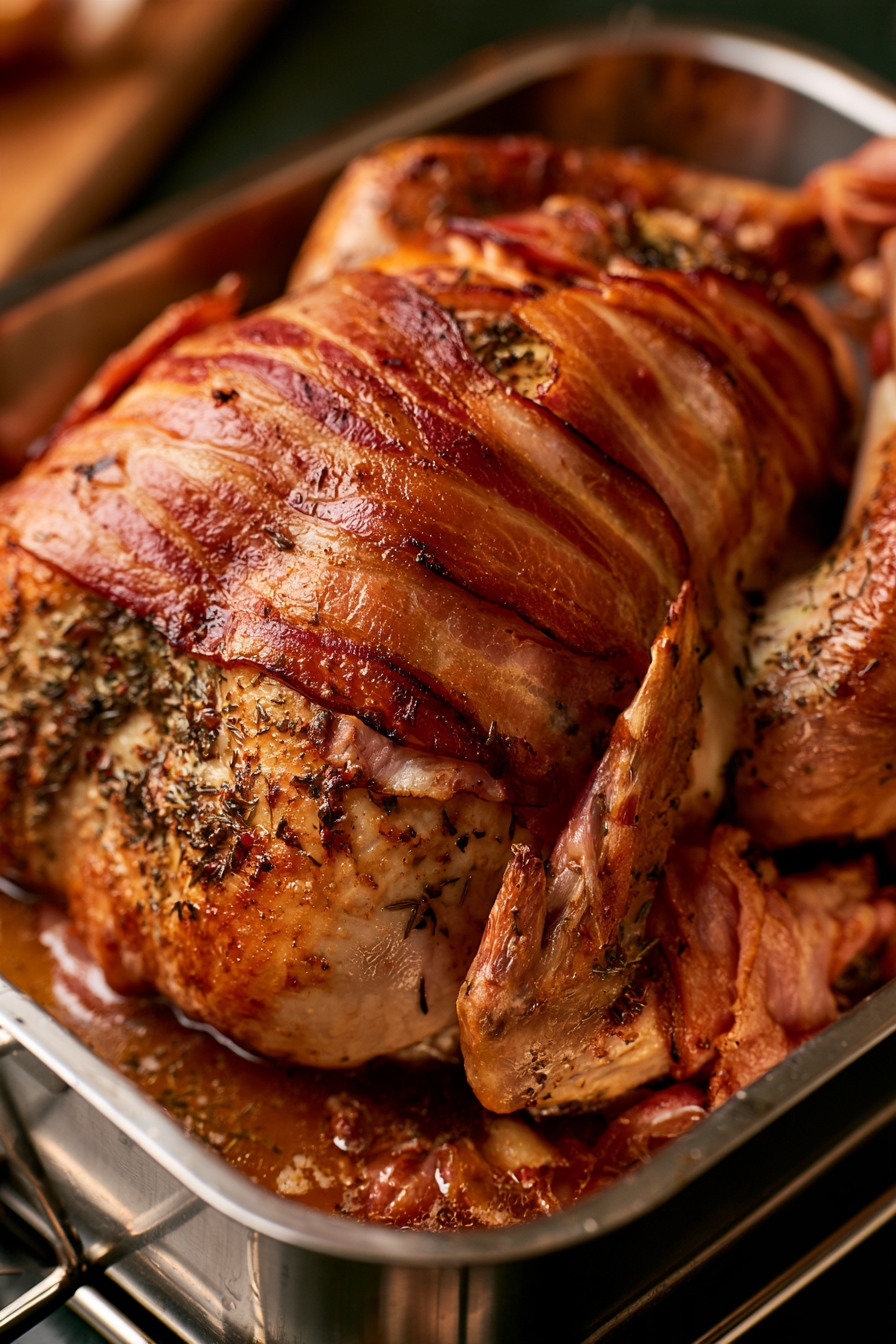
- Remove from the oven and baste with the pan juices. Lay the bacon rashers over the breast and baste again.
- Reduce the oven to 180°C/Gas 4 and roast for about 2½ hours, basting occasionally.
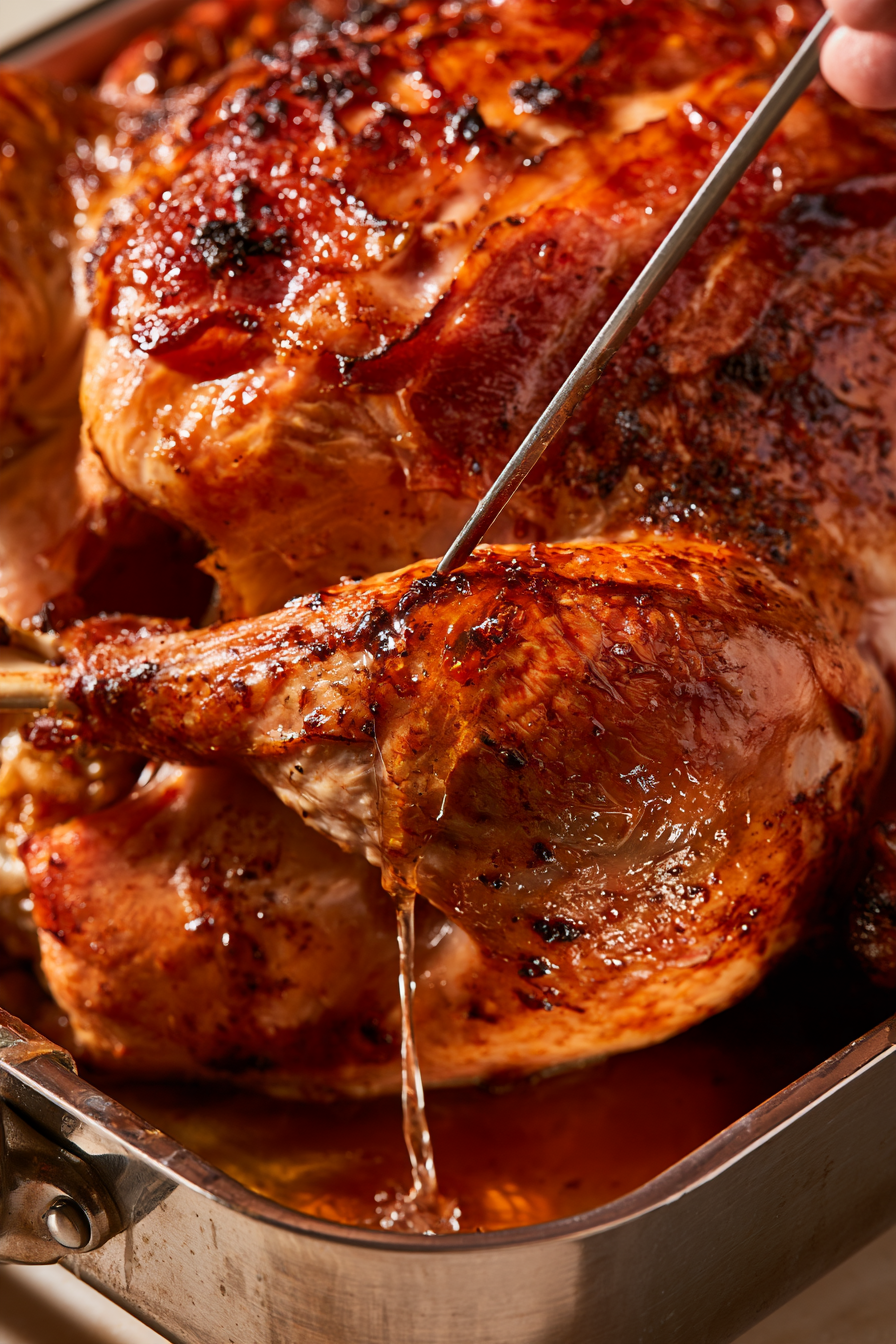
- Check the thickest part of the leg with a skewer; the juices should run clear rather than pink. If necessary, continue roasting and check again every 15 minutes.
- Transfer the turkey to a warmed platter and let it rest for at least 45 minutes. Remove the bay leaves before carving, then serve with hot gravy and your favorite festive sides.
Nutritional Facts:
| Calories | 550kcal |
| Cholesterol | 150 g |
| Fat | 32g |
| Protein | 55g |
| Fibre | 3 g |
Why the Bacon Goes on Partway Through Roasting
The bacon is not added at the beginning. The turkey first spends 10–15 minutes roasting at the higher temperature before it is removed and basted.
At that point, the bacon rashers are arranged across the breast and the turkey is basted again before the oven temperature is reduced.
This gives the bacon time to contribute its smoky, savory flavor during the longer roasting period without subjecting it to the full initial high heat for the entire cook.
How to Manage the Roasting Time
The stated cooking time is a useful starting point, but it should not be treated as an exact finish time.
Turkey size, oven performance, starting temperature, and roasting conditions can all affect how quickly the bird cooks. Start checking before the expected finish rather than waiting until the very last minute.
The original method checks the thickest part of the leg with a skewer and looks for clear rather than pink juices. If the turkey needs more time, continue roasting and check again every 15 minutes.
For an additional food-safety check, the USDA recommends that turkey reach a minimum internal temperature of 165°F (74°C) throughout, measured in the innermost thigh and wing and the thickest part of the breast. (USDA Food Safety and Inspection Service)
Why You Should Give the Turkey a Long Rest
The 45-minute resting period is an important part of the recipe rather than an afterthought.
Once the turkey comes out of the oven, transfer it to a warmed platter and leave it undisturbed for at least 45 minutes. This gives the juices time to redistribute and makes carving easier.
It also creates a useful window for preparing gravy, finishing roasted vegetables, warming potatoes, and getting the rest of the holiday table ready.
How to Carve the Turkey
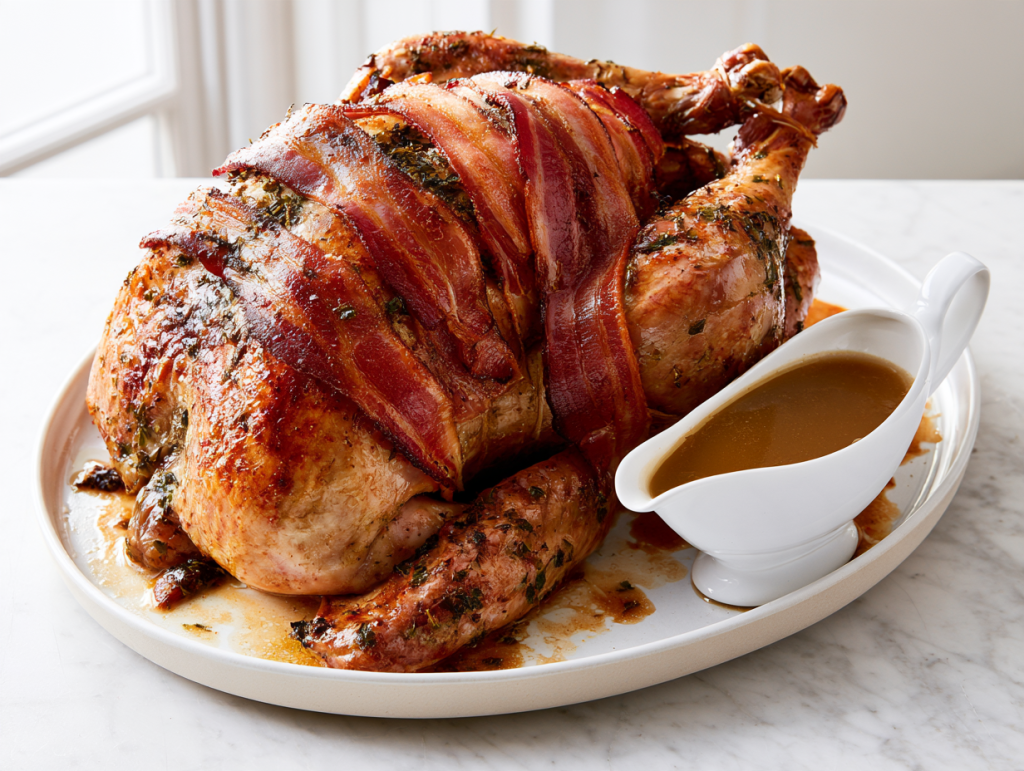
Use a sturdy carving board and a sharp carving knife. Begin by removing the legs, separating the drumsticks and thighs at their natural joints.
Next, remove the breast meat by following the breastbone and making long, controlled cuts. Slice the breast meat into even pieces rather than hacking directly across the bird.
Arrange the slices on a warmed serving platter alongside the darker meat. Remove any remaining bay leaves before serving.
Try More Main Course Recipes
- Creamy Chicken Pot Pie
- Creamy Tuscan Chicken
- Deep Dish Pizza
- Stuffed Shells
- Chickpea Salad Sandwiches
Holiday Preparation Timeline
A little planning makes a large turkey much easier to manage.
- Before cooking: Make sure the turkey is completely thawed if starting with a frozen bird, and allow the butter to soften at room temperature.
- Before roasting: Prepare the lemon, parsley, and garlic butter and organize the cavity aromatics.
- During roasting: Keep the basting brush and pan juices nearby.
- Before serving: Plan for at least 45 minutes of resting time. Use this window to finish gravy and side dishes.
- At the table: Remove the bay leaves before carving and serve the turkey hot with gravy and festive sides.
Frequently Asked Questions
1. What size turkey does this recipe use?
Free-range of turkey weighing approximately 5–5.5 kg, or about 11–12 pounds, and serves 8–10 people.
2. Can I use a different type of turkey?
Ideally Norfolk Black or Bronze. If those varieties are unavailable, another turkey of the recommended size can be used.
3. Why is butter placed underneath the turkey skin?
Putting the herb butter beneath the skin allows the lemon, garlic, parsley, and butter to flavor the breast directly while it roasts.
4. When should I add the bacon?
The bacon is added after the initial 10–15 minute roast. The turkey is removed, basted with the pan juices, covered with the bacon rashers, and basted again before returning to the oven at the reduced temperature.
5. Do I need to baste the turkey during cooking?
Yes. Do the basting after the initial high-temperature roasting period and occasionally during the remaining cooking time.
6. Why does this recipe use two different oven temperatures?
The turkey starts at 220°C/Gas 7 for 10–15 minutes, then the temperature is reduced to 180°C/Gas 4 for the remainder of the roast. This gives the turkey a strong initial roast before the longer cooking period.
7. Can I carve the turkey immediately after it comes out of the oven?
It is better to follow the recipe and let it rest for at least 45 minutes. This makes carving easier and gives you time to finish the rest of the meal.
8. How can I tell if the turkey is safely cooked?
Use a reliable food thermometer to verify the internal temperature. USDA guidance recommends a minimum internal temperature of 165°F (74°C) throughout the turkey. (USDA Food Safety and Inspection Service)

hi there,
i’m Archie
A San Diego-born home cook who turns her kitchen into a playground of flavors.


